35mm Reversal Color Film (For Recording)
CN → US| HS Code | Tariff Rate | Origin | Destination | Doc |
|---|---|---|---|---|
| 3701910060 | 38.7% | CN | US | Official Doc |
| 3702550030 | 35.0% | CN | US | Official Doc |
| 3703906000 | 37.8% | CN | US | Official Doc |
| 3703206000 | 38.1% | CN | US | Official Doc |
| 3701910030 | 38.7% | CN | US | Official Doc |
Product Images

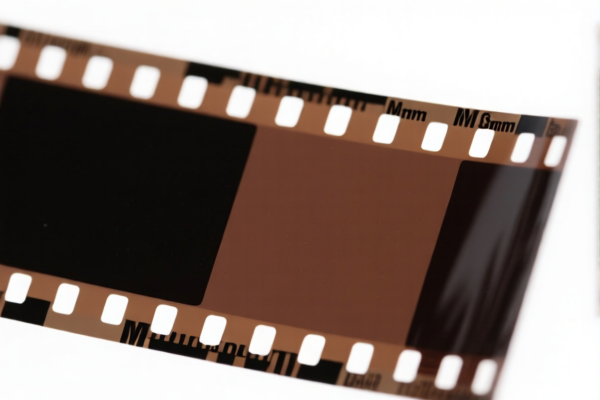
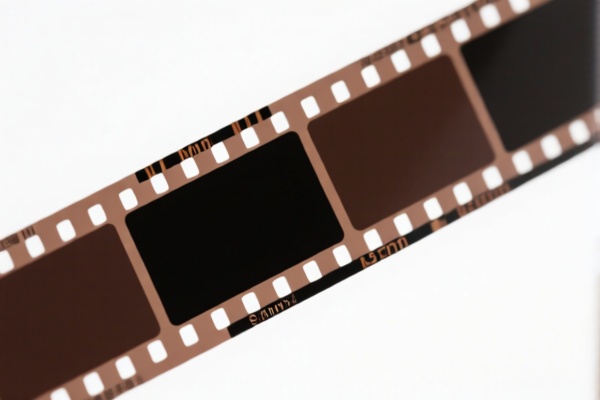
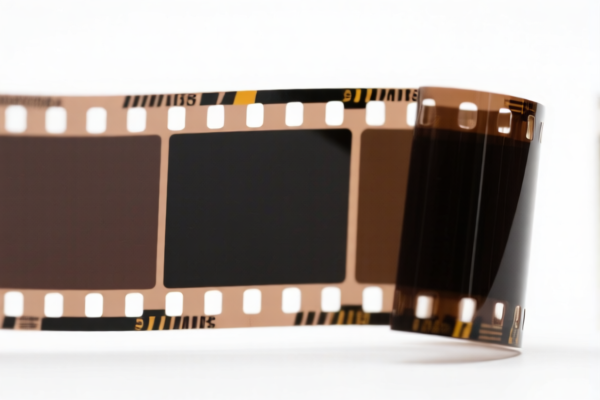
AI Analysis
🎞️ 35mm Reversal Color Film (For Recording)
🌐 HS Code Reference & Customs Clearance Guide | 2026 Latest Tariff Analysis | Professional Clearance Strategy
📌 I. Product Definition & Classification: What is "Reversal Color Film"?
35mm Reversal Color Film is a specialized photographic medium used for capturing high-fidelity, direct-positive images (slides). Unlike standard negative film, reversal film develops directly into the final visible image. In international trade, it is strictly classified under Chapter 37 (Photographic or Cinematographic Goods) based on its chemical nature, format (35mm), and intended use (recording/color photography).
⚠️ Critical Distinction:
- Reversal Film (Slide Film): Develops to positive images. Often classified under 3702 (Photographic Film in Rolls) or 3703 (Paper/Plate/Film for Imaging), depending on the specific chemical layering and official customs interpretation of "unexposed感光材料" (photosensitive materials).
- Negative Film: Develops to negative images. Usually falls under 3702.
- Digital "Recording": If the term "For Recording" implies digital data storage, this is NOT film. However, given the HS codes provided in the data, this is purely analogue photographic film.
📦 II. HS Code Classification Details (2026 Latest Tariff Authority Comparison)
Based on the provided data, there are 5 potential HS Code matches. The final classification depends on the specific customs authority's interpretation of "Reversal Film" vs. "Color Photography Material."
| HS Code | Product Description | Application Scenario | Tax Rate (Total) |
|---|---|---|---|
3702.55.00.30 |
Color Reversal Film (35mm) | Direct positive slide film; high-precision color reproduction | 35.0% |
3703.20.60.00 |
Color Photosensitive Material (Film) | Unexposed color film; broad category for color imaging | 38.1% |
3703.90.60.00 |
Other Photosensitive Materials | "Other" category for film/paper not specified elsewhere | 37.8% |
3701.91.00.30 |
Other Color Photography Products | Film considered as a general photography accessory/material | 38.7% |
3701.91.00.60 |
Other Color Photography Products | Similar to above; broader "Other" classification | 38.7% |
🔍 Key Insight:
-3702.55.00.30is the most precise match for "Reversal Color Film" as it explicitly mentions "Color Reversal Film" in the summary.
-3703.20.60.00and3703.90.60.00are broader categories for "Photosensitive Materials" and may be used if customs classifies the film as a raw material rather than a finished photographic good.
-3701.91.00.30/60are catch-all categories for "Other Color Photography Products," typically resulting in higher tariffs (38.7%).
💰 III. 2026 Latest Tariff Rate Breakdown (Including Surcharges)
✅ Applicable Country: United States (US)
✅ Origin: China (CN)
✅ Effective Date: 2025年11月10日起 (From November 10, 2025)
🎯 1. 3702.55.00.30 – Color Reversal Film (35mm) [RECOMMENDED]
| Item | Content |
|---|---|
| Base Tariff | 0.0% (Ad Valorem) |
| USITC Surcharge (Section 301) | +25.0% |
| IEEPA Surcharge (122 Clause) | +10.0% |
| Total Tax Rate | 35.0% |
| Tax Calculation | CIF Value × 35.0% |
| De Minimis Exemption | ❌ NOT APPLICABLE (deny_de_minimis) |
| Legal Basis Path | IEEPA:9903.01.25 → IEEPA:9903.01.24 → USITC:3702.55.00.30 → FOOTNOTE:9903.88.01 |
📌 Explanation:
- Base 0%: Reversal film often enjoys a low base tariff due to its niche industrial/artistic use.
- 25% + 10%: These are the heavy surcharges applied to Chinese-origin goods.
- Total 35%: This is the lowest total rate among the options, making it the most cost-effective if accurately classified.
🎯 2. 3703.20.60.00 – Color Photosensitive Material (Film)
| Item | Content |
|---|---|
| Base Tariff | 3.1% |
| USITC Surcharge | +25.0% |
| IEEPA Surcharge | +10.0% |
| Total Tax Rate | 38.1% |
| Tax Calculation | CIF Value × 38.1% |
| De Minimis Exemption | ❌ NOT APPLICABLE |
📌 Explanation:
- Higher base tariff (3.1%) pushes the total to 38.1%.
- Classified under "Other Color Photosensitive Materials."
🎯 3. 3703.90.60.00 – Other Photosensitive Materials
| Item | Content |
|---|---|
| Base Tariff | 2.8% |
| USITC Surcharge | +25.0% |
| IEEPA Surcharge | +10.0% |
| Total Tax Rate | 37.8% |
| Tax Calculation | CIF Value × 37.8% |
📌 Explanation:
- Slightly lower than3703.20but still higher than3702.55.
- Used for "Other" unspecified photosensitive materials.
🎯 4. 3701.91.00.30 & 3701.91.00.60 – Other Color Photography Products
| Item | Content |
|---|---|
| Base Tariff | 3.7% |
| USITC Surcharge | +25.0% |
| IEEPA Surcharge | +10.0% |
| Total Tax Rate | 38.7% |
| Tax Calculation | CIF Value × 38.7% |
📌 Explanation:
- These are the highest rate options (38.7%).
- Should only be used if the film cannot be classified under 3702 or 3703.
🛠️ IV. Customs Clearance Practical Advice (Avoid Pitfalls)
✅ 1. Documentation Checklist (Mandatory)
| Document | Required | Description |
|---|---|---|
| ✅ Product Specifications | ✔️ | Must clearly state "35mm Reversal Color Film," emulsion type, speed (ISO), and length. |
| ✅ Chemical Composition | ✔️ | Detail the photosensitive layers to justify classification under Chapter 37. |
| ✅ Commercial Invoice | ✔️ | Must explicitly describe as "Photographic Film for Recording" or "Reversal Film." |
| ✅ Certificate of Origin | ✔️ | Proof of Chinese origin to apply surcharges accurately. |
| ✅ Packaging List | ✔️ | Detail contents to avoid confusion with digital media. |
| ✅ Safety Data Sheet (SDS) | ✔️ | Required due to chemical nature of film. |
✅ 2. Declaration Tips (Key Strategy)
🔥 "Be Specific: 'Reversal Film' not just 'Film'!"
| Scenario | Correct Declaration | Incorrect Declaration |
|---|---|---|
| Slide Film | 3702.55.00.30 - "35mm Color Reversal Film" |
"Photographic Film" → Ambiguous, may lead to 3703 or 3701 (Higher Tax) |
| Negative Film | 3702.90.xx.xx (Check specific code) |
"Color Film" → Misleading if it's reversal |
| Digital Media | 8523.xx.xx |
"Recording Film" → CRITICAL ERROR: If it's digital, it's NOT film |
| Used/Exposed Film | 9603.xx.xx (Brooms/Brushes?) or Waste |
"New Film" → Contradiction, leads to seizure |
📌 Note:
- The phrase "For Recording" in the product name is acceptable but should be clarified as "Photographic Recording" (analog image capture), not data storage.
- If customs suspects it's digital, demand a pre-classification ruling.
✅ 3. Special Circumstances
| Situation | Handling Advice |
|---|---|
| OEM Custom Film | Provide customer order + design specs to prove it's a standard photographic good. |
| Bulk Imports | Ensure each roll is individually wrapped to prevent chemical damage and clarify quantity. |
| High-Value Artistic Film | Consider Advance Ruling to lock in 3702.55.00.30 (35% tax) instead of 38.7%. |
| Digital "Recording" Misinterpretation | If the buyer insists it's for "data," clarify it's for image data capture via analog film, not digital files. |
🌍 V. Global Market Comparison (2026 Latest)
| Country/Region | Recommended HS Code | Tariff | Certification | Notes |
|---|---|---|---|---|
| 🇺🇸 USA | 3702.55.00.30 |
35.0% | No special certs | High surcharges (25%+10%) |
| 🇨🇳 China | 3702.55.00.30 |
~5-10% | CCC (if applicable) | Lower base tariff |
| 🇪🇺 EU | 3702.55.00.30 |
0-6% | CE (if electronic) | No surcharges |
| 🇬🇧 UK | 3702.55.00.30 |
0-6% | UKCA | Post-Brexit rules apply |
| 🇦🇺 Australia | 3702.55.00.30 |
5% | RCM | Moderate tariff |
📌 Conclusion:
- USA is the most expensive market due to Section 301 and IEEPA surcharges.
- EU/UK are the most cost-effective for importing Chinese film.
- Strategy: If targeting the US, ensure accurate classification to avoid penalties and maximize the 35% rate (lowest among options).
📌 VI. Common Errors & Pitfalls (Lessons Learned)
❌ Error 1: Declaring "Color Film" without specifying "Reversal"
👉 Consequence: Customs may classify under 3703 (38.1%) or 3701 (38.7%) → 3.7% higher tax!
❌ Error 2: Using "Digital Recording Media" for Film
👉 Consequence: Seizure and Fine for misdeclaration. Film is analog, not digital.
❌ Error 3: Ignoring the "For Recording" Clause
👉 Consequence: Customs may ask for proof of use. Clarify it's for photographic image recording.
❌ Error 4: Not Providing SDS
👉 Consequence: Customs Hold due to chemical safety concerns.
✅ Correct Declaration Example:
"35mm Color Reversal Film (Slide Film), Unexposed, for Analog Photographic Recording, Chemical Emulsion on Polyester Base, Model XYZ, Non-Digital"
🎯 VII. Conclusion: Precision in Classification Saves Money!
🎯 Remember the Golden Rule:
🔹 "Reversal Film is
3702.55.00.30(35%), not3701(38.7%)!"
🔹 "Be Specific: 'Reversal' vs. 'Negative' vs. 'Other'."
🔹 "Digital ≠ Film. Don't confuse them!"
📌 Pro Tip:
- If your film is originating from Vietnam, Mexico, or Thailand, you may qualify for IEEPA Exemptions, reducing the tariff to 0-5%.
- Apply for an Advance Ruling before shipping to lock in the 35% rate and avoid customs disputes.
📣 Take Action Now:
📞 Contact a Professional Broker + Provide Product Photos + Apply for HS Code Pre-Ruling
🚀 Ensure Smooth Clearance, Minimize Costs, and Protect Your Profits!
✨ Professional Classification Starts with Precision!
💼 Every Penny of Tax Matters!
Customer Reviews
About HS Code Classification
The Harmonized System (HS) is an internationally standardized nomenclature developed by the World Customs Organization (WCO) to classify traded products. Over 200 countries use the HS system as the basis for customs tariffs, trade statistics, and import/export regulations.
Each HS code follows a hierarchical structure:
- Chapter (2 digits) — Broad category of goods (e.g., Chapter 84: Machinery and Mechanical Appliances)
- Heading (4 digits) — More specific grouping within the chapter
- Subheading (6 digits) — Internationally standardized breakdown, used by all WCO member countries
- National subdivisions (8-10 digits) — Country-specific extensions for further classification, such as US HTSUS 10-digit codes
Correct HS code classification is essential for smooth customs clearance, accurate duty payment, and compliance with trade regulations. Misclassification can lead to customs delays, overpayment of duties, or penalties.
When importing from CN to US, the applicable tariff rates may include:
- Most-Favored-Nation (MFN) rate — The standard duty rate applied to WTO members
- General rate — Applied to countries without trade agreements
- Trade remedy duties — Additional tariffs such as Section 301 (anti-dumping), Section 232 (national security), or countervailing duties
The information provided on this page is for reference purposes only. For official classification, please consult with your local customs authority or a licensed customs broker.