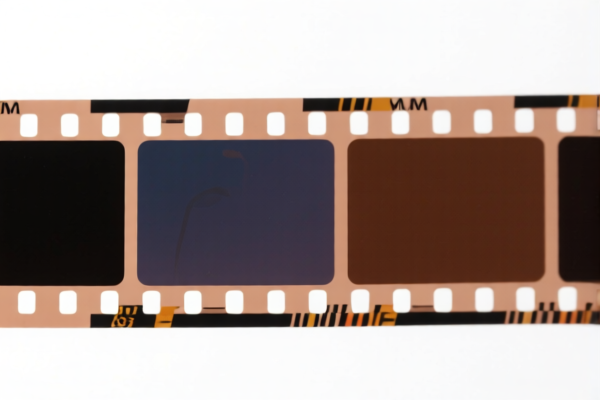
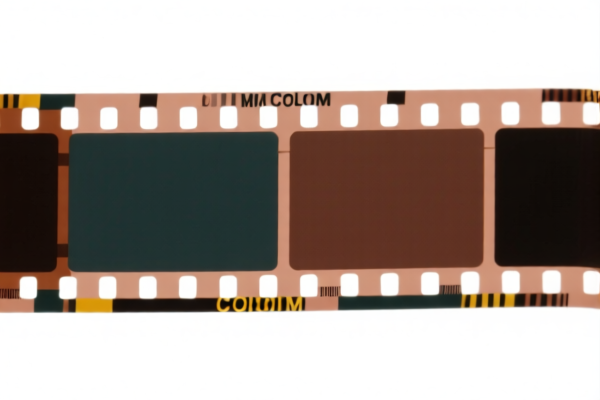
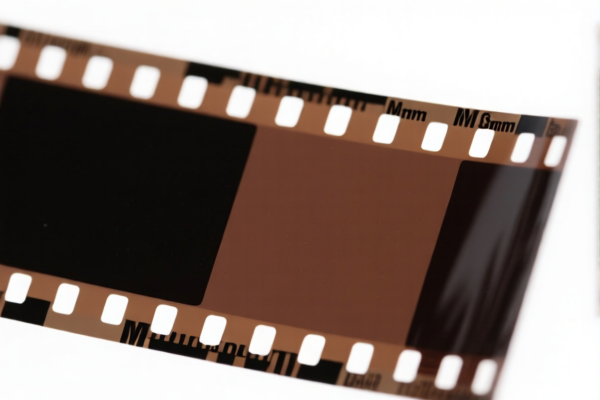
35mm film art film
CN → US| HS Code | Tariff Rate | Origin | Destination | Doc |
|---|---|---|---|---|
| 3702530030 | 38.7% | CN | US | Official Doc |
| 3702540030 | 38.7% | CN | US | Official Doc |
Product Images

AI Analysis
🎞️ 35mm Film Art Film (Cinematic & Photographic)
🌐 HS Code Reference & Customs Clearance Guide | 2026 Latest Tariff Analysis | Professional Clearance Strategy
📌 I. Product Definition: What Exactly is "35mm Film Art Film"?
In international trade, "35mm Film" is not a single monolithic category. It is strictly divided based on its state of exposure and chemical composition. The term "Art Film" usually implies high-quality cinematographic or photographic material, but customs authorities care about the physical state of the emulsion.
There are two primary classifications for 35mm film: 1. Unexposed/Processed Film Stock: The raw material used by filmmakers/photographers. 2. Photographic Sensitizers/Emulsions: The chemical liquids or coatings applied to the film base (often traded as raw industrial inputs).
⚠️ Key Distinction Point:
- If the film is already exposed and developed (visible images) → It is treated as a processed good (Finished Product).
- If the film is blank (ready to shoot) → It is treated as sensitized material.
- If you are trading the chemical emulsion itself (not on a reel) → It is treated as a chemical intermediate.
📦 II. HS Code Classification Details (2026 Latest Tariff Authority Mapping)
Based on the provided data, here are the exact HS Codes for 35mm Art/Cinematic Film products:
| HS Code | Product Description (Summary) | Applicable Scenario | State of Product |
|---|---|---|---|
3706.10.60.60 |
35mm width, exposed and developed motion picture film | Finished film reels with images; archival footage; processed art films | ✅ Exposed/Developed |
3706.10.60.30 |
35mm width, motion picture film (generic/unspecified) | Unexposed 35mm cinema stock; raw film reels ready for shooting | ❌ Unexposed |
3707.10.00.90 |
Sensitizers or sensitized materials for color photography | Chemical emulsions; liquids/coatings used in film manufacturing | 🧪 Chemical/Intermediate |
3707.10.00.05 |
Color negative type sensitized materials | Specific color negative emulsions for industrial/photographic use | 🧪 Chemical/Intermediate |
3701.91.00.60 |
35mm color photographic film, non-paper/non-textile base | Standard photographic negatives/positives on plastic base | 📷 Photographic Roll/Reel |
🔍 Critical Alert:
- Do not confuse3706(Finished Film) with3707(Chemicals). Misdeclaring a chemical emulsion as a finished film (or vice versa) leads to severe penalties. -3706.10.60.60is the ONLY code for "Exposed/Developed" film. If you ship a reel that has already been shot and developed, this is the mandatory code.
💰 III. 2026 Latest Tariff Rate Breakdown (Including Surtaxes & Policy Add-ons)
✅ Applicable Country: United States (US)
✅ Origin: China (CN)
✅ Effective Date: Post-2025 (Current 2026 Framework)
🎯 1. 3706.10.60.60 —— 35mm Exposed & Developed Motion Picture Film
| Item | Content |
|---|---|
| Base Tariff | 0.0% (ad valorem) |
| USITC Surtax (Section 301) | +25.0% |
| IEEPA Surtax (Section 122) | +10.0% |
| Total Tax Rate | 35.0% |
| Tax Calculation | CIF Value × 35% |
| De Minimis Exemption | ❌ Not Eligible (High tariff rate excludes low-value shipments) |
| Legal Path | USITC:3706.10.60.60 → FOOTNOTE:301 → IEEPA:122 |
📌 Explanation:
- Although the base tariff is 0%, the combination of Section 301 tariffs (25%) and the specific 122 Clause tariffs (10%) results in a heavy 35% burden. - This code applies specifically to 35mm width. Any deviation in width changes the classification entirely.
🎯 2. 3706.10.60.30 —— 35mm Motion Picture Film (Unexposed/Blank)
| Item | Content |
|---|---|
| Base Tariff | 0.0% |
| USITC Surtax (Section 301) | +25.0% |
| IEEPA Surtax (Section 122) | +10.0% |
| Total Tax Rate | 35.0% |
| Tax Calculation | CIF Value × 35% |
| De Minimis Exemption | ❌ Not Eligible |
| Legal Path | USITC:3706.10.60.30 → FOOTNOTE:301 → IEEPA:122 |
📌 Note:
- Identical tariff structure to the exposed film code above. - Applies to all 35mm cinema stock regardless of brand (Kodak, Fuji, etc.), provided it is for motion pictures.
🎯 3. 3707.10.00.90 & 3707.10.00.05 —— Color Photographic Sensitizers/Emulsions
| Item | Content |
|---|---|
| Base Tariff | 3.0% |
| USITC Surtax (Section 301) | +25.0% |
| IEEPA Surtax (Section 122) | +10.0% |
| Total Tax Rate | 38.0% |
| Tax Calculation | CIF Value × 38% |
| De Minimis Exemption | ❌ Not Eligible |
| Legal Path | USITC:3707.10.00.xx → FOOTNOTE:301 → IEEPA:122 |
📌 Distinction:
-3707.10.00.90: General "Sensitizers or sensitized materials for color photography." -3707.10.00.05: Specifically "Color negative type sensitized materials." - Both carry a 3% base duty (unlike the 0% for film reels), making the total 38%.
🎯 4. 3701.91.00.60 —— 35mm Color Photographic Film (Non-Paper/Textile)
| Item | Content |
|---|---|
| Base Tariff | 3.7% |
| USITC Surtax (Section 301) | +25.0% |
| IEEPA Surtax (Section 122) | +10.0% |
| Total Tax Rate | 38.7% |
| Tax Calculation | CIF Value × 38.7% |
| De Minimis Exemption | ❌ Not Eligible |
| Legal Path | USITC:3701.91.00.60 → FOOTNOTE:301 → IEEPA:122 |
📌 Warning:
- This code is for 35mm color photographic film (still photography) on non-paper bases. - It has the highest total tax rate (38.7%) among all listed codes due to the higher base tariff (3.7%). - Do not use this for motion picture (cinema) film; use3706instead.
🛠️ IV. Customs Clearance Practical Advice (Avoiding Pitfalls)
✅ 1. Documentation Checklist (Mandatory)
| Document | Required | Explanation |
|---|---|---|
| ✅ Commercial Invoice | ✔️ | Must explicitly state "35mm Motion Picture Film" or "Sensitized Film Stock". Avoid vague terms like "Art Supplies." |
| ✅ Product Specification Sheet | ✔️ | Must confirm width is exactly 35mm and specify if it is exposed/developed or unexposed. |
| ✅ Photos of the Product | ✔️ | Show the canister/spool and any labels indicating exposure status. |
| ✅ Material Safety Data Sheet (MSDS) | ✔️ | Required for 3707 (chemicals) to verify flammability and chemical composition. |
| ✅ Certificate of Origin (CO) | ✔️ | Essential for claiming any potential FTA benefits (though rare for these codes) and verifying CN origin. |
✅ 2. Declaration Strategy (Key Rules)
🔥 "Width Matters, Exposure Defines!"
| Scenario | Correct HS Code | Common Mistake | Consequence |
|---|---|---|---|
| Finished Movie Reel (Images visible) | 3706.10.60.60 |
Declaring as 3706.10.60.30 (Unexposed) |
Penalty: Misdeclaration of "Exposed" status. |
| Blank Cinema Stock | 3706.10.60.30 |
Declaring as 3701 (Photographic) |
Penalty: Wrong classification (Photo vs. Cinema). |
| 35mm Photo Negatives (Still Camera) | 3701.91.00.60 |
Declaring as 3706 (Motion Picture) |
Penalty: Higher tax (38.7% vs 35% or vice versa depending on base). |
| Liquid Emulsion (Not on reel) | 3707.10.00.90 |
Declaring as "Film" | Penalty: Hazardous material misdeclaration. |
✅ 3. Special Handling Tips
| Situation | Recommendation |
|---|---|
| "Art Film" Branding | Do not declare as "Artwork" (Chapter 97). It is a photographic good (Chapter 37). |
| 35mm Width Variation | If the width is not 35mm (e.g., 16mm or 70mm), the codes above do not apply. Check other subheadings. |
| Sample Shipments | Even small samples of 35mm film are subject to the 35%-38.7% tariff. De minimis does not apply. |
| Chemical Stability | For 3707 codes, ensure proper packaging to prevent leakage during transit. Customs may inspect for hazardous materials. |
🌍 V. Global Market Comparison (2026 Overview)
| Country/Region | Recommended HS Code (Example) | Est. Total Tax (China Origin) | Key Requirement |
|---|---|---|---|
| 🇺🇸 USA | 3706.10.60.60 / 3706.10.60.30 |
35.0% | IEEPA 122 + 301 Surtax |
| 🇪🇺 EU | 3706.10 (General) |
~0% - 3% | No 301/122 surtaxes. Standard MFN rates. |
| 🇨🇳 China | 3706.10 |
0% - 5% | Domestic trade or import into China. |
| 🇬🇧 UK | 3706.10 |
~0% - 5% | Post-Brexit standard rates. |
📌 Conclusion:
- The US market is exceptionally expensive for 35mm film due to the叠加 (stacking) of Base + 301 + 122 tariffs. - EU and UK markets are significantly more cost-effective, with no political surtaxes. - If you are importing into the US, price your product accordingly or consider sourcing from non-China origins to avoid IEEPA surtaxes.
📌 VI. Common Errors & Pitfalls (Lessons Learned)
❌ Error 1: Declaring "Exposed" film as "Unexposed" to avoid scrutiny.
👉 Consequence: Customs will inspect. If images are found, penalties and back-taxes apply.
❌ Error 2: Using 3701 (Photographic) for Cinematography Film (3706).
👉 Consequence: 3701 has a higher base duty (3.7% vs 0%), leading to overpayment or underpayment if misdeclared incorrectly.
❌ Error 3: Ignoring the 35mm width specification.
👉 Consequence: If the width is ambiguous, customs may default to higher-duty categories or seize the goods for reclassification.
✅ Correct Declaration Example:
"35mm Motion Picture Film, Unexposed, Plastic Base, 400ASA, for Cinematography, HS Code 3706.10.60.30"
🎯 VII. Conclusion: Professional Clearance for Film Imports
🎯 Remember These Rules:
🔹 "Exposed vs. Unexposed changes the code!"
🔹 "35mm width is critical for 3706 classification."
🔹 "US Tariff = 35% (Film) or 38.7% (Photo). Plan your margins!"
📌 Pro Tip:
If you are importing large volumes of 35mm film for art production, consider applying for an Exclusion from Section 301 tariffs (if available) or verify if your specific film brand qualifies for any historical exemptions. Always consult a licensed customs broker for the final declaration.
📣 Immediate Action:
📞 Contact a customs broker with your Product Spec Sheet.
📦 Ensure your invoice clearly states "35mm Width" and "Exposed/Unexposed" status.
🚀 Smooth clearance ensures your art film arrives on time and within budget!
✨ Precision in Classification, Efficiency in Clearance!
💼 Your film is fragile; your paperwork must be stronger!
Customer Reviews
About HS Code Classification
The Harmonized System (HS) is an internationally standardized nomenclature developed by the World Customs Organization (WCO) to classify traded products. Over 200 countries use the HS system as the basis for customs tariffs, trade statistics, and import/export regulations.
Each HS code follows a hierarchical structure:
- Chapter (2 digits) — Broad category of goods (e.g., Chapter 84: Machinery and Mechanical Appliances)
- Heading (4 digits) — More specific grouping within the chapter
- Subheading (6 digits) — Internationally standardized breakdown, used by all WCO member countries
- National subdivisions (8-10 digits) — Country-specific extensions for further classification, such as US HTSUS 10-digit codes
Correct HS code classification is essential for smooth customs clearance, accurate duty payment, and compliance with trade regulations. Misclassification can lead to customs delays, overpayment of duties, or penalties.
When importing from CN to US, the applicable tariff rates may include:
- Most-Favored-Nation (MFN) rate — The standard duty rate applied to WTO members
- General rate — Applied to countries without trade agreements
- Trade remedy duties — Additional tariffs such as Section 301 (anti-dumping), Section 232 (national security), or countervailing duties
The information provided on this page is for reference purposes only. For official classification, please consult with your local customs authority or a licensed customs broker.