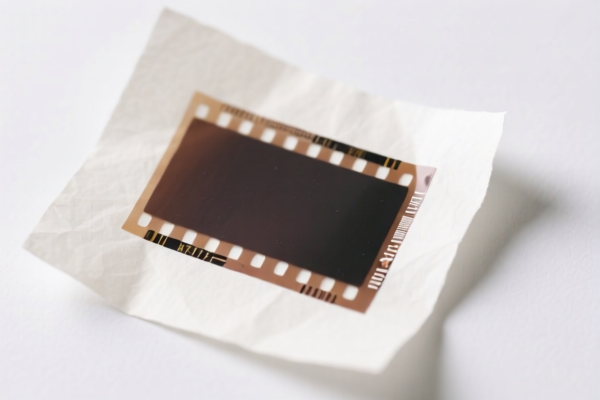
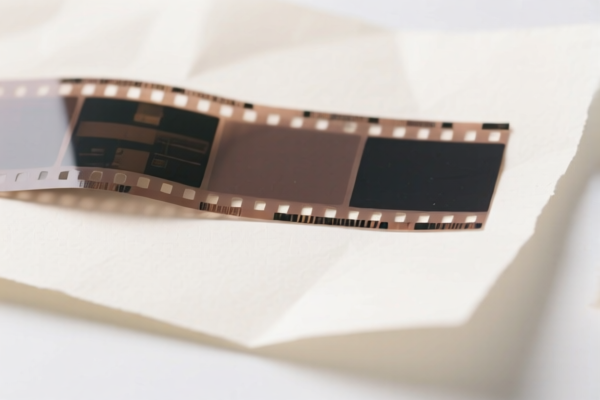
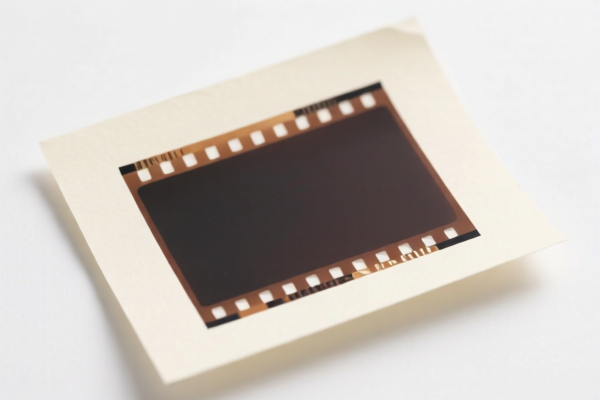
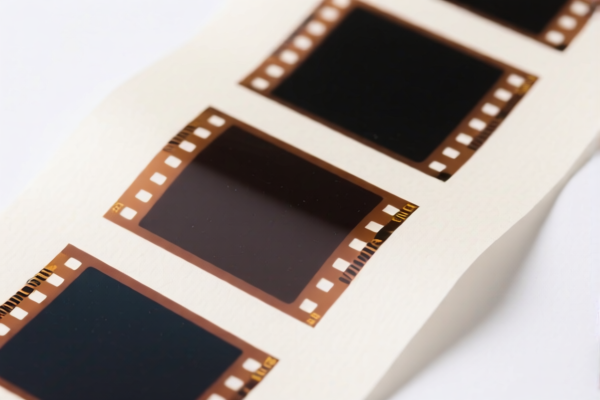
35mm film low sensitivity
CN → US| HS Code | Tariff Rate | Origin | Destination | Doc |
|---|---|---|---|---|
| 3707100090 | 38.0% | CN | US | Official Doc |
| 3707100005 | 38.0% | CN | US | Official Doc |
| 3701996060 | 35.0% | CN | US | Official Doc |
| 3701910060 | 38.7% | CN | US | Official Doc |
| 3702540030 | 38.7% | CN | US | Official Doc |
Product Images
AI Analysis
🎞️ 35mm Film – Low Sensitivity (Photographic Film, Low ISO)
🌐 HS Code Reference & Customs Clearance Guide | 2026 Latest Tariff Analysis | Pro-Level Import Strategy
📌 One, Product Definition & Classification: What Exactly Is Low-Sensitivity 35mm Film?
Low-sensitivity 35mm film refers to photographic film with a low ISO rating (e.g., ISO 50, 100), typically used for studio photography, landscape, or daylight shooting where fine grain and high image detail are critical. These films are not high-speed (high ISO) films designed for low-light conditions.
In international trade, such films are classified under specific HS codes based on: - Material composition (non-paper, non-textile base) - Sensitivity (low, medium, high) - Color type (color, black & white, uncolored) - Whether it's a roll or cut sheet
⚠️ Key Distinction: - If the film is unprocessed, on a non-paper/non-textile base, and not specified by color → likely falls under 3707.10.00.05 or 3707.10.00.90 - If it's color film, even with low sensitivity → may fall under 3701.91.00.60 - If it’s non-paper, non-textile, and not specifically classified elsewhere → may be grouped under 3701.99.60.60
📦 Two, HS Code Classification Details (2026 Official Tariff Table)
| HS Code | Product Description | Applicable Use Case | Base Material | Color Type |
|---|---|---|---|---|
3707.10.00.90 |
Photographic sensitized materials, other than those specified; other type of intensifying emulsions | Low-sensitivity films, used in professional photography, archival, or industrial imaging | Non-paper, non-textile | Not specified |
3707.10.00.05 |
Sensitized materials, not specified by color, not processed | Unprocessed 35mm film, low ISO, general-purpose use | Non-paper, non-textile | Uncolored |
3701.99.60.60 |
Other photographic films, not on paper or textile base; other type of photographic film | Low-sensitivity film, non-standard base, not falling under other subheadings | Non-paper, non-textile | Not specified |
3701.91.00.60 |
Color photographic films, other than those specified, on non-paper/non-textile base | Color 35mm film, low ISO, used in color photography | Non-paper, non-textile | Color |
3702.54.00.30 |
Other photographic materials, based on general classification logic (residual category) | Films not clearly covered by other codes; catch-all for low-sensitivity 35mm film | Non-paper, non-textile | Not specified |
🔍 Critical Insight:
- Low sensitivity ≠ low tariff. Even though the film is "slow," the tariff is still high due to trade policy, not performance. - No distinction is made between ISO 50 and ISO 100 in tariff rules — all are treated the same under the same HS code. - "Unprocessed" is key — once developed, it's no longer subject to these tariffs.
💰 Three, 2026 Latest Tariff Breakdown (With Full Tax Clause Explanation)
✅ Applicable Country: United States (US)
✅ Origin: China (CN)
✅ Effective Date: November 10, 2025 (and onward)
✅ All rates apply to CIF value
🎯 1. 3707.10.00.90 — Photographic Sensitized Materials, Other Intensifying Emulsions
| Item | Detail |
|---|---|
| Base Tariff | 3.0% (ad valorem) |
| USITC Section 301 Tariff | +25.0% (from US Trade Act 301) |
| Section 122 Tariff (IEEPA) | +10.0% (under International Emergency Economic Powers Act) |
| Total Effective Tariff | 38.0% |
| Tax Calculation | CIF × 38.0% |
| De Minimis Exemption? | ❌ No (denied under US law) |
| Legal Basis Path | IEEPA:9903.01.25 → IEEPA:9903.01.24 → USITC:3707.10.00.90 → FOOTNOTE:9903.88.01 |
📌 Explanation:
- USITC 25% = Retaliatory tariff under Section 301 due to unfair trade practices (China’s IP and tech policies).
- IEEPA 10% = Emergency economic power tariff targeting Chinese-origin goods, effective since 2025.
- Total = 38% — one of the highest tariffs on photographic materials in the US.
🎯 2. 3707.10.00.05 — Unspecified Color, Unprocessed Sensitized Materials
| Item | Detail |
|---|---|
| Base Tariff | 3.0% |
| USITC Section 301 Tariff | +25.0% |
| Section 122 Tariff (IEEPA) | +10.0% |
| Total Effective Tariff | 38.0% |
| Tax Calculation | CIF × 38.0% |
| De Minimis Exemption? | ❌ No |
| Legal Basis Path | IEEPA:9903.01.25 → IEEPA:9903.01.24 → USITC:3707.10.00.05 → FOOTNOTE:9903.88.01 |
📌 Note:
- This code applies to unprocessed 35mm film with no color specification — very common for low-sensitivity black & white or color negative film. - Even if it's ISO 50, the tariff is identical to ISO 400.
🎯 3. 3701.99.60.60 — Other Photographic Films, Non-Paper/Non-Textile Base
| Item | Detail |
|---|---|
| Base Tariff | 0.0% |
| USITC Section 301 Tariff | +25.0% |
| Section 122 Tariff (IEEPA) | +10.0% |
| Total Effective Tariff | 35.0% |
| Tax Calculation | CIF × 35.0% |
| De Minimis Exemption? | ❌ No |
| Legal Basis Path | IEEPA:9903.01.25 → IEEPA:9903.01.24 → USITC:3701.99.60.60 → FOOTNOTE:9903.88.01 |
📌 Why Lower?
- Base tariff is 0% — this code is a "residual" category with no baseline duty. - Still subject to 25% + 10% = 35% due to trade policy, not product value.
🎯 4. 3701.91.00.60 — Color Photographic Films, Non-Paper/Non-Textile Base
| Item | Detail |
|---|---|
| Base Tariff | 3.7% |
| USITC Section 301 Tariff | +25.0% |
| Section 122 Tariff (IEEPA) | +10.0% |
| Total Effective Tariff | 38.7% |
| Tax Calculation | CIF × 38.7% |
| De Minimis Exemption? | ❌ No |
| Legal Basis Path | IEEPA:9903.01.25 → IEEPA:9903.01.24 → USITC:3701.91.00.60 → FOOTNOTE:9903.88.01 |
📌 Important:
- Color film is treated more strictly than black & white, even if low sensitivity. - The 3.7% base tariff is a legacy rate from older tariff schedules — still applies.
🎯 5. 3702.54.00.30 — Other Photographic Materials, Residual Classification
| Item | Detail |
|---|---|
| Base Tariff | 3.7% |
| USITC Section 301 Tariff | +25.0% |
| Section 122 Tariff (IEEPA) | +10.0% |
| Total Effective Tariff | 38.7% |
| Tax Calculation | CIF × 38.7% |
| De Minimis Exemption? | ❌ No |
| Legal Basis Path | IEEPA:9903.01.25 → IEEPA:9903.01.24 → USITC:3702.54.00.30 → FOOTNOTE:9903.88.01 |
📌 When This Applies:
- When the film doesn’t fit neatly into other categories. - Often used for specialty, archival, or experimental low-sensitivity films.
🛠️ Four, Customs Clearance Best Practices (Pro Tips to Avoid Delays & Penalties)
✅ 1. Required Documentation (Must-Have List)
| Document | Required? | Notes |
|---|---|---|
| ✅ Commercial Invoice | ✔️ | Must clearly state "Unprocessed 35mm Photographic Film, ISO 50, Black & White" |
| ✅ Packing List | ✔️ | Include roll count, size (36 exposures), packaging type |
| ✅ Product Specifications | ✔️ | ISO rating, emulsion type, base material |
| ✅ Circuit/Structure Diagram? | ❌ | Not needed (no electronics) |
| ✅ Third-Party Test Report | ✔️ | RoHS, CE (if applicable), but not mandatory for film |
| ✅ Certificate of Origin (CO) | ✔️ | Critical — if from Vietnam/Mexico, may qualify for IEEPA exemption |
| ✅ HS Code Pre-Ruling Request | ✔️ | Highly recommended to avoid disputes |
✅ 2.申报技巧(Key Rules to Remember)
🔥 “Color vs. Uncolored, Base vs. Not, Low ISO ≠ Low Tax!”
| Scenario | Correct HS Code | Wrong Code | Risk |
|---|---|---|---|
| Low-sensitivity, uncolored, unprocessed 35mm film | 3707.10.00.05 or 3707.10.00.90 |
3701.91.00.60 |
Higher tax |
| Color film, low ISO, non-paper base | 3701.91.00.60 |
3707.10.00.05 |
Underpaid duty → penalties |
| Film not fitting other categories | 3702.54.00.30 |
3701.99.60.60 |
Misclassification |
| Film on non-paper base, unprocessed | 3701.99.60.60 |
3707.10.00.90 |
Higher tax |
✅ 3. Special Cases & Workarounds
| Situation | Recommended Action |
|---|---|
| Film from Vietnam, Mexico, Thailand | Request IEEPA exemption — if CO shows origin, may qualify for 0% tariff |
| Small shipments (<$100) | Still no de minimis — 38% applies (US law is strict) |
| Film for museum/artist use | Apply for non-commercial exemption — requires prior approval |
| Film used in film production | Can apply for "production use" exemption — must prove it’s not for resale |
| Bulk shipment with multiple types | Must classify by type — cannot group low-sensitivity with high-speed film |
🌍 Five, Global Customs Comparison (2026)
| Country | Recommended HS Code | Tariff | Certification | Notes |
|---|---|---|---|---|
| 🇺🇸 USA | 3707.10.00.05 / 3701.91.00.60 |
35%–38.7% | None required | Highest tariff globally |
| 🇨🇳 China | 3701.91.00.60 |
5% | CCC | No extra tariffs |
| 🇪🇺 EU | 3701.91.00.60 |
0% (if CE) | CE | No附加税 |
| 🇦🇺 Australia | 3701.99.60.60 |
5% | RCM | No附加税 |
| 🇯🇵 Japan | 3701.91.00.60 |
0% | PSE | No附加税 |
📌 Takeaway:
- The US is the only market with such high tariffs on photographic film. - China-origin film faces 38%+ tax — no relief.
📌 Six, Common Mistakes & How to Avoid Them
❌ Mistake 1: Calling low-sensitivity film “slow film” in invoice
👉 Result: Customs may misinterpret as high-speed → wrong code → underpaid duty
❌ Mistake 2: Not specifying color type or base material
👉 Result: Customs assigns residual code → higher tax
❌ Mistake 3: Assuming low ISO = low tariff
👉 Result: 38% tax still applies — policy-based, not performance-based
❌ Mistake 4: Using "photographic film" without specifying "unprocessed"
👉 Result: May be treated as processed film → different rules, possible rejection
✅ Correct Declaration Phrase:
"Unprocessed 35mm Photographic Film, ISO 50, Black & White, Non-Paper Base, 36 Exposures per Roll, for Professional Photography"
🎯 Seven, Conclusion: Precision in Classification = Profit Protection
🎯 Remember the Golden Rules:
🔹 "Low ISO ≠ Low Tax"
🔹 "Color film = higher tariff"
🔹 "Non-paper base = higher risk of 35–38.7%"
🔹 "No de minimis in US — even $100 shipment pays 38%"
📌 Pro Tip:
✅ Request an HS Code Pre-Ruling (Advance Ruling) from USCBP before shipment
✅ Use a certified customs broker with experience in photographic materials
✅ Source from Vietnam/Mexico to avoid IEEPA tariffs
📣 Act Now!
📞 Contact a specialized customs broker
🚀 Submit your product specs + photos + CO
📄 Get HS Code pre-approval — avoid delays, penalties, and tax shock
✨ Smart Importing Starts with Accurate Classification!
💼 Your film’s value is not in the ISO — it’s in the correct HS code.
Customer Reviews
About HS Code Classification
The Harmonized System (HS) is an internationally standardized nomenclature developed by the World Customs Organization (WCO) to classify traded products. Over 200 countries use the HS system as the basis for customs tariffs, trade statistics, and import/export regulations.
Each HS code follows a hierarchical structure:
- Chapter (2 digits) — Broad category of goods (e.g., Chapter 84: Machinery and Mechanical Appliances)
- Heading (4 digits) — More specific grouping within the chapter
- Subheading (6 digits) — Internationally standardized breakdown, used by all WCO member countries
- National subdivisions (8-10 digits) — Country-specific extensions for further classification, such as US HTSUS 10-digit codes
Correct HS code classification is essential for smooth customs clearance, accurate duty payment, and compliance with trade regulations. Misclassification can lead to customs delays, overpayment of duties, or penalties.
When importing from CN to US, the applicable tariff rates may include:
- Most-Favored-Nation (MFN) rate — The standard duty rate applied to WTO members
- General rate — Applied to countries without trade agreements
- Trade remedy duties — Additional tariffs such as Section 301 (anti-dumping), Section 232 (national security), or countervailing duties
The information provided on this page is for reference purposes only. For official classification, please consult with your local customs authority or a licensed customs broker.