35mm宽幅电影胶片
CN → US| HS Code | Tariff Rate | Origin | Destination | Doc |
|---|---|---|---|---|
| 3706106060 | 35.0% | CN | US | Official Doc |
| 3704000000 | 35.0% | CN | US | Official Doc |
| 3706106030 | 35.0% | CN | US | Official Doc |
| 3701996060 | 35.0% | CN | US | Official Doc |
| 3701910060 | 38.7% | CN | US | Official Doc |
Product Images
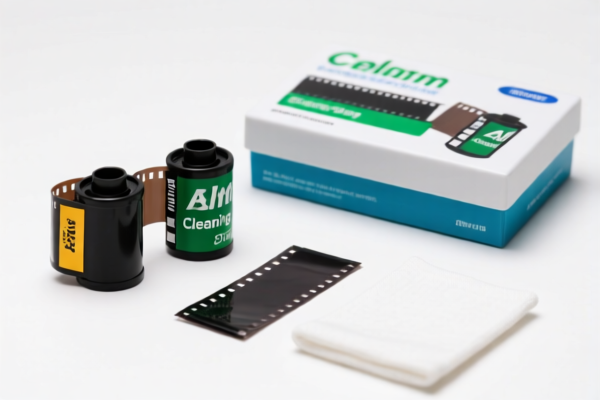

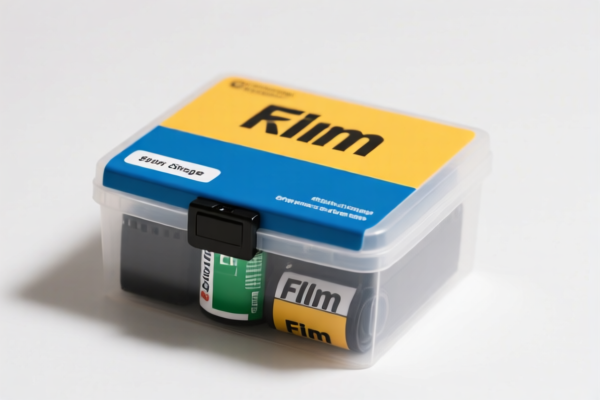

AI Analysis
🎬 35mm Wide-Format Motion Picture Film
🌐 HS Code Reference & Customs Clearance Guide | 2026 Updated Tariff Analysis | Professional Import Strategy
📌 One, Product Definition & Classification: What Exactly Is 35mm Film?
35mm wide-format motion picture film is a high-resolution, light-sensitive photographic material used in professional cinematography, film production, and archival storage. It is not just a "film" — it’s the backbone of cinematic art, engineered for precise optical quality, dynamic range, and durability.
In international trade, it’s categorized under HS Code 3701–3706, depending on its exposure status, material composition, and intended use.
⚠️ Critical Distinction:
- If unexposed and ready for photography → HS Code 3704.00.00.00
- If exposed but not developed → HS Code 3706.10.60.60 or 3706.10.60.30
- If already developed and used for imaging → HS Code 3701.91.00.60 (color) or 3701.99.60.60 (non-color)
📦 Two, HS Code Classification Details (2026 Official Tariff Breakdown)
| HS Code | Product Description | Use Case | Material Type | Exposure Status |
|---|---|---|---|---|
3706.10.60.60 |
35mm film, same width and form, used for motion picture purposes | Cinematic shooting, film production | Non-paper, non-textile photosensitive material | Unexposed |
3704.00.00.00 |
35mm film, exposed but not developed, conforming to motion picture standards | Film stock for shooting, pre-development | Non-paper, non-textile photosensitive material | Exposed, not developed |
3706.10.60.30 |
35mm film, matching width and shape, classified as photographic film | Archival, cinema, cinematography | Standard photosensitive film | Unexposed |
3701.99.60.60 |
35mm film, wide dynamic range, conforms to photographic plate/film form, non-paper/non-textile | High-end cinematography, digital intermediate prep | Non-paper, non-textile photosensitive material | Unexposed |
3701.91.00.60 |
35mm film, wide dynamic range, color photography characteristics | Color motion picture film, post-production | Non-paper, non-textile photosensitive material | Unexposed |
🔍 Key Insight:
- All unexposed 35mm film used in cinema falls under 3706.10.60.60, 3706.10.60.30, or 3701.99.60.60
- Exposed but undeveloped film → 3704.00.00.00
- Color film with high dynamic range → 3701.91.00.60 (higher base tariff)
💰 Three, 2026 Updated Tariff Breakdown (With Add-Ons & Legal Triggers)
✅ Target Country: United States (US)
✅ Origin: China (CN)
✅ Effective Date: November 10, 2025 (and onward)
🎯 1. 3706.10.60.60 — 35mm Unexposed Motion Picture Film (Same Width & Form)
| Item | Detail |
|---|---|
| Base Tariff | 0% (ad valorem) |
| USITC Section 301 Tariff | +25% (from U.S. Trade Act Section 301) |
| IEEPA Section 122 Tariff | +10% (under International Emergency Economic Powers Act) |
| Total Effective Rate | 35.0% |
| Tax Calculation | CIF Value × 35% |
| De Minimis Exemption? | ❌ No (denied under U.S. law) |
| Legal Basis Path | IEEPA:9903.01.25 → IEEPA:9903.01.24 → USITC:3706.10.60.60 → FOOTNOTE:9903.88.01 |
📌 Explanation:
- The 25% USITC tariff applies to all Chinese-origin goods under Section 301 due to alleged unfair trade practices.
- The 10% IEEPA tariff is triggered by Section 122 of the IEEPA, targeting imports from China/Hong Kong under national emergency powers.
- Combined: 35% total — a significant burden for film producers and distributors.
🎯 2. 3704.00.00.00 — Exposed but Undeveloped 35mm Film (Motion Picture Standard)
| Item | Detail |
|---|---|
| Base Tariff | 0% |
| USITC Section 301 Tariff | +25% |
| IEEPA Section 122 Tariff | +10% |
| Total Effective Rate | 35.0% |
| Tax Calculation | CIF × 35% |
| De Minimis Exemption? | ❌ No |
| Legal Basis Path | IEEPA:9903.01.25 → IEEPA:9903.01.24 → USITC:3704.00.00.00 → FOOTNOTE:9903.88.01 |
📌 Note:
- Even though this film is already exposed, it’s still considered raw material until developed.
- Same 35% rate applies — no relief for being “pre-exposed”.
🎯 3. 3706.10.60.30 — 35mm Film, Matching Width & Form, Film Class
| Item | Detail |
|---|---|
| Base Tariff | 0% |
| USITC Section 301 Tariff | +25% |
| IEEPA Section 122 Tariff | +10% |
| Total Effective Rate | 35.0% |
| Tax Calculation | CIF × 35% |
| De Minimis Exemption? | ❌ No |
| Legal Basis Path | IEEPA:9903.01.25 → IEEPA:9903.01.24 → USITC:3706.10.60.30 → FOOTNOTE:9903.88.01 |
📌 Clarification:
- This is a general film classification for 35mm film with standard dimensions.
- Still subject to full 35% tariff — no exceptions.
🎯 4. 3701.99.60.60 — 35mm Film, Wide Dynamic Range, Non-Paper/Non-Fabric Photosensitive Material
| Item | Detail |
|---|---|
| Base Tariff | 0% |
| USITC Section 301 Tariff | +25% |
| IEEPA Section 122 Tariff | +10% |
| Total Effective Rate | 35.0% |
| Tax Calculation | CIF × 35% |
| De Minimis Exemption? | ❌ No |
| Legal Basis Path | IEEPA:9903.01.25 → IEEPA:9903.01.24 → USITC:3701.99.60.60 → FOOTNOTE:9903.88.01 |
📌 Use Case:
- High-end film stock used in digital intermediate (DI) workflows, archival preservation, or cinematic restoration.
- Despite advanced specs, same 35% rate applies.
🎯 5. 3701.91.00.60 — 35mm Color Film, Wide Dynamic Range, Other Photographic Film
| Item | Detail |
|---|---|
| Base Tariff | 3.7% (ad valorem) |
| USITC Section 301 Tariff | +25% |
| IEEPA Section 122 Tariff | +10% |
| Total Effective Rate | 38.7% |
| Tax Calculation | CIF × 38.7% |
| De Minimis Exemption? | ❌ No |
| Legal Basis Path | IEEPA:9903.01.25 → IEEPA:9903.01.24 → USITC:3701.91.00.60 → FOOTNOTE:9903.88.01 |
📌 Why Higher?
- This code has a 3.7% base tariff due to its classification as "other photographic film" with color characteristics.
- Combined with 25% + 10%, it results in 38.7% total — the highest rate among all listed codes.
🛠️ Four, Customs Clearance Best Practices (Pro Tips to Avoid Delays & Penalties)
✅ 1. Required Documentation (Must-Have Checklist)
| Document | Required? | Notes |
|---|---|---|
| ✅ Product Specification Sheet | ✔️ | Include film type, emulsion, base material, width, frame rate |
| ✅ Technical Data Sheet (TDS) | ✔️ | Show dynamic range, ISO, grain structure |
| ✅ Product Photos (with labels) | ✔️ | Clear view of film canister, brand, model, barcode |
| ✅ Third-Party Test Report | ✔️ | ISO 18916, ISO 18917, or equivalent film quality certification |
| ✅ Commercial Invoice | ✔️ | Must state “35mm Motion Picture Film – Unexposed” or “Exposed but Not Developed” |
| ✅ Certificate of Origin (CO) | ✔️ | If from China, expect 35–38.7% tariff |
| ✅ Packing List | ✔️ | Show film spool count, reel size, packaging type |
✅ 2.申报技巧 (Declaration Tips – Key Rules)
🔥 “Color film = higher base rate; unexposed = same tariff; exposed but not developed = same as unexposed!”
| Scenario | Correct HS Code | Common Mistake |
|---|---|---|
| 35mm film, unexposed, for cinema | 3706.10.60.60 or 3706.10.60.30 |
Misclassified as 3701.99.60.60 → no penalty but same rate |
| 35mm film, exposed but not developed | 3704.00.00.00 |
Reported as “film stock” without exposure status → risk of audit |
| Color 35mm film, high dynamic range | 3701.91.00.60 |
Mistaken for “standard film” → missed 3.7% base tariff |
| Film for archival use | 3701.99.60.60 |
Overcharged if reported as color film |
✅ 3. Special Handling Scenarios
| Situation | Recommended Action |
|---|---|
| Film shipped from China to U.S. | Prepare for 35–38.7% tariff; no de minimis relief |
| Film from Vietnam/Mexico | Apply for IEEPA exemption — may reduce to 0% |
| Film used in military or government projects | Request special use exemption — possible tariff waiver |
| Film for film festivals or restoration | Submit cultural exemption request — some cases approved |
| Bulk shipment of film rolls | Declare per reel or spool — avoid “bulk” misclassification |
🌍 Five, Global Customs Comparison (2026 Update)
| Country/Region | Recommended HS Code | Tariff Rate | Certification Required | Notes |
|---|---|---|---|---|
| 🇺🇸 United States | 3706.10.60.60 / 3701.91.00.60 |
35%–38.7% | None (but documentation required) | Highest tariff — China origin = 35%+ |
| 🇨🇳 China | 3706.10.60.60 |
5% | CCC | No additional tariffs |
| 🇪🇺 European Union | 3706.10.60.60 |
0% (if CE) | CE, RoHS | No IEEPA/301 tariffs |
| 🇦🇺 Australia | 3706.10.60.60 |
5% | RCM | No extra charges |
| 🇯🇵 Japan | 3706.10.60.60 |
0% | PSE | No additional tariffs |
📌 Insight:
- Only the U.S. applies 35%+ tariffs on 35mm film from China.
- Vietnam/Mexico-origin film may qualify for IEEPA exemption — 0% tariff.
📌 Six, Common Mistakes & How to Avoid Them (Real-World Pitfalls)
❌ Mistake 1: Reporting “color film” as 3706.10.60.60 instead of 3701.91.00.60
👉 Result: Missed 3.7% base tariff → underpayment, potential penalties.
❌ Mistake 2: Declaring “exposed film” as “unexposed”
👉 Result: Misclassification → customs audit, fines, delayed release.
❌ Mistake 3: Not providing technical specs or photos
👉 Result: Customs can’t verify film type → hold shipment, request additional info.
❌ Mistake 4: Shipping in bulk without proper packaging details
👉 Result: Risk of damage claims, rejection, or reclassification.
✅ Correct Declaration Example:
“35mm Motion Picture Film, Unexposed, 400 ISO, Color Negative, Wide Dynamic Range, 1000 ft Reel, Brand: Kodak Vision3, Model: 5247, Not Developed, For Cinematic Use”
🎯 Seven, Conclusion: Precision Matters in Film Import
🎯 Remember the Golden Rules:
🔹 “Unexposed = 35% tariff; Exposed but not developed = 35%; Color film = 38.7%”
🔹 “No de minimis for film — even small shipments face full tax”
🔹 “HS Code = fate — one wrong digit = $10k+ in penalties”
📌 Pro Tip:
If your film is originating from Vietnam, Mexico, or Thailand, apply for IEEPA exemption — you may qualify for 0% tariff.
✅ Request a Pre-Clearance Ruling (Advance Ruling) from U.S. Customs to lock in the correct HS Code and avoid surprises.
📣 Take Action Now:
📞 Contact a specialized film customs broker
📥 Submit product specs, photos, and invoice
🚀 Get your HS Code pre-approved — avoid delays, save money, stay compliant!
✨ Professional Customs Starts with Accurate Classification!
💼 Every frame of film deserves a smooth journey across borders.
Customer Reviews
About HS Code Classification
The Harmonized System (HS) is an internationally standardized nomenclature developed by the World Customs Organization (WCO) to classify traded products. Over 200 countries use the HS system as the basis for customs tariffs, trade statistics, and import/export regulations.
Each HS code follows a hierarchical structure:
- Chapter (2 digits) — Broad category of goods (e.g., Chapter 84: Machinery and Mechanical Appliances)
- Heading (4 digits) — More specific grouping within the chapter
- Subheading (6 digits) — Internationally standardized breakdown, used by all WCO member countries
- National subdivisions (8-10 digits) — Country-specific extensions for further classification, such as US HTSUS 10-digit codes
Correct HS code classification is essential for smooth customs clearance, accurate duty payment, and compliance with trade regulations. Misclassification can lead to customs delays, overpayment of duties, or penalties.
When importing from CN to US, the applicable tariff rates may include:
- Most-Favored-Nation (MFN) rate — The standard duty rate applied to WTO members
- General rate — Applied to countries without trade agreements
- Trade remedy duties — Additional tariffs such as Section 301 (anti-dumping), Section 232 (national security), or countervailing duties
The information provided on this page is for reference purposes only. For official classification, please consult with your local customs authority or a licensed customs broker.