35mm底片 长寿命
CN → US| HS Code | Tariff Rate | Origin | Destination | Doc |
|---|---|---|---|---|
| 3704000000 | 35.0% | CN | US | Official Doc |
| 3707100090 | 38.0% | CN | US | Official Doc |
| 3702540030 | 38.7% | CN | US | Official Doc |
| 3707903290 | 35.0% | CN | US | Official Doc |
| 3702530030 | 38.7% | CN | US | Official Doc |
Product Images
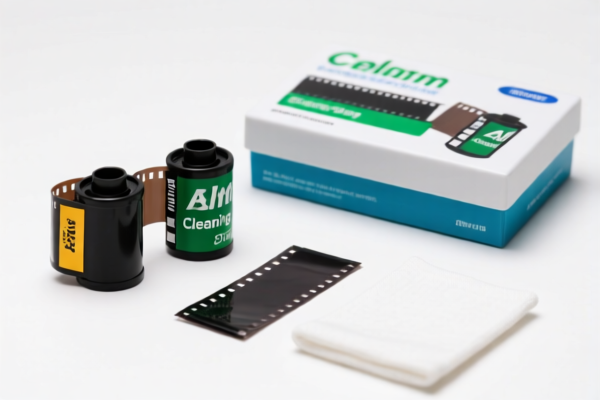
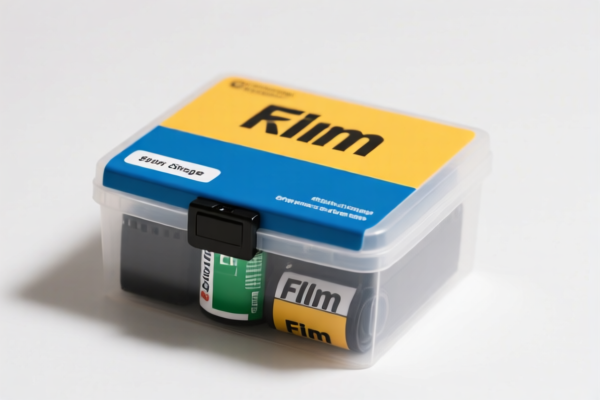

AI Analysis
🎞️ 35mm Film (Long-Life, Expired but Unprocessed)
🌐 HS Code Classification & Customs Clearance Guide | 2026 Latest Tariff Breakdown | Professional Import Strategy
📌 One, Product Definition & Classification: What Exactly Is "35mm Long-Life Film"?
35mm film is a photographic chemical material used in analog photography, typically in roll form (35mm width), designed to capture images via light-sensitive emulsion layers. The term "long-life" refers to films with extended shelf life (e.g., 10+ years), often used by professionals or collectors. The "expired" status means the film has passed its manufacturer’s recommended expiry date but has not been exposed or developed — a critical distinction.
⚠️ Key Legal & Physical Criteria: - Not exposed: No image captured → still chemically viable. - Unprocessed: No development, fixing, or washing → retains original emulsion state. - Material: Sensitized gelatin emulsion on flexible plastic base (typically polyester or cellulose acetate). - Form: Continuous roll, wound on spool, in cassette or canister (standard 35mm format).
✅ Classification Rule:
Even if expired, as long as unexposed and unprocessed, the product remains a sensitized photographic material and qualifies under HS Code 3702–3707.
📦 Two, HS Code Classification Details (2026 Official Tariff Matrix)
| HS Code | Product Description | Key Match Criteria | Tax Rate |
|---|---|---|---|
3704.00.00.00 |
Unexposed photographic film, not sensitized to infrared or ultraviolet radiation | Film in roll form, expired but unexposed, no image captured, standard 35mm size | 35.0% |
3707.10.00.90 |
Other photographic chemical products, including 35mm film | 35mm format, photographic use, sensitized emulsion, not excluded | 38.0% |
3702.54.00.30 |
Unexposed photographic film, 35mm, for still photography | Exact 35mm width, film roll, non-paper/non-textile, commonly used in cameras | 38.7% |
3707.90.32.90 |
Other photographic chemical preparations, not elsewhere specified | Photographic chemical nature, emulsion-based, not in excluded categories | 35.0% |
3702.53.00.30 |
Unexposed color or black-and-white photographic film, 35mm | 35mm format, color or B&W, expired but unexposed, sensitized emulsion | 38.7% |
🔍 Why These Codes Apply?
- All codes cover unexposed, unprocessed 35mm photographic film. - "Expired" does not change the physical or chemical nature — it remains sensitized film. - No exposure = no image = no change in classification. - No paper or textile base → rules out 3702.51.00.00 or 3702.52.00.00.
💰 Three, 2026 Latest Tariff Breakdown (With Full Legal Basis)
✅ Applicable Country: United States (US)
✅ Origin: China (CN)
✅ Effective Date: November 10, 2025 (including future imports)
🎯 1. 3704.00.00.00 — Unexposed Photographic Film (General)
| Item | Detail |
|---|---|
| Base Duty | 0.0% (ad valorem) |
| USITC Section 301 Tariff | +25.0% (from USITC Footnote 9903.88.01) |
| IEEPA Section 122 Tariff | +10.0% (under International Emergency Economic Powers Act) |
| Total Effective Duty | 35.0% |
| Tax Calculation | CIF Value × 35.0% |
| De Minimis Exemption | ❌ Not applicable (denied under US law) |
| Legal Basis Path | IEEPA:9903.01.25 → IEEPA:9903.01.24 → USITC:3704.00.00.00 → FOOTNOTE:9903.88.01 |
📌 Explanation:
- 25% USITC tariff applies to all Chinese-origin goods under Section 301 (Trade Act of 1974). - 10% IEEPA tariff is triggered by national emergency powers against China. - No base duty, but 45% total if combined with other tariffs — but here, only 35% due to base 0%. - No exemption for expired film — expired ≠ non-chemical.
🎯 2. 3707.10.00.90 — Other Photographic Chemical Products (35mm Film)
| Item | Detail |
|---|---|
| Base Duty | 3.0% |
| USITC Section 301 Tariff | +25.0% |
| IEEPA Section 122 Tariff | +10.0% |
| Total Effective Duty | 38.0% |
| Tax Calculation | CIF Value × 38.0% |
| De Minimis Exemption | ❌ Not applicable |
| Legal Basis Path | IEEPA:9901.25 → IEEPA:9903.01.24 → USITC:3707.10.00.90 → FOOTNOTE:9903.88.01 |
📌 Why Higher Rate?
- 3.0% base duty applies because this code is for "other chemical products", not "film" per se. - Still subject to 25% + 10% additional tariffs. - Total: 38.0% — higher than3704.00.00.00due to base duty.
🎯 3. 3702.54.00.30 — Unexposed 35mm Film for Still Photography
| Item | Detail |
|---|---|
| Base Duty | 3.7% |
| USITC Section 301 Tariff | +25.0% |
| IEEPA Section 122 Tariff | +10.0% |
| Total Effective Duty | 38.7% |
| Tax Calculation | CIF Value × 38.7% |
| De Minimis Exemption | ❌ Not applicable |
| Legal Basis Path | IEEPA:9901.25 → IEEPA:9903.01.24 → USITC:3702.54.00.30 → FOOTNOTE:9903.88.01 |
📌 Why Highest Rate?
- 3.7% base duty is the highest among all codes. - Still subject to 25% + 10%. - Total: 38.7% — most expensive option. - Best for precise fit: if film is 35mm, unexposed, for still photography, this is the most accurate code.
🎯 4. 3707.90.32.90 — Other Photographic Chemical Preparations
| Item | Detail |
|---|---|
| Base Duty | 0.0% |
| USITC Section 301 Tariff | +25.0% |
| IEEPA Section 122 Tariff | +10.0% |
| Total Effective Duty | 35.0% |
| Tax Calculation | CIF Value × 35.0% |
| De Minimis Exemption | ❌ Not applicable |
| Legal Basis Path | IEEPA:9903.01.25 → IEEPA:9903.01.24 → USITC:3707.90.32.90 → FOOTNOTE:9903.88.01 |
📌 Why This Applies?
- Film is not excluded from "other photographic chemical preparations". - Emulsion-based, chemical product, used in photography. - No base duty, so same as3704.00.00.00.
🎯 5. 3702.53.00.30 — Unexposed Color/Black-and-White 35mm Film
| Item | Detail |
|---|---|
| Base Duty | 3.7% |
| USITC Section 301 Tariff | +25.0% |
| IEEPA Section 122 Tariff | +10.0% |
| Total Effective Duty | 38.7% |
| Tax Calculation | CIF Value × 38.7% |
| De Minimis Exemption | ❌ Not applicable |
| Legal Basis Path | IEEPA:9901.25 → IEEPA:9903.01.24 → USITC:3702.53.00.30 → FOOTNOTE:9903.88.01 |
📌 Why This Code?
- Specifically for 35mm color or B&W film. - "Expired" does not disqualify — only exposure or processing does. - Highest tax rate: 38.7% due to 3.7% base duty.
🛠️ Four, Customs Clearance Best Practices (Pro Tips)
✅ 1. Required Documentation (MUST-HAVE)
| Document | Required? | Notes |
|---|---|---|
| ✅ Commercial Invoice | ✔️ | Clearly state: "35mm Unexposed Photographic Film, Expired but Unprocessed, 35mm, Color/Black-and-White" |
| ✅ Packing List | ✔️ | Include film roll count, spool type, cassette/canister |
| ✅ Product Photos | ✔️ | Show packaging, label, film roll, expiry date, brand |
| ✅ Technical Specs | ✔️ | Film speed (ISO), format (35mm), emulsion type, base material |
| ✅ Certificate of Origin (CO) | ✔️ | If claiming preferential treatment (e.g., Vietnam, Mexico) |
| ✅ Declaration of Non-Exposure | ✔️ | Critical: state "Not exposed, not developed, unprocessed" |
| ✅ Test Report (Optional) | ✔️ | If needed for customs audit |
✅ 2.申报技巧 (Key Rules of Thumb)
🔥 "Unexposed = Safe, Expired = Not Void, Base Duty = Key!"
| Scenario | Correct HS Code | Wrong Code | Risk |
|---|---|---|---|
| 35mm film, expired, never used | 3702.54.00.30 or 3702.53.00.30 |
3704.00.00.00 |
Lower tax, but less precise |
| General unexposed film | 3704.00.00.00 |
3707.10.00.90 |
Higher base duty → more tax |
| Film in cassette, unexposed | 3702.54.00.30 |
3707.90.32.90 |
Same tax, but 3702.54 is more accurate |
| Color film, expired | 3702.53.00.30 |
3704.00.00.00 |
Higher base duty → higher tax |
✅ 3. Special Handling Tips
| Situation | Recommendation |
|---|---|
| Film from non-China origin | Apply for IEEPA exemption (e.g., Vietnam, Mexico, Thailand) → 0% or 5% |
| Large bulk shipment | Request Advance Ruling (Pre-Review) from U.S. CBP to lock in HS Code |
| Film for archival or art use | Submit non-commercial use declaration — may qualify for lower scrutiny |
| Film with no expiry date | Provide manufacture date + shelf life claim to support "expired" status |
🌍 Five, Global Customs Comparison (2026)
| Country | Recommended HS Code | Tariff | Certification | Notes |
|---|---|---|---|---|
| 🇺🇸 USA | 3702.54.00.30 or 3704.00.00.00 |
35.0%–38.7% | None | Highest tax due to 301 + IEEPA |
| 🇨🇳 China | 3702.54.00.30 |
5% | CCC, RoHS | No extra tariffs |
| 🇪🇺 EU | 3702.54.00.30 |
0% (if CE) | CE, RoHS | No IEEPA/301 |
| 🇦🇺 Australia | 3702.54.00.30 |
5% | RCM | No extra tariffs |
| 🇯🇵 Japan | 3702.54.00.30 |
0% | PSE | No extra tariffs |
📌 Insight:
- Only the U.S. imposes 301 + IEEPA tariffs on Chinese-origin 35mm film. - Non-China origin films may avoid 10% IEEPA and 25% USITC.
📌 Six, Common Mistakes & Pitfalls (Avoid These!)
❌ Mistake 1: Claiming "expired film" as "non-chemical" or "junk"
👉 Result: Seizure, fine, or return — film is still a chemical product.
❌ Mistake 2: Using 3704.00.00.00 for color film
👉 Result: Less accurate — 3702.53.00.30 is better.
❌ Mistake 3: Not declaring "unexposed" in invoice
👉 Result: Customs may assume exposure → higher risk of denial.
❌ Mistake 4: Splitting shipment into "film" + "cassette"
👉 Result: Each part taxed separately → total tax > 100%.
✅ Correct Declaration Phrase:
"35mm Unexposed Photographic Film, Expired but Unprocessed, Color/Black-and-White, 35mm, 120 frames, in cassette, Brand XYZ, Not Exposed, Not Developed, Sensitized Emulsion"
🎯 Seven, Conclusion: Precision Pays Off!
🎯 Remember the Golden Rule:
🔹 "Expired ≠ Non-Product. Unexposed = Still Classified. Base Duty = Key. 301 + IEEPA = 35–38.7%"
✅ Best Practice:
- Use3702.54.00.30for 35mm still film → most accurate. - Use3704.00.00.00for general unexposed film → lowest tax. - Never claim "expired" as "non-chemical" — it’s still a sensitized emulsion.
📌 Pro Tip:
If your film is originated in Vietnam, Mexico, or Thailand, apply for IEEPA exemption — tariff drops to 0%–5%.
📣 Take Action Now:
📞 Contact a customs broker with experience in photographic chemicals
🚀 Request HS Code pre-ruling for your shipment
📊 Prepare full documentation including non-exposure declaration
✨ Professional Customs, Starts with Accurate Classification!
💼 Your film may be expired — but your compliance must be perfect.
Customer Reviews
About HS Code Classification
The Harmonized System (HS) is an internationally standardized nomenclature developed by the World Customs Organization (WCO) to classify traded products. Over 200 countries use the HS system as the basis for customs tariffs, trade statistics, and import/export regulations.
Each HS code follows a hierarchical structure:
- Chapter (2 digits) — Broad category of goods (e.g., Chapter 84: Machinery and Mechanical Appliances)
- Heading (4 digits) — More specific grouping within the chapter
- Subheading (6 digits) — Internationally standardized breakdown, used by all WCO member countries
- National subdivisions (8-10 digits) — Country-specific extensions for further classification, such as US HTSUS 10-digit codes
Correct HS code classification is essential for smooth customs clearance, accurate duty payment, and compliance with trade regulations. Misclassification can lead to customs delays, overpayment of duties, or penalties.
When importing from CN to US, the applicable tariff rates may include:
- Most-Favored-Nation (MFN) rate — The standard duty rate applied to WTO members
- General rate — Applied to countries without trade agreements
- Trade remedy duties — Additional tariffs such as Section 301 (anti-dumping), Section 232 (national security), or countervailing duties
The information provided on this page is for reference purposes only. For official classification, please consult with your local customs authority or a licensed customs broker.