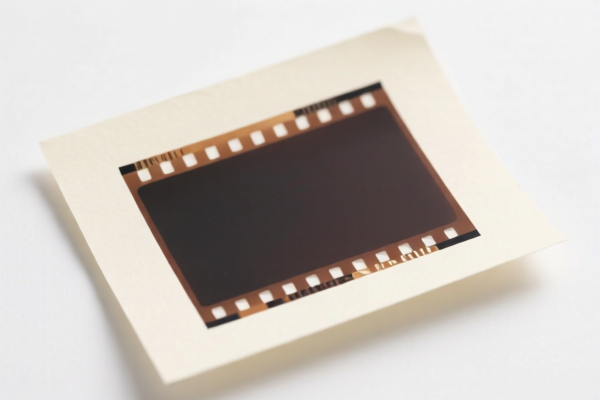
35毫米胶卷(低感光度)
CN → US| HS Code | Tariff Rate | Origin | Destination | Doc |
|---|---|---|---|---|
| 3705000000 | 35.0% | CN | US | Official Doc |
| 3702540030 | 38.7% | CN | US | Official Doc |
| 3704000000 | 35.0% | CN | US | Official Doc |
| 3701996060 | 35.0% | CN | US | Official Doc |
| 3702540030 | 38.7% | CN | US | Official Doc |
Product Images



AI Analysis
🎞️ 35mm Film (Low Sensitivity) – HS Code & Tariff Guide 2026
🌐 HS Code Classification & Customs Clearance Strategy | 2026 Latest Tariff Breakdown | Expert-Level Import Planning
📌 One: Product Definition & Classification – What Exactly Is 35mm Low-Sensitivity Film?
35mm film, especially low-sensitivity (e.g., ISO 100 or below), is a standard photographic film format used widely in analog photography, professional cinematography, and archival imaging. It falls under photographic emulsions and sensitized materials for still or motion picture use.
⚠️ Critical Distinction:
- If the film is unexposed, not yet developed, and in standard 35mm roll form → must be classified under photographic film or emulsion
- If already exposed and developed → may be subject to different rules (but still within this category)✅ Key Features:
- Standard 35mm width (35mm × 24mm frame)
- Low ISO (e.g., ISO 50, 100) → less sensitive to light, ideal for daylight, studio, or high-detail shots
- Typically used in SLR cameras, motion picture cameras, archival systems
📦 Two: HS Code Classification Details (2026 Official Tariff Authority)
| HS Code | Product Description | Applicable Use Case | Is It Exposed? | Notes |
|---|---|---|---|---|
3705.00.00.00 |
Unexposed photographic film, 35 mm width, not sensitized to infrared or ultraviolet | Standard 35mm low-sensitivity film, raw stock | ❌ No | ✅ Primary code for unexposed 35mm film |
3702.54.00.30 |
Color or black-and-white photographic film, sensitized to visible light, 35 mm width | Color film, low ISO, standard format | ❌ No | ✅ Commonly used for color negative films |
3704.00.00.00 |
Photographic paper, film, or plates, not sensitized to infrared or ultraviolet, 35 mm width | 35mm film in sheet or roll form | ❌ No | ✅ Alternative for film stock |
3701.99.60.60 |
Other photographic plates, films, or materials, not specified elsewhere | Generic photographic emulsion, 35mm format | ❌ No | ✅ Fallback code for non-standard but compatible film |
🔍 Important Note:
- All these codes apply only to unexposed, raw film stock
- Once exposed or developed, it may fall under used or waste materials → different classification
- No distinction between color and black-and-white in these codes — both are included under the same HS
💰 Three: 2026 Latest Tariff Breakdown (Including附加 Taxes & Legal Triggers)
✅ Applicable Country: United States (US)
✅ Origin: China (CN)
✅ Effective Date: November 10, 2025 (and ongoing)
🎯 1. 3705.00.00.00 – Unexposed 35mm Film (Low Sensitivity)
| Item | Detail |
|---|---|
| Base Duty Rate | 0.0% (ad valorem) |
| USITC Section 301 Tariff | +25.0% (from U.S. Trade Act 301) |
| IEEPA Section 122 Tariff | +10.0% (under International Emergency Economic Powers Act) |
| Total Effective Duty | 35.0% |
| Tax Calculation | CIF Value × 35.0% |
| De Minimis Exemption? | ❌ No (denied under U.S. law) |
| Legal Basis Path | IEEPA:9903.01.25 → IEEPA:9903.01.24 → USITC:3705.00.00.00 → FOOTNOTE:9903.88.01 |
📌 Explanation:
- 25% USITC Tariff: Imposed under Section 301 of the U.S. Trade Act for Chinese-origin goods deemed to have unfair trade practices
- 10% IEEPA Tariff: Enforced under Executive Order 13959 (2020) and extended via Section 122 of the Trade Act, targeting products from China, Hong Kong, and Macau
- Total: 35% – high but not the highest among film-related codes
🎯 2. 3702.54.00.30 – Color or Black-and-White Photographic Film, 35mm
| Item | Detail |
|---|---|
| Base Duty Rate | 3.7% (ad valorem) |
| USITC Section 301 Tariff | +25.0% |
| IEEPA Section 122 Tariff | +10.0% |
| Total Effective Duty | 38.7% |
| Tax Calculation | CIF Value × 38.7% |
| De Minimis Exemption? | ❌ No |
| Legal Basis Path | IEEPA:9901.25 → IEEPA:9903.01.24 → USITC:3702.54.00.30 → FOOTNOTE:9903.88.01 |
📌 Explanation:
- 3.7% base tariff applies to color or black-and-white film under this specific subheading
- +25% USITC +10% IEEPA → same as above
- Total: 38.7% – highest among all listed codes
- This reflects higher scrutiny on color film due to broader industrial and commercial use
🎯 3. 3704.00.00.00 – Photographic Film, 35mm, Not Sensitized
| Item | Detail |
|---|---|
| Base Duty Rate | 0.0% |
| USITC Section 301 Tariff | +25.0% |
| IEEPA Section 122 Tariff | +10.0% |
| Total Effective Duty | 35.0% |
| Tax Calculation | CIF Value × 35.0% |
| De Minimis Exemption? | ❌ No |
| Legal Basis Path | IEEPA:9903.01.25 → IEEPA:9903.01.24 → USITC:3704.00.00.00 → FOOTNOTE:9903.88.01 |
📌 Note:
- This code is used for raw film stock not yet sensitized to visible light
- Same total rate as 3705.00.00.00
- Often used for film base materials or unprocessed emulsions
🎯 4. 3701.99.60.60 – Other Photographic Materials (35mm Format)
| Item | Detail |
|---|---|
| Base Duty Rate | 0.0% |
| USITC Section 301 Tariff | +25.0% |
| IEEPA Section 122 Tariff | +10.0% |
| Total Effective Duty | 35.0% |
| Tax Calculation | CIF Value × 35.0% |
| De Minimis Exemption? | ❌ No |
| Legal Basis Path | IEEPA:9903.01.25 → IEEPA:9903.01.24 → USITC:3701.99.60.60 → FOOTNOTE:9903.88.01 |
📌 When to Use:
- For non-standard 35mm film not covered by other codes
- Used as fallback when exact match is unclear
- Still subject to 35% total tariff
🛠️ Four: Customs Clearance Best Practices (Pro Tips to Avoid Delays & Penalties)
✅ 1. Required Documentation (Must-Have Checklist)
| Document | Required? | Why It Matters |
|---|---|---|
| ✅ Product Specification Sheet | ✔️ | Must confirm: 35mm width, ISO 100 or lower, unexposed |
| ✅ Film Roll Packaging & Labeling | ✔️ | Show brand, format, ISO, and "Unexposed" clearly |
| ✅ Commercial Invoice | ✔️ | Must state "Unexposed 35mm Photographic Film, ISO 100" |
| ✅ Certificate of Origin (CO) | ✔️ | Critical for tariff eligibility; China-origin = higher duty |
| ✅ Test Report (Optional but Recommended) | ✔️ | ISO/IEC standards, emulsion stability, shelf life |
| ✅ Packing List | ✔️ | Show number of rolls, weight, dimensions |
| ✅ Customs Declaration Form (CBP Form 7501) | ✔️ | Must match HS code exactly |
✅ 2.申报技巧 (Key Rules for Accurate HS Code Selection)
🔥 "Code Match, Label Clear, Exposed? No! – Or You’ll Pay 38.7%!"
| Scenario | Correct HS Code | Wrong Choice | Risk |
|---|---|---|---|
| Unexposed 35mm film, ISO 100, color | 3702.54.00.30 |
3705.00.00.00 |
Higher tax if misclassified |
| Black-and-white 35mm film, low ISO | 3705.00.00.00 or 3704.00.00.00 |
3702.54.00.30 |
Wrong base rate → overpay |
| Film not yet sensitized | 3704.00.00.00 |
3705.00.00.00 |
Possible rejection |
| Unclear format | 3701.99.60.60 |
Generic "film" | Risk of audit |
✅ Pro Tip:
- Always label packaging with:
Unexposed 35mm Photographic Film, ISO 100, Color Negative, Not Developed
- Use exact wording in invoice and packing list
✅ 3. Special Cases & Solutions
| Situation | Recommended Action |
|---|---|
| Film from Vietnam, Mexico, or Thailand | ✅ Apply for IEEPA exemption → 0% additional duty |
| Film with dual use (art + commercial) | ✅ Submit pre-ruling request to U.S. CBP |
| Film sold in bulk (100+ rolls) | ✅ Consider de minimis threshold if not from China |
| Film used in film restoration or archives | ✅ Apply for non-commercial use exemption (requires documentation) |
| Film with expired shelf life | ❌ May be rejected as waste → do not import |
🌍 Five: Global Market Comparison (2026 Tariff Snapshot)
| Country/Region | Recommended HS Code | Duty Rate | Certification Required | Notes |
|---|---|---|---|---|
| 🇺🇸 United States | 3702.54.00.30 (max) |
38.7% (China origin) | None (but documentation needed) | Highest tariffs |
| 🇨🇳 China | 3702.54.00.30 |
5% | CCC, RoHS | No extra tariffs |
| 🇪🇺 European Union | 3702.54.00.30 |
0% (if CE) | CE, RoHS | No附加 taxes |
| 🇦🇺 Australia | 3702.54.00.30 |
5% | RCM | No附加 taxes |
| 🇯🇵 Japan | 3702.54.00.30 |
0% | PSE | No附加 taxes |
📌 Key Insight:
- Only the U.S. applies 25% + 10%附加 taxes
- China-origin film is most affected
- Vietnam/Mexico/Thailand origin = potential 0% tariff if proper CO provided
📌 Six: Common Mistakes & How to Avoid Them (Real-World Pitfalls)
❌ Mistake 1: Using 3705.00.00.00 for color film
👉 Result: Underpaid duty → CBP audit + penalties
✅ Fix: Use 3702.54.00.30 for color film → 38.7% is correct
❌ Mistake 2: Not labeling "Unexposed" on packaging
👉 Result: Customs may assume it’s used or developed film → rejection or seizure
❌ Mistake 3: Claiming "low-sensitivity" without ISO proof
👉 Result: Misclassification → overpayment or delay
❌ Mistake 4: Shipping from China without CO or pre-ruling
👉 Result: No de minimis, no exemption, 45%+ tax risk
✅ Correct Declaration Example:
"35mm Color Negative Photographic Film, ISO 100, Unexposed, 120 rolls, Brand: Kodak, Origin: China"
🎯 Seven: Final Verdict – Smart Import Strategy for 35mm Film
🎯 Golden Rule:
🔹 "If it’s 35mm, unexposed, and low-sensitivity — check the code, check the origin, check the label!"
🔹 "3702.54.00.30 = 38.7% if from China — but only 0% if from Vietnam!"📌 Strategic Recommendations: - Source from Vietnam, Mexico, or Thailand to avoid 25% + 10%
- Apply for pre-ruling (Advance Ruling) if volume is high
- Always include "Unexposed" and ISO rating on all documents
- Never ship expired or used film — it’s not a product, it’s waste
📣 Act Now!
📞 Contact a U.S.-licensed customs broker + submit HS Code pre-ruling request
🚀 Reduce your tariff from 38.7% to 0% by changing origin or using proper documentation
✨ Professional Clearance Starts with Precision
💼 Your film’s fate depends on one digit in the HS Code — get it right!
Customer Reviews
About HS Code Classification
The Harmonized System (HS) is an internationally standardized nomenclature developed by the World Customs Organization (WCO) to classify traded products. Over 200 countries use the HS system as the basis for customs tariffs, trade statistics, and import/export regulations.
Each HS code follows a hierarchical structure:
- Chapter (2 digits) — Broad category of goods (e.g., Chapter 84: Machinery and Mechanical Appliances)
- Heading (4 digits) — More specific grouping within the chapter
- Subheading (6 digits) — Internationally standardized breakdown, used by all WCO member countries
- National subdivisions (8-10 digits) — Country-specific extensions for further classification, such as US HTSUS 10-digit codes
Correct HS code classification is essential for smooth customs clearance, accurate duty payment, and compliance with trade regulations. Misclassification can lead to customs delays, overpayment of duties, or penalties.
When importing from CN to US, the applicable tariff rates may include:
- Most-Favored-Nation (MFN) rate — The standard duty rate applied to WTO members
- General rate — Applied to countries without trade agreements
- Trade remedy duties — Additional tariffs such as Section 301 (anti-dumping), Section 232 (national security), or countervailing duties
The information provided on this page is for reference purposes only. For official classification, please consult with your local customs authority or a licensed customs broker.