3D Pen Accessories
CN → USProduct Images
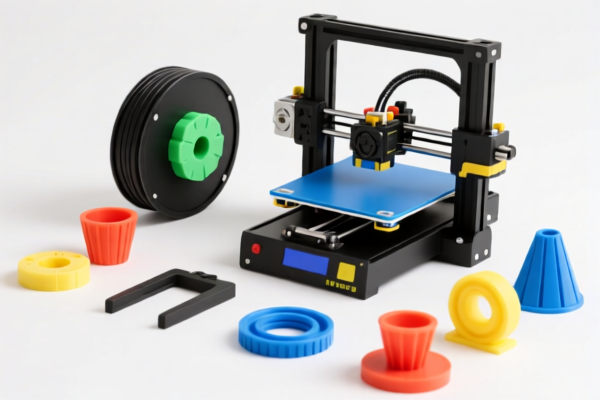
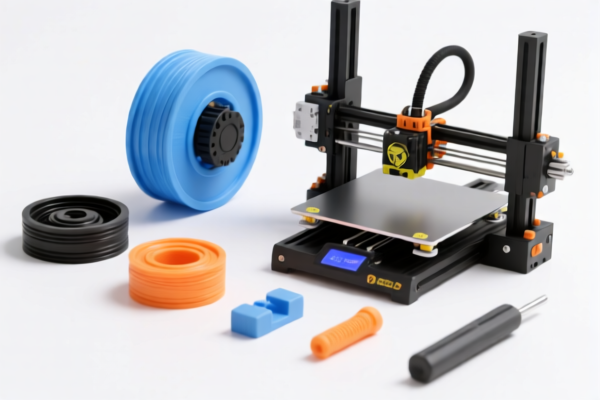
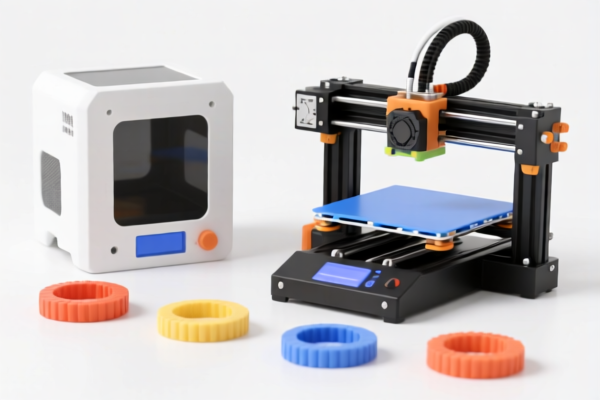
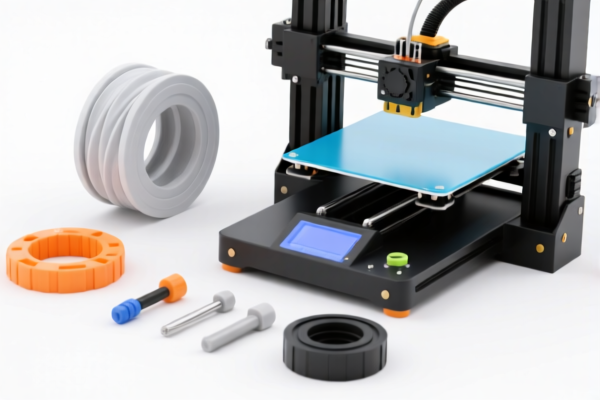
AI Analysis
🖊️ 3D Pen Accessories (Accessories for 3D Printing Pens)
🌐 HS Code Reference & Customs Clearance Guide | 2026 Latest Tariff Analysis | Professional Clearance Strategy
📌 Part I: Product Definition & Classification: What Exactly Are "3D Pen Accessories"?
3D pens are emerging creative tools that extrude heated plastic filament to create 3D objects in mid-air. Unlike traditional 2D pens, they function similarly to miniature 3D printers. Therefore, their accessories are generally classified based on their functionality and integration.
In international trade, "3D Pen Accessories" are typically divided into two main categories:
- Plastic Filaments (The "Ink"): The raw material used for printing.
- PLA (Polylactic Acid) & ABS (Acrylonitrile Butadiene Styrene): The most common materials.
- Hardware & Electronic Components (The "Tools"): Parts that support the operation of the pen.
- Nozzles/Tips: Replaceable metal or plastic tips.
- Power Adapters/Cables: Specific to the pen’s voltage and interface.
- Stencils/Stand: Auxiliary tools for ease of use.
⚠️ Key Distinction Point:
- If the item is plastic material (rolls of filament) → It is classified as Plastic/Chemical Products.
- If the item is a functional part of a machine/electronic device → It is classified as Parts of Electrical Machinery/Tools.
- ⚠️ Crucial Warning: Do NOT classify 3D pens or their main bodies under "Stationery" (e.g., Chapter 96). They are Electronic/Industrial Devices. Consequently, their accessories are also not stationery.
📦 Part II: HS Code Classification Details (2026 Latest Tariff Authority Comparison)
| HS Code | Product Description | Application Scenario | Is it Consumable? |
|---|---|---|---|
3917.32.00.00 |
Tubes, pipes, and hoses of plastics, rigid, of polyethylene (PE) | Rare for 3D pens; usually PLA/ABS are other plastics. | ✅ Yes (Material) |
3917.39.00.00 |
Other tubes, pipes, and hoses of plastics, rigid, of other plastics | Primary Code for 3D Pen Filaments (PLA/ABS/TPU) | ✅ Yes (Material) |
3919.10.00.00 |
Self-adhesive plates, sheets, film, foil, tape, strip and other flat shapes, of plastics | Filament sheets or specialized adhesive tapes (less common for pens) | ✅ Yes |
8543.70.90.00 |
Electrical machines and apparatus, having individual functions, not specified or included elsewhere | Power Adapters, Charging Stations, Electronic Control Boxes | ❌ No (Hardware) |
8207.50.00.00 |
Interchangeable tools for hand tools, whether or not power-operated, for pressing, stamping or punching... | Metal Nozzles/Tips (if considered tools for shaping) | ❌ No (Part/Tool) |
9031.80.90.00 |
Instruments, appliances and machinery, not specified or included elsewhere in this chapter | Complex laser scanning pens or high-end industrial 3D pen accessories | ❌ No (Device Part) |
🔍 Key Reminder:
- Filaments (PLA/ABS): The vast majority of 3D pen "ink" falls under Chapter 39 (Plastics). Specifically,3917.39.00.00is the most common for filament rolls.
- Nozzles/Tips: These are tricky. If they are simple plastic inserts, they might be3926.90(Plastic Articles). If they are metal and critical for function,8207.50.00.00or8543.70.90.00might apply depending on the country's interpretation of "parts." For simplicity and lower risk, many importers classify simple plastic tips under3926.90.90.90(Other plastic articles) or3917.39.00.00if bundled with filament.
- Electronics: Power supplies and controllers are strictly Chapter 85.
💰 Part III: 2026 Latest Tariff Rate Details (Including Surcharges & Policy Add-ons)
✅ Target Country: United States (US)
✅ Origin: China (CN)
✅ Effective Date: Post-2025/2026 Trade Policies (Section 301 & IEEPA)
🎯 1. 3917.39.00.00 —— Plastic Filaments (PLA/ABS) for 3D Pens
| Item | Content |
|---|---|
| Base Tariff | 3.5% (General) or 0% (Most Favored Nation, if applicable via specific GSP, but currently limited for China) |
| Section 301 Surcharge (USITC) | +7.5% to +25% (Varies by specific HTS subheading and exclusions) |
| IEEPA Surcharge | +10% (On Chinese-origin goods, effective Nov 2025) |
| Total Effective Rate | ~15% – 38.5% (Estimate) |
| Calculation Basis | CIF Value × Total Rate |
| De Minimis Eligibility | ❌ No (Section 301 goods are generally excluded from $800 de minimis exemption if properly declared) |
| Legal Path | USITC:3917.39.00.00 → Section301:Footnote62 (Check for exclusions) → IEEPA:9903.01.25 |
📌 Explanation:
- Plastic products from China are heavily scrutinized. While PLA is biodegradable, it is chemically processed.
- Exclusion Check: Some 3D printing materials may have been excluded from Section 301 tariffs in the past. You must verify if your specific filament HTS has an active exclusion. If not, the surcharge applies.
- The 10% IEEPA is a new layer for 2025/2026 imports, adding significant cost.
🎯 2. 8543.70.90.00 —— Electronic Accessories (Adapters/Chargers)
| Item | Content |
|---|---|
| Base Tariff | 0% - 1.5% |
| Section 301 Surcharge (USITC) | +25% (Most electrical parts fall under List 4C or similar) |
| IEEPA Surcharge | +10% |
| Total Effective Rate | ~35% - 36.5% |
| De Minimis Eligibility | ❌ No |
| Legal Path | USITC:8543.70.90.00 → Section301:Footnote88 → IEEPA:9901.25 |
📌 Note:
- Electronic accessories are not exempt.
- If the adapter is sold separately, it is taxed as an electrical appliance. If bundled, it is still taxed based on its primary function.
🎯 3. 3926.90.90.90 —— Plastic Nozzles/Tips (If classified as Plastic Articles)
| Item | Content |
|---|---|
| Base Tariff | 5.7% (Average) |
| Section 301 Surcharge | +7.5% to +25% |
| IEEPA Surcharge | +10% |
| Total Effective Rate | ~22.7% - 40.7% |
| Legal Path | USITC:3926.90.90.90 → Section301 → IEEPA |
🛠️ Part IV: Customs Clearance Operational Suggestions (Practical Pitfall Avoidance Guide)
✅ 1. Required Documentation Checklist (None Can Be Missing)
| Document | Must Provide | Description |
|---|---|---|
| ✅ Product Specification Sheet | ✔️ | Material composition (e.g., "100% Polylactic Acid"), dimensions, weight per roll. |
| ✅ Ingredient/Composition Statement | ✔️ | Crucial for plastics. Must state "PLA," "ABS," or "TPU." |
| ✅ Product Photos (Clear Label) | ✔️ | Show the filament spool, the "Made in China" label, and any safety warnings. |
| ✅ Third-Party Test Report | ✔️ | FDA/LFGB compliance for food-contact plastics (if claimed), RoHS, REACH. |
| ✅ Commercial Invoice | ✔️ | Clearly describe as "3D Printing Filament, PLA, 1.75mm, Color: Black" NOT just "Stationery." |
| ✅ Packing List | ✔️ | Net/Gross weight, number of rolls, carton dimensions. |
| ✅ Certificate of Origin (CO) | ✔️ | To prove origin and apply for any potential duty drawbacks or exemptions. |
✅ 2. Declaration Tips (Key Mantra)
🔥 "Material First, Function Second, No Stationery!"
| Situation | Correct Declaration | Wrong Approach |
|---|---|---|
| PLA Filament Roll | 3917.39.00.00 - "Polylactic Acid Filament for 3D Printing" |
"Plastic Stationery" or "Pen Ink" → Risk of Misclassification |
| Metal Nozzle | 8207.50.00.00 or 3926.90.90.90 (if plastic) |
"Pen Part" → Vague and risky |
| Power Adapter | 8543.70.90.00 or 8504.40.95.00 |
"Charger" without HS code |
| Bundle (Filament + Pen) | Split Declaration | Declare Filament under 3917 and Pen under 9031/8477 separately. Do NOT bundle into one vague line item. |
✅ 3. Special Case Handling
| Situation | Handling Advice |
|---|---|
| "Eco-Friendly" Claims | If you claim PLA is "Biodegradable," provide ASTM D6400 or EN 13432 certification. Without it, Customs may doubt the "Plastic" classification. |
| Multi-Color Filament | Declare as "Mixed Color PLA Filament." Ensure the material composition is 100% PLA. |
| 3D Pen Kit (Pen + Filament) | Crucial: Do NOT declare as one item. The pen is an electronic device (Chapter 84/85/90), and the filament is a plastic material (Chapter 39). They have different HS Codes and potentially different duty rates. Mixed shipment requires split invoicing or clear line-item separation. |
| Filament for Medical Use | If intended for medical implants (rare for consumer pens), additional FDA 510(k) documentation is required. |
🌍 Part V: Global Market Customs Comparison (2026 Latest)
| Country/Region | Recommended HS Code (Filament) | Base Tariff | Certification Requirements | Notes |
|---|---|---|---|---|
| 🇺🇸 USA | 3917.39.00.00 |
3.5% + Surcharges | FDA (if food-contact), RoHS | High Risk: Section 301 + IEEPA surcharges apply. |
| 🇨🇳 China | 3917.39.00.00 |
6.5% | CCC (if electronic accessories) | No additional surcharges. |
| 🇪🇺 EU | 3917.39.00.00 |
6.5% | REACH, RoHS, CE (for electronic parts) | No anti-dumping on PLA currently. |
| 🇬🇧 UK | 3917.39.00.00 |
6.5% | UKCA, UK REACH | Post-Brexit rules apply. |
| 🇦🇺 Australia | 3917.39.00.00 |
5% | RCM (for electronics) | Low base tariff. |
📌 Conclusion:
- USA is the most challenging market due to the叠加 (stacking) of Section 301 and IEEPA tariffs.
- Plastic filaments are relatively stable in classification but face high financial barriers in the US.
- Electronic parts (adapters) are equally affected by high US tariffs.
📌 Part VI: Common Errors & Pitfall Guide (Lessons Learned the Hard Way)
❌ Error 1: Declaring PLA Filament as "Stationery" or "Pen Refill"
👉 Consequence: HS Code 9608.10.00.00. If the true HS is 3917, it’s a misclassification. While the duty rate might be similar, it triggers audits for "why is plastic stationery?" and may lead to penalties.
❌ Error 2: Bundling a 3D Pen and Filament into one HS Code
👉 Consequence: Customs will force you to choose one. If you choose the Pen’s HS, the Filament’s duty might be underpaid or overpaid. This leads to entry rejects or post-entry audits. Always separate line items.
❌ Error 3: Ignoring the "10% IEEPA Surcharge" in 2025/2026
👉 Consequence: Underpaying duties by ~10% on Chinese goods. IRS/Customs will assess back taxes + interest.
❌ Error 4: Using "3D Pen Ink" on the Invoice
👉 Consequence: Non-standard terminology. Use "PLA Filament for 3D Printing." Clear, technical terms reduce Customs scrutiny.
✅ Correct Practice:
"Line 1: 3D Printing Pen, Model XYZ, Electronic Device, HS 9031.80/8477...
Line 2: PLA Filament, 1.75mm, Black, 1kg, HS 3917.39.00.00..."
🎯 Part VII: Conclusion: Professional Classification Saves Money!
🎯 Remember the Mantra:
🔹 "Filament is Plastic (Ch 39), Pen is Machine (Ch 84/90), Adapters are Electrical (Ch 85)."
🔹 "Split the Bundle, Declare the Material, Avoid the 301 Trap!"
🔹 "HS Code Defines Duty, Misclassification Costs Thousands!"
📌 Pro Tip:
If your filaments are made from recycled PLA, you may qualify for Green Trade Preferences in some countries (e.g., EU), but not in the US under current Section 301 rules.
For the US market, pre-consult a customs broker to verify if your specific filament HTS has an active Section 301 exclusion.
📣 Immediate Action:
📞 Contact a licensed customs broker
📄 Prepare technical datasheets (Material Safety Data Sheet - MSDS)
🚀 Clear your 3D pen accessories efficiently and legally!
✨ Professional Customs Clearance Starts with Precise Classification!
💼 Every Dollar Saved is a Dollar Earned!
Customer Reviews
About HS Code Classification
The Harmonized System (HS) is an internationally standardized nomenclature developed by the World Customs Organization (WCO) to classify traded products. Over 200 countries use the HS system as the basis for customs tariffs, trade statistics, and import/export regulations.
Each HS code follows a hierarchical structure:
- Chapter (2 digits) — Broad category of goods (e.g., Chapter 84: Machinery and Mechanical Appliances)
- Heading (4 digits) — More specific grouping within the chapter
- Subheading (6 digits) — Internationally standardized breakdown, used by all WCO member countries
- National subdivisions (8-10 digits) — Country-specific extensions for further classification, such as US HTSUS 10-digit codes
Correct HS code classification is essential for smooth customs clearance, accurate duty payment, and compliance with trade regulations. Misclassification can lead to customs delays, overpayment of duties, or penalties.
When importing from CN to US, the applicable tariff rates may include:
- Most-Favored-Nation (MFN) rate — The standard duty rate applied to WTO members
- General rate — Applied to countries without trade agreements
- Trade remedy duties — Additional tariffs such as Section 301 (anti-dumping), Section 232 (national security), or countervailing duties
The information provided on this page is for reference purposes only. For official classification, please consult with your local customs authority or a licensed customs broker.