3D Printer Drag Chain
CN → US| HS Code | Tariff Rate | Origin | Destination | Doc |
|---|---|---|---|---|
| 8479899595 | 37.5% | CN | US | Official Doc |
| 8479909596 | 85.0% | CN | US | Official Doc |
Product Images
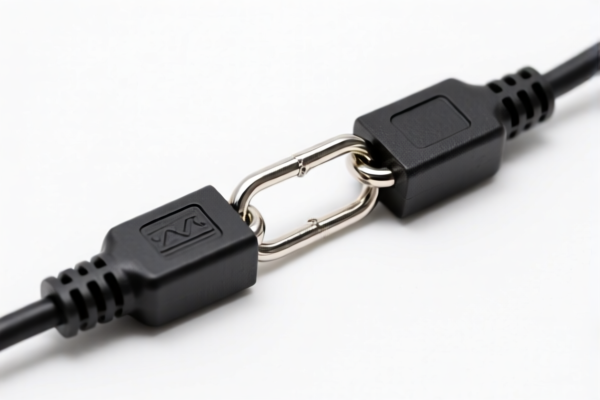
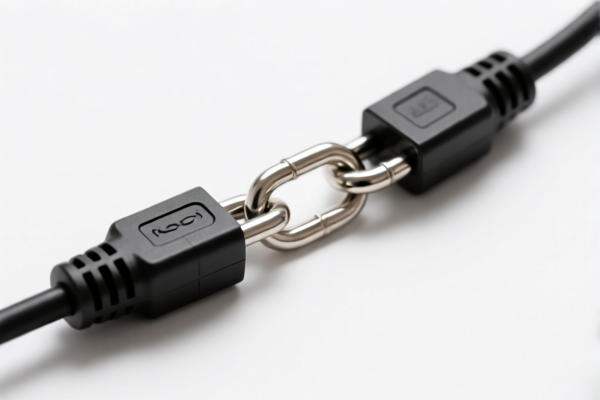


AI Analysis
🖨️ 3D Printer Drag Chain (Cable Carrier)
🌐 HS Code Reference & Customs Clearance Guide | 2026 Latest Tariff Analysis | Professional Strategy
📌 I. Product Definition & Classification: What Exactly Is a "Drag Chain"?
A Drag Chain (also known as a Cable Carrier, Energy Chain, or Chain Link) is a mechanical component used to support and guide moving cables, hoses, and tubes in machinery. In the context of a 3D Printer, it prevents tangling, wear, and tearing of electrical wires (motors, heaters, sensors) and filament tubes as the print head moves.
In international trade, these are not classified as "3D Printers" themselves. They are classified as Machines and Mechanical Appliances having individual functions or their Parts.
⚠️ Key Distinction:
- If sold as a standalone component for general industrial use or specific machines (like 3D printers) → It falls under Chapter 84.
- If sold as a part of the 3D printer (included in the main unit) → It is generally absorbed into the 3D Printer’s HS Code (e.g., 8477.80.00 for Polymer Processing Machinery, depending on specific design), but for imports/exports of spare parts, it is declared separately.
- Critical Note for US-China Trade: The classification of "Parts" vs. "Machines" drastically changes the tariff rate, especially with the 25%-50% additional tariffs on Chinese goods.
📦 II. HS Code Classification Details (2026 Latest Tariff Authority)
Based on the provided data and standard Harmonized System (HS) logic for mechanical parts:
| HS Code | Product Description | Applicable Scenario | Tariff Structure (US Import from China) |
|---|---|---|---|
8479.89.95.95 |
Other machines and mechanical appliances (Industrial vibrators, general mechanical appliances) | Standalone cable carrier units, general industrial mechanical components not specifically listed elsewhere | Base: 0.0% + Additional: 0.0% Total: 0.0% |
8479.90.95.96 |
Parts of machines having individual functions (Other) | Spare parts for the above appliances, including cable carriers sold as replacements | Base: 0.0% + Additional: 75.0% (Details: 25% Section 301 + 50% Steel/Aluminum/Copper Surcharge) |
🔍 Critical Analysis of Provided Data: -
8479.89.95.95(The Machine): This code is surprisingly low tax (0.0%). It may apply if the drag chain is classified as a specific "mechanical appliance" with an individual function that doesn't fit other narrow categories. However, this is rare for simple cable carriers unless they have complex automated locking/feeding mechanisms. -8479.90.95.96(The Part): This code applies to parts. The tax here is 75.0% (0% Base + 25% Section 301 + 50% Metal Surcharge).
- Why 50% Metal Surcharge? Drag chains are often made of steel, aluminum, or copper-wire-embedded plastics. If the customs authority determines the primary material is metal (or contains significant metal components subject to the surcharge), the 50% additional tariff kicks in. - Conclusion: If your drag chain is metal or contains metal springs/wires, declaring it as a "Part" (8479.90) incurs a 75% total tariff. If it is purely plastic and classified as a "Machine/Appliance" (8479.89), it is 0%. Classification strategy is vital.
💰 III. 2026 Latest Tariff Rate Breakdown (Detailed Explanation)
✅ Applicable Country: United States (US)
✅ Origin: China (CN)
✅ Effective Date: Post-2025 Trade Policies (Section 301 & IEEPA Surcharges)
🎯 1. 8479.89.95.95 — Other Machines & Mechanical Appliances
| Item | Content |
|---|---|
| Base Tariff | 0% (ad valorem) |
| USITC Section 301 Surcharge | 0% (Not applicable under this specific subheading in the provided data) |
| IEEPA/Metal Surcharge | 0% (Assumed non-metal or exempted category) |
| Total Tariff | 0.0% |
| Tax Calculation | CIF Value × 0% = $0 |
| De Minimis Eligibility | ❌ No (Imports >$800 require formal entry; < $800 may apply de minimis, but check carrier policies) |
| Legal Basis | HTSUS:8479.89.95.95 |
📌 Interpretation:
- This code suggests that if the drag chain is viewed as a self-contained mechanical device with an individual function (e.g., a pre-assembled, complex tensioning system) rather than a simple "part," it might enjoy zero tariffs.
- Risk: Customs may challenge this if the item is a simple chain without significant "machine-like" complexity.
🎯 2. 8479.90.95.96 — Parts
| Item | Content |
|---|---|
| Base Tariff | 0% |
| USITC Section 301 Surcharge | +25% |
| Steel/Aluminum/Copper Surcharge | +50% |
| Total Tariff | 75.0% |
| Tax Calculation | CIF Value × 75% |
| De Minimis Eligibility | ❌ No |
| Legal Basis | HTSUS:8479.90.95.96 |
📌 Interpretation:
- 75% is extremely high. This is due to the 50% surcharge on metal products (Section 232/301 extensions) and the 25% Section 301 tariff on Chinese goods.
- If the drag chain is made of plastic only, you must argue it does not fall under the "Steel, Aluminum, Copper" surcharge. However, the provided data explicitly assigns the 50% metal surcharge to this code.
- Warning: If your drag chain has metal springs, clips, or frames, this 75% tariff is likely unavoidable unless a ruling is obtained.
🛠️ IV. Customs Clearance Practical Advice (Battle-Tested)
✅ 1. Preparation Checklist (Non-Negotiable)
| Document | Required | Explanation |
|---|---|---|
| ✅ Product Specification Sheet | ✔️ | Must detail material composition (Plastic vs. Metal ratio). Crucial for proving if the 50% metal surcharge applies. |
| ✅ Technical Drawing | ✔️ | Shows the drag chain as a component, not a standalone machine. |
| ✅ Commercial Invoice | ✔️ | Description: "Plastic Cable Carrier for 3D Printer, Model XYZ" |
| ✅ HS Code Pre-Ruling | ✔️ | Strongly Recommended to determine if 8479.89 (0%) or 8479.90 (75%) is correct. |
| ✅ Bill of Lading/Air Waybill | ✔️ | Consistent with invoice description. |
✅ 2. Declaration Strategy (Key Mantras)
🔥 "Material Matters, Part vs. Machine, Avoid the 75% Trap!"
| Scenario | Correct Declaration | Incorrect Declaration | Consequence |
|---|---|---|---|
| All-Plastic Drag Chain | Claim 8479.89.95.95 (0%) if argued as a "mechanical appliance"; or 8479.90.95.96 but dispute the metal surcharge. |
Declare as "Metal Part" | Pay 75% unnecessarily. |
| Metal/Composite Drag Chain | Declare 8479.90.95.96 (75%) |
Try to hide metal content | Customs seizure, fines, penalty. |
| Spare Part for 3D Printer | Declare as Part (8479.90) |
Try to declare as "3D Printer" (8477) |
Rejection: 3D Printers have their own code; drag chains are separate components. |
| Small Sample (<$800) | Use De Minimis (if eligible) | Formal Entry for small value | Overpaying fees; De Minimis may be exempt from some tariffs (check current policy). |
✅ 3. Special Circumstances Handling
| Situation | Advice |
|---|---|
| Plastic Drag Chain with Metal Springs | You cannot avoid the 50% metal surcharge if metal components are integral. Consider sourcing from non-China countries if possible. |
| Customs Audit on Material | Provide mill certificates for plastics and metal components to prove composition ratios. |
| 3D Printer Bundle | If selling the drag chain pre-installed in a 3D printer, declare the whole machine under the 3D Printer HS code (8477.80.00 or similar), which may have different tariffs. Do not split the shipment if it arrives as a single unit. |
| Dispute the 50% Surcharge | If the metal content is negligible (< certain threshold, if defined), file a protest to exclude the 50% surcharge, arguing it's primarily a plastic mechanical part. |
🌍 V. Global Market Comparison (2026)
| Country/Region | Recommended HS Code | Tariff (China Origin) | Certification | Notes |
|---|---|---|---|---|
| 🇺🇸 USA | 8479.89.95.95 (0%) or 8479.90.95.96 (75%) |
0% or 75% | None specific | High risk due to metal surcharge. Classification is critical. |
| 🇨🇳 China | 8479.89.95 / 8479.90.95 |
0% - 5% | CCC (if applicable) | Low tariffs for domestic/import. |
| 🇪🇺 EU | 8479.89 / 8479.90 |
0% - 4% | CE Mark | No additional punitive tariffs. |
| 🇯🇵 Japan | 8479.89 / 8479.90 |
0% - 4% | PSE (if electrical) | Favorable for mechanical parts. |
📌 Conclusion:
- The USA is the most challenging market due to Section 301 and Metal Surcharges.
- European Union and Japan are much friendlier, with no punitive tariffs.
- Strategy: For US exports, optimize supply chain (e.g., assemble final product in Vietnam/Mexico) or argue for non-metal classification if possible.
📌 VI. Common Mistakes & Pitfalls (Blood Lessons)
❌ Mistake 1: Declaring a metal-frame drag chain as 8479.89 (0%) without justification.
👉 Consequence: Customs adds 50% metal surcharge + 25% Section 301 = 75% penalty + back taxes.
❌ Mistake 2: Combining the drag chain with the 3D Printer in the same line item.
👉 Consequence: If the 3D Printer has a different tariff rate, it may flag the entire shipment for audit. Declare separately if shipped as a spare part.
❌ Mistake 3: Ignoring the material composition.
👉 Consequence: If the invoice says "Mechanical Chain" but customs finds steel, the 50% surcharge applies. Be specific: "ABS Plastic Cable Carrier with Steel Spring."
✅ Correct Practice:
"Cable Carrier for 3D Printer, Model XYZ, Material: 90% Glass-Filled Nylon, 10% Steel Spring, HS Code: 8479.89.95.95, Value: $XX.00"
🎯 VII. Conclusion: Professional Declaration, Save Costs!
🎯 Remember the Mantra:
🔹 "Plastic is Free, Metal is Heavy, 75% Tax is the Enemy!"
🔹 "HS Code is King, Material is Queen, Declare True or Pay the Fee!"
📌 Pro Tip:
If your drag chain is exclusively plastic, fight for the 0% rate by providing material certificates. If it contains metal, consider transshipment through non-target countries or absorb the 75% cost in your pricing model.
Get an Advance Ruling from US Customs if the value is high enough.
📣 Immediate Action:
📞 Contact your customs broker + Provide Material Safety Data Sheet (MSDS) + Verify HS Code Pre-Ruling
🚀 Let your 3D Printer parts pass smoothly, maximize profit, and avoid 75% tariffs!
✨ Professional Customs Clearance Starts with Accurate Classification!
💼 Every dollar saved in tariff is pure profit!
Customer Reviews
About HS Code Classification
The Harmonized System (HS) is an internationally standardized nomenclature developed by the World Customs Organization (WCO) to classify traded products. Over 200 countries use the HS system as the basis for customs tariffs, trade statistics, and import/export regulations.
Each HS code follows a hierarchical structure:
- Chapter (2 digits) — Broad category of goods (e.g., Chapter 84: Machinery and Mechanical Appliances)
- Heading (4 digits) — More specific grouping within the chapter
- Subheading (6 digits) — Internationally standardized breakdown, used by all WCO member countries
- National subdivisions (8-10 digits) — Country-specific extensions for further classification, such as US HTSUS 10-digit codes
Correct HS code classification is essential for smooth customs clearance, accurate duty payment, and compliance with trade regulations. Misclassification can lead to customs delays, overpayment of duties, or penalties.
When importing from CN to US, the applicable tariff rates may include:
- Most-Favored-Nation (MFN) rate — The standard duty rate applied to WTO members
- General rate — Applied to countries without trade agreements
- Trade remedy duties — Additional tariffs such as Section 301 (anti-dumping), Section 232 (national security), or countervailing duties
The information provided on this page is for reference purposes only. For official classification, please consult with your local customs authority or a licensed customs broker.