3D Printer Serial Data Cable
CN → US| HS Code | Tariff Rate | Origin | Destination | Doc |
|---|---|---|---|---|
| 8544422000 | 85.0% | CN | US | Official Doc |
| 8544429010 | 87.6% | CN | US | Official Doc |
Product Images
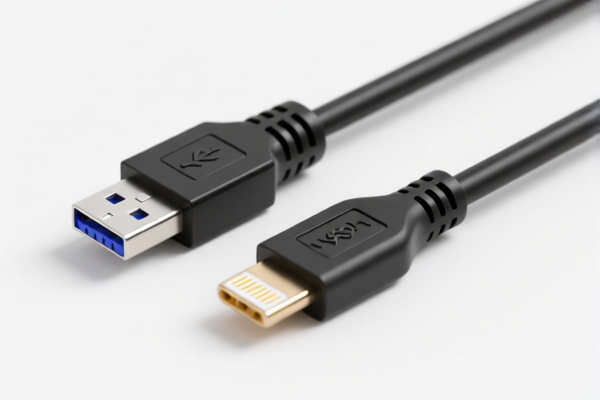
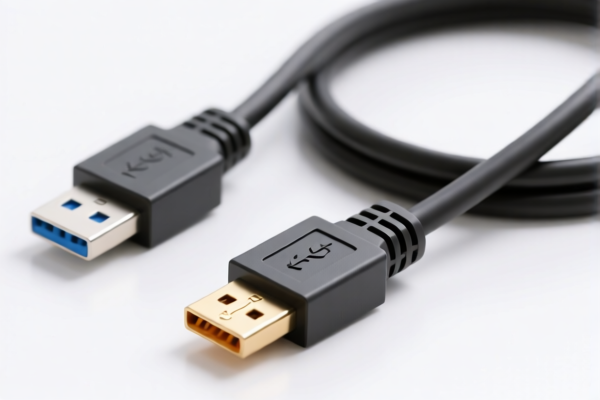
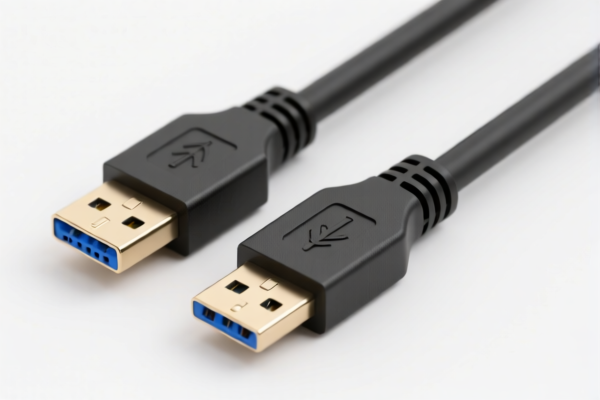
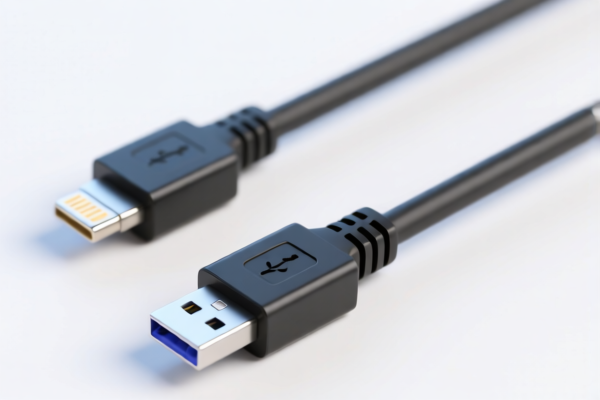
AI Analysis
🔌 3D Printer Serial Data Cable (USB/Communication Cables)
🌐 HS Code Reference & Customs Clearance Guide | 2026 Latest Tariff Analysis | Professional Clearance Strategy
📌 I. Product Definition: What is a "Serial Data Cable" for 3D Printers?
A "3D Printer Serial Data Cable" typically refers to the communication cable connecting the 3D printer controller (motherboard) to a computer, smartphone, or external storage (SD card reader). In modern contexts, this is overwhelmingly a USB Data Cable (USB Type-A to Type-B, Mini-USB, or Micro-USB).
In international trade classification (HS Code), these are not treated as "printer parts" (which would fall under Chapter 84). Instead, they are classified as Insulated Electric Conductors because their primary function is signal transmission via copper conductors.
⚠️ Key Distinction:
- If the cable is fitted with connectors (e.g., USB plugs) and used for telecommunications or data transmission (like connecting to a PC), it falls under HS 8544.42.
- If it is an optical fiber cable, it falls under HS 8544.60 or 8544.70.
- Note: Most 3D printer cables are copper-based, so HS 8544.42 is the primary focus.
📦 II. HS Code Classification Details (2026 Latest Tariff Authority)
Based on the provided <DATA>, there are two relevant HS Codes depending on the specific application and connector type.
| HS Code | Product Description | Application Scenario | Connector Status |
|---|---|---|---|
8544.42.20.00 |
Other electric conductors, ≤1,000 V, Fitted with Connectors: Of a kind used for telecommunications | USB cables connecting 3D printers to computers/networks for data transfer; Ethernet cables (Cat5e/6) for networked printers | ✅ Yes (USB/Ethernet plugs) |
8544.42.90.10 |
Other electric conductors, ≤1,000 V, Fitted with Connectors: Extension cords as defined in statistical note 6 | Power extension cords, multi-plug adapters, or long data cables explicitly marketed as "extension" units (less common for pure serial data) | ✅ Yes (Multiple plugs) |
🔍 Critical Clarification:
- Most 3D Printer Data Cables (USB): Fall under8544.42.20.00because they are considered "of a kind used for telecommunications" (data transmission between devices).
- Why not8544.42.90?: The general "Other" category is for cables without specific telecom/data designation. However,8544.42.90.10is explicitly for Extension Cords. A single USB cable is not an extension cord.
- Voltage Check: These cables operate at ≤5V (USB), which is well below the 1,000 V threshold in the HS description.
💰 III. 2026 Latest Tariff Rate Breakdown (Including Surtaxes)
✅ Applicable Country: United States (US)
✅ Origin: China (CN)
✅ Effective Date: Current rates apply (2024-2026)
🎯 1. 8544.42.20.00 —— USB/Telecom Data Cables
| Item | Content |
|---|---|
| Basic Tariff | 0.0% |
| Section 301 Surtax (USITC) | +25.0% (List 3/4a items) |
| Steel/Aluminum/Copper Surcharge | +50.0% (Applies to steel, aluminum, copper products; Check if applicable to your cable construction) |
| Total Tariff | 75.0% |
| De Minimis Exemption | ❌ NOT Eligible (DENY) |
| Legal Basis | 8544.42.20.00 → USITC:8544.42.20.00 → Section 301: 75% |
📌 Explanation:
- 0% Base: Standard MFN rate for insulated wires.
- 25% Section 301: This is the primary surtax for Chinese-made electronic components and cables.
- 50% Metal Surcharge: CRITICAL WARNING: If the cable contains significant copper (conductors) or steel/aluminum (shielding/jackets), a 50% surtax may be applied in addition to the 25%.
- Total 75%: This is the wor-case scenario and must be accounted for in pricing. Most standard USB cables (copper conductors) are subject to this high combined rate.
🎯 2. 8544.42.90.10 —— Extension Cords
| Item | Content |
|---|---|
| Basic Tariff | 0.0% |
| Section 301 Surtax (USITC) | +0.0% (Often exempt or lower rate for certain consumer goods) |
| Steel/Aluminum/Copper Surcharge | +50.0% (If copper/steel content qualifies) |
| Total Tariff | 50.0% |
| De Minimis Exemption | ❌ NOT Eligible (DENY) |
| Legal Basis | 8544.42.90.10 → USITC:8544.42.90.10 → Section 301: 0% + Metal Surcharge |
📌 Explanation:
- This code has 0% Section 301 surtax, but the 50% metal surcharge still applies if the product contains covered metals.
- However: A 3D printer data cable is NOT an extension cord. Do not misclassify as8544.42.90.10to save 25%. Customs will detect the mismatch and impose penalties.
🛠️ IV. Customs Clearance Practical Advice (Battle-Tested)
✅ 1. Preparation Checklist (Non-Negotiable)
| Document | Must Provide | Notes |
|---|---|---|
| ✅ Product Specification Sheet | ✔️ | Must state: "USB Data Cable," "Voltage: 5V," "Function: Data Transmission for 3D Printer" |
| ✅ Circuit Diagram | ✔️ | Proof it is a data cable, not a power-only cable |
| ✅ Photos (Label + Connectors) | ✔️ | Show USB Type-A/B plugs, model number |
| ✅ Commercial Invoice | ✔️ | Description: "USB Serial Data Cable for 3D Printer, HS 8544.42.20.00" |
| ✅ Packing List | ✔️ | Weight and dimensions |
| ✅ FCC ID | ✔️ | If the cable contains active components (unlikely for passive cables, but good practice) |
✅ 2. Declaration Strategy (Key Mantras)
🔥 "Do Not Call It 'Part'! Call It 'Cable'! Classify Under 8544, Not 8471!"
| Scenario | Correct Declaration | Wrong Declaration |
|---|---|---|
| USB Data Cable | 8544.42.20.00 (Telecom Cable) |
8471.80.00.00 (Part of Printer) → Wrong Function |
| Power Cable (AC to DC) | 8544.42.20.00 or 8544.30 |
8544.42.20.00 → Acceptable if ≤1kV |
| Extension Cord | 8544.42.90.10 |
8544.42.20.00 → Wrong Description |
| Optical Fiber Cable | 8544.60 or 8544.70 |
8544.42.20.00 → Wrong Material |
📌 Key Tip:
- Do NOT declare as "Part of 3D Printer" (HS 8471/8479). While 3D printers are machinery, their cables are classified by their electrical function, not the machine they serve.
- Explicitly State: "Fitted with Connectors" and "Used for Data Transmission/Telecommunications" in the invoice description.
✅ 3. Special Cases & Warnings
| Situation | Handling Advice |
|---|---|
| Cable with Copper Shielding | HIGH RISK: May trigger 50% Metal Surcharge on top of 25% Section 301 = 75% Total. |
| Bulk vs. Retail | Tariff rate is the same, but retail packaging helps identify the end-use. |
| De Minimis (Section 321) | ❌ NO. These items are not eligible for $800 de minimis exemption. Must file formal entry. |
| Misclassification | If declared as "Extension Cord" (8544.42.90.10) to save 25%, Customs may audit and demand back duties + penalties. |
🌍 V. Global Market Comparison (2026 Update)
| Country/Region | Recommended HS Code | Tariff Rate (China Origin) | Key Certification | Note |
|---|---|---|---|---|
| 🇺🇸 USA | 8544.42.20.00 |
75% (0% + 25% + 50% metal) | N/A (Passive Cable) | Highest duty. Cost impact significant. |
| 🇨🇳 China | 8544.42.20.00 |
0% | CCC (Optional for cables) | Free trade within China. |
| 🇪🇺 EU | 8544.42.20.00 |
4% | CE + RoHS | No Section 301 equivalent. |
| 🇬🇧 UK | 8544.42.20.00 |
4% | UKCA + RoHS | Post-Brexit rules apply. |
| 🇨🇦 Canada | 8544.42.20.00 |
0% | ICES-003 | Free trade under CUSMA. |
| 🇦🇺 Australia | 8544.42.20.00 |
5% | RCM | No major surtaxes. |
📌 Conclusion:
- USA is the only major market with punitive tariffs (75%) for these cables.
- Cost Optimization: Consider sourcing cables from Vietnam, Mexico, or Thailand (if eligible under USMCA or GSP) to avoid Section 301 surtaxes.
- Note: Even if the cable is "made in Vietnam" but the copper is from China, origin rules may still apply. Consult a customs broker.
📌 VI. Common Errors & Pitfalls (Lessons Learned)
❌ Error 1: Declaring as "Printer Accessory"
👉 Consequence: Wrong HS Code → Audit + Back Duties + Penalties.
👉 Fix: Always classify cables under Chapter 85.
❌ Error 2: Ignoring the 50% Metal Surcharge
👉 Consequence: Unexpected 50% bill on top of 25%.
👉 Fix: Confirm if the cable construction triggers the "Steel, Aluminum, Copper" surtax. Most USB cables have copper conductors → Likely Applicable.
❌ Error 3: Misclassifying as "Extension Cord" (8544.42.90.10)
👉 Consequence: Customs rejects as false description.
👉 Fix: Only use for multi-plug extension units. Single-end data cables = Telecom (8544.42.20.00).
❌ Error 4: Assuming De Minimis Applies
👉 Consequence: Seizure of packages.
👉 Fix: Formal entry required for all shipments, regardless of value.
✅ Correct Declaration Example:
"USB Type-A to Type-B Data Cable, 1.8m, for 3D Printer Communication, HS 8544.42.20.00, Made in China"
🎯 VII. Conclusion: Precision Saves Money!
🎯 Key Takeaway:
🔹 "Cable is Cable, Not Part!" → Classify under 8544.42.20.00.
🔹 "Expect 75% Duty in USA" → Include in cost model.
🔹 "Check for Metal Surcharge" → Copper conductors often trigger +50%.
🔹 "No De Minimis" → Plan for formal customs entry.
📌 Pro Tip:
If you are importing large volumes, consider Section 321 (De Minimis) Exclusion Lists updates. Currently, 8544.42.20.00 is not exempt. However, always verify with a licensed customs broker before each shipment.
📣 Immediate Action:
📞 Contact a Customs Broker to confirm if your specific cable design triggers the 50% metal surcharge.
📦 Update your Costing Model to include 75% tariff for US imports.
🌍 Diversify Sourcing to non-China origins if margins are thin.
✨ Professional clearance starts with accurate classification!
💼 Your margin depends on every percentage point!
Customer Reviews
About HS Code Classification
The Harmonized System (HS) is an internationally standardized nomenclature developed by the World Customs Organization (WCO) to classify traded products. Over 200 countries use the HS system as the basis for customs tariffs, trade statistics, and import/export regulations.
Each HS code follows a hierarchical structure:
- Chapter (2 digits) — Broad category of goods (e.g., Chapter 84: Machinery and Mechanical Appliances)
- Heading (4 digits) — More specific grouping within the chapter
- Subheading (6 digits) — Internationally standardized breakdown, used by all WCO member countries
- National subdivisions (8-10 digits) — Country-specific extensions for further classification, such as US HTSUS 10-digit codes
Correct HS code classification is essential for smooth customs clearance, accurate duty payment, and compliance with trade regulations. Misclassification can lead to customs delays, overpayment of duties, or penalties.
When importing from CN to US, the applicable tariff rates may include:
- Most-Favored-Nation (MFN) rate — The standard duty rate applied to WTO members
- General rate — Applied to countries without trade agreements
- Trade remedy duties — Additional tariffs such as Section 301 (anti-dumping), Section 232 (national security), or countervailing duties
The information provided on this page is for reference purposes only. For official classification, please consult with your local customs authority or a licensed customs broker.