3d brick pattern wall panel
CN → US| HS Code | Tariff Rate | Origin | Destination | Doc |
|---|---|---|---|---|
| 6810191200 | 39.9% | CN | US | Official Doc |
| 6811820000 | 35.0% | CN | US | Official Doc |
| 6810191400 | 44.0% | CN | US | Official Doc |
| 3925305000 | 22.8% | CN | US | Official Doc |
| 6810191200 | 39.9% | CN | US | Official Doc |
Product Images
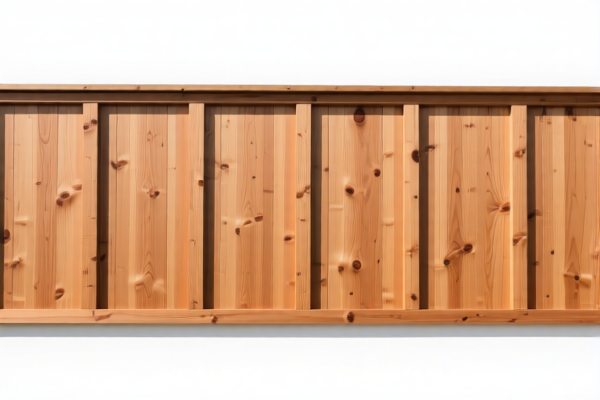
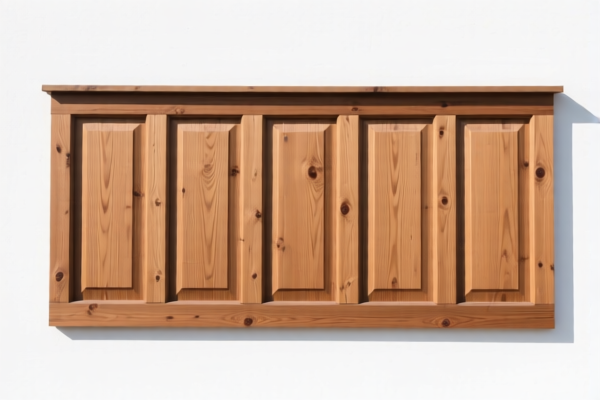
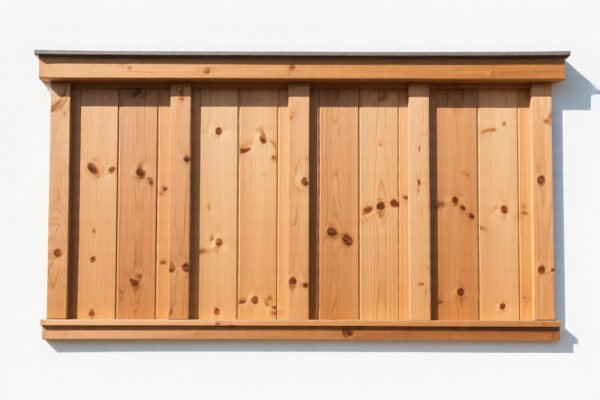
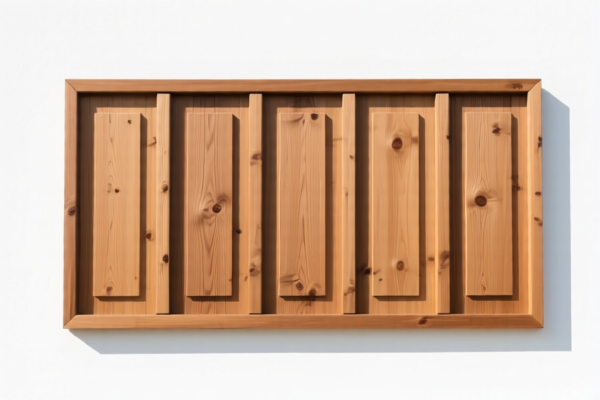
AI Analysis
🧱 3D Brick Pattern Wall Panel: Comprehensive HS Code Classification & Customs Clearance Guide
🌐 HS Code Reference & Customs Strategy | 2026 Tariff Analysis | Professional Clearance Protocol 📌 Part I: Product Definition & Classification Strategy
The "3D Brick Pattern Wall Panel" is a decorative architectural material used for interior or exterior wall cladding. Its classification depends strictly on the material composition and binding agent. It is not a single HS code product but a category with distinct classifications based on manufacturing composition.
⚠️ Critical Distinction:
- If made of PVC/Polymers → Classified as Plastic Building Accessory (HS: 3925.30.50.00)
- If made of Stone/Artificial Stone (non-cement bound) → Classified as Stone Product (HS: 6810.19.12.00)
- If made of Fiber Cement (asbestos-free) → Classified as Cement Product (HS: 6811.82.00.00)
- If made of Cement-based Composite → Classified as Ceramic/Stone Tile equivalent (HS: 6810.19.14.00)
📦 Part II: HS Code Classification Details (2026 Latest Tariff Schedule)
| HS Code | Material Composition & Summary | Key Characteristics |
|---|---|---|
3925.30.50.00 |
Plastic-Based 3D Brick Wall Panel made of PVC or similar polymers. |
Lightweight, waterproof, synthetic texture. Classified as "Plastic building accessories." |
6810.19.12.00 |
Stone-Based (Non-Cement) Wall panel resembling bricks, made of natural stone or artificial stone bound by adhesives (non-cement). |
Heavy, natural look. Classified as "Other stone articles not cement-bound." |
6811.82.00.00 |
Fiber Cement-Based Wall panel made of asbestos-free fiber cement or similar composite. |
Durable, fire-resistant, cementitious but non-asbestos. Classified as "Asbestos-cement." |
6810.19.14.00 |
Cement-Based Composite Wall panel with brick pattern, made of cement-based materials or artificial stone using cement as binder. |
Heavy, rigid. Classified as "Bricks/Tiles of artificial stone or cement." |
🔍 Key Reminder:
- Do not assume all "brick panels" are the same.
- Plastic (PVC) has the lowest base tariff (5.3%) but still faces significant additional duties.
- Stone/Cement variants face higher base tariffs (4.9% - 9.0%) plus the same additional duties.
- Misclassification leads to severe penalties and delays.
💰 Part III: 2026 Tariff Rate Breakdown (Detailed Tax Analysis)
✅ Applicable Country: United States (US)
✅ Country of Origin: China (CN)
✅ Effective Date: November 10, 2025 (inclusive)
✅ Note: All rates include Base Tariff + Section 301 Tariff + IEEPA 122 Tariff.
🎯 1. 3925.30.50.00 – Plastic 3D Brick Wall Panels (PVC/Polymer)
The most common cost-effective option.
| Item | Detail |
|---|---|
| Base Tariff | 5.3% (ad valorem) |
| Section 301 Tariff | +7.5% (USITC Footnote 9903.88.01) |
| IEEPA 122 Tariff | +10% (Against China/HK products, effective 2025-11-10) |
| Total Tariff Rate | 22.8% |
| Calculation | CIF Value × 22.8% |
| De Minimis Exemption | ❌ No (denied) |
| Legal Path | IEEPA:9903.01.25 → USITC:3925.30.50.00 → FOOTNOTE:9903.88.01 |
📌 Explanation:
- This is the lowest total tariff among the four options.
- The "Section 301" rate is 7.5% (lower than stone/cement variants).
- Crucial: Must be clearly declared as "Plastic/PVC" to qualify.
🎯 2. 6810.19.12.00 – Stone/Artificial Stone Wall Panels (Non-Cement Bound)
| Item | Detail |
|---|---|
| Base Tariff | 4.9% (ad valorem) |
| Section 301 Tariff | +25.0% (USITC Footnote 9903.88.01) |
| IEEPA 122 Tariff | +10% (Against China/HK products, effective 2025-11-10) |
| Total Tariff Rate | 39.9% |
| Calculation | CIF Value × 39.9% |
| De Minimis Exemption | ❌ No (denied) |
| Legal Path | IEEPA:9903.01.25 → USITC:6810.19.12.00 → FOOTNOTE:9903.88.01 |
📌 Explanation:
- Although the base tariff (4.9%) is low, the Section 301 tariff is 25%, pushing the total to ~40%.
- Applies to panels bound by resins/adhesives, not cement.
🎯 3. 6811.82.00.00 – Asbestos-Free Fiber Cement Panels
| Item | Detail |
|---|---|
| Base Tariff | 0.0% (ad valorem) |
| Section 301 Tariff | +25.0% (USITC Footnote 9903.88.01) |
| IEEPA 122 Tariff | +10% (Against China/HK products, effective 2025-11-10) |
| Total Tariff Rate | 35.0% |
| Calculation | CIF Value × 35.0% |
| De Minimis Exemption | ❌ No (denied) |
| Legal Path | IEEPA:9903.01.25 → USITC:6811.82.00.00 → FOOTNOTE:9903.88.01 |
📌 Explanation:
- Base tariff is 0%, but the 25% Section 301 applies.
- Lower than stone variants (39.9%) but higher than plastic (22.8%).
- Must be certified asbestos-free to qualify for this HS code.
🎯 4. 6810.19.14.00 – Cement-Based Composite/Artificial Stone Tiles
| Item | Detail |
|---|---|
| Base Tariff | 9.0% (ad valorem) |
| Section 301 Tariff | +25.0% (USITC Footnote 9903.88.01) |
| IEEPA 122 Tariff | +10% (Against China/HK products, effective 2025-11-10) |
| Total Tariff Rate | 44.0% |
| Calculation | CIF Value × 44.0% |
| De Minimis Exemption | ❌ No (denied) |
| Legal Path | IEEPA:9903.01.25 → USITC:6810.19.14.00 → FOOTNOTE:9903.88.01 |
📌 Explanation:
- Highest Total Tariff at 44.0%.
- High base tariff (9%) combined with the maximum Section 301 duty (25%).
- Applies if the panel uses cement as the primary binder and mimics brick tiles.
🛠️ Part IV: Customs Clearance Practical Advice
✅ 1. Required Documentation Checklist
| Document | Mandatory | Description |
|---|---|---|
| ✅ Product Specification Sheet | ✔️ | Must explicitly state Material Composition (e.g., "100% PVC", "Asbestos-free Fiber Cement"). |
| ✅ Composition Declaration | ✔️ | Letter of Guarantee specifying % of binder, filler, and core material. |
| ✅ Product Photos | ✔️ | Close-ups of texture, cross-section (if possible), and packaging labels. |
| ✅ Commercial Invoice | ✔️ | Must use precise description: "3D Wall Panel, [Material], for Wall Cladding." Avoid vague terms like "Decoration." |
| ✅ Packing List | ✔️ | Clear indication of gross/net weight and number of units. |
| ✅ Origin Certificate | ✔️ | Required for US import; verify country of origin to confirm applicability of IEEPA 122. |
✅ 2. Declaration Best Practices (Key Mnemonic)
🔥 "Material First, Binder Key, Avoid Vague, Save Costs Early!"
| Scenario | Correct Declaration | Wrong Practice |
|---|---|---|
| PVC Panel | "3D Wall Panel, PVC Plastic, Assembled" | Call it "Stone Wall Brick" → Risk of 44% tariff |
| Fiber Cement | "3D Wall Panel, Asbestos-Free Fiber Cement" | Omit "Asbestos-Free" → Risk of seizure/rejection |
| Stone/Resin | "Wall Panel, Artificial Stone, Resin-Bound" | Call it "Cement Brick" → Risk of 44% tariff |
| Cement Composite | "3D Wall Panel, Cement-Based Composite" | Call it "Plastic Panel" → Severe misclassification penalty |
✅ 3. Special Handling Tips
| Situation | Recommendation |
|---|---|
| Mixed Materials | If the panel has a plastic face and cement core, consult a customs broker. May require primary classification based on essential character. |
| New vs. Used | These are generally new decorative items. Ensure no import restrictions on recycled materials if applicable. |
| Samples | Even samples are subject to the 22.8%-44% tariffs. Do not rely on "De Minimis" exemptions for B2B shipments. |
| Pre-Ruling | Strongly recommend applying for an Advance Ruling (US CBP) if your product composition is complex. |
🌍 Part V: Global Market Comparison (2026)
| Country/Region | Recommended HS Code (Plastic) | Tariff (China Origin) | Notes |
|---|---|---|---|
| 🇺🇸 USA | 3925.30.50.00 |
22.8% | High additional duties (301 + IEEPA 122). |
| 🇨🇳 China | 3925.30.50.00 |
0-5% | Low import tariff, no 301/IEEPA. |
| 🇪🇺 EU | 3925.30.50.00 |
5-6% | No Section 301 equivalent. CE marking required. |
| 🇬🇧 UK | 3925.30.50.00 |
5-6% | Post-Brexit tariff schedule applies. |
| 🇨🇦 Canada | 3925.30.50.00 |
0-5% | No 301 tariffs. |
📌 Conclusion:
- The US market is the most expensive due to the 22.8% effective rate on plastic panels and up to 44% on cement/stone panels.
- Plastic (PVC) is the most tariff-efficient option for the US market (22.8% vs 35-44%).
- For other markets (EU, UK, Canada), tariffs are significantly lower, but CE/UKCA certification is mandatory.
📌 Part VI: Common Errors & Pitfalls
❌ Error 1: Declaring PVC panels as "Ceramic Bricks"
👉 Consequence: Incorrect HS code (6810.19.14.00) → 44% tariff instead of 22.8%.
❌ Error 2: Omitting "Asbestos-Free" in Fiber Cement declarations
👉 Consequence: Customs may suspect asbestos content → Shipment held, tested, or rejected.
❌ Error 3: Using generic names like "Wall Decoration"
👉 Consequence: Customs cannot determine material → Delay, audit, or retroactive tariff assessment.
❌ Error 4: Assuming "De Minimis" (Section 321) applies
👉 Consequence: Denied. Goods from China subject to IEEPA 122 are excluded from de minimis relief if value exceeds thresholds or specific criteria are met.
✅ Correct Approach:
"3D Wall Panel, 12x24 inch, 100% PVC Plastic, Brick Pattern, for Interior Wall Cladding, Made in China."
🎯 Part VII: Conclusion & Strategic Recommendation
🎯 Key Takeaway:
🔹 "Material Dictates Tariff: PVC Saves, Stone Costs."
🔹 "22.8% for Plastic, 35-44% for Stone/Cement. Choose Wisely."
🔹 "Declare Accurately: One Wrong Word = High Penalty."
📌 Pro Tip:
If your product is not made in China (e.g., Vietnam, Thailand, Malaysia), the IEEPA 122 (10%) and Section 301 tariffs may not apply or apply differently.
✅ Action: Verify Country of Origin and apply for Section 301 Exclusions if eligible.
📣 Immediate Action Steps:
1. Confirm Material Composition with your manufacturer.
2. Select the Optimal HS Code based on material (PVC vs. Cement/Stone).
3. Prepare Precise Documentation (Spec Sheets, Declarations).
4. Apply for Advance Ruling if unsure about classification.
5. Calculate Total Landed Cost including 22.8%-44% tariffs.
✨ Professional Clearance Starts with Precise Classification!
💼 Every Dollar Saved on Tariffs is Pure Profit!
Customer Reviews
About HS Code Classification
The Harmonized System (HS) is an internationally standardized nomenclature developed by the World Customs Organization (WCO) to classify traded products. Over 200 countries use the HS system as the basis for customs tariffs, trade statistics, and import/export regulations.
Each HS code follows a hierarchical structure:
- Chapter (2 digits) — Broad category of goods (e.g., Chapter 84: Machinery and Mechanical Appliances)
- Heading (4 digits) — More specific grouping within the chapter
- Subheading (6 digits) — Internationally standardized breakdown, used by all WCO member countries
- National subdivisions (8-10 digits) — Country-specific extensions for further classification, such as US HTSUS 10-digit codes
Correct HS code classification is essential for smooth customs clearance, accurate duty payment, and compliance with trade regulations. Misclassification can lead to customs delays, overpayment of duties, or penalties.
When importing from CN to US, the applicable tariff rates may include:
- Most-Favored-Nation (MFN) rate — The standard duty rate applied to WTO members
- General rate — Applied to countries without trade agreements
- Trade remedy duties — Additional tariffs such as Section 301 (anti-dumping), Section 232 (national security), or countervailing duties
The information provided on this page is for reference purposes only. For official classification, please consult with your local customs authority or a licensed customs broker.