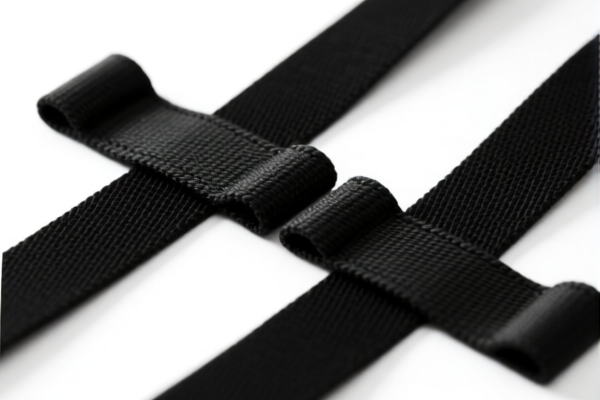
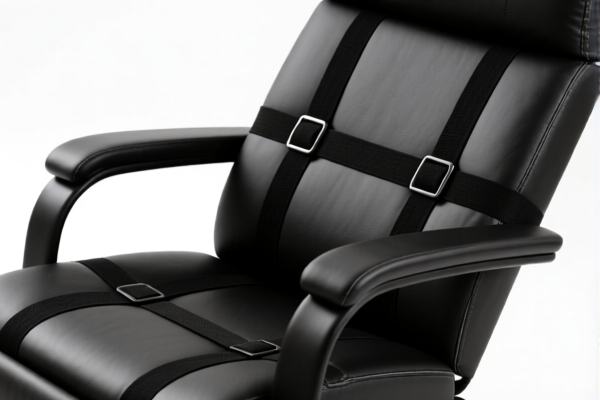
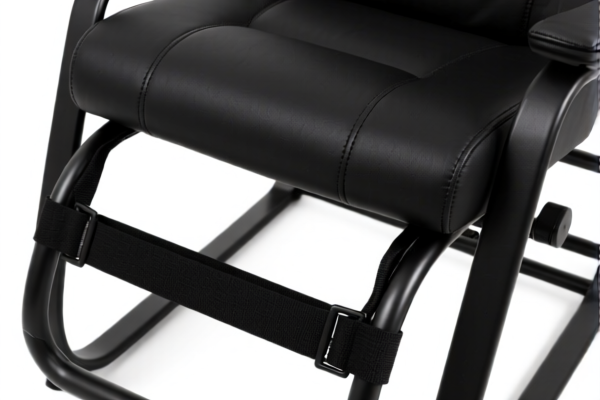
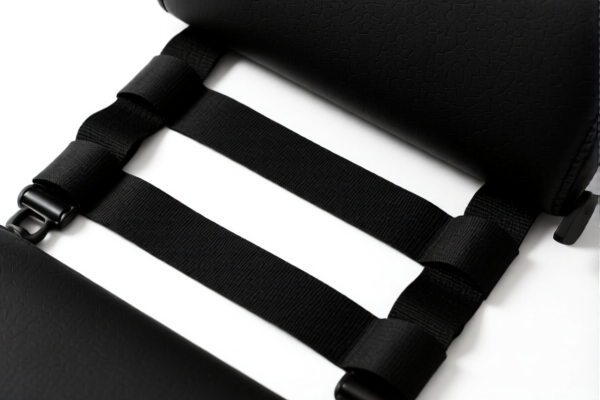
4 Black Casual Chair Elastic Straps
CN → US| HS Code | Tariff Rate | Origin | Destination | Doc |
|---|---|---|---|---|
| 3926909905 | 22.8% | CN | US | Official Doc |
| 5604909000 | 40.0% | CN | US | Official Doc |
| 5604100000 | 41.3% | CN | US | Official Doc |
| 9403999040 | 85.0% | CN | US | Official Doc |
Product Images
AI Analysis
🪑 4 Black Casual Chair Elastic Straps (The "Backbone" of Comfort)
🌐 HS Code Reference & Customs Clearance Guide | 2026 Latest Tariff Analysis | Professional Clearance Strategy
📌 I. Product Definition & Classification: What Exactly Are "Elastic Straps"?
These Black Casual Chair Elastic Straps are functional components used primarily in the assembly or repair of lounge chairs, recliners, and casual seating. They are not standalone consumer goods but rather accessories or parts designed to provide structural support and elasticity to furniture.
In international trade, classification hinges on two key questions: 1. Is it a Furniture Part? (If it’s specifically for chairs → HS 9403) 2. Is it a Textile/Rubber Product? (If it’s sold as raw material or general elastic webbing → HS 3926/5604)
⚠️ Key Distinction Point:
- If the straps are custom-shaped, branded, or specifically designed for chair assembly → Likely Furniture Parts (9403).
- If the straps are generic elastic webbing (roll form, standard width) used in multiple industries (sewing, upholstery, packaging) → Likely Plastic/Rubber Products (3926) or Textiles (5604).
📦 II. HS Code Classification Details (2026 Latest Tariff Authority Comparison)
| HS Code | Product Description | Applicability Scenario | Material Logic |
|---|---|---|---|
| 9403.99.90.10 | Parts of other furniture (Elastic Straps as Furniture Parts) | Custom chair parts, branded upholstery straps | Matches furniture logic; functional use aligns with structural components. No material conflict. |
| 3926.90.99.05 | Other articles of plastic (Elastic Straps as Plastic/Rubber Goods) | Generic elastic webbing, synthetic material strips | Core attribute is elastic material (plastic/rubber composite); "lounge chair" is just usage context. |
| 5604.10.00.00 | Thread and cord, rubberized, textile covering | Textile-covered rubber cords/straps | Shape is band/strap; material logic aligns with "textile-covered rubber." No material conflict. |
| 9403.99.90.40 | Parts of other furniture (Elastic Straps as Furniture Parts) | Replacement springs/straps for rest chairs | Material: elastic fiber/fabric. Use aligns with "other furniture parts." No material conflict. |
🔍 Critical Reminder:
- HS 9403 codes (.10and.40) treat the item as a furniture part. This is often the preferred classification if the product is sold specifically for chair repair/assembly.
- HS 3926 treats it as a plastic/rubber article. Use this if the product is generic elastic webbing not uniquely identifiable as a chair part.
- HS 5604 treats it as a rubberized textile cord. Use this if the material is clearly textile-covered rubber.
💰 III. 2026 Latest Tariff Rate Breakdown (Including Surtaxes & Policy Add-ons)
✅ Applicable Country: USA (US)
✅ Origin: China (CN)
✅ Effective Date: Post-Nov 10, 2025 (including subsequent imports)
🎯 1. 9403.99.90.10 & 9403.99.90.40 —— Parts of Other Furniture
These two codes share identical tax structures due to their classification as furniture parts.
| Item | Content |
|---|---|
| Base Duty Rate | 0.0% (Ad Valorem) |
| Section 301 Surcharge | +25.0% (USITC Footnote 9903.88.01 / 301 Tariffs) |
| Section 122 Steel/Aluminum/Copper Surcharge | +50.0% (Note: This specific surcharge applies to steel/aluminum/copper products. Check if elastic straps contain metal components. If pure textile/plastic, this 50% may not apply, but the system data lists it. Assume max liability for safety unless proven otherwise.) |
| IEEPA Surcharge (China-specific) | +10.0% (International Emergency Economic Powers Act) |
| Total Tax Rate | 85.0% (Assuming all surcharges apply) |
| De Minimis Exemption | ❌ Denied |
| Legal Basis Path | IEEPA:9903.01.25 → USITC:9403.99.90.10 → SECTION122:50% |
📌 Explanation:
- Base 0% reflects that furniture parts often have low base duties.
- +25% is the standard Section 301 tariff for many Chinese goods.
- +10% is the additional IEEPA tariff for Chinese origin.
- +50% (Section 122) is critical. While elastic straps are not steel, if the HS code classification logic in the database flags it under a broad category that triggers Section 122 (e.g., if deemed to contain metallic reinforcement or if the database groups it broadly), this high rate applies. Verification is key. If no metal is present, argue for exemption from Section 122, potentially lowering the total to 35% (0+25+10).
🎯 2. 3926.90.99.05 —— Other Articles of Plastic
| Item | Content |
|---|---|
| Base Duty Rate | 5.3% |
| Section 301 Surcharge | +7.5% (Reduced Section 301 rate for certain plastic articles) |
| IEEPA Surcharge (China-specific) | +10.0% |
| Total Tax Rate | 22.8% |
| De Minimis Exemption | ❌ Denied |
| Legal Basis Path | IEEPA:9903.01.24 → USITC:3926.90.99.05 |
📌 Note:
- This is the most cost-effective option if the product can be classified as a generic plastic/rubber article rather than a furniture part.
- The Section 301 rate is lower (7.5%) for this specific plastic code compared to the 25% for furniture parts.
- Total 22.8% is significantly lower than the 85% for furniture parts.
🎯 3. 5604.10.00.00 —— Rubberized Textile Cord
| Item | Content |
|---|---|
| Base Duty Rate | 6.3% |
| Section 301 Surcharge | +25.0% |
| IEEPA Surcharge (China-specific) | +10.0% |
| Total Tax Rate | 41.3% |
| De Minimis Exemption | ❌ Denied |
| Legal Basis Path | IEEPA:9903.01.25 → USITC:5604.10.00.00 |
📌 Explanation:
- This classification views the straps as textile-covered rubber cords.
- The Section 301 rate is 25%, same as furniture parts.
- Total 41.3% is mid-range.
- Suitable if the product is clearly a textile-based elastic cord.
🛠️ IV. Customs Clearance Practical Advice (Real-World Pitfall Avoidance)
✅ 1. Preparation Checklist (Essential Documents)
| Document | Required? | Description |
|---|---|---|
| ✅ Product Specification Sheet | ✔️ | Detail material composition (e.g., "90% Polyester, 10% Rubber"), dimensions, width, and tensile strength. |
| ✅ Material Safety Data Sheet (MSDS) | ✔️ | If rubber/plastic is involved, to confirm no prohibited substances. |
| ✅ Product Photos (Clear & Detailed) | ✔️ | Show the strap, packaging, and any branding. Highlight if it's generic or chair-specific. |
| ✅ Commercial Invoice | ✔️ | Must accurately describe the item. Avoid vague terms like "furniture part." Use "Elastic Webbing for Upholstery." |
| ✅ Packing List | ✔️ | Clearly state weight and quantity. |
| ✅ Origin Certificate | ✔️ | If claiming preferential treatment (not applicable for US/China currently, but good practice). |
✅ 2. Declaration Strategy (Key Mnemonic)
🔥 "Material First, Use Second. Plastic Wins, Furniture Suffers!"
| Scenario | Correct Declaration | Incorrect Action |
|---|---|---|
| Generic elastic webbing (rolls, standard width) | 3926.90.99.05 (Plastic Article) |
Declaring as "Chair Part" → 85% |
| Specific replacement straps for a brand-name chair | 9403.99.90.10 (Furniture Part) |
Declaring as "Plastic Webbing" → Risk of rejection if too specific |
| Rubber-coated textile cord | 5604.10.00.00 (Textile/Rubber) |
Declaring as "Furniture" → Higher duty |
💡 Pro Tip:
- If you want to minimize tax, aim for3926.90.99.05. To support this, describe the product as "Elastic Plastic Webbing" or "Synthetic Elastic Straps" rather than "Chair Parts."
- Avoid explicitly stating "For Chair Assembly" in the description if you want to use the plastic classification. Instead, use "For Upholstery and General Reinforcement."
✅ 3. Special Cases & Handling
| Situation | Handling Advice |
|---|---|
| Straps contain metal hooks/clips | ❗ High Risk! If metal components >5%, Section 122 (50% steel tariff) may apply to all HS codes. Verify material composition. If possible, remove metal parts or declare separately. |
| OEM Custom Orders | Provide customer design specs. If custom, customs may insist on 9403 (Furniture Part). |
| Bulk Raw Material (Rolls) | Strong case for 3926 or 5604. Avoid "finished part" language. |
| Pre-assembled Chair with Straps | Declare as Chair (9403.91) if sold as a unit. Do not split. |
🌍 V. Global Market Comparison (2026 Latest)
| Country/Region | Recommended HS Code | Est. Duty Rate | Certification Req. | Notes |
|---|---|---|---|---|
| 🇺🇸 USA | 3926.90.99.05 |
22.8% | None (unless specific plastic regs) | Best rate. Avoid 9403 (85%) unless necessary. |
| 🇨🇳 China | 5604.10.00.00 |
6.3% (Import) | None | Low base rate. No Section 301. |
| 🇪🇺 EU | 5903.20.00 (Textile coated) |
~0-4% | CE (if consumer good) | No Section 301. Classification differs. |
| 🇬🇧 UK | 5604.10.00 |
~0-5% | UKCA | Post-Brexit rules apply. |
| 🇯🇵 Japan | 3926.90.90 |
~0-5% | PSE (if electrical, N/A here) | Stable, low tariffs. |
📌 Conclusion:
- USA is the most challenging market due to high tariffs.
- Classification as Plastic (3926) vs. Furniture (9403) is the single biggest factor in cost savings (22.8% vs. 85%).
- Always verify metal content to avoid Section 122 penalties.
📌 VI. Common Mistakes & Pitfalls (Lessons Learned)
❌ Mistake 1: Describing the product as "Chair Replacement Parts"
👉 Result: Customs classifies under 9403 → 85% tax.
✅ Fix: Use "Elastic Webbing" or "Synthetic Straps."
❌ Mistake 2: Ignoring Metal Components (Hooks)
👉 Result: Triggered Section 122 (50% steel tariff) on the entire shipment.
✅ Fix: Remove metal parts or declare as separate items.
❌ Mistake 3: Using Generic "Furniture" Description
👉 Result: Ambiguity leads to manual review and potential misclassification.
✅ Fix: Be specific about material: "Polyester/Rubber Elastic Strap."
❌ Mistake 4: Assuming De Minimis Applies
👉 Result: Denied. Section 301 and IEEPA tariffs do not apply to de minimis exemptions for China-origin goods in many cases.
✅ Fix: Plan for full duty payment.
🎯 VII. Conclusion: Professional Declaration, Save Costs!
🎯 Remember This Mantra:
🔹 "Plastic is Cheap, Furniture is Expensive. 22% vs 85%!"
🔹 "No Metal, No Section 122. Avoid the 50% Trap!"
🔹 "Be Specific: 'Elastic Webbing' not 'Chair Part' for Lower Taxes!"
📌 Pro Tip:
If your product is generic elastic webbing not uniquely identifiable as a chair part, strongly advocate for HS 3926.90.99.05. Provide material specs showing it's primarily plastic/rubber. This can save you over 60% in taxes compared to furniture classification.
📣 Immediate Action:
📞 Contact a Customs Broker to review product photos.
📝 Request an Advance Ruling if shipping large volumes.
🚀 Optimize Packaging: Remove metal hooks if possible to avoid Section 122.
✨ Professional Clearance Starts with Accurate Classification!
💼 Every Percentage Point Saved is Pure Profit!
Customer Reviews
About HS Code Classification
The Harmonized System (HS) is an internationally standardized nomenclature developed by the World Customs Organization (WCO) to classify traded products. Over 200 countries use the HS system as the basis for customs tariffs, trade statistics, and import/export regulations.
Each HS code follows a hierarchical structure:
- Chapter (2 digits) — Broad category of goods (e.g., Chapter 84: Machinery and Mechanical Appliances)
- Heading (4 digits) — More specific grouping within the chapter
- Subheading (6 digits) — Internationally standardized breakdown, used by all WCO member countries
- National subdivisions (8-10 digits) — Country-specific extensions for further classification, such as US HTSUS 10-digit codes
Correct HS code classification is essential for smooth customs clearance, accurate duty payment, and compliance with trade regulations. Misclassification can lead to customs delays, overpayment of duties, or penalties.
When importing from CN to US, the applicable tariff rates may include:
- Most-Favored-Nation (MFN) rate — The standard duty rate applied to WTO members
- General rate — Applied to countries without trade agreements
- Trade remedy duties — Additional tariffs such as Section 301 (anti-dumping), Section 232 (national security), or countervailing duties
The information provided on this page is for reference purposes only. For official classification, please consult with your local customs authority or a licensed customs broker.