4 Channel Relay Module
CN → US| HS Code | Tariff Rate | Origin | Destination | Doc |
|---|---|---|---|---|
| 8542900000 | 60.0% | CN | US | Official Doc |
| 8536490075 | 37.7% | CN | US | Official Doc |
| 8536490080 | 37.7% | CN | US | Official Doc |
| 8542390090 | 60.0% | CN | US | Official Doc |
| 8543709860 | 37.6% | CN | US | Official Doc |
Product Images
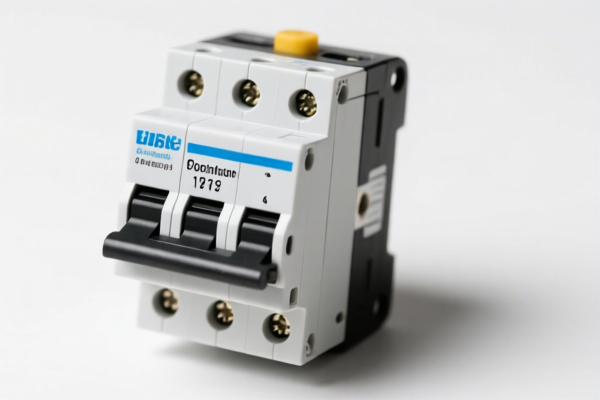
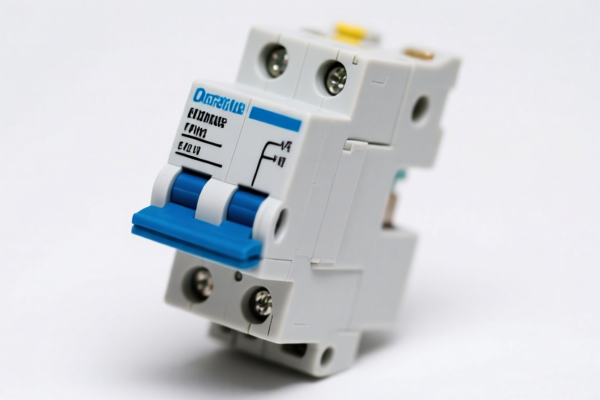
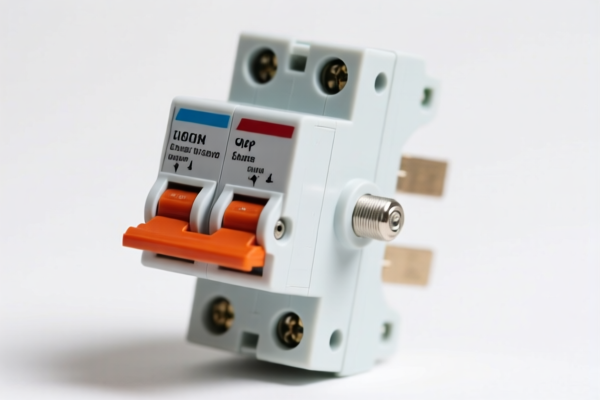
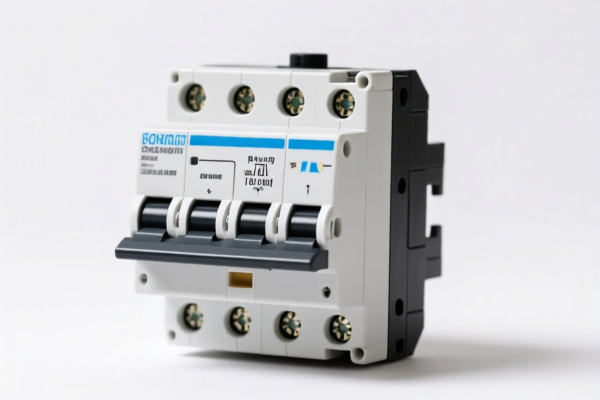
AI Analysis
⚡ 4-Channel Relay Module: Strategic HS Code Classification & US Customs Clearance Guide (2026)
🌐 HS Code Reference & Clearance Strategy | Advanced Tax Analysis for Electronics Components
📌 I. Product Definition: What is a "4-Channel Relay Module"?
A 4-Channel Relay Module is a compact electronic assembly designed to switch four separate electrical circuits independently. It typically consists of: 1. Relay Elements: Electromechanical or solid-state switches. 2. Control Interface: Logic inputs (e.g., 3.3V/5V GPIO for Arduino/Raspberry Pi). 3. Support Circuitry: Optocouplers for isolation, diodes for voltage suppression, and sometimes terminal blocks.
Critical Distinction for Customs:
The classification depends entirely on whether the module is viewed as a "Component of an Integrated Circuit" (higher tax, specific tech classification) or as an "Electrical Switching Device/Part" (lower tax, general machinery classification).
⚠️ Key Decision Point:
- If the module is treated as a custom-made IC or specific digital processing unit, it falls under Heading 8542 (Higher Risk/Tax).
- If the module is treated as a standard electrical switching device or part of a machine, it falls under Heading 8536 or 8543 (Lower Tax).
📦 II. HS Code Classification Matrix (2026 US Import Data)
Based on the provided data, here are the 5 valid HS Codes for a 4-Channel Relay Module, ranked by potential tax efficiency.
| HS Code | Classification Description | Total Tax Rate | Key Tax Components |
|---|---|---|---|
| 8536.49.00.75 | Electromagnetic Switching Relays | 37.7% | Base 2.7% + 25% Sec 301 + 10% 122 |
| 8536.49.00.80 | Other Electrical Switching Apparatus | 37.7% | Base 2.7% + 25% Sec 301 + 10% 122 |
| 8543.70.98.60 | Electrical Machines/Parts (Other) | 37.6% | Base 2.6% + 25% Sec 301 + 10% 122 |
| 8542.90.00.00 | Parts of Integrated Circuits | 60.0% | Base 0.0% + 50% Sec 301 + 10% 122 |
| 8542.39.00.90 | Digital Integrated Circuits (Other) | 60.0% | Base 0.0% + 50% Sec 301 + 10% 122 |
| 8543.90.88.85 | Parts of Electrical Machines | 85.0% | Base 0.0% + 50% Sec 301/122 + Metal Penalty |
🔍 Analysis:
- Best Case:8536.49.00.75or8536.49.00.80at 37.7%.
- Worst Case:8543.90.88.85at 85.0% (due to steel/aluminum penalties).
- High Risk:8542.*codes at 60.0%.
💰 III. Detailed Tax Breakdown & Legal Basis
🎯 Option 1: The "Switching Device" Route (Recommended)
HS Code: 8536.49.00.75 or 8536.49.00.80
Summary: The relay module is classified as an electromagnetic switching device or other electrical switching apparatus.
| Item | Detail |
|---|---|
| Base Tariff | 2.7% (General Rate for Electrical Switching) |
| Section 301 Tariff | +25.0% (Retaliatory tariffs on Chinese goods) |
| Section 122 Tariff | +10.0% (Additional surcharge on specific electronics) |
| Total Effective Rate | 37.7% |
| Calculation | (CIF Value) × 37.7% |
📌 Why this works:
Relays are fundamentally switches. Even if mounted on a PCB with some logic control, US Customs often accepts8536if the primary function is switching rather than data processing.
🎯 Option 2: The "Electrical Part" Route
HS Code: 8543.70.98.60
Summary: Classified as an electrical machine or apparatus having individual functions, not specified elsewhere.
| Item | Detail |
|---|---|
| Base Tariff | 2.6% |
| Section 301 Tariff | +25.0% |
| Section 122 Tariff | +10.0% |
| Total Effective Rate | 37.6% |
📌 Why this works:
If the module includes signal processing circuits (optocouplers, logic gates) that go beyond simple mechanical switching,8543is a safer "catch-all" for electrical apparatus than8542.
🎯 Option 3: The "Integrated Circuit" Route (High Risk)
HS Code: 8542.90.00.00 or 8542.39.00.90
Summary: Classified as parts of ICs or digital ICs.
| Item | Detail |
|---|---|
| Base Tariff | 0.0% |
| Section 301 Tariff | +50.0% (Higher penalty for high-tech ICs) |
| Section 122 Tariff | +10.0% |
| Total Effective Rate | 60.0% |
📌 Warning:
Avoid this unless you can prove the module is essentially an IC. Relays are electromechanical or simple semiconductor switches, not complex digital processors. Misclassification here invites audits.
🎯 Option 4: The "Parts/Metal Penalty" Route (Avoid!)
HS Code: 8543.90.88.85
Summary: Parts of electrical machines, potentially including metal components.
| Item | Detail |
|---|---|
| Base Tariff | 0.0% |
| Section 301 Tariff | +25.0% or +50.0% (if steel/aluminum) |
| Section 122 Tariff | +10.0% |
| Metal Penalty | +50.0% (If containing significant steel/aluminum) |
| Total Effective Rate | 85.0% |
📌 Critical Warning:
If the relay housing or terminal blocks are made of steel or aluminum, this code triggers an additional 50% penalty on the total value. Do not use this code for standard plastic-housed relay modules.
🛠️ IV. Clearance Best Practices & Optimization
✅ 1. Documentation Strategy
To justify the lower tax rate (37.7% vs 60-85%), your documentation must align with the "Switching Device" narrative.
| Document | Requirement | Purpose |
|---|---|---|
| Commercial Invoice | Describe as: "4-Channel Electromagnetic Relay Module for Industrial Switching" | Avoid words like "IC," "Processor," or "Controller." |
| Product Data Sheet | Highlight Switching Capacity, Voltage Rating, and Relay Type (e.g., 5V DC Coil). | Prove primary function is switching, not computing. |
| Bill of Materials (BOM) | List Relay Brands (e.g., Songle, Omron) prominently. | Show presence of electromechanical components. |
| Circuit Diagram | Show Optocouplers and Diodes. | Explain that these are for isolation/protection, not complex logic. |
✅ 2. Key Clearance Tips
🔥 "Function Over Form: Sell the Switch, Not the Chip!"
| Scenario | Recommended HS Code | Reasoning |
|---|---|---|
| Standard 5V/12V Relay Board | 8536.49.00.75 |
Primary function is mechanical switching. Lowest compliant tax. |
| Solid State Relay (SSR) Module | 8536.49.00.80 |
No moving parts, but still a switching device. |
| Module with Complex MCU/Logic | 8543.70.98.60 |
If it runs code or processes signals extensively. |
| Relay with Steel Housing | AVOID 8543.90.88.85 |
Use 8536 instead to avoid the 50% metal penalty. |
✅ 3. Common Pitfalls & Penalties
❌ Pitfall 1: Calling it an "Electronic Controller"
👉 Consequence: Customs may reclassify to 8542 (ICs) → 60% Tax.
✅ Fix: Use terms like "Relay Board," "Switching Module," or "Interface Module."
❌ Pitfall 2: Ignoring Material Composition
👉 Consequence: If labeled as "Parts of Machines" with steel parts, hit with 85% Tax.
✅ Fix: Ensure plastic housing is emphasized. Use 8536 where material penalties are less aggressive or non-existent for the classification.
❌ Pitfall 3: Misidentifying as "Integrated Circuit Part"
👉 Consequence: Unnecessary audit for high-tech goods.
✅ Fix: Relays are not integrated circuits in the digital sense. They are discrete components or electromechanical assemblies.
🌍 V. Global Market Comparison (Context)
| Market | Recommended HS Code | Est. Total Tax (China Origin) | Notes |
|---|---|---|---|
| 🇺🇸 USA | 8536.49.00.75 |
37.7% | High Section 301/122 tariffs apply. |
| 🇪🇺 EU | 8536.41.00 |
~0-4% | No Section 301. Standard EU duty. |
| 🇨🇳 China | 8536.41.00 |
5-10% | Import duty on Chinese exports to China is low. |
| 🇬🇧 UK | 8536.41.00 |
~4-7% | Post-Brexit tariffs. |
📌 Conclusion:
The US market is uniquely punitive due to Section 301 and 122 tariffs. The choice between8536(37.7%) and8542(60%) saves you 22.3% in duties. For a $10,000 shipment, this is a $2,230 difference.
📌 VI. Final Recommendation
- Primary Classification: Use
8536.49.00.75(Electromagnetic Switching Relays) or8536.49.00.80(Other Switching Apparatus). - Secondary Classification: Use
8543.70.98.60if the module contains significant signal processing circuitry. - Avoid:
8542.*(ICs) and8543.90.88.85(Metal Penalty).
🚀 Pro Tip:
Always include a Circuit Diagram and BOM in your clearance file. Clearly mark the Relay as the dominant component by value and function. This evidence is crucial if US Customs challenges your classification.
✨ Smart Clearance = Lower Costs + Faster Release
💼 Don't let a wrong HS code cost you 50% of your profit!
Customer Reviews
About HS Code Classification
The Harmonized System (HS) is an internationally standardized nomenclature developed by the World Customs Organization (WCO) to classify traded products. Over 200 countries use the HS system as the basis for customs tariffs, trade statistics, and import/export regulations.
Each HS code follows a hierarchical structure:
- Chapter (2 digits) — Broad category of goods (e.g., Chapter 84: Machinery and Mechanical Appliances)
- Heading (4 digits) — More specific grouping within the chapter
- Subheading (6 digits) — Internationally standardized breakdown, used by all WCO member countries
- National subdivisions (8-10 digits) — Country-specific extensions for further classification, such as US HTSUS 10-digit codes
Correct HS code classification is essential for smooth customs clearance, accurate duty payment, and compliance with trade regulations. Misclassification can lead to customs delays, overpayment of duties, or penalties.
When importing from CN to US, the applicable tariff rates may include:
- Most-Favored-Nation (MFN) rate — The standard duty rate applied to WTO members
- General rate — Applied to countries without trade agreements
- Trade remedy duties — Additional tariffs such as Section 301 (anti-dumping), Section 232 (national security), or countervailing duties
The information provided on this page is for reference purposes only. For official classification, please consult with your local customs authority or a licensed customs broker.