4 Layer Twill Fabric (No Velvet) 200g+
CN → US| HS Code | Tariff Rate | Origin | Destination | Doc |
|---|---|---|---|---|
| 5514120020 | 49.9% | CN | US | Official Doc |
| 5211120020 | 42.7% | CN | US | Official Doc |
| 5514220020 | 49.9% | CN | US | Official Doc |
| 5211120020 | 42.7% | CN | US | Official Doc |
| 5514120020 | 49.9% | CN | US | Official Doc |
Product Images
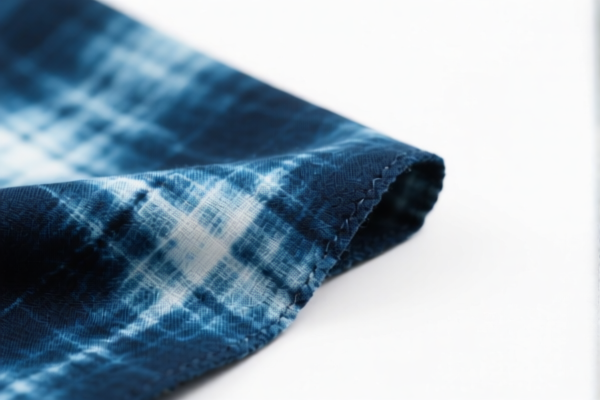
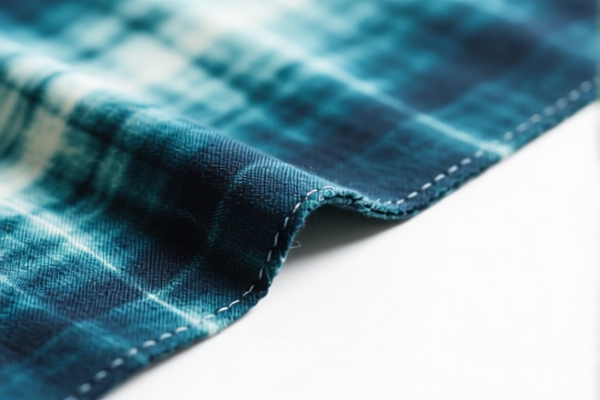
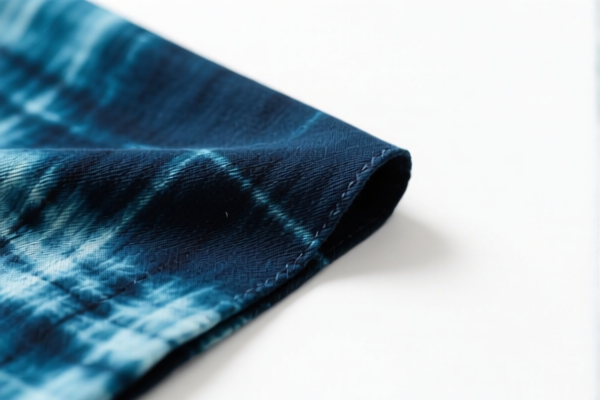
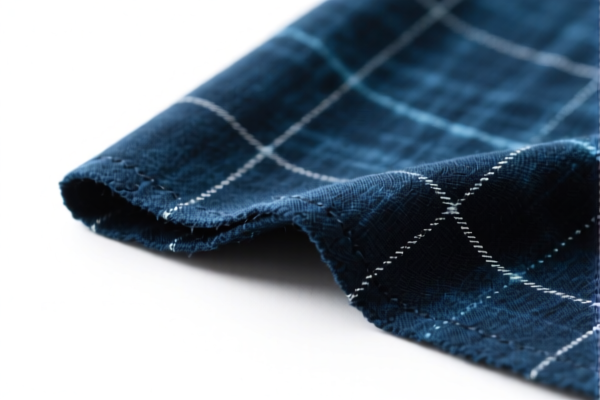
AI Analysis
🧵 4-Layer Twill Fabric (No Velvet) 200g+ / 4-Sy Twill Fabric, Synthetic & Cotton Blend, >170g/m²
🌐 HS Code Reference & Customs Clearance Guide | 2026 Latest Tariff Analysis | Professional Customs Strategy
📌 I. Product Definition & Classification: Do You Really Know "Twill Fabric"?
4-Layer Twill Fabric is a high-density, durable textile structure commonly used in workwear, denim, upholstery, and industrial applications. In international trade, its classification hinges on fiber composition, weight, and surface treatment (specifically, whether it is "napped" or "velvety").
The term "No Velvet" (Non-Napped/Non-Bouclé) is critical. It excludes brushed or raised fabrics, placing it strictly under standard woven twill categories.
⚠️ Key Distinction Points:
- Weight Threshold: The data specifies weights >170g/m² and >200g/m². This places it in the "Heavy Weight" subheadings, which often carry higher duties than light fabrics.
- Fiber Composition:
- Synthetic + Cotton Blend: Classified under 5514.12.00.20 or 5514.22.00.20.
- Cotton + Man-made Fiber Blend: Classified under 5211.12.00.20.
- Structure: "4-Layer" or "4-Ply" refers to the yarn construction or weave density, but the HS Code primarily depends on the main fiber content.
📦 II. HS Code Classification Details (2026 Latest Tariff Authority Cross-Reference)
| HS Code | Product Description | Application Scenario | Fiber Composition |
|---|---|---|---|
5514.12.00.20 |
Synthetic Fiber & Cotton Blend Twill, >170g/m², Non-napped | Workwear, heavy-duty garments, synthetic-cotton mix | Synthetic (Main) + Cotton |
5514.22.00.20 |
Polyester Staple Fiber Twill (3-4 yarns), >170g/m², Non-napped | Industrial fabrics, polyester-heavy blends | Polyester (Main) + Other |
5211.12.00.20 |
Cotton & Man-made Fiber Blend Twill, >200g/m², Non-napped | Heavy denim, canvas-like fabrics, cotton-dominant blends | Cotton (Main) + Man-made |
🔍 Critical Reminder:
- "No Velvet" (Non-Napped): Ensure the fabric is not brushed, raised, or bouclé. If it is napped, it may fall under different subheadings (e.g., 5514.3x or 5211.3x), which have different tax rates.
- Weight Matters: All entries in the provided data exceed 170g/m² or 200g/m². Lighter twills (<170g/m²) are not covered in this specific dataset and may have lower duties.
- Cotton vs. Synthetic: The primary fiber determines the chapter (52 for Cotton, 55 for Synthetic).
💰 III. 2026 Latest Tariff Rate Breakdown (Including Additional Taxes & Policy Add-ons)
✅ Applicable Country: United States (US)
✅ Origin: China (CN)
✅ Effective Date: Current tariffs apply (including 301 & 122 clauses)
🎯 1. 5514.12.00.20 & 5514.22.00.20 —— Synthetic-Cotton/Polyester Twill
| Item | Content |
|---|---|
| Base Duty Rate | 14.9% (Ad valorem) |
| Section 301 Additional Duty | +25.0% (From USITC Footnote 9903.88.01) |
| Section 122 Duty | +10.0% (Specific tariff for certain textile/apparel categories under IEEPA) |
| Total Tax Rate | 49.9% |
| Tax Calculation | CIF Value × 49.9% |
| De Minimis Exemption | ❌ Not Eligible (deny_de_minimis) |
| Legal Basis Path | Base Tariff: 14.9% → 301 Clause: +25% → 122 Clause: +10% |
📌 Explanation:
- Base Tariff (14.9%): The standard MFN duty for synthetic-cotton twill fabrics over 170g/m².
- Section 301 (25%): The widely known Trump-era/Biden-era additional tariff on Chinese goods.
- Section 122 (10%): A specific additional tariff often applied to certain textile products from China, added on top of the 301 duty.
- Total 49.9%: This is an extremely high effective tax rate. Profit margins will be significantly impacted.
🎯 2. 5211.12.00.20 —— Cotton-Man-made Fiber Blend Twill
| Item | Content |
|---|---|
| Base Duty Rate | 7.7% (Ad valorem) |
| Section 301 Additional Duty | +25.0% (From USITC Footnote 9903.88.01) |
| Section 122 Duty | +10.0% (Specific tariff for certain textile/apparel categories under IEEPA) |
| Total Tax Rate | 42.7% |
| Tax Calculation | CIF Value × 42.7% |
| De Minimis Exemption | ❌ Not Eligible (deny_de_minimis) |
| Legal Basis Path | Base Tariff: 7.7% → 301 Clause: +25% → 122 Clause: +10% |
📌 Note:
- While the base rate (7.7%) is lower than synthetic blends (14.9%), the additional duties (35%) remain the same.
- Total 42.7% is still very high. However, it is 7.2% cheaper than the synthetic-cotton blend option.
- Strategy: If your fabric is primarily cotton, ensure the "Cotton" percentage is correctly declared to claim the lower base rate.
🛠️ IV. Customs Clearance Practical Advice (Real-World Pitfall Avoidance)
✅ 1. Required Documentation Checklist (None Can Be Missing)
| Document | Required | Explanation |
|---|---|---|
| ✅ Product Specification Sheet | ✔️ | Must state: Weight (g/m²), Weave Structure (Twill), Fiber Content (%), Surface Treatment (Non-napped) |
| ✅ Commercial Invoice | ✔️ | Must explicitly state: "4-Layer Twill Fabric, Non-Velvet, Weight >170g/m²" |
| ✅ Packing List | ✔️ | Show weight and dimensions accurately. |
| ✅ Fiber Content Test Report | ✔️ | CRITICAL: Third-party lab report (e.g., SGS, Intertek) proving the percentage of Cotton vs. Polyester/Synthetic. |
| ✅ Origin Certificate (CO) | ✔️ | If shipped from China, must declare CN origin. |
| ✅ Photos of Fabric | ✔️ | Show the twill pattern and confirm "no velvet/brushed" surface. |
✅ 2. Declaration Tips (Key Mnemonics)
🔥 “Weight Over 170, No Velvet, Check Fiber, Pay 49%!”
| Scenario | Correct Declaration | Wrong Practice |
|---|---|---|
| Polyester-Cotton Blend | 5514.12.00.20 |
Misdeclare as 100% Cotton → Risk of fraud investigation |
| Cotton-Dominant Blend | 5211.12.00.20 |
Misdeclare as Polyester → Higher base duty (14.9% vs 7.7%) |
| Napped/Raised Fabric | Different HS Code | Declare as "Non-velvet" when it is napped → Penalty & Back Tax |
| Light Fabric (<170g/m²) | Different HS Code | Declare weight as >170g/m² → Misdeclaration |
✅ 3. Special Case Handling
| Situation | Handling Advice |
|---|---|
| Mixed Container | If shipping with other goods, ensure the fabric is clearly separated in the invoice. |
| Sample Shipment | Even small samples are subject to 49.9% / 42.7% duty. De Minimis ($800) does NOT apply. |
| Origin Marking | Ensure each bale has a clear "Made in China" label. |
| HS Code Pre-Ruling | Highly Recommended. Given the high duty, apply for an Advance Ruling from CBP to confirm the correct HS Code before shipment. |
🌍 V. Global Market Comparison (2026 Latest)
| Country/Region | Recommended HS Code | Total Duty Rate | Certification Required | Notes |
|---|---|---|---|---|
| 🇺🇸 USA | 5514.12.00.20 / 5211.12.00.20 |
49.9% / 42.7% | None Specific | Highly Taxed due to 301 + 122 clauses |
| 🇨🇳 China | 5514.12.00.20 / 5211.12.00.20 |
9% - 14% | None | Low base duty, no additional taxes |
| 🇪🇺 EU | 5514.12.00 / 5211.12.00 |
12% - 14% | None | No Section 301 equivalent |
| 🇬🇧 UK | 5514.12.00 / 5211.12.00 |
12% - 14% | None | Post-Brexit tariffs |
| 🇯🇵 Japan | 5514.12.00 / 5211.12.00 |
10% - 12% | None | Moderate duty |
📌 Conclusion:
- USA is the most expensive market for these fabrics due to the 35% additional tariffs.
- China, EU, UK, and Japan have significantly lower rates.
- Strategy: If exporting to the US, consider tariff engineering (e.g., adjusting fiber content to maximize cotton if under 5514, or blending to change classification) or supply chain diversification.
📌 VI. Common Errors & Pitfalls Guide (Lessons Learned)
❌ Error 1: Misdeclaring "Non-Velvet" as "Napped"
👉 Consequence: Wrong HS Code → Incorrect Duty → Penalty & Back Taxes.
❌ Error 2: Ignoring the Weight Threshold
👉 Consequence: If weight is <170g/m², a different (usually lower) HS Code might apply. Misdeclaration leads to audit risk.
❌ Error 3: Assuming De Minimis ($800) Applies
👉 Consequence: For Chinese textiles, De Minimis is blocked. You must pay duties even on small samples. Unexpected Costs!
❌ Error 4: Incorrect Fiber Content Reporting
👉 Consequence: If Polyester is 51% but declared as Cotton, you pay 49.9% instead of potentially lower rates (if misclassified) or face fraud allegations.
✅ Correct Approach:
"Twill Fabric, 4-Ply, Weight 200g/m², 65% Polyester / 35% Cotton, Non-Napped, Made in China"
🎯 VII. Conclusion: Professional Declaration Saves Money!
🎯 Remember the Mnemonic:
🔹 "Synth-Cotton: 49.9%, Cotton-Mix: 42.7%."
🔹 "No Velvet is Key, Weight Over 170g, 301+122 is Real."
🔹 "HS Code Determines Cost, Wrong Code Costs Thousands!"
📌 Pro Tip:
If your fabric is originated from Vietnam, India, Bangladesh, or Turkey, you may avoid the US 301 and 122 tariffs. The duty may drop to the base rate only (7.7% - 14.9%).
Recommendation:
🚀 Apply for an Advance Ruling with CBP.
📞 Consult a Licensed Customs Broker.
💼 Your Fabric, Your Cost, Your Compliance.
✨ Professional Clearance Starts with Accurate Classification!
💼 Every Percent of Duty Saved is Profit Gained!
Customer Reviews
About HS Code Classification
The Harmonized System (HS) is an internationally standardized nomenclature developed by the World Customs Organization (WCO) to classify traded products. Over 200 countries use the HS system as the basis for customs tariffs, trade statistics, and import/export regulations.
Each HS code follows a hierarchical structure:
- Chapter (2 digits) — Broad category of goods (e.g., Chapter 84: Machinery and Mechanical Appliances)
- Heading (4 digits) — More specific grouping within the chapter
- Subheading (6 digits) — Internationally standardized breakdown, used by all WCO member countries
- National subdivisions (8-10 digits) — Country-specific extensions for further classification, such as US HTSUS 10-digit codes
Correct HS code classification is essential for smooth customs clearance, accurate duty payment, and compliance with trade regulations. Misclassification can lead to customs delays, overpayment of duties, or penalties.
When importing from CN to US, the applicable tariff rates may include:
- Most-Favored-Nation (MFN) rate — The standard duty rate applied to WTO members
- General rate — Applied to countries without trade agreements
- Trade remedy duties — Additional tariffs such as Section 301 (anti-dumping), Section 232 (national security), or countervailing duties
The information provided on this page is for reference purposes only. For official classification, please consult with your local customs authority or a licensed customs broker.