4 Layer Twill Fabric (Non Velvet, 200g+)
CN → US| HS Code | Tariff Rate | Origin | Destination | Doc |
|---|---|---|---|---|
| 5514220020 | 49.9% | CN | US | Official Doc |
| 5211120020 | 42.7% | CN | US | Official Doc |
| 5211320020 | 43.1% | CN | US | Official Doc |
| 5211320020 | 43.1% | CN | US | Official Doc |
| 5211320020 | 43.1% | CN | US | Official Doc |
Product Images
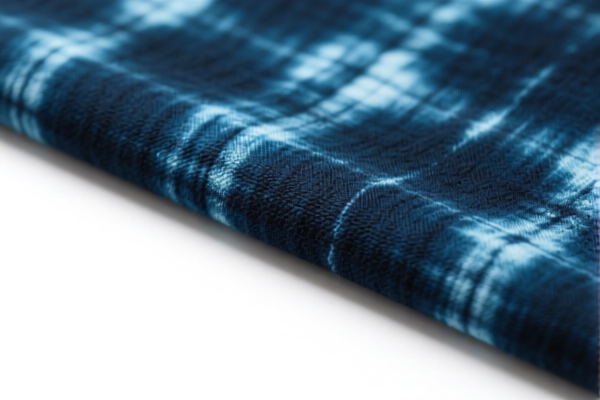
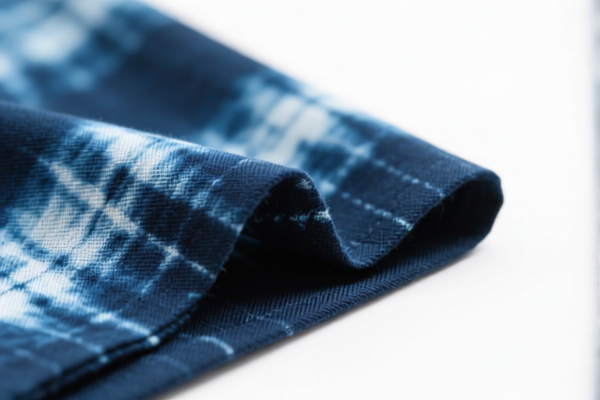
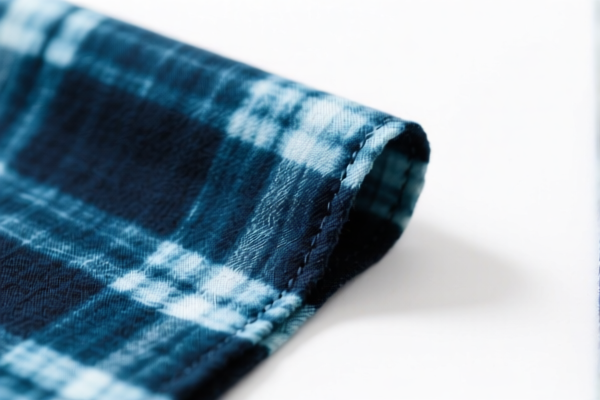
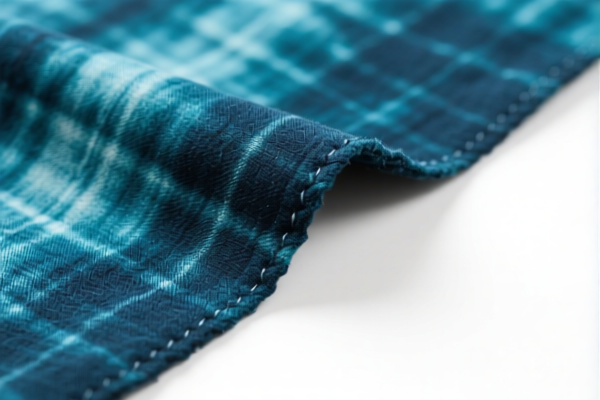
AI Analysis
🧵 4 Layer Twill Fabric (Non Velvet, 200g+)
🌐 HS Code Reference & Customs Clearance Guide | 2026 Latest Tariff Analysis | Professional Clearance Strategy
📌 I. Product Definition & Classification: What Exactly is "4 Layer Twill"?
"4 Layer Twill Fabric" refers to woven textile structures where the warp and weft threads interlace in a diagonal pattern (twill). The "4 Layer" designation typically implies a complex weave structure, often involving 4 yarns per unit or a specific ply construction. Key characteristics from the provided data indicate: * Material Composition: Can be Polyester, Cotton, or Blends (Cotton/Synthetic). * Finish: Non-velvet, non-napped (smooth surface). * Weight: Heavier weights, specifically noted as exceeding 170 g/m² (with the user input suggesting 200g+, which falls into this heavier category).
⚠️ Critical Distinction:
- Polyester vs. Cotton vs. Blend: The material composition is the primary driver for HS Code selection. Even if the weave (twill) and weight are identical, the tariff rates and legal bases differ significantly. - "4 Layer" Interpretation: In customs terminology, this often maps to "4-thread twill" (4 yarns involved in the interlacing sequence) or specific heavy-duty constructions. It does not mean a "double-layer" fabric, but rather the complexity of the weave structure.
📦 II. HS Code Classification Details (Based on Provided Data)
The following HS Codes are derived directly from the provided dataset. Note that while the HS Code prefix (6 digits) is standard, the suffixes (8-10 digits) are country-specific (likely US HTSUS based on the "122 Clause" and "Section 301" references).
| HS Code | Product Description | Material Basis | Key Attributes | Total Tax Rate |
|---|---|---|---|---|
5514.22.00.20 |
Polyester Staple Fiber Twill | 100% Polyester (Synthetic) | Non-napped, Weight >170 g/m² (Matches 200g+ input) | 49.9% |
5211.12.00.20 |
Cotton Twill | 100% Cotton (or predominantly cotton) | 4-thread twill, Non-napped, Weight compliant | 42.7% |
5211.32.00.20 |
Cotton/Synthetic Blend Twill | Cotton mixed with Synthetic fibers | 4-thread twill, Non-napped, Weight compliant | 43.1% |
🔍 Data Note:
The dataset lists5211.32.00.20three times with identical tax details. This indicates a consistent classification for Cotton-Synthetic Blends. The variation in weight descriptions ("exceeding 170g", "satisfying weight") suggests that all these codes apply to fabrics meeting the heavyweight criteria (>170g/m²), which aligns with your input of 200g+.
💰 III. 2026 Latest Tariff Rate Breakdown (Including Surcharges)
✅ Applicable Country: United States (US)
✅ Origin: China (CN) (Implied by "Section 122" and "25% Surcharge" typical of US-China trade tensions)
✅ Effective Date: Current regime includes Section 301 and Section 232/122 surcharges.
🎯 1. 5514.22.00.20 — Polyester Staple Fiber Twill
| Item | Content |
|---|---|
| Base Tariff | 14.9% (ad valorem) |
| Section 301 Surcharge | +25.0% (Retaliatory tariff on Chinese goods) |
| Section 122 Surcharge | +10.0% (Tariff on certain textile/apparel imports) |
| Total Tax Rate | 49.9% |
| Calculation | CIF Value × 49.9% |
| De Minimis Exemption | ❌ Not Eligible (High value per unit + specific restrictions) |
| Legal Basis Path | USITC:5514.22.00.20 → Section 301: Footnote 2 → Section 122: Statutory Authority |
📌 Explanation:
- Section 122 (10%): Often applied to certain textile products to protect domestic manufacturing. - Section 301 (25%): Standard tariff on a wide range of Chinese imports. - Total Impact: Nearly 50% of the import value is lost to tariffs. This is a high-cost classification.
🎯 2. 5211.12.00.20 — Cotton Twill
| Item | Content |
|---|---|
| Base Tariff | 7.7% (ad valorem) |
| Section 301 Surcharge | +25.0% |
| Section 122 Surcharge | +10.0% |
| Total Tax Rate | 42.7% |
| Calculation | CIF Value × 42.7% |
| De Minimis Exemption | ❌ Not Eligible |
| Legal Basis Path | USITC:5211.12.00.20 → Section 301: Footnote 2 → Section 122: Statutory Authority |
📌 Note:
- Cotton fabrics generally have a lower base tariff than polyester counterparts in this specific subheading. - However, the 35% surcharge (25% + 10%) remains constant, making the total rate still very high.
🎯 3. 5211.32.00.20 — Cotton/Synthetic Blend Twill
| Item | Content |
|---|---|
| Base Tariff | 8.1% (ad valorem) |
| Section 301 Surcharge | +25.0% |
| Section 122 Surcharge | +10.0% |
| Total Tax Rate | 43.1% |
| Calculation | CIF Value × 43.1% |
| De Minimis Exemption | ❌ Not Eligible |
| Legal Basis Path | USITC:5211.32.00.20 → Section 301: Footnote 2 → Section 122: Statutory Authority |
📌 Explanation:
- Blends fall between pure cotton and pure polyester in terms of base duty. - The rate is nearly identical to pure cotton, suggesting that the blend ratio does not significantly alter the tariff burden in this specific classification.
🛠️ IV. Customs Clearance Practical Advice (Pitfall Avoidance)
✅ 1. Required Documentation Checklist (Non-Negotiable)
| Document | Mandatory? | Description |
|---|---|---|
| ✅ Commercial Invoice | ✔️ | Must clearly state: "4-Layer Twill Fabric," Weight (e.g., 200g/m²), Material (e.g., 100% Polyester), and "Non-Velvet/Non-Napped." |
| ✅ Packing List | ✔️ | Specify rolls, weight per roll, and total meters. |
| ✅ Product Specification Sheet | ✔️ | Crucial: Must include weave structure (Twill), thread count, and exact GSM (grams per square meter). |
| ✅ Proof of Origin | ✔️ | If claiming any potential exemptions (rare for CN), provide Certificate of Origin. |
| ✅ Test Report | ✔️ | Third-party lab report confirming GSM and material composition (e.g., ASTM D123 for fiber analysis). |
✅ 2. Declaration Tips (Key Mnemonics)
🔥 “Weight Matters, Material Decides, Weave Defines!”
| Scenario | Correct Declaration | Error to Avoid |
|---|---|---|
| Polyester Fabric, >170g/m² | 5514.22.00.20 |
Misdeclaring as Cotton → Audit Risk + Penalty |
| Cotton Fabric, 4-Layer Twill | 5211.12.00.20 |
Misdeclaring as Blend → Underpayment |
| Blend Fabric | 5211.32.00.20 |
Using wrong blend ratio → Rate Mismatch |
| Velvet/Napped Fabric | ❌ Different Code | Declaring as "Non-Velvet" if it is velvety → Misclassification |
📌 Critical Warning:
- The phrase "4 Layer" must be clarified in the description. If customs interprets it as "double-layer" (two fabrics laminated), the classification could change entirely. Ensure "4-thread twill" or "4-yarn structure" is used if that is the technical meaning. - Weight Threshold: Since the dataset specifies ">170g/m²", and your input is "200g+", you must ensure the GSM is clearly stated on the invoice. If it drops below 170g/m², a different subheading may apply with different duties.
✅ 3. Special Handling for Section 122 & 301
| Issue | Solution |
|---|---|
| High Tariff Burden (43-50%) | Consider Supply Chain Diversification: Import from Vietnam, India, or Bangladesh to avoid Section 301/122 surcharges. |
| Customs Scrutiny | Provide detailed fabric swatches and lab tests upon request. Customs may verify the "Non-Velvet" status to ensure it’s not a higher-duty napped fabric. |
| De Minimis (Section 321) | ❌ Not Applicable: Textile imports from China generally do not qualify for the $800 de minimis exemption due to Section 301 and specific textile restrictions. |
🌍 V. Global Market Comparison (2026)
| Region | HS Code (Typical) | Est. Total Duty | Notes |
|---|---|---|---|
| 🇺🇸 USA | 5514.22.00.20 / 5211.xxxxxx.xx |
42.7% - 49.9% | High due to Section 301 + 122. |
| 🇨🇳 China | 5514.xxxxxx.xx / 5211.xxxxxx.xx |
5% - 10% | Low import duty, but export from CN may have VAT refund adjustments. |
| 🇪🇺 EU | 5514.xxxxxx.xx / 5211.xxxxxx.xx |
4% - 12% | No Section 301/122 equivalents. CE compliance may apply. |
| 🇬🇧 UK | Similar to EU | 4% - 12% | Post-Brexit tariffs apply. |
📌 Conclusion:
- USA is the most expensive market for these fabrics due to aggressive trade policies. - Profit Margins: Must account for ~45% average tariff when pricing for the US market.
📌 VI. Common Errors & Pitfalls (Lessons Learned)
❌ Error 1: Ignoring the "Non-Velvet" specification
👉 Consequence: If the fabric has a slight nap, it may be classified under a different, potentially higher-duty subheading.
✅ Fix: Include "Non-Napped" in the declaration.
❌ Error 2: Misstating Weight (GSM)
👉 Consequence: If declared as 150g/m² but actual is 200g/m², customs may reclassify to a lighter-weight subheading with different duties, leading to penalties for under-declaration.
✅ Fix: Test and declare the average GSM accurately.
❌ Error 3: Vague "4 Layer" Description
👉 Consequence: Customs officers may not understand "4 Layer."
✅ Fix: Use technical terms: "4-thread Twill Weave" or "4-Ply Structure".
❌ Error 4: Assuming De Minimis Eligibility
👉 Consequence: Shipments under $800 will still be detained and taxed.
✅ Fix: Plan for full formal entry and payment of duties.
🎯 VII. Conclusion: Strategic Sourcing & Compliance
🎯 Key Takeaway:
🔹 Material is King: The difference between Polyester (49.9%) and Cotton (42.7%) is 7.2%.
🔹 Weight Matters: Ensure >170g/m² to match the provided HS codes.
🔹 Compliance is Costly: The 35% surcharge is fixed. Focus on accurate classification to avoid fines.
📌 Pro Tip:
If you are importing into the US, consider pre-clearance rulings for large contracts. Also, explore Free Trade Agreements (FTAs) by sourcing from eligible countries to bypass the 25% Section 301 tariff.
📣 Immediate Action:
📞 Contact Customs Broker: Provide fabric swatch + GSM report.
📄 Verify HTSUS: Confirm the 8-digit code with your broker.
💸 Budget for Tariffs: Include ~45% in your landed cost calculation.
✨ Precision in Classification, Profitability in Trade!
💼 Don't let tariffs eat your margin!
Customer Reviews
About HS Code Classification
The Harmonized System (HS) is an internationally standardized nomenclature developed by the World Customs Organization (WCO) to classify traded products. Over 200 countries use the HS system as the basis for customs tariffs, trade statistics, and import/export regulations.
Each HS code follows a hierarchical structure:
- Chapter (2 digits) — Broad category of goods (e.g., Chapter 84: Machinery and Mechanical Appliances)
- Heading (4 digits) — More specific grouping within the chapter
- Subheading (6 digits) — Internationally standardized breakdown, used by all WCO member countries
- National subdivisions (8-10 digits) — Country-specific extensions for further classification, such as US HTSUS 10-digit codes
Correct HS code classification is essential for smooth customs clearance, accurate duty payment, and compliance with trade regulations. Misclassification can lead to customs delays, overpayment of duties, or penalties.
When importing from CN to US, the applicable tariff rates may include:
- Most-Favored-Nation (MFN) rate — The standard duty rate applied to WTO members
- General rate — Applied to countries without trade agreements
- Trade remedy duties — Additional tariffs such as Section 301 (anti-dumping), Section 232 (national security), or countervailing duties
The information provided on this page is for reference purposes only. For official classification, please consult with your local customs authority or a licensed customs broker.