4 Screw Connecting Rod
CN → US| HS Code | Tariff Rate | Origin | Destination | Doc |
|---|---|---|---|---|
| 7318155051 | 85.0% | CN | US | Official Doc |
| 8483103010 | 37.5% | CN | US | Official Doc |
| 8409999110 | 37.5% | CN | US | Official Doc |
Product Images
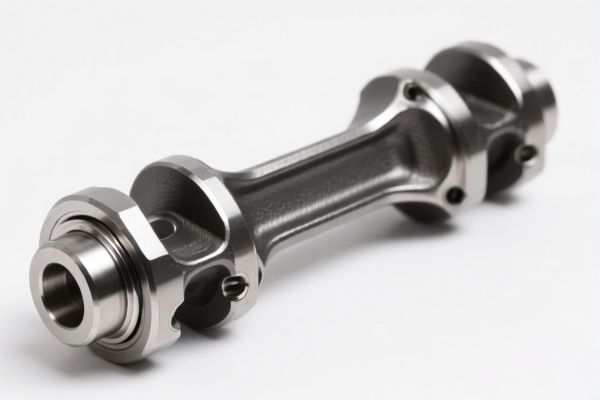
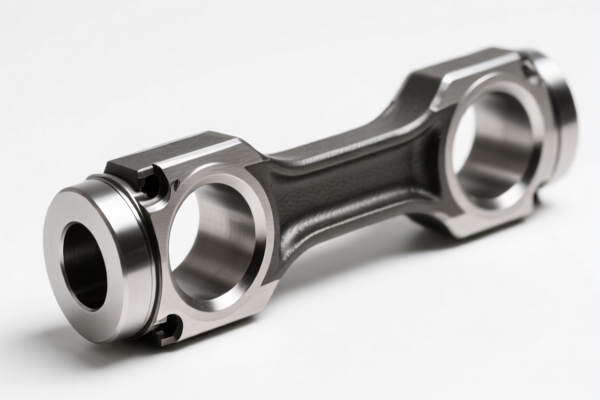
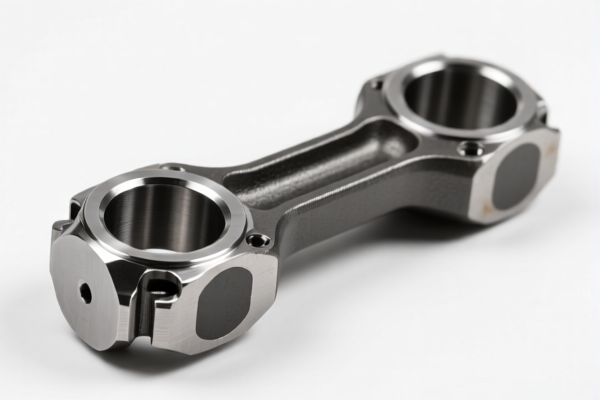
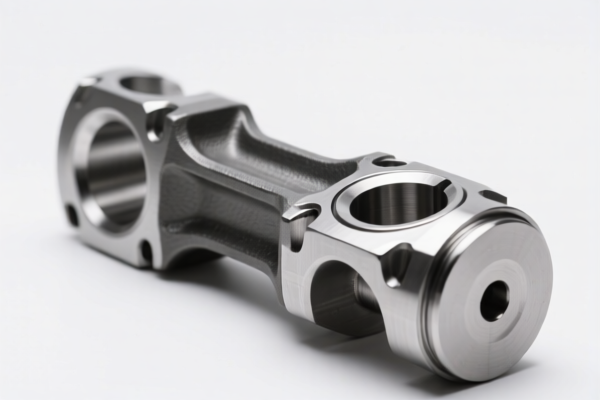
AI Analysis
🔩 4 Screw Connecting Rod (Metallic Fasteners & Engine Components)
🌐 HS Code Reference & Clearance Guide | 2026 Latest Tariff Analysis | Professional Clearance Strategy
📌 1. Product Definition & Classification: Are You Sure You Know "Connecting Rods"?
A "4 Screw Connecting Rod" is a dual-nature product. Depending on its material, form, and end-use, it falls into one of three distinct categories in international trade:
A. Metallic Fastener (Threaded Rod):
If the product is a long, continuous threaded rod used for general mechanical joining or structural reinforcement, and the "4 screw" description refers to its thread pitch or compatibility.
→ Classified as Steel Threaded Rod.
B. Transmission Component (Linkage):
If the product is a specific mechanical linkage part used in engines or machinery to transmit motion, regardless of whether it's an engine block part or a general transmission part.
→ Classified as Mechanical Linkage/Transmission Part.
C. Specific Engine Part:
If the product is explicitly designed as a connecting rod for a piston engine, specifically identified by "4 Screw" specifications.
→ Classified as Engine Component.
⚠️ Key Distinction Points:
- If it is a long threaded rod for general use → HS 7318.15.50.51
- If it is a general mechanical linkage (non-specific engine) → HS 8483.10.30.10
- If it is a specific engine part named "Connecting Rod" → HS 8409.99.91.10
📦 2. HS Code Classification Details (2026 Latest Tariff Authority Comparison)
| HS Code | Product Description | Application Scenario | Material/Feature |
|---|---|---|---|
7318.15.50.51 |
Continuous Threaded Rods of Alloy Steel | General fastening, structural reinforcement, where form matches "threaded rod" | ✅ Alloy Steel |
8483.10.30.10 |
Connecting Rods (General Transmission Parts) | Mechanical linkages in engines/machinery, functional consistency with transmission shafts | ✅ No Material Conflict |
8409.99.91.10 |
Parts of Piston Internal Combustion Engines (Connecting Rods) | Specific engine components, "4 Screw" denotes specification,不影响 (does not affect) engine part classification | ✅ Engine Part |
🔍 Key Reminders:
- "4 Screw" in8409.99.91.10is a specification detail (e.g., bolt holes, thread size) and does not change its classification as an engine part. - If the item is a long continuous rod rather than a shaped connecting rod, it may be misclassified. Ensure the shape matches the component type. - Material matters:7318.15.50.51requires alloy steel. If it’s carbon steel or other metal, this code may not apply.
💰 3. 2026 Latest Tariff Rate Breakdown (Including Surcharges & Policy Add-ons)
✅ Applicable Country: United States (US)
✅ Origin: China (CN)
✅ Effective Date: 2025/2026 (Post-Trade Policy Era)
🎯 1. 7318.15.50.51 —— Continuous Threaded Rods of Alloy Steel
| Item | Content |
|---|---|
| Base Tariff | 0.0% (ad valorem) |
| Section 301 Surcharge | +25.0% |
| Section 232 Surcharge (Steel/Aluminum/Copper) | +50.0% (122 Clause) |
| Total Tariff | 85.0% |
| Tax Calculation | CIF Value × 85% |
| De Minimis Exemption? | ❌ No (deny_de_minimis) |
| Legal Basis Path | Section 301: USITC 7318.15.50.51 → Section 232: Steel Surcharge |
📌 Explanation:
- This is the highest tariff category among the three. - Section 232 (50%) applies to steel products due to national security concerns. - Section 301 (25%) applies to Chinese-origin goods. - Total 85% is extremely high. Importers must verify if the product strictly meets "Alloy Steel Continuous Threaded Rod" criteria. Misclassification can lead to severe penalties.
🎯 2. 8483.10.30.10 —— Connecting Rods (Transmission Parts)
| Item | Content |
|---|---|
| Base Tariff | 2.5% (ad valorem) |
| Section 301 Surcharge | +25.0% |
| Section 232 Surcharge | ❌ Not Applicable (Not a raw steel product) |
| Total Tariff | 37.5% |
| Tax Calculation | CIF Value × 37.5% |
| De Minimis Exemption? | ❌ No (deny_de_minimis) |
| Legal Basis Path | Section 301: USITC 8483.10.30.10 |
📌 Explanation:
- Lower than steel fasteners because it’s classified as a machine part, not a raw steel material. - Still subject to Section 301 (25%) for Chinese origin. - Suitable for general mechanical linkages that are not exclusively engine parts.
🎯 3. 8409.99.91.10 —— Parts of Piston Internal Combustion Engines (Connecting Rods)
| Item | Content |
|---|---|
| Base Tariff | 2.5% (ad valorem) |
| Section 301 Surcharge | +25.0% |
| Section 232 Surcharge | ❌ Not Applicable (Not a raw steel product) |
| Total Tariff | 37.5% |
| Tax Calculation | CIF Value × 37.5% |
| De Minimis Exemption? | ❌ No (deny_de_minimis) |
| Legal Basis Path | Section 301: USITC 8409.99.91.10 |
📌 Explanation:
- Same tariff rate as8483.10.30.10(37.5%). - Specific to engine components. The phrase "4 Screw" in the product name is treated as a specification detail and does not alter the classification. - Ideal for automotive or industrial engine parts.
🛠️ 4. Clearance Practical Advice (Battle-Tested Pitfall Avoidance)
✅ 1. Document Checklist (Non-Negotiable)
| Document | Required | Notes |
|---|---|---|
| ✅ Product Specifications | ✔️ | Must clarify: Is it a long threaded rod or a shaped connecting rod? |
| ✅ Material Test Report | ✔️ | Must confirm Alloy Steel for 7318.15.50.51. If carbon steel, this code is invalid. |
| ✅ Product Photos (Clear) | ✔️ | Show shape, threads, and any "4 screw" features. |
| ✅ Commercial Invoice | ✔️ | Describe accurately: "Alloy Steel Threaded Rod" OR "Engine Connecting Rod, 4 Screw Spec". |
| ✅ Packing List | ✔️ | Prevents拆分 (splitting) declaration issues. |
✅ 2. Declaration Strategy (Key Mantra)
🔥 “Form Dictates Code, Material Dictates Tax!”
| Scenario | Correct HS Code | Wrong Action | Consequence |
|---|---|---|---|
| Long continuous threaded rod, alloy steel | 7318.15.50.51 |
Declare as engine part | 85% vs 37.5% → Overpay or Underpay? |
| Shaped connecting rod for engine | 8409.99.91.10 |
Declare as general linkage | May still be 37.5%, but risk of audit if misdescribed |
| Shaped connecting rod, non-engine | 8483.10.30.10 |
Declare as engine part | Risk of misclassification penalty |
| Carbon steel threaded rod | ❌ Not 7318.15.50.51 |
Declare as alloy steel | Severe penalty for false declaration |
✅ 3. Special Cases Handling
| Scenario | Handling Advice |
|---|---|
| "4 Screw" Ambiguity | Provide technical drawings showing if "4 screw" refers to bolt holes or thread count. |
| Alloy vs. Carbon Steel | If unsure, provide mill certificates. Misclassifying carbon steel as alloy steel triggers fraud alerts. |
| Engine vs. General Use | If the part can be used in multiple machinery, classify under 8483 (General) unless explicitly designed for engines. |
| Bulk Shipments | Ensure all items in one shipment have the same HS Code. Mixed shipments complicate clearance. |
🌍 5. Global Market Clearance Comparison (2026 Latest)
| Country/Region | Recommended HS Code | Tariff (China Origin) | Certification | Notes |
|---|---|---|---|---|
| 🇺🇸 USA | 7318.15.50.51 / 8483.10.30.10 / 8409.99.91.10 |
85% / 37.5% / 37.5% | None specific | High tariffs due to Sec 301 & 232 |
| 🇨🇳 China | 7318.15.50.51 / 8483.10.30.10 / 8409.99.91.10 |
~2.5% - 5% | CCC (if applicable) | No surcharges |
| 🇪🇺 EU | 7318.15.50 / 8483.10 / 8409.99 |
~2.5% - 6% | CE (if machinery) | No Section 301/232 |
| 🇬🇧 UK | Similar to EU | ~2.5% - 6% | UKCA | Post-Brexit tariffs apply |
| 🇯🇵 Japan | 7318.15.50 / 8483.10 / 8409.99 |
~2.5% - 5% | PSE (if electrical) | Low tariffs |
📌 Conclusion:
- USA is the most challenging market due to Section 301 & 232 surcharges. - Tariff Difference: 85% vs 37.5% is a 47.5% gap. Correct classification is critical. - EU/UK/Japan do not impose these surcharges, making them more cost-effective for steel goods.
📌 6. Common Mistakes & Pitfall Guide (Lessons from the Field)
❌ Mistake 1: Declaring an alloy steel threaded rod as a connecting rod to avoid Section 232
👉 Consequence: Customs audit reveals material mismatch → 85% tariff applied retroactively + fines!
❌ Mistake 2: Ignoring "4 Screw" details in 8409.99.91.10
👉 Consequence: If "4 Screw" implies a non-engine part (e.g., generic linkage), misclassification occurs → Delay or Rejection.
❌ Mistake 3: Using "Steel Rod" as a generic description for 7318.15.50.51
👉 Consequence: Fails to specify Alloy Steel → Document rejection or penalty.
❌ Mistake 4: Splitting a shipment into fasteners and engine parts to lower tax
👉 Consequence: Customs deems it split shipment fraud → Seizure or heavy penalties.
✅ Correct Action:
“Alloy Steel Continuous Threaded Rod, 10mm Diameter, Class 12.9, for Structural Use”
OR
“Piston Engine Connecting Rod, 4-Bolt Specification, Alloy Steel, for Automotive Engines”
🎯 7. Conclusion: Professional Declaration, Cost Saving, Efficiency!
🎯 Remember the Mantra:
🔹 “Form Dictates Code, Material Dictates Tax!”
🔹 “Threaded Rod? 85%! Engine Part? 37.5%! Don’t Guess, Verify!”
📌 Pro Tip:
If your product is not from China (e.g., Vietnam, Germany, USA), you may avoid Section 301 surcharges.
For Section 232, only steel products from non-quota countries may face exemptions.
Always apply for an Advance Ruling if uncertain.
📣 Immediate Action:
📞 Contact a licensed customs broker + Provide Product Photos + Request HS Code Advance Ruling
🚀 Clear Goods Smoothly, Avoid 85% Tariffs, Maximize Profits!
✨ Professional Clearance Starts with Accurate Classification!
💼 Every Dollar Saved is a Dollar Earned!
Customer Reviews
About HS Code Classification
The Harmonized System (HS) is an internationally standardized nomenclature developed by the World Customs Organization (WCO) to classify traded products. Over 200 countries use the HS system as the basis for customs tariffs, trade statistics, and import/export regulations.
Each HS code follows a hierarchical structure:
- Chapter (2 digits) — Broad category of goods (e.g., Chapter 84: Machinery and Mechanical Appliances)
- Heading (4 digits) — More specific grouping within the chapter
- Subheading (6 digits) — Internationally standardized breakdown, used by all WCO member countries
- National subdivisions (8-10 digits) — Country-specific extensions for further classification, such as US HTSUS 10-digit codes
Correct HS code classification is essential for smooth customs clearance, accurate duty payment, and compliance with trade regulations. Misclassification can lead to customs delays, overpayment of duties, or penalties.
When importing from CN to US, the applicable tariff rates may include:
- Most-Favored-Nation (MFN) rate — The standard duty rate applied to WTO members
- General rate — Applied to countries without trade agreements
- Trade remedy duties — Additional tariffs such as Section 301 (anti-dumping), Section 232 (national security), or countervailing duties
The information provided on this page is for reference purposes only. For official classification, please consult with your local customs authority or a licensed customs broker.