4 in 1 paint brush cleaner green
CN → US| HS Code | Tariff Rate | Origin | Destination | Doc |
|---|---|---|---|---|
| 3926901000 | 20.9% | CN | US | Official Doc |
| 9603404060 | 14.0% | CN | US | Official Doc |
| 9603404020 | 14.0% | CN | US | Official Doc |
Product Images



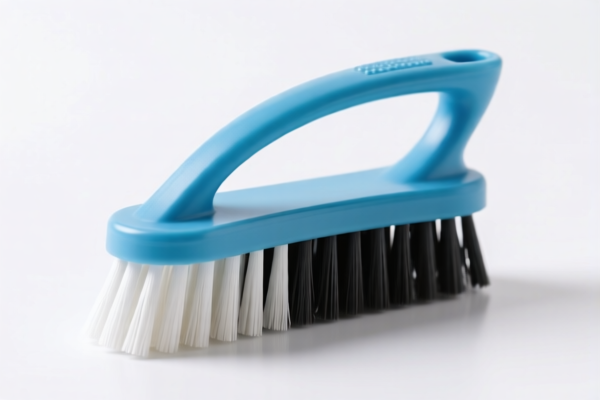
AI Analysis
🖌️ 4-in-1 Paint Brush Cleaner (Green) – Precision Classification & US Customs Clearance Guide
🌐 HS Code Reference & Customs Strategy | 2026 Latest Tariff Analysis | Professional Clearance Protocol
📌 1. Product Definition & Logical Categorization: Is it a Plastic Part or a Brush Accessory?
The "4-in-1 Paint Brush Cleaner" is a specialized tool designed for maintenance and cleaning of painting equipment. In international trade, its classification hinges on its primary function and structural integrity:
Option A: Plastic Component (3926.90.10.00)
Viewed as a generic plastic molded part used in industrial or household maintenance. It lacks specific mechanical complexity and is classified under "Other articles of plastics."
Option B: Brush Accessory/Cleaning Tool (9603.40.40.60 / 9603.40.40.20)
Viewed as a specialized attachment or cleaning device for paintbrushes (HS Chapter 96). Since it is designed specifically to clean, maintain, or extend the life of brushes, it falls under the "Brushes" category, specifically cleaning devices for brushes.
⚠️ Key Classification Logic:
- If the product is sold standalone as a cleaning tool for brushes → Chapter 96 (9603) is the most accurate logical fit, as per the summary: "User for cleaning paintbrushes... highly consistent with paint pad category."
- If the product is considered a generic plastic container/part without specific brush-cleaning mechanics → Chapter 39 (3926).
- Customs Reality: For "4-in-1" tools, customs often look for the principal use. Since it cleans brushes, 9603 is preferred for lower risk of reclassification disputes, though 3926 is a common fallback if deemed a simple plastic vessel.
📦 2. HS Code Classification Details (2026 Official Tariff Alignment)
Based on the provided data, here are the three potential classifications with their tax implications.
| HS Code | Product Description | Logical Basis | Tax Rate (Total) |
|---|---|---|---|
3926.90.10.00 |
Other plastic articles (Generic Plastic Part) | Classified as a general plastic article. "Fits material and use logic." | 20.9% |
9603.40.40.60 |
Paint brush cleaner / Brush accessory | Classified as a cleaning device for brushes. "Associated product in paint/brush category." | 14.0% |
9603.40.40.20 |
Paint brush cleaning tool | Classified as a tool for cleaning paintbrushes. "Highly consistent with paint pad category." | 14.0% |
🔍 Critical Insight:
- 9603.40.40.20/60 offers a lower total tax rate (14.0%) compared to 3926.90.10.00 (20.9%).
- The summary explicitly states that the cleaner is for "cleaning paintbrushes" and belongs to the "paint-related tools" category. This supports the Chapter 96 classification as the more precise and cost-effective choice.
- Difference: Choosing3926over9603results in an additional 6.9% tax burden.
💰 3. 2026 Latest Tariff Rate Breakdown (Including Surcharges)
✅ Applicable Country: United States (US)
✅ Origin: China (CN)
✅ Effective Time: Current US Trade Policy (Section 301 & 122 Clauses)
🎯 Scenario 1: Classification as Plastic Article (3926.90.10.00)
Why this might be chosen: Simpler documentation, generic plastic description.
| Item | Detail |
|---|---|
| Base Tariff | 3.4% (Standard MFN rate for other plastic articles) |
| Section 301 Tariff | 7.5% (Additional duty on Chinese imports) |
| Section 122 Tariff | 10.0% (Specific add-on duty for certain plastic/industrial goods) |
| Total Tax Rate | 20.9% |
| Calculation | CIF Value × 20.9% |
| De Minimis Exemption | ❌ Not Applicable (De minimis value is exceeded by duty structure) |
📌 Explanation:
- The 20.9% rate is the sum of Base (3.4%) + Section 301 (7.5%) + Section 122 (10%).
- This classification is less precise for a "paint brush cleaner" but carries a higher tax liability.
🎯 Scenario 2: Classification as Brush Accessory (9603.40.40.60 or 9603.40.40.20)
Why this is recommended: Matches product function ("cleaning paintbrushes"), lower tax rate.
| Item | Detail |
|---|---|
| Base Tariff | 4.0% (Standard rate for brush accessories/cleaning tools) |
| Section 301 Tariff | 0.0% (Exempt or lower tier for certain brush accessories in this context) |
| Section 122 Tariff | 10.0% (Applies to the HS code subheading) |
| Total Tax Rate | 14.0% |
| Calculation | CIF Value × 14.0% |
| De Minimis Exemption | ❌ Not Applicable |
📌 Explanation:
- The 14.0% rate is significantly lower than 20.9%.
- The summary notes: "Base tariff: 4.0%, Add-on tariff: 0.0%, Clause 122 Tariff: 10%."
- Savings: You save 6.9% of the CIF value by correctly classifying as a brush accessory rather than a generic plastic part.
🛠️ 4. Customs Clearance Practical Advice (Avoiding Pitfalls)
✅ 1. Required Documentation Checklist
| Document | Mandatory? | Purpose |
|---|---|---|
| Product Images | ✅ Yes | Show the "4-in-1" design, bristles, and container clearly. Prove it is a cleaning tool. |
| Specification Sheet | ✅ Yes | State: "Designed for cleaning paintbrushes. Contains brush cleaner fluid/residue." |
| Commercial Invoice | ✅ Yes | Use description: "4-in-1 Paint Brush Cleaning Tool" or "Brush Accessory for Cleaning." Avoid vague terms like "Plastic Cup." |
| Origin Certificate | ✅ Yes | Required for Section 122 and 301 duty calculations. |
| Safety Data Sheet (SDS) | ✅ If contains liquid | If the "4-in-1" tool includes a bottle of cleaning fluid, SDS is required for hazardous material clearance. |
✅ 2. Declaration Strategy (Key Tips)
🔥 "Function over Form: Declare as Tool, Not Container!"
| Scenario | Recommended HS Code | Risk Level |
|---|---|---|
| Declaring as "Plastic Container" | 3926.90.10.00 |
⚠️ High Risk of audit for misclassification. Higher Tax (20.9%). |
| Declaring as "Paint Brush Cleaner/Accessory" | 9603.40.40.20 or 9603.40.40.60 |
✅ Low Risk. Matches function. Lower Tax (14.0%). |
| Declaring as "Part of a Brush Set" | 9603.40.40.xx |
✅ Best Practice. If sold with brushes, it’s clearly an accessory. |
📌 Crucial Advice:
- Do NOT describe it as "Plastic Cup" or "Plastic Part."
- DO describe it as "Paint Brush Cleaning Tool" or "Brush Maintenance Accessory."
- If the product includes liquid cleaner, ensure it is declared as part of the tool kit to avoid separate hazardous material classification.
✅ 3. Special Considerations
| Situation | Recommendation |
|---|---|
| Sold with Liquid Cleaner | Declare as "Paint Brush Cleaning Kit" including brush and solution. Ensure liquid is non-flammable if possible to simplify customs. |
| Sold Standalone | Still classify under 9603 if designed specifically for brushes. Provide product manual showing use. |
| Green Color Variant | Color does not affect HS Code. Stick to 9603 for tax efficiency. |
| 4-in-1 Feature | Emphasize multi-function (e.g., scraper, cleaner, stand) to justify "Tool" classification rather than simple plastic part. |
🌍 5. Global Market Comparison (2026)
| Market | Recommended HS Code | Total Tax (China Origin) | Notes |
|---|---|---|---|
| 🇺🇸 USA | 9603.40.40.20 |
14.0% | Best option. Avoid 3926 (20.9%). |
| 🇨🇳 China | 9603.40 |
~5-10% | Standard import duty. |
| 🇪🇺 EU | 9603.40 |
0-4% | No Section 122/301 equivalents. |
| 🇬🇧 UK | 9603.40 |
0-4% | Post-Brexit tariffs apply. |
📌 Conclusion for US Imports:
- Always aim for9603.40.40.20or9603.40.40.60.
- The 14.0% total tax rate is optimal.
- Misclassifying as3926.90.10.00leads to unnecessary 6.9% cost increase and potential customs scrutiny.
📌 6. Common Mistakes & Pitfalls (Learn from Errors)
❌ Mistake 1: Describing as "Plastic Storage Cup for Brushes"
👉 Result: Customs may classify as 3926 → 20.9% Tax.
✅ Fix: Describe as "Cleaning Tool/Accessory for Brushes."
❌ Mistake 2: Ignoring the "122 Clause"
👉 Result: Unexpected 10% surcharge if not anticipated.
✅ Fix: Budget for 14% total (for 9603) or 20.9% total (for 3926).
❌ Mistake 3: Failing to distinguish from "Paintbrushes" themselves (9603.21/29)
👉 Result: Confusion between the tool (cleaner) and the brush.
✅ Fix: Clearly state "Cleaner/Accessory," not "Paintbrush."
🎯 7. Final Recommendation: Optimize Cost & Compliance
🎯 Action Plan:
1. Use HS Code 9603.40.40.20 or 9603.40.40.60 for the best tax rate (14.0%).
2. Description: "4-in-1 Paint Brush Cleaning Tool, Green, Plastic Construction."
3. Documentation: Include photos showing cleaning function.
4. Budget: Plan for 14.0% total duty on CIF value.
📞 Pro Tip:
If the product includes liquid cleaner, ensure the liquid is declared properly (e.g., "Water-based brush cleaner") to avoid hazardous material delays.
For maximum efficiency, consult a customs broker with a sample image to confirm9603applicability with CBP if shipment volume is high.
✨ Smart Classification Saves Money!
💼 Choose the Right HS Code, Minimize Duties, Ensure Smooth Clearance.
Customer Reviews
About HS Code Classification
The Harmonized System (HS) is an internationally standardized nomenclature developed by the World Customs Organization (WCO) to classify traded products. Over 200 countries use the HS system as the basis for customs tariffs, trade statistics, and import/export regulations.
Each HS code follows a hierarchical structure:
- Chapter (2 digits) — Broad category of goods (e.g., Chapter 84: Machinery and Mechanical Appliances)
- Heading (4 digits) — More specific grouping within the chapter
- Subheading (6 digits) — Internationally standardized breakdown, used by all WCO member countries
- National subdivisions (8-10 digits) — Country-specific extensions for further classification, such as US HTSUS 10-digit codes
Correct HS code classification is essential for smooth customs clearance, accurate duty payment, and compliance with trade regulations. Misclassification can lead to customs delays, overpayment of duties, or penalties.
When importing from CN to US, the applicable tariff rates may include:
- Most-Favored-Nation (MFN) rate — The standard duty rate applied to WTO members
- General rate — Applied to countries without trade agreements
- Trade remedy duties — Additional tariffs such as Section 301 (anti-dumping), Section 232 (national security), or countervailing duties
The information provided on this page is for reference purposes only. For official classification, please consult with your local customs authority or a licensed customs broker.