4 layer Polyester Cotton Twill Denim Fabric
CN → US| HS Code | Tariff Rate | Origin | Destination | Doc |
|---|---|---|---|---|
| 5208230000 | 44.1% | CN | US | Official Doc |
| 5111909000 | 60.0% | CN | US | Official Doc |
| 5208130000 | 42.9% | CN | US | Official Doc |
| 5407820040 | 49.9% | CN | US | Official Doc |
| 5407922050 | 49.9% | CN | US | Official Doc |
Product Images
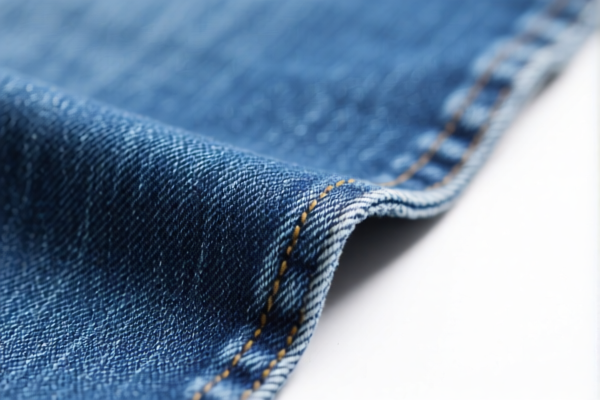
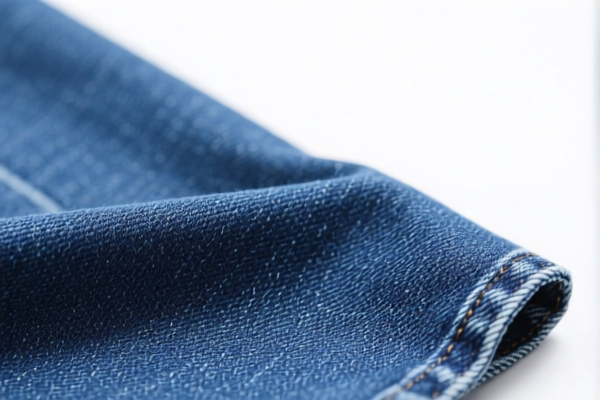
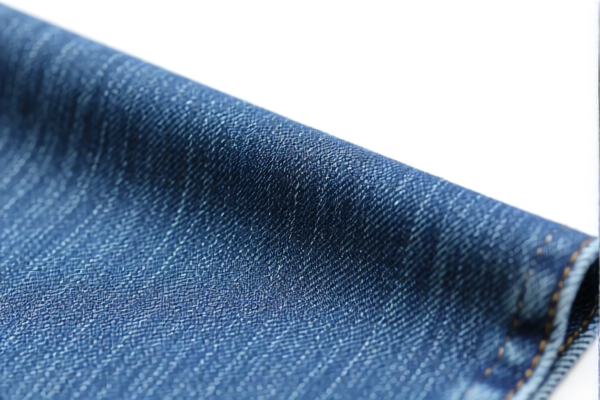
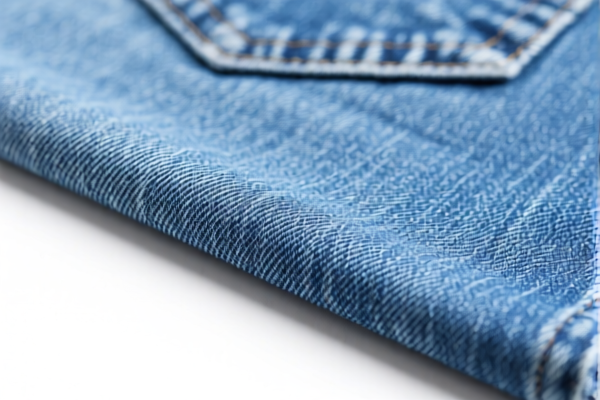
AI Analysis
🧵 4-Layer Polyester Cotton Twill Denim Fabric (Composite Denim)
🌐 HS Code Reference & Customs Clearance Guide | 2026 Latest Tariff Analysis | Professional Clearance Strategy
📌 1. Product Definition & Classification: What is "4-Layer Polyester Cotton Twill Denim"?
4-Layer Polyester Cotton Twill Denim is not a standard single-fabric classification. It is a composite textile structure consisting of multiple layers (typically face fabric, lining, or insulating layers) bonded or knitted together, where the primary visible surface or dominant material is a blend of Polyester and Cotton in a twill weave (denim-style).
In international trade, this product falls under Chapter 52 (Cotton) or Chapter 54 (Man-made Filaments) depending on the weight proportion and structural composition. However, since it is described as "Polyester Cotton" (implying a blend or composite), and explicitly mentions "Twill" and "Denim" (often associated with cotton-based denim), we must look at the specific HS codes provided in the data.
⚠️ Key Distinction:
- If the fabric is predominantly cotton (cotton > 50% by weight) with polyester threads, it falls under Chapter 52.
- If the fabric is predominantly synthetic (polyester > 50%) with cotton backing, it may fall under Chapter 54.
- The term "4-layer" suggests a composite fabric, but customs often classifies based on the principal material or the outer layer.
📦 2. HS Code Classification Details (2026 Latest Tariff Authority Cross-Reference)
Based on the provided data, here are the matching HS codes for "Twill Fabric" forms, categorized by material composition:
| HS Code | Product Description | Material Composition | Applicable Scenario |
|---|---|---|---|
5208.23.00.00 |
Woven fabrics of cotton, weighing ≤ 200 g/m², printed | Cotton-based | Most Likely Match: If the "Polyester Cotton" blend is cotton-dominant and the fabric is light enough (≤200g/m²). Often used for lightweight denim-like garments. |
5208.13.00.00 |
Woven fabrics of cotton, weighing ≤ 200 g/m², plain weave | Cotton-based | Less likely for "twill/denim," as this is for plain weave. Only consider if the twill structure is not recognized and classified as plain. |
5407.82.00.40 |
Woven fabrics of synthetic filaments, containing ≥ 85% synthetic filaments, mixed mainly or solely with cotton | Synthetic-dominant Blend | Strong Match: If the "4-layer" structure makes the polyester (synthetic) the principal material (≥85% synthetic filaments mixed with cotton). Common for composite denim with synthetic backing. |
5407.92.20.50 |
Woven fabrics of synthetic filaments, other than those of heading 5407.54 or 5407.55, containing ≥ 85% synthetic filaments | Synthetic-dominant | Alternative Match: If the fabric is ≥85% synthetic but doesn't fit the specific mixed-filament category of 5407.82. |
5111.90.90.00 |
Woven fabrics of wool or fine animal hair, weighing > 200 g/m², other than coarse animal hair | Wool/Animal Hair | Not Applicable: This product is Polyester/Cotton, not wool. Exclude this HS Code. |
🔍 Critical Note:
-5111.90.90.00is INCORRECT for Polyester/Cotton fabric. It is for wool/fine animal hair. Do not use this code.
- The choice between5208(Cotton) and5407(Synthetic) depends on the exact weight ratio and layer composition.
- If the fabric is a composite where no single layer is clearly dominant, customs may apply the principle of "essential character," often favoring the outer visible layer or the material that gives the fabric its main function.
💰 3. 2026 Latest Tariff Rate Breakdown (Including Surcharges & Policy Add-ons)
✅ Applicable Country: United States (US)
✅ Country of Origin: China (CN)
✅ Effective Date: November 10, 2025 (and subsequent imports)
🎯 1. 5208.23.00.00 – Cotton Woven Fabric, ≤200 g/m², Printed (Cotton-Dominant)
| Item | Detail |
|---|---|
| Base Duty Rate | 9.1% (ad valorem) |
| Section 301 Additional Duty | +25.0% |
| 122 Clause Duty | +10.0% |
| Total Duty Rate | 44.1% |
| Tax Calculation | CIF Value × 44.1% |
| De Minimis Exemption | ❌ Not Eligible (deny_de_minimis) |
| Legal Path | USITC:5208.23.00.00 → FOOTNOTE:301 → IEEPA:122 |
📌 Explanation:
- This is the most common classification for lightweight cotton-dominant twill/denim fabrics.
- The 44.1% rate is high, but lower than wool or synthetic-heavy blends in some cases.
- 122 Clause: Applies to specific Chinese textile imports under trade remedy measures.
🎯 2. 5407.82.00.40 – Synthetic Filament Woven Fabric, Mixed with Cotton (Synthetic-Dominant Blend)
| Item | Detail |
|---|---|
| Base Duty Rate | 14.9% (ad valorem) |
| Section 301 Additional Duty | +25.0% |
| 122 Clause Duty | +10.0% |
| Total Duty Rate | 49.9% |
| Tax Calculation | CIF Value × 49.9% |
| De Minimis Exemption | ❌ Not Eligible (deny_de_minimis) |
| Legal Path | USITC:5407.82.00.40 → FOOTNOTE:301 → IEEPA:122 |
📌 Explanation:
- If your "4-layer" fabric is polyester-heavy (≥85% synthetic), this code applies.
- Although the base rate (14.9%) is higher than cotton (9.1%), the total rate (49.9%) is slightly higher than cotton-dominant fabric due to the base rate difference.
- This code is for blended filaments (synthetic + cotton), which fits "Polyester Cotton" if synthetic is dominant.
🎯 3. 5407.92.20.50 – Other Synthetic Filament Woven Fabrics (Synthetic-Dominant)
| Item | Detail |
|---|---|
| Base Duty Rate | 14.9% (ad valorem) |
| Section 301 Additional Duty | +25.0% |
| 122 Clause Duty | +10.0% |
| Total Duty Rate | 49.9% |
| Tax Calculation | CIF Value × 49.9% |
| De Minimis Exemption | ❌ Not Eligible (deny_de_minimis) |
| Legal Path | USITC:5407.92.20.50 → FOOTNOTE:301 → IEEPA:122 |
📌 Explanation:
- Similar to5407.82.00.40, but for synthetic fabrics not meeting the specific mixed-filament criteria.
- Use this if the fabric is ≥85% synthetic but doesn't fit5407.82.
🎯 4. 5208.13.00.00 – Cotton Woven Fabric, ≤200 g/m², Plain Weave
| Item | Detail |
|---|---|
| Base Duty Rate | 7.9% (ad valorem) |
| Section 301 Additional Duty | +25.0% |
| 122 Clause Duty | +10.0% |
| Total Duty Rate | 42.9% |
| Tax Calculation | CIF Value × 42.9% |
| De Minimis Exemption | ❌ Not Eligible (deny_de_minimis) |
| Legal Path | USITC:5208.13.00.00 → FOOTNOTE:301 → IEEPA:122 |
⚠️ Note: This code is for plain weave, not twill. Only use if the fabric is incorrectly identified as plain weave or if the twill structure is not recognized by customs. Not recommended for twill/denim.
🛠️ 4. Customs Clearance Practical Advice (Actionable Checklist)
✅ 1. Required Documentation (Mandatory)
| Document | Must Provide | Description |
|---|---|---|
| ✅ Fabric Specification Sheet | ✔️ | Must state: Layer count (4-layer), Material composition (% Polyester, % Cotton), Weight (g/m²), Weave type (Twill). |
| ✅ Product Photos | ✔️ | Clear images of the fabric surface, cross-section (showing 4 layers), and any labels. |
| ✅ Certificate of Origin (CO) | ✔️ | Required for origin verification and potential duty exemptions. |
| ✅ Commercial Invoice | ✔️ | Must clearly describe the product as "Polyester Cotton Twill Fabric, 4-Layer, Composites." |
| ✅ Packing List | ✔️ | Detail weight, dimensions, and number of layers per roll. |
| ✅ Third-Party Test Report | ✔️ | Fiber content analysis (e.g., from SGS, Intertek) to prove % Polyester vs. % Cotton. |
✅ 2. Classification Strategy (Key Tips)
🔥 “Know Your Layer, Know Your Duty!”
| Scenario | Recommended HS Code | Duty Rate | Reason |
|---|---|---|---|
| Cotton-Dominant (Cotton > Polyester) | 5208.23.00.00 |
44.1% | Cotton is the essential character. Twill weave fits. |
| Polyester-Dominant (Polyester ≥85%) | 5407.82.00.40 |
49.9% | Synthetic is the essential character. Mixed with cotton. |
| Polyester-Dominant (Other Synthetic) | 5407.92.20.50 |
49.9% | If not meeting the "mixed filaments" criteria. |
| Unclear Composition | Apply for Advance Ruling | N/A | Avoid misclassification penalties. |
📌 Warning:
- Do NOT use5111.90.90.00(Wool). This is a critical error that will lead to detention, fines, and re-classification.
- "4-layer" is not a HS Code discriminator. Customs classifies by material, not layer count, unless it's a specific composite heading (which is rare for standard textiles).
✅ 3. Special Cases & Mitigation
| Situation | Handling Advice |
|---|---|
| Composite Fabric (Bonded Layers) | Provide a cross-section photo and fiber test report to prove the principal material. If layers are different materials (e.g., cotton face, polyester backing), customs may classify based on the outer layer or essential character. |
| OEM/Custom Orders | Include the customer’s design specs to show the fabric is not a standard commodity but a custom composite. |
| High-Value Denim | Consider Advance Ruling from US CBP to confirm the correct HS Code and duty rate before shipment. |
| Small Parcel (De Minimis) | ❌ Not Eligible. All textile imports from China to the US are subject to the 44.1%-49.9% duty. |
🌍 5. Global Market Comparison (2026 Latest)
| Country/Region | Recommended HS Code | Duty Rate | Certification | Notes |
|---|---|---|---|---|
| 🇺🇸 USA | 5208.23.00.00 or 5407.82.00.40 |
44.1% - 49.9% | None specific, but CO required | Highest duty burden. Plan for high landed cost. |
| 🇨🇳 China | 5208.23.00.00 or 5407.82.00.40 |
0% - 5% | None | Export duty may apply if applicable. |
| 🇪🇺 EU | 5208.23.00.00 or 5407.82.00.40 |
6.5% - 9.6% | REACH, OEKO-TEX | No 301/122 surcharges. Much more competitive. |
| 🇬🇧 UK | 5208.23.00.00 or 5407.82.00.40 |
6.5% - 9.6% | UK REACH | Post-Brexit rules apply. |
| 🇨🇦 Canada | 5208.23.00.00 or 5407.82.00.40 |
8% - 12% | None | CUSMA may apply if originating in NA. |
📌 Conclusion:
- USA has the highest duty rates due to Section 301 and 122 Clause.
- EU/UK/Canada are more favorable for textile imports.
- Consider diversifying sourcing if targeting the US market with high-volume, low-margin products.
📌 6. Common Mistakes & Pitfalls (Lessons Learned)
❌ Mistake 1: Using 5111.90.90.00 (Wool) for Polyester/Cotton Fabric
👉 Consequence: Immediate rejection, fines, and potential fraud investigation.
✅ Fix: Always verify material composition. Polyester/Cotton ≠ Wool.
❌ Mistake 2: Ignoring the "4-Layer" Structure in Documentation
👉 Consequence: Customs may classify as a "composite fabric" under a different, less favorable heading.
✅ Fix: Provide cross-section images and layer composition details.
❌ Mistake 3: Assuming "Denim" Automatically Means Chapter 52
👉 Consequence: If the fabric is polyester-dominant, it falls under Chapter 54.
✅ Fix: Use fiber test reports to prove material dominance.
❌ Mistake 4: Not Planning for 44.1%-49.9% Duty in US
👉 Consequence: Profit margin erosion, unexpected costs, or customer rejection.
✅ Fix: Build duty costs into pricing from the start.
🎯 7. Conclusion: Smart Classification, Smarter Profits
🎯 Remember:
🔹 "Material Dominance Determines HS Code, Not Just Layer Count."
🔹 "Cotton-Dominant = 44.1%, Polyester-Dominant = 49.9% in the US."
🔹 "No De Minimis for Chinese Textiles to the US."
🔹 "Never Use Wool HS Codes for Polyester/Cotton!"
📌 Pro Tip:
If your product is not made in China, you may be eligible for duty-free entry under various Free Trade Agreements (FTAs).
Always verify Origin before shipping.
📣 Immediate Action:
📞 Contact a licensed customs broker to file an Advance Ruling with US CBP.
📄 Get a fiber content test report from SGS/Intertek.
📊 Calculate landed cost including 44.1%-49.9% duty.
✨ Professional clearance starts with precise classification!
💼 Every dollar saved on duty is pure profit!
Customer Reviews
About HS Code Classification
The Harmonized System (HS) is an internationally standardized nomenclature developed by the World Customs Organization (WCO) to classify traded products. Over 200 countries use the HS system as the basis for customs tariffs, trade statistics, and import/export regulations.
Each HS code follows a hierarchical structure:
- Chapter (2 digits) — Broad category of goods (e.g., Chapter 84: Machinery and Mechanical Appliances)
- Heading (4 digits) — More specific grouping within the chapter
- Subheading (6 digits) — Internationally standardized breakdown, used by all WCO member countries
- National subdivisions (8-10 digits) — Country-specific extensions for further classification, such as US HTSUS 10-digit codes
Correct HS code classification is essential for smooth customs clearance, accurate duty payment, and compliance with trade regulations. Misclassification can lead to customs delays, overpayment of duties, or penalties.
When importing from CN to US, the applicable tariff rates may include:
- Most-Favored-Nation (MFN) rate — The standard duty rate applied to WTO members
- General rate — Applied to countries without trade agreements
- Trade remedy duties — Additional tariffs such as Section 301 (anti-dumping), Section 232 (national security), or countervailing duties
The information provided on this page is for reference purposes only. For official classification, please consult with your local customs authority or a licensed customs broker.