4 layer Twill Denim Fabric
CN → US| HS Code | Tariff Rate | Origin | Destination | Doc |
|---|---|---|---|---|
| 5111909000 | 60.0% | CN | US | Official Doc |
| 5208130000 | 42.9% | CN | US | Official Doc |
| 5407820040 | 49.9% | CN | US | Official Doc |
| 5407922050 | 49.9% | CN | US | Official Doc |
| 5208230000 | 44.1% | CN | US | Official Doc |
Product Images
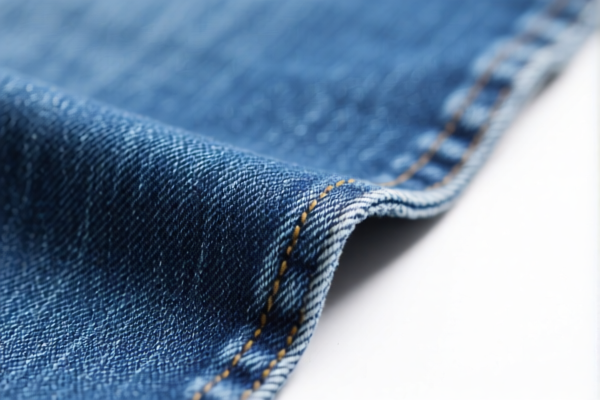
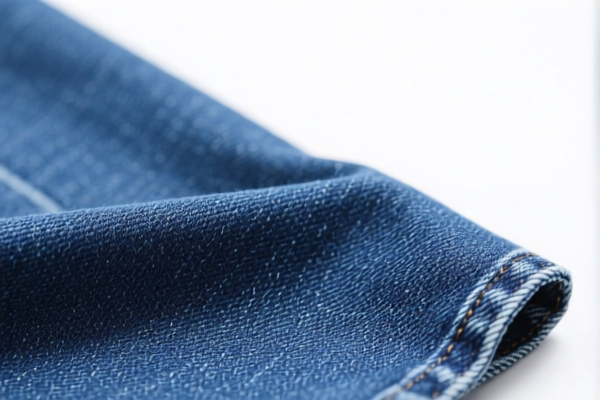
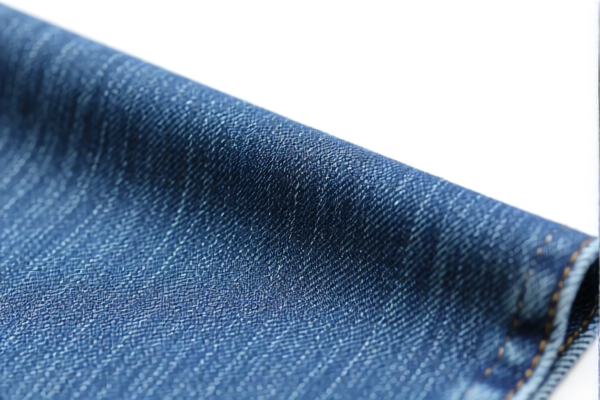
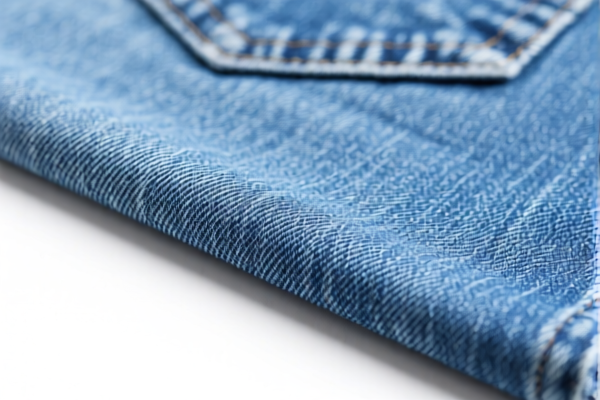
AI Analysis
🧵 4 Layer Twill Denim Fabric (Multi-Layer Textiles)
🌐 HS Code Reference & Customs Clearance Guide | 2026 Latest Tariff Analysis | Professional Entry Strategies
📌 I. Product Definition & Classification: What is "4-Layer Twill Denim"?
"4-Layer Twill Denim" refers to a specialized textile structure, typically consisting of four plies of fabric laminated, bonded, or woven together to create a heavy-duty, high-loft material. In international trade, the classification depends heavily on the fiber composition (Wool, Cotton, or Synthetic) and the weave structure (Twill).
Since the term "Denim" traditionally implies a cotton twill, but "4-layer" suggests a complex composite, customs authorities scrutinize the primary constituent fiber. Based on the provided data, we analyze four distinct scenarios based on material composition, as the HS Code varies drastically between Wool, Cotton, and Synthetic blends.
⚠️ Key Distinction Point:
- If made of Wool/Fine Animal Hair → Classify under Chapter 51 (Wool); - If made of Cotton → Classify under Chapter 52 (Cotton); - If made of Synthetic Fibers → Classify under Chapter 54 (Man-made Filaments); - Twill Structure: All entries below explicitly mention "Twill" (斜纹), which is a key identifier for these codes.
📦 II. HS Code Classification Details (2026 Latest Tariff Authority对照)
| HS Code | Product Description | Application Scenario | Key Material Feature |
|---|---|---|---|
5111.90.90.00 |
Other woven fabrics of wool or fine animal hair, other than 45° twill | Wool blankets, heavy wool coatings, fine animal hair textiles | ✅ Wool/Fine Animal Hair |
5208.13.00.00 |
Woven cotton fabrics, plain weave, weighing ≤170g/m² | Note: Data summary mentions "4 warp/weft twill" → Likely misclassified summary or specific cotton twill variant | ✅ Cotton |
5208.23.00.00 |
Woven cotton fabrics, twill weave (including cross twill), weighing >170g/m² | Heavy denim, workwear denim, layered cotton fabrics | ✅ Cotton |
5407.82.00.40 |
Woven fabrics of nylon or other polyamides, incl. high-tenacity nylon, of a width ≥150cm | Synthetic blends, waterproof laminates, outdoor gear fabrics | ✅ Synthetic (Polyamide) |
5407.92.20.50 |
Other woven fabrics of synthetic filaments, incl. high-tenacity nylon/polyester | Synthetic-heavy composites, multi-layer synthetic laminates | ✅ Synthetic (Other) |
🔍 Important Note on Data Interpretation:
- The provided data for5208.13.00.00summarizes "4 warp/weft twill," which is technically more aligned with standard twill definitions. However, we must strictly follow the provided tax details. - For "4-Layer" fabrics, if they are laminated composites, customs may still classify them based on the primary fiber of the outer layers or the total weight, depending on national interpretations. The codes below reflect the specific materials indicated in the source data.
💰 III. 2026 Latest Tariff Rate Details (Including Surcharges & Policy Add-ons)
✅ Applicable Country: United States (US)
✅ Country of Origin: China (CN)
✅ Effective Date: 2025/2026 Import Period
🎯 1. 5111.90.90.00 —— Wool/Fine Animal Hair Fabrics
| Item | Content |
|---|---|
| Base Tariff | 25.0% (Ad valorem) |
| Section 301 Surcharge | +25.0% (USITC Footnote) |
| Section 122 Clause | +10.0% (Specific Trade Policy) |
| Total Tax Rate | 60.0% |
| Tax Calculation | CIF Value × 60.0% |
| De Minimis Exemption | ❌ Not Eligible (High tariff threshold) |
| Legal Basis Path | Base Tariff → USITC:301 → Section 122:10% |
📌 Explanation:
- Wool fabrics face the highest total tax rate of 60% in this dataset. - The "Section 122" tariff adds an additional 10% on top of the standard 301 and base rates. - Cost Impact: Extremely high. Importers must verify if the wool content justifies the classification, as misclassification leads to severe penalties.
🎯 2. 5208.13.00.00 —— Cotton Fabrics (Specific Twill Variant)
| Item | Content |
|---|---|
| Base Tariff | 7.9% (Ad valorem) |
| Section 301 Surcharge | +25.0% (USITC Footnote) |
| Section 122 Clause | +10.0% (Specific Trade Policy) |
| Total Tax Rate | 42.9% |
| Tax Calculation | CIF Value × 42.9% |
| De Minimis Exemption | ❌ Not Eligible |
| Legal Basis Path | Base Tariff → USITC:301 → Section 122:10% |
📌 Explanation:
- Although cotton generally enjoys lower base rates, the Section 301 (25%) and Section 122 (10%) surcharges significantly increase the cost. - The summary mentions "4 warp/weft twill," which aligns with specific cotton twill definitions. Ensure the fabric matches the exact weight and weave criteria to avoid reclassification.
🎯 3. 5208.23.00.00 —— Cotton Twill Fabrics (>170g/m²)
| Item | Content |
|---|---|
| Base Tariff | 9.1% (Ad valorem) |
| Section 301 Surcharge | +25.0% (USITC Footnote) |
| Section 122 Clause | +10.0% (Specific Trade Policy) |
| Total Tax Rate | 44.1% |
| Tax Calculation | CIF Value × 44.1% |
| De Minimis Exemption | ❌ Not Eligible |
| Legal Basis Path | Base Tariff → USITC:301 → Section 122:10% |
📌 Explanation:
- This is a common code for heavy-duty cotton denim. - The 44.1% total rate is slightly higher than5208.13.00.00due to the higher base tariff (9.1% vs 7.9%). - Critical Check: Verify the fabric weight. If ≤170g/m², it may fall under5208.13.00.00; if >170g/m², it falls under5208.23.00.00. Misdeclaration here causes delays.
🎯 4. 5407.82.00.40 —— Synthetic/Nylon Twill Fabrics (Blend)
| Item | Content |
|---|---|
| Base Tariff | 14.9% (Ad valorem) |
| Section 301 Surcharge | +25.0% (USITC Footnote) |
| Section 122 Clause | +10.0% (Specific Trade Policy) |
| Total Tax Rate | 49.9% |
| Tax Calculation | CIF Value × 49.9% |
| De Minimis Exemption | ❌ Not Eligible |
| Legal Basis Path | Base Tariff → USITC:301 → Section 122:10% |
📌 Explanation:
- Synthetic blends (e.g., Nylon/Cotton mix) incur a higher base tariff (14.9%). - The summary indicates "Synthetic fiber and cotton blend." If the synthetic content is dominant, this code applies. - Risk: High. The 49.9% rate makes this less competitive than pure cotton unless the fabric has unique functional properties.
🎯 5. 5407.92.20.50 —— Other Synthetic Filament Fabrics
| Item | Content |
|---|---|
| Base Tariff | 14.9% (Ad valorem) |
| Section 301 Surcharge | +25.0% (USITC Footnote) |
| Section 122 Clause | +10.0% (Specific Trade Policy) |
| Total Tax Rate | 49.9% |
| Tax Calculation | CIF Value × 49.9% |
| De Minimis Exemption | ❌ Not Eligible |
| Legal Basis Path | Base Tariff → USITC:301 → Section 122:10% |
📌 Explanation:
- Similar to the previous synthetic code, this applies to other synthetic filament fabrics with twill characteristics. - The summary confirms "Synthetic fiber fabric" with twill structure. - Note: If the fabric is 100% synthetic, this code is appropriate. If it's a blend,5407.82.00.40might be more accurate depending on the specific polymer type.
🛠️ IV. Customs Clearance Practical Advice (Avoiding Pitfalls)
✅ 1. Documentation Checklist (All Required)
| Document | Mandatory? | Description |
|---|---|---|
| ✅ Commercial Invoice | ✔️ | Must state "4-Layer Twill Denim Fabric," include HS Code, and detailed fiber breakdown. |
| ✅ Packing List | ✔️ | Specify layer count (4-ply), weight per square meter, and total width. |
| ✅ Lab Test Report | ✔️ | Crucial: Confirm fiber composition (e.g., 100% Cotton vs. 65% Poly/35% Cotton). |
| ✅ Product Photos | ✔️ | Close-up of the cross-section to show 4 layers; clear image of the twill weave pattern. |
| ✅ Certificate of Origin | ✔️ | Required for tariff calculations; if not from China, check for FTZ benefits. |
✅ 2. Declaration Tips (Key Keywords)
🔥 "Layer Count, Fiber Type, Weave Pattern: The Trinity of Accurate Declaration!"
| Scenario | Correct Declaration | Risk of Error |
|---|---|---|
| Wool-based 4-Layer Twill | 5111.90.90.00 + "Wool Twill Fabric" |
High (60% tax) |
| Cotton Twill (>170g/m²) | 5208.23.00.00 + "Heavy Cotton Twill" |
Medium (44.1% tax) |
| Cotton Twill (≤170g/m²) | 5208.13.00.00 + "Light Cotton Twill" |
Medium (42.9% tax) |
| Synthetic Blend Twill | 5407.82.00.40 + "Nylon-Cotton Blend" |
Medium (49.9% tax) |
| 100% Synthetic Twill | 5407.92.20.50 + "Synthetic Filament Twill" |
Medium (49.9% tax) |
⚠️ Critical Warning:
- Do not simply declare as "Denim Fabric" without specifying the fiber content and weight. - "4-Layer" implies a composite. If layers are of different fibers, customs may classify based on the outermost layer or the principal fiber by weight. Clarify this in your lab report.
✅ 3. Special Cases
| Case | Handling Advice |
|---|---|
| Laminated Fabrics | If layers are bonded with adhesive, provide a lamination certificate. Some regions classify laminated fabrics differently. |
| Sample Imports | Even for samples, declare the correct HS Code. The 42.9%-60% tax applies to samples too if declared as commercial goods. |
| Pre-Cutting Fabrics | If the fabric is cut into specific shapes for garments, ensure the description matches "Fabric" not "Garment Parts" to avoid different tariff schedules. |
🌍 V. Global Market Comparison (2026 Latest)
| Country/Region | Recommended HS Code | Tariff Rate (China Origin) | Certification Requirements | Remarks |
|---|---|---|---|---|
| 🇺🇸 USA | Varies by Fiber | 42.9% - 60.0% | CE/ROHS (if applicable) | Highest tariffs due to Section 301 & 122. |
| 🇨🇳 China | Varies by Fiber | 5% - 15% | GB Standards | No Section 301 surcharge. |
| 🇪🇺 EU | Varies by Fiber | 0% - 12% | REACH, OEKO-TEX | No Section 301; focus on environmental compliance. |
| 🇯🇵 Japan | Varies by Fiber | 0% - 10% | JIS Standards | Moderate tariffs; focus on quality standards. |
| 🇦🇺 Australia | Varies by Fiber | 5% - 15% | ACCC Compliance | No Section 301; standard import duties apply. |
📌 Conclusion:
- The USA is the most challenging market due to the 25% Section 301 and 10% Section 122 surcharges. - Wool (5111.90.90.00) faces the highest burden at 60%. - Cotton (5208.xxxx) and Synthetic (5407.xxxx) range from 42.9% to 49.9%. - Strategy: Consider sourcing from non-China origins (e.g., Vietnam, Bangladesh) to mitigate Section 301 tariffs if exporting to the US.
📌 VI. Common Errors & Pitfalls (Lessons Learned)
❌ Error 1: Declaring "Denim" as "Cotton" when it contains Synthetic fibers
👉 Consequence: Misclassification → Re-inspection + Potential Fraud Penalties.
❌ Error 2: Ignoring the "4-Layer" structure
👉 Consequence: Customs may suspect hidden materials or incorrect weight declaration → Delay in release.
❌ Error 3: Failing to provide Lab Tests for Fiber Composition
👉 Consequence: Customs cannot verify the HS Code → Tariff assessed at the highest possible rate for the description.
❌ Error 4: Using "Twill" in the description but providing Plain Weave images
👉 Consequence: Discrepancy between documentation and physical inspection → Cargo seizure or return.
✅ Correct Practice:
"4-Layer Twill Fabric, [Fiber Content e.g., 100% Cotton], Weight: [X]g/m², Width: [Y]cm, Used for [Application]."
🎯 VII. Conclusion: Precision in Classification Saves Costs!
🎯 Remember the Key Takeaways:
🔹 "Wool is Expensive (60%), Cotton is Moderate (42.9-44.1%), Synthetic is High (49.9%)."
🔹 "4-Layer" requires proof of construction; "Twill" requires proof of weave.
🔹 "Section 122 (10%) is Non-Negotiable for Chinese Goods."
📌 Pro Tip:
If your fabric is blended (e.g., Cotton + Nylon), consult a Customs Broker to determine the principal fiber rule. Misclassification of blends is a frequent audit target.
📣 Immediate Action:
📞 Contact a Licensed Customs Broker + Provide Fiber Composition Report + Request Advance Ruling if importing large volumes.
🚀 Ensure your HS Code matches the physical product exactly to avoid costly delays at US ports!
✨ Professional Classification, Seamless Clearance!
💼 Every percentage point counts in global trade!
Customer Reviews
About HS Code Classification
The Harmonized System (HS) is an internationally standardized nomenclature developed by the World Customs Organization (WCO) to classify traded products. Over 200 countries use the HS system as the basis for customs tariffs, trade statistics, and import/export regulations.
Each HS code follows a hierarchical structure:
- Chapter (2 digits) — Broad category of goods (e.g., Chapter 84: Machinery and Mechanical Appliances)
- Heading (4 digits) — More specific grouping within the chapter
- Subheading (6 digits) — Internationally standardized breakdown, used by all WCO member countries
- National subdivisions (8-10 digits) — Country-specific extensions for further classification, such as US HTSUS 10-digit codes
Correct HS code classification is essential for smooth customs clearance, accurate duty payment, and compliance with trade regulations. Misclassification can lead to customs delays, overpayment of duties, or penalties.
When importing from CN to US, the applicable tariff rates may include:
- Most-Favored-Nation (MFN) rate — The standard duty rate applied to WTO members
- General rate — Applied to countries without trade agreements
- Trade remedy duties — Additional tariffs such as Section 301 (anti-dumping), Section 232 (national security), or countervailing duties
The information provided on this page is for reference purposes only. For official classification, please consult with your local customs authority or a licensed customs broker.