4 layer decorative fabric over 200g/sqm
CN → US| HS Code | Tariff Rate | Origin | Destination | Doc |
|---|---|---|---|---|
| 5407740060 | 49.9% | CN | US | Official Doc |
| 6304996040 | 20.7% | CN | US | Official Doc |
| 6304993500 | 28.8% | CN | US | Official Doc |
| 5903102090 | 35.0% | CN | US | Official Doc |
Product Images
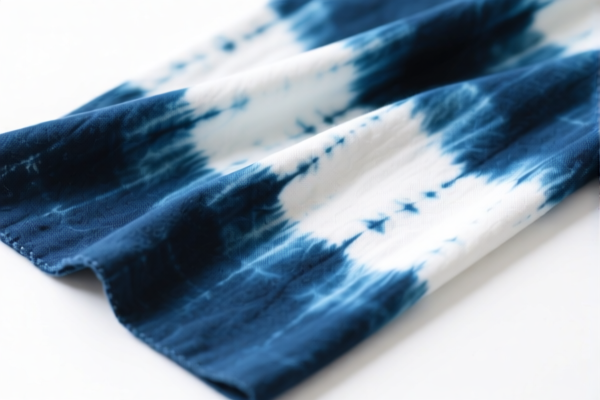
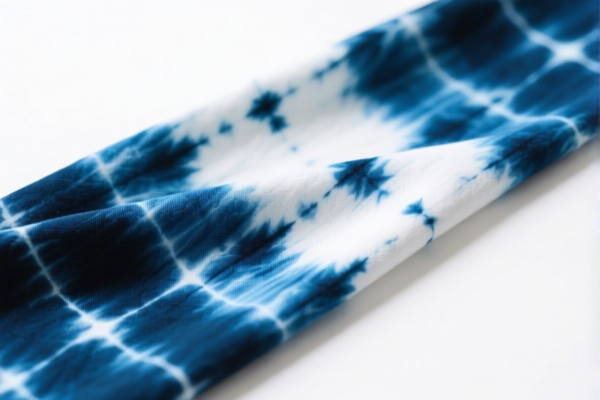
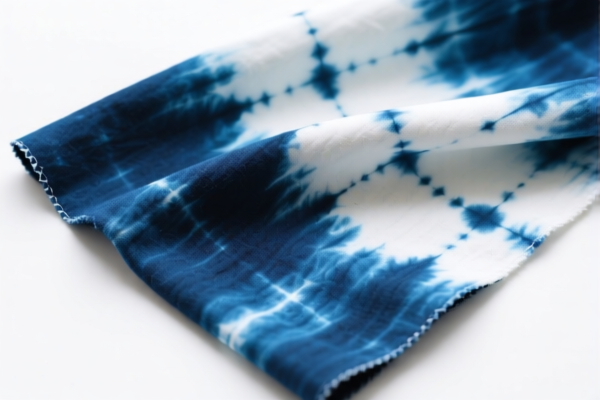
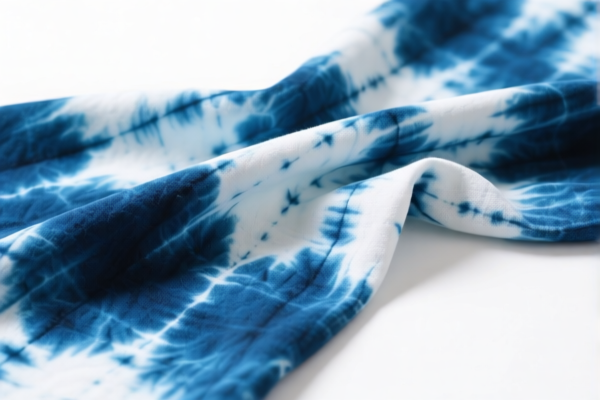
AI Analysis
🧵 4-Layer Decorative Fabric (>200g/sqm)
🌐 HS Code Reference & Clearance Guide | 2026 Latest Tariff Analysis | Strategic Customs Strategy
📌 I. Product Definition & Classification: Do You Really Understand "Decorative Fabric"?
Decorative Fabric (Over 200g/sqm, 4-Layer), is a high-density textile material used primarily for home decoration, upholstery, curtains, and interior design. In international trade, it falls under Chapter 63 (Other Made Up Textile Articles) or Chapter 59 (Textiles Impregnated, Coated, Covered or Re-laminated), depending on its specific construction and perceived functional layers.
Key Characteristics:
- Structure: 4-layer construction (implying composite/laminated nature).
- Weight: >200g/sqm (heavyweight, durable).
- Function: Decorative (not for clothing or technical filtering).
- Material: Not explicitly stated, but inferred as woven fabric based on "fabric" terminology and lack of conflict.
⚠️ Key Distinction Point:
- If viewed primarily as a finished household textile article →归入 Chapter 63 (e.g., 6304).
- If viewed primarily as a technical/textile material due to its multi-layer/coated nature → 归入 Chapter 59 (e.g., 5903).
- If viewed as a synthetic fiber fabric exceeding 170g/m² → 归入 Chapter 54 (e.g., 5407).
📦 II. HS Code Classification Details (2026 Latest Tariff Authoritative Comparison)
| HS Code | Product Description | Application Scenario | Inferred Material/Structure | Total Tax Rate |
|---|---|---|---|---|
6304.99.35.00 |
Other made up textile articles, not elsewhere specified | General home decorative items, no conflict with natural/synthetic fibers | Non-knitted/woven, textile material | 28.8% |
5903.10.20.90 |
Textile fabrics impregnated, coated, covered or re-laminated with plastics | 4-layer composite fabric, assumed to have impregnated/coated layers for durability/decoration | Synthetic/Plastic-laminated textile | 35.0% |
5407.74.00.60 |
Woven fabrics of synthetic fibers, weighing >200g/sqm | Heavyweight synthetic fabric, >170g/m² threshold met | Synthetic fiber fabric | 49.9% |
6304.99.60.40 |
Other made up textile articles, other than wool or silk | Decorative fabric, inferred as non-woven/non-knitted textile | Non-woven/non-knitted, textile | 20.7% |
🔍 Key Reminder:
-6304.99.60.40offers the lowest total tax (20.7%), suitable if the fabric is clearly a finished decorative article without technical coating claims.
-5407.74.00.60has the highest tax (49.9%) due to high base tariff (14.9%) + 25% Section 301 tariff.
-5903.10.20.90and6304.99.35.00are middle-ground options, depending on whether the "4-layer" aspect is interpreted as a technical lamination (5903) or a simple structural weave (6304).
💰 III. 2026 Latest Tariff Rate Details (Including Surcharges & Policy Add-ons)
✅ Applicable Country: United States (US)
✅ Origin: China (CN)
✅ Effective Time: From November 10, 2025 (for subsequent imports)
🎯 1. 6304.99.60.40 —— Other Made Up Textile Articles (Lowest Tax)
| Item | Content |
|---|---|
| Base Rate | 3.2% (ad valorem) |
| Section 301 Surcharge | +7.5% |
| IEEPA Surcharge | +10% (for China/HK products, from Nov 10, 2025) |
| Total Rate | 20.7% |
| Tax Calculation | CIF Value × 20.7% |
| De Minimis Eligibility | ❌ No (deny_de_minimis) |
| Legal Basis Path | USITC:6304.99.60.40 → FOOTNOTE:301.88.01 → IEEPA:9903.01.24 |
📌 Explanation:
- Base 3.2%: Standard duty for decorative textile articles.
- Section 301 7.5%: Additional duty under US Trade Act Section 301.
- IEEPA 10%: Emergency economic power surcharge for Chinese goods.
- Total 20.7%: Most cost-effective option if the product can be classified as a standard decorative article.
🎯 2. 6304.99.35.00 —— Other Made Up Textile Articles (Medium Tax)
| Item | Content |
|---|---|
| Base Rate | 11.3% |
| Section 301 Surcharge | +7.5% |
| IEEPA Surcharge | +10% |
| Total Rate | 28.8% |
| Tax Calculation | CIF Value × 28.8% |
| De Minimis Eligibility | ❌ No |
| Legal Basis Path | USITC:6304.99.35.00 → FOOTNOTE:301.88.01 → IEEPA:9903.01.24 |
📌 Note:
- Higher base tariff (11.3%) due to less specific sub-category than6304.99.60.40.
- Suitable if the fabric is considered a "generic" decorative textile without specific non-wool/non-silk designation.
🎯 3. 5903.10.20.90 —— Impregnated/Coated Textile Fabrics (High Tax)
| Item | Content |
|---|---|
| Base Rate | 0.0% |
| Section 301 Surcharge | +25% |
| IEEPA Surcharge | +10% |
| Total Rate | 35.0% |
| Tax Calculation | CIF Value × 35.0% |
| De Minimis Eligibility | ❌ No |
| Legal Basis Path | USITC:5903.10.20.90 → FOOTNOTE:301.88.01 → IEEPA:9903.01.24 |
📌 Note:
- 0% base rate is misleading; the 25% Section 301 surcharge dominates.
- Applies if the "4-layer" structure is officially classified as impregnated, coated, or laminated with plastics.
- Common for technical textiles or heavily processed decorative fabrics.
🎯 4. 5407.74.00.60 —— Synthetic Fiber Fabrics >200g/sqm (Highest Tax)
| Item | Content |
|---|---|
| Base Rate | 14.9% |
| Section 301 Surcharge | +25% |
| IEEPA Surcharge | +10% |
| Total Rate | 49.9% |
| Tax Calculation | CIF Value × 49.9% |
| De Minimis Eligibility | ❌ No |
| Legal Basis Path | USITC:5407.74.00.60 → FOOTNOTE:301.88.01 → IEEPA:9903.01.24 |
📌 Warning:
- Highest total tariff (49.9%).
- Applies if the fabric is classified as a woven synthetic fiber fabric weighing >170g/m².
- Avoid this classification unless the fabric is strictly a raw synthetic textile and not a decorative article.
🛠️ IV. Clearance Operational Advice (Practical Pitfall Avoidance Guide)
✅ 1. Preparation Checklist (All Must-Provides)
| Document | Required | Description |
|---|---|---|
| ✅ Product Specification Sheet | ✔️ | Include dimensions, layer count, weight (gsm), composition, use case |
| ✅ Product Photos | ✔️ | Clear images showing texture, layers, and any labels |
| ✅ Material Composition Certificate | ✔️ | Confirm if synthetic, natural, or blended; crucial for HS code selection |
| ✅ Commercial Invoice | ✔️ | Clearly state "Decorative Fabric, 4-Layer, >200g/sqm" |
| ✅ Packing List | ✔️ | Detail rolls, dimensions, gross/net weight |
| ✅ Origin Certificate | ✔️ | If not China, may qualify for preferential rates |
✅ 2. Declaration Tips (Key Mantra)
🔥 “Layer count matters, weight speaks loud, declare decorative, not raw cloth!”
| Scenario | Correct Declaration | Wrong Practice |
|---|---|---|
| Decorative fabric for home use | 6304.99.60.40 (20.7%) |
Misdeclare as raw fabric → 49.9% |
| Fabric with clear plastic lamination | 5903.10.20.90 (35.0%) |
Hide lamination → Risk of penalty |
| Heavy synthetic fabric (>200g/sqm) | 5407.74.00.60 (49.9%) |
If not decorative, declare as such |
| Generic decorative textile | 6304.99.35.00 (28.8%) |
Use too vague description → Delay |
✅ 3. Special Case Handling
| Case | Handling Advice |
|---|---|
| OEM Custom Fabric | Provide design specs + customer PO to justify "decorative" classification |
| Multi-layer Technical Fabric | If used for filtration/insulation, consider Chapter 59; if for decoration, Chapter 63 |
| Mixed Material Composition | Provide detailed breakdown; if wool/silk content is negligible, avoid wool/silk sub-heads |
| High-Value High-Volume Imports | Apply for Advance Ruling to lock in HS code and avoid post-clearance audits |
🌍 V. Global Market Clearance Comparison (2026 Latest)
| Country/Region | Recommended HS Code | Tariff | Certification | Note |
|---|---|---|---|---|
| 🇺🇸 USA | 6304.99.60.40 |
20.7% (China) | No special certs | 49.9% if misclassified as raw fabric |
| 🇨🇳 China | 6304.99.60.40 |
~5-10% | N/A | Lower import duty |
| 🇪🇺 EU | 6304.99.60.40 |
~0-10% | CE (if applicable) | No Section 301/IEEPA surcharges |
| 🇬🇧 UK | 6304.99.60.40 |
~0-10% | UKCA | Post-Brexit rules apply |
| 🇯🇵 Japan | 6304.99.60.40 |
~0-5% | PSE (if electrical, not applicable) | Low tariffs |
📌 Conclusion:
- USA has the highest risk due to Section 301 and IEEPA surcharges.
- EU/UK/JP offer more favorable rates for decorative textiles.
- Correct classification is critical in the US market to avoid nearly 50% tariff.
📌 VI. Common Errors & Pitfall Avoidance (Blood-Learning Lessons)
❌ Error 1: Declaring "Decorative Fabric" as "Raw Synthetic Fabric"
👉 Consequence: Tax jumps from 20.7% to 49.9% → Overpayment of nearly 30%!
❌ Error 2: Ignoring the "4-layer" specification
👉 Consequence: Customs may classify as technical fabric (5903) → 35% tax + potential penalties
❌ Error 3: Omitting weight (>200g/sqm) in description
👉 Consequence: Misclassification as lightweight fabric → Audit risk & back taxes
❌ Error 4: Using vague terms like "Textile Material"
👉 Consequence: Customs assigns highest default rate → 49.9% or higher
✅ Correct Practice:
"4-Layer Decorative Woven Fabric, Weight >200g/sqm, for Home Upholstery, Synthetic Blend, Model XYZ"
🎯 VII. Conclusion: Precise Classification Saves Money!
🎯 Remember the Mantra:
🔹 “Declare Decorative, Not Raw; Avoid 49.9% Trap!”
🔹 “HS Code Determines Fate; 20.7% vs 49.9% is a Huge Difference!”
📌 Pro Tip:
If your fabric is originating from Vietnam, Mexico, Thailand, or Malaysia, you may apply for IEEPA Exemption, reducing tax to 0%~10%.
Recommend Advance Ruling for high-volume imports to secure the 20.7% rate.
📣 Take Action Now:
📞 Contact a Professional Customs Broker + Provide Product Photos + Apply for HS Code Advance Ruling
🚀 Ensure Smooth Clearance, Efficient Shipping, Maximized Profit!
✨ Professional Clearance Starts with Accurate Classification!
💼 Every Penny Saved is a Penny Earned!
Customer Reviews
About HS Code Classification
The Harmonized System (HS) is an internationally standardized nomenclature developed by the World Customs Organization (WCO) to classify traded products. Over 200 countries use the HS system as the basis for customs tariffs, trade statistics, and import/export regulations.
Each HS code follows a hierarchical structure:
- Chapter (2 digits) — Broad category of goods (e.g., Chapter 84: Machinery and Mechanical Appliances)
- Heading (4 digits) — More specific grouping within the chapter
- Subheading (6 digits) — Internationally standardized breakdown, used by all WCO member countries
- National subdivisions (8-10 digits) — Country-specific extensions for further classification, such as US HTSUS 10-digit codes
Correct HS code classification is essential for smooth customs clearance, accurate duty payment, and compliance with trade regulations. Misclassification can lead to customs delays, overpayment of duties, or penalties.
When importing from CN to US, the applicable tariff rates may include:
- Most-Favored-Nation (MFN) rate — The standard duty rate applied to WTO members
- General rate — Applied to countries without trade agreements
- Trade remedy duties — Additional tariffs such as Section 301 (anti-dumping), Section 232 (national security), or countervailing duties
The information provided on this page is for reference purposes only. For official classification, please consult with your local customs authority or a licensed customs broker.