4 piece Polishing Kit
CN → US| HS Code | Tariff Rate | Origin | Destination | Doc |
|---|---|---|---|---|
| 3405900000 | 35.0% | CN | US | Official Doc |
| 3926909989 | 22.8% | CN | US | Official Doc |
| 3405400000 | 35.0% | CN | US | Official Doc |
| 8205595560 | 40.3% | CN | US | Official Doc |
| 8205906000 | 0.0% | CN | US | Official Doc |
Product Images
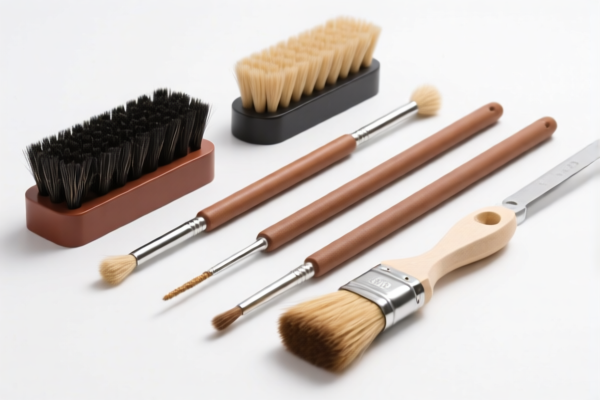
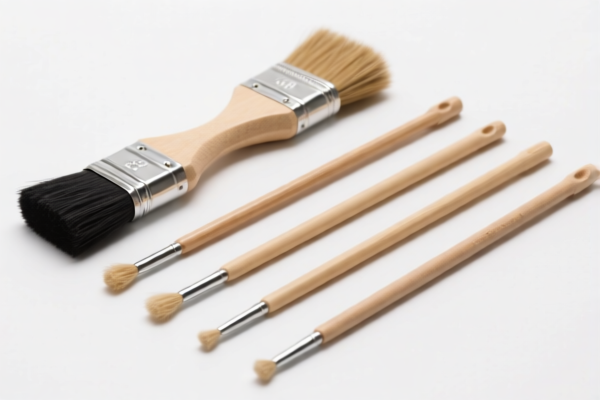
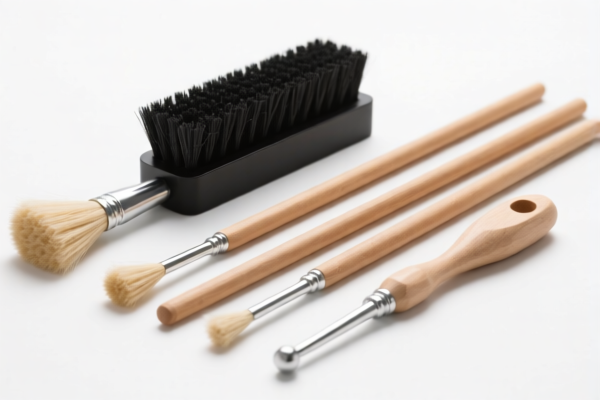
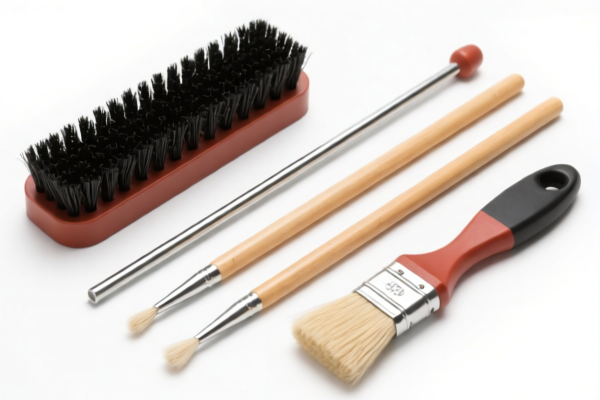
AI Analysis
🧽 Polishing Kit (4-Piece Set)
🌐 HS Code Reference & Customs Clearance Guide | 2026 Latest Tariff Analysis | Professional Clearance Strategy
📌 I. Product Definition and Classification: What Exactly is a "Polishing Kit"?
A 4-Piece Polishing Kit is a composite good typically containing polishing compounds/creams (chemical/liquid/solid) and tools (such as pads, wheels, or hand tools) used for surface treatment, buffing, or cleaning.
In international trade, the classification depends heavily on the primary material and primary function. Is it primarily a chemical product (Chapter 34) or a tool/good made of other materials (Chapter 39 or 82)?
⚠️ Key Distinction:
- If the kit’s value or function is dominated by the polishing agent (cream/paste) → It falls under Chapter 34 (Wax, Polishing Products).
- If the kit consists of plastic tools/accessories with minor compounds → It may fall under Chapter 39 (Plastics).
- If it contains metal/hand tools as the main component → It falls under Chapter 82 (Tools of Base Metal).
- If it is a set of different tools (mixed materials) → It may be classified as a set of articles under Chapter 82.
📦 II. HS Code Classification Details (2026 Latest Tariff Authority Comparison)
| HS Code | Product Description | Applicable Scenario | Key Characteristic |
|---|---|---|---|
3405.90.00.00 |
Other polishing preparations (creams, pastes, etc.) | Kit where polishing agent is the main value/function; contains polishers as accessories. | Chemical/Preparation Focus |
3926.90.99.89 |
Other articles of plastics and articles of other materials | Kit where plastic tools/pads are the main component, with minimal or no chemical content. | Plastic/Non-Chemical Focus |
3405.40.00.00 |
Polishing preparations and pastes (scouring preparations) | Kit explicitly defined as containing scouring/polishing preparations. | Scouring/Preparation Focus |
8205.59.55.60 |
Other hand tools of base metal | Kit where metal tools (files, scrapers) are the primary component, possibly with abrasives. | Metal Tool Focus |
8205.90.60.00 |
Sets of articles of Chapter 82 (Two or more subheadings) | A mixed set of tools (e.g., metal tool + plastic pad + cloth) classified as a "set" of tools. | Mixed Tool Set Focus |
🔍 Important Note:
- Composite Goods Rule (GRI 3(b)): The kit is classified by the material or component that gives it its essential character.
- If the kit includes polishing cream (HS 3405), it often pulls the classification to Chapter 34 unless the tools are significantly more valuable/dominant.
- Chapter 82 sets are only applicable if the kit contains two or more different types of tools from Chapter 82 subheadings.
💰 III. 2026 Latest Tariff Rate Details (Including Additional Taxes, Policy Add-ons)
✅ Applicable Country: United States (US)
✅ Origin: China (CN)
✅ Effective Date: 2025/2026 (Current Trade War Policies Active)
🎯 1. 3405.90.00.00 – Other Polishing Preparations (Creams/Pastes)
| Item | Content |
|---|---|
| Base Tariff | 0.0% (ad valorem) |
| USITC Additional Tax (Section 301) | +25.0% |
| IEEPA Additional Tax (Section 122/301 Extension) | +10.0% |
| Total Effective Rate | 35.0% |
| Tax Calculation | CIF Value × 35% |
| De Minimis Eligibility | ❌ Not Eligible (Deny de minimis for Section 301 goods) |
| Legal Basis Path | IEEPA:9903.01.24 → USITC:3405.90.00.00 → FOOTNOTE:9903.88.01 |
📌 Explanation:
- Although the base tariff for polishing preparations is 0%, the Section 301 additional duty of 25% and IEEPA 10% surcharge apply to Chinese-origin goods.
- Total 35% is a high effective rate. Must be declared accurately to avoid penalties.
🎯 2. 3926.90.99.89 – Other Articles of Plastics/Other Materials
| Item | Content |
|---|---|
| Base Tariff | 5.3% (ad valorem) |
| USITC Additional Tax (Section 301) | +7.5% |
| IEEPA Additional Tax (Section 122/301 Extension) | +10.0% |
| Total Effective Rate | 22.8% |
| Tax Calculation | CIF Value × 22.8% |
| De Minimis Eligibility | ❌ Not Eligible (Section 301 applies) |
| Legal Basis Path | IEEPA:9901.25 → USITC:3926.90.99.89 |
📌 Explanation:
- This rate is lower than the chemical-based classification (35%).
- Applicable if the kit is primarily plastic tools (e.g., foam pads, plastic scrapers) with minimal or no liquid/paste content.
- Strategy: If the chemical content is negligible, consider this classification to save 12.2% in tariffs.
🎯 3. 3405.40.00.00 – Polishing Preparations (Scouring)
| Item | Content |
|---|---|
| Base Tariff | 0.0% |
| USITC Additional Tax (Section 301) | +25.0% |
| IEEPA Additional Tax (Section 122/301 Extension) | +10.0% |
| Total Effective Rate | 35.0% |
| Tax Calculation | CIF Value × 35% |
| De Minimis Eligibility | ❌ Not Eligible |
| Legal Basis Path | IEEPA:9903.01.24 → USITC:3405.40.00.00 |
📌 Note:
- Same rate as3405.90.00.00.
- Use this if the product is explicitly marketed as a "scouring preparation" or "polishing paste" for heavy-duty cleaning.
🎯 4. 8205.59.55.60 – Other Hand Tools of Base Metal
| Item | Content |
|---|---|
| Base Tariff | 5.3% |
| USITC Additional Tax (Section 301) | +25.0% |
| IEEPA Additional Tax (Section 122/301 Extension) | +10.0% |
| Total Effective Rate | 40.3% |
| Tax Calculation | CIF Value × 40.3% |
| De Minimis Eligibility | ❌ Not Eligible |
| Legal Basis Path | IEEPA:9903.01.24 → USITC:8205.59.55.60 |
📌 Warning:
- This is the highest rate (40.3%).
- Only use if the kit is primarily metal hand tools (e.g., steel scrapers, files) with minor polishing accessories.
- Avoid unless necessary; it is cost-prohibitive compared to plastic or chemical classifications.
🎯 5. 8205.90.60.00 – Sets of Articles (Chapter 82)
| Item | Content |
|---|---|
| Base Tariff | Variable (Rate applicable to the article in the set) |
| USITC Additional Tax (Section 301) | +25.0% |
| IEEPA Additional Tax (Section 122/301 Extension) | +10.0% |
| Total Effective Rate | Variable + 35% |
| Tax Calculation | Depends on the specific article in the set |
| De Minimis Eligibility | ❌ Not Eligible |
| Legal Basis Path | IEEPA:9903.01.24 → USITC:8205.90.60.00 |
📌 Explanation:
- This is a catch-all for sets containing multiple tool types from Chapter 82.
- If the kit contains both metal tools and plastic pads, it might be forced into this category if it doesn’t qualify as a chemical kit (Chapter 34).
- Complexity: High. Requires detailed breakdown of components to determine the base rate.
- Risk: Misclassification can lead to higher effective rates if the base article has a high duty.
🛠️ IV. Customs Clearance Practical Advice (Real-World Pitfall Guide)
✅ 1. Documentation Checklist (Mandatory)
| Document | Required? | Purpose |
|---|---|---|
| ✅ Product Composition List | ✔️ | Must detail % of chemical vs. tool vs. plastic. Critical for GRI 3(b) classification. |
| ✅ Product Photos | ✔️ | Show the kit layout: Is the cream the main item? Are tools metal or plastic? |
| ✅ MSDS (Material Safety Data Sheet) | ✔️ | Required for any chemical/polishing compound (Chapter 34). |
| ✅ Commercial Invoice | ✔️ | Clearly state "Polishing Kit" and describe components. |
| ✅ Packing List | ✔️ | Itemize each piece: "1x Polishing Cream, 3x Plastic Pads" |
✅ 2. Declaration Tips (Key Rules)
🔥 “Chemical Dominates 34, Plastic is 39, Metal Tools are 82!”
| Scenario | Correct HS Code | Reason |
|---|---|---|
| Kit with polish cream + foam pads | 3405.90.00.00 |
Cream gives essential character. |
| Kit with plastic scrapers + cloth (no liquid) | 3926.90.99.89 |
Plastic tools dominate. |
| Kit with metal files + brass brush | 8205.90.60.00 |
Set of metal tools. |
| Kit with metal tool + small polish tube | 8205.59.55.60 or 8205.90.60.00 |
Metal tool dominates (Check value/weight). |
⚠️ Warning:
- Do not declare as "Miscellaneous Household Goods" (HS 9403/9801) to avoid taxes. CBP will reject this and assess penalties.
- If the kit contains both chemical and tool, the chemical classification (3405) is often safer and more standard, despite the 35% tax, because it is a recognized category for "polishing preparations."
✅ 3. Special Cases
| Situation | Handling Advice |
|---|---|
| OEM Custom Kit | Provide design specs to prove essential character. |
| Kit with Liquid & Tools | Submit MSDS + Tool Material Certificate. |
| Kit with Only Dry Pads | Use 3926.90.99.89 (Plastic) or 6307.90 (Textile) if fabric. |
| Kit with Metal Tools Only | Use 8205.90.60.00 (Set) or individual tool HS codes. |
🌍 V. Global Market Comparison (2026 Latest)
| Country/Region | Recommended HS Code | Estimated Total Tariff (China Origin) | Certification | Notes |
|---|---|---|---|---|
| 🇺🇸 USA | 3405.90.00.00 |
35% | FDA/CDRH (if cosmetic) | High tax due to Section 301. |
| 🇺🇸 USA | 3926.90.99.89 |
22.8% | None | Lower tax if plastic-based. |
| 🇨🇳 China | 3405.90.00.00 |
5-10% | CCC (if applicable) | No Section 301. |
| 🇪🇺 EU | 3405.90.00.00 |
5-6.5% | REACH/CLP | No trade war tariffs. |
| 🇬🇧 UK | 3405.90.00.00 |
5-6.5% | UKCA/REACH | Post-Brexit tariffs apply. |
📌 Conclusion:
- USA is the most expensive market due to Section 301 + IEEPA surcharges.
- Strategy: If possible, structure the kit to be plastic-based (3926) to reduce the US tariff from 35% to 22.8%.
- Documentation: Keep MSDS ready for any chemical component.
📌 VI. Common Mistakes & Pitfalls (Blood Lessons)
❌ Mistake 1: Declaring as "Hardware Tools" (8205) when it contains polish.
👉 Result: CBP may reclassify to 3405 and assess 35% tax instead of ~40%, but with penalties for misdeclaration.
❌ Mistake 2: Declaring as "Plastic Goods" (3926) when it contains significant liquid polish.
👉 Result: CBP rejects due to lack of MSDS; goods held in warehouse. Delay + Storage Fees.
❌ Mistake 3: Ignoring the De Minimis ($800) Exemption.
👉 Result: Since Section 301 goods are not eligible for de minimis, even small kits are subject to full tariffs if imported via courier (e.g., DHL/FedEx). Do not assume $800 exemption applies!
❌ Mistake 4: Vague description "Polishing Set".
👉 Result: Customs officer has discretion. Likely to assign the highest duty rate (8205 or 3405). Be Specific.
✅ Correct Practice:
"4-Piece Polishing Kit: 1x Polishing Cream (3405), 3x Foam Applicator Pads (3926). Material: Chemical & Plastic. Use HS Code 3405.90.00.00."
🎯 VII. Conclusion: Precision in Classification Saves Money!
🎯 Remember the Rule:
🔹 "Cream = 3405 (35%) | Plastic = 3926 (22.8%) | Metal Tools = 8205 (40.3%)"
🔹 "Section 301 applies to ALL categories for China Origin. No De Minimis!"
🔹 "Structure your kit to minimize tax liability (e.g., reduce chemical content)."
📌 Pro Tip:
If your kit contains less than 10% chemical by weight/value, consider reformulating to plastic-based tools only (3926) to save 12.2% in US tariffs.
For large volumes, apply for a CBP Ruling (Advance Ruling) to lock in the HS Code and avoid audits.
📣 Immediate Action:
📞 Consult a Customs Broker + Provide MSDS + Component Breakdown
🚀 Clear Customs Smoothly, Avoid Delays, Maximize Profit!
✨ Professional Clearance Starts with Accurate Classification!
💼 Your Every Penny Counts in Tariff Calculations!
Customer Reviews
About HS Code Classification
The Harmonized System (HS) is an internationally standardized nomenclature developed by the World Customs Organization (WCO) to classify traded products. Over 200 countries use the HS system as the basis for customs tariffs, trade statistics, and import/export regulations.
Each HS code follows a hierarchical structure:
- Chapter (2 digits) — Broad category of goods (e.g., Chapter 84: Machinery and Mechanical Appliances)
- Heading (4 digits) — More specific grouping within the chapter
- Subheading (6 digits) — Internationally standardized breakdown, used by all WCO member countries
- National subdivisions (8-10 digits) — Country-specific extensions for further classification, such as US HTSUS 10-digit codes
Correct HS code classification is essential for smooth customs clearance, accurate duty payment, and compliance with trade regulations. Misclassification can lead to customs delays, overpayment of duties, or penalties.
When importing from CN to US, the applicable tariff rates may include:
- Most-Favored-Nation (MFN) rate — The standard duty rate applied to WTO members
- General rate — Applied to countries without trade agreements
- Trade remedy duties — Additional tariffs such as Section 301 (anti-dumping), Section 232 (national security), or countervailing duties
The information provided on this page is for reference purposes only. For official classification, please consult with your local customs authority or a licensed customs broker.