4 piece pencil case
CN → US| HS Code | Tariff Rate | Origin | Destination | Doc |
|---|---|---|---|---|
| 3926909989 | 22.8% | CN | US | Official Doc |
| 4202329900 | 52.6% | CN | US | Official Doc |
| 3926100000 | 15.3% | CN | US | Official Doc |
Product Images
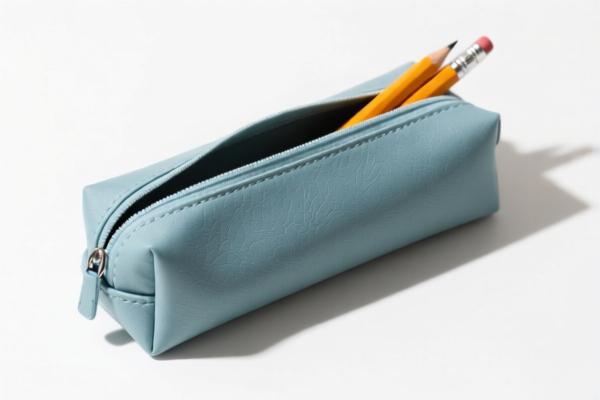
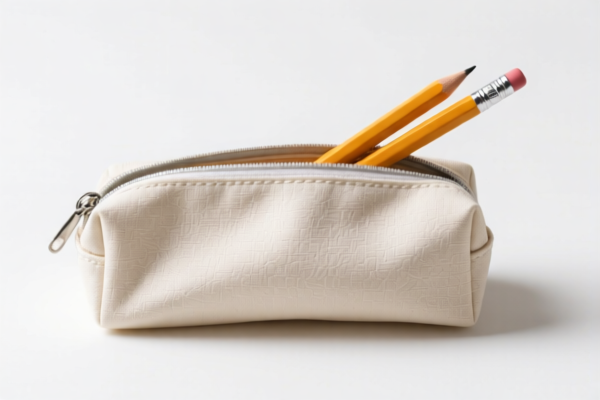
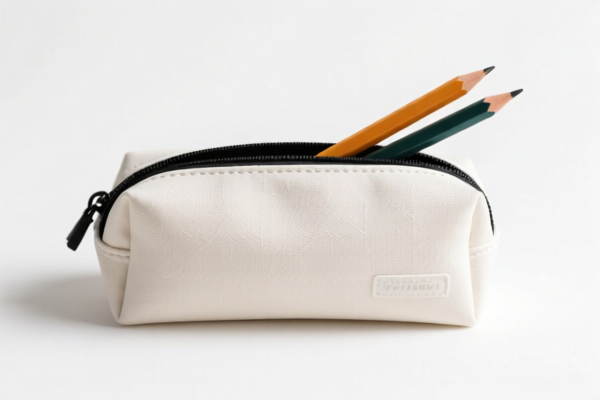
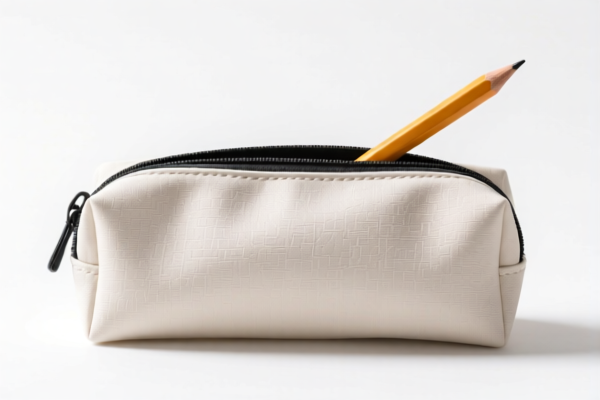
AI Analysis
🎒 The "4-Piece Pencil Case" Puzzle: Where Do The Pieces Belong?
🌐 HS Code Reference & Clearance Guide | 2026 Latest Tariff Analysis | Professional Customs Strategy
📌 I. Product Definition: Is It One Item or Many?
A "4-piece pencil case" is not a single unified entity in the eyes of Customs. It is a set or a group of items that may fall under completely different tariff headings depending on their material and function. In international trade, you cannot simply declare "pencil case" and pick one HS Code. You must analyze each of the "4 pieces" individually.
⚠️ Key Distinction:
- If the 4 items are identical materials (e.g., 4 plastic boxes) → Likely 3926.90.99.89
- If the 4 items are mixed materials (e.g., 1 metal tin, 3 plastic pouches) → Must be split into separate HS Codes
- If the 4 items include metal containers → Potentially 7326.90.35.00 (Very High Duty!)
📦 II. HS Code Classification Matrix (Based on Provided Data)
Below are the possible HS Codes from your data set, mapped to the likely components of a "4-piece pencil case."
| Component Type | HS Code | Product Description | Tax Rate (Total) |
|---|---|---|---|
| Metal Containers | 7326.90.35.00 |
Other articles of iron or steel: Containers normally carried on person/pocket/handbag | 50.0% ⚠️ |
| Other Metal Parts | 7326.90.86.88 |
Other articles of iron or steel: Other | 77.9% 🚨 |
| Plastic/Synthetic Parts | 3926.10.00.00 |
Other articles of plastics: Office or school supplies | 5.3% ✅ |
| Other Plastic Parts | 3926.90.99.89 |
Other articles of plastics: Other | 12.8% ✅ |
| Textile/Plastic Bags | 4202.32.99.00 |
Similar containers: Of textile materials: Other | 0.0% 🎉 |
| Plastic-Lined Bags | 4202.32.10.00 |
Similar containers: Of reinforced or laminated plastics | 0.0% 🎉 |
| Instruments/Tools | 9017.90.01.32 |
Parts/Accessories for measuring instruments (e.g., calipers, rulers) | 0.0% 🎉 |
| Instrument Accessories | 9017.90.01.05 |
Parts/Accessories for drafting machines, etc. | 0.0% 🎉 |
🔍 Critical Insight:
- A "pencil case" is rarely just a container. It often includes rulers, compasses, or metal tins.
- Metal containers attract a massive 50-77.9% duty due to Section 301/IEEPA add-ons.
- Plastic/Textile containers enjoy low duties (0-12.8%).
- Instruments (rulers/calipers) may be duty-free (0%) but require precise description.
💰 III. Detailed Tax Breakdown & Legal Basis
✅ Applicable Country: United States (US)
✅ Origin: China (CN)
✅ Effective Date: 2025-11-10 (Subject to Change)
🎯 1. Metal Components (High Risk)
| HS Code | Description | Base Duty | Section 301 | IEEPA Add-on | Total Duty |
|---|---|---|---|---|---|
7326.90.35.00 |
Metal Containers (Pocket/Handbag) | 0.0% | 25.0% | 25.0% | 50.0% |
7326.90.86.88 |
Other Metal Articles | 2.9% | 25.0% | 50.0% | 77.9% |
📌 Explanation:
- Section 301 Tariff: 25% or 10% on Chinese imports depending on specific footnote.
- IEEPA Tariff: Additional 25% or 50% on steel/aluminum products.
- Result: If your 4-piece set includes even one metal tin, the duty on that item is 50-77.9%. This is the biggest cost risk.
🎯 2. Plastic & Textile Components (Low Risk)
| HS Code | Description | Base Duty | Section 301 | IEEPA Add-on | Total Duty |
|---|---|---|---|---|---|
3926.10.00.00 |
Plastic Office/School Supplies | 5.3% | 0.0% | 0.0% | 5.3% |
3926.90.99.89 |
Other Plastic Articles | 5.3% | 7.5% | 0.0% | 12.8% |
4202.32.99.00 |
Textile/Plastic Pouches (Pocket-size) | 0.0% | 0.0% | 0.0% | 0.0% |
4202.32.10.00 |
Reinforced Plastic Bags (Pocket-size) | 0.0% | 0.0% | 0.0% | 0.0% |
📌 Explanation:
- Plastic bags/pouches classified under Chapter 42 (Leather/Plastic sheeting) often have 0% duty if they are "of a kind normally carried in the pocket or handbag."
- Rigid plastic boxes fall under Chapter 39, with modest duties.
🎯 3. Instrument Components (Duty-Free)
| HS Code | Description | Total Duty |
|---|---|---|
9017.90.01.32 |
Parts/Accessories for Measuring Instruments | 0.0% |
9017.90.01.05 |
Parts/Accessories for Drafting Machines | 0.0% |
📌 Explanation:
- If the 4 pieces include metal rulers, calipers, or compasses, they may qualify as "parts and accessories of measuring instruments," which currently have 0% duty.
- Crucial: Must be explicitly described as "parts of measuring instruments," not "pencil cases."
🛠️ IV. Clearance Practical Advice (Avoiding Pitfalls)
✅ 1. Material Separation is Key
Do not declare a "4-piece pencil case" as a single unit if materials differ. Customs will force you to split it or assign the highest duty.
| Scenario | Recommended Declaration | HS Code Strategy |
|---|---|---|
| 4x Plastic Pouches | "Plastic Pouch Set for Office Use" | 4202.32.99.00 or 3926.90.99.89 |
| 1x Metal Tin + 3x Plastic Bags | Split Declaration | Tin: 7326.90.35.00 (50%)Bags: 4202.32.99.00 (0%) |
| Ruler + Eraser + Pencil + Bag | Split by Material | Ruler: 9017.90.01.32 (0%)Bag: 4202.32.99.00 (0%)Eraser/Pencil: 3926.10.00.00 (5.3%) |
✅ 2. Description Matters
| Bad Description | Good Description |
|---|---|
| "Pencil Case" | "Plastic Pouch for Handbag, Not for Pocket" |
| "Metal Box" | "Iron Container for Personal Effects" |
| "School Supplies" | "Measuring Instrument Parts (Ruler)" |
✅ 3. Special Case: "Normally Carried in Pocket/Handbag"
- HS Codes
4202.32.10.00and4202.32.99.00have 0% duty. - Condition: Must be small enough to be carried in a pocket or handbag.
- Proof: Provide dimensions (e.g., 15cm x 10cm) to prove it’s "pocket-sized."
🌍 V. Global Comparison (2026 Update)
| Country | Recommended HS Code (Plastic) | Duty | Note |
|---|---|---|---|
| 🇺🇸 USA | 4202.32.99.00 |
0.0% | Best for soft cases |
| 🇨🇳 China | 4202.32.99.00 |
5-10% | Varies by local policy |
| 🇪🇺 EU | 4202.32.00 |
0-3% | Low if under €6 (de minimis) |
| 🇬🇧 UK | 4202.32.00 |
0-3% | Post-Brexit rules apply |
📌 Conclusion:
- USA offers 0% duty for textile/plastic pouches if classified under4202.32.
- USA penalizes metal containers with 50%+ duty.
- Strategy: Use textile/plastic materials for containers; avoid metal tins.
📌 VI. Common Mistakes & Blood-Crying Lessons
❌ Mistake 1: Declaring a metal pencil tin as "plastic"
👉 Consequence: Fraud penalty, goods seized, 77.9% duty applied retroactively.
❌ Mistake 2: Combining all 4 items into one HS Code
👉 Consequence: Customs rejects, demands split declaration, delay + storage fees.
❌ Mistake 3: Calling rulers "pencil cases"
👉 Consequence: Missed 0% duty on instruments (9017.90.01.32).
✅ Correct Approach:
"1x Plastic Pouch (4202.32.99.00), 1x Ruler (9017.90.01.32), 1x Eraser (3926.10.00.00), 1x Pencil (3926.90.99.89)"
🎯 VII. Conclusion: Cost Optimization Strategy
🎯 Golden Rule:
🔹 "Soft is Free, Metal is Heavy, Split is Safe!"
🔹 "Use4202.32for 0% duty, avoid7326.90to save 50%!"
📌 Pro Tip:
If your product includes measuring instruments (rulers, compasses), declare them separately as 9017.90.01.32 for 0% duty. Do not bundle them into a "pencil case" container if you can avoid it.
📣 Action Item:
📞 Provide dimensions to prove "pocket/handbag" size for
4202.32classification.
🚀 Avoid metal in your 4-piece set to minimize duties.
✨ Split declarations if materials differ.
✨ Professional Clearance Starts with Accurate Classification!
💼 Your Bottom Line Depends on These Details!
Customer Reviews
About HS Code Classification
The Harmonized System (HS) is an internationally standardized nomenclature developed by the World Customs Organization (WCO) to classify traded products. Over 200 countries use the HS system as the basis for customs tariffs, trade statistics, and import/export regulations.
Each HS code follows a hierarchical structure:
- Chapter (2 digits) — Broad category of goods (e.g., Chapter 84: Machinery and Mechanical Appliances)
- Heading (4 digits) — More specific grouping within the chapter
- Subheading (6 digits) — Internationally standardized breakdown, used by all WCO member countries
- National subdivisions (8-10 digits) — Country-specific extensions for further classification, such as US HTSUS 10-digit codes
Correct HS code classification is essential for smooth customs clearance, accurate duty payment, and compliance with trade regulations. Misclassification can lead to customs delays, overpayment of duties, or penalties.
When importing from CN to US, the applicable tariff rates may include:
- Most-Favored-Nation (MFN) rate — The standard duty rate applied to WTO members
- General rate — Applied to countries without trade agreements
- Trade remedy duties — Additional tariffs such as Section 301 (anti-dumping), Section 232 (national security), or countervailing duties
The information provided on this page is for reference purposes only. For official classification, please consult with your local customs authority or a licensed customs broker.