4 piece polishing set
CN → US| HS Code | Tariff Rate | Origin | Destination | Doc |
|---|---|---|---|---|
| 3405900000 | 35.0% | CN | US | Official Doc |
| 3926909989 | 22.8% | CN | US | Official Doc |
| 3405400000 | 35.0% | CN | US | Official Doc |
| 8205595560 | 40.3% | CN | US | Official Doc |
| 8205906000 | 0.0% | CN | US | Official Doc |
Product Images
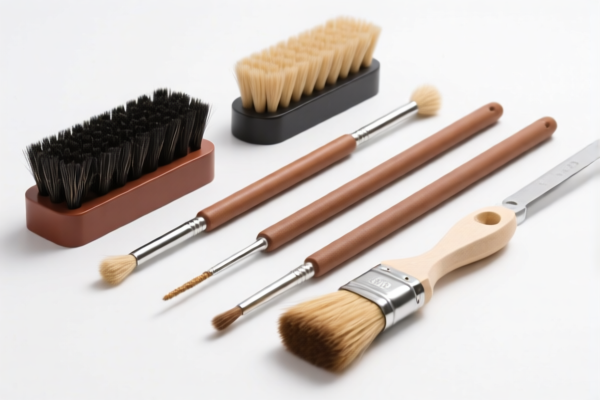
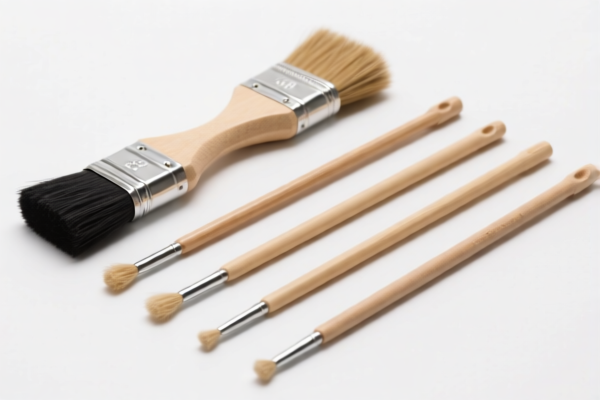
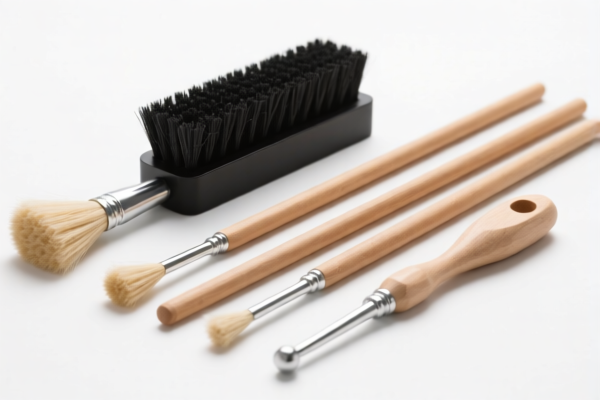
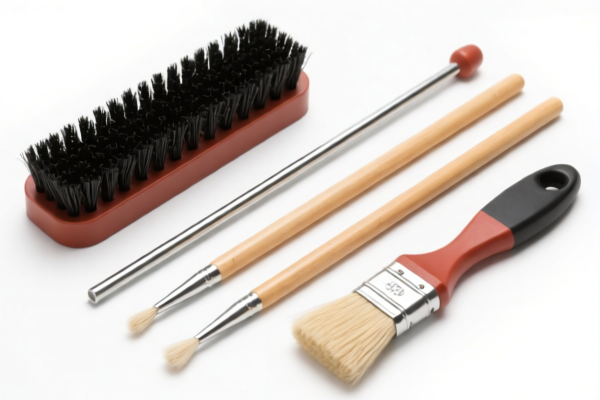
AI Analysis
✨ 4-Piece Polishing Set (Polishing Kits)
🌐 HS Code Reference & Customs Clearance Guide | 2026 Latest Tariff Analysis | Strategic通关 Strategy
📌 I. Product Definition & Classification: What Exactly Is a "Polishing Set"?
A 4-Piece Polishing Set is a composite good typically used in automotive detailing, furniture maintenance, or industrial surface finishing. It generally includes a combination of: 1. Abrasive/Chemical Agents (Polishing compounds, creams, pastes); 2. Application Tools (Buffers, pads, cloths, or hand tools).
In international trade, these sets fall into a "classification trap." The correct HS Code depends entirely on which component provides the essential character of the set under General Rule of Interpretation (GRI) 3(b).
⚠️ Critical Distinction:
- If the set is primarily a chemical product with applicators as accessories → Go to Chapter 34 (Polishing Preparations).
- If the set is primarily a toolset (e.g., metal hand tools) with polish as an accessory → Go to Chapter 82 (Hand Tools).
- If the set is primarily plastic containers/tools with polish inside → Go to Chapter 39 (Plastic Articles).
📦 II. HS Code Classification Details (2026 Latest Tariff Authority Comparison)
Based on the provided data for a "4-Piece Polishing Set," here are the four valid classification paths with their specific tax implications:
| HS Code | Product Description | Application Scenario | Key Classification Logic |
|---|---|---|---|
3405.90.00.00 |
Polishing Preparations (Other) | Sets where the polishing cream/paste is the primary value/function. | "Includes polishing agents, fits the use of polishing agents and creams, no material conflict." |
3926.90.99.89 |
Other Articles of Plastic | Sets where the plastic containers/tools define the set's character. | "Polishing sets belong to other articles of plastic and other materials, no obvious material conflict." |
3405.40.00.00 |
Scouring Preparations | Sets containing scouring/powder-based polishing agents. | "Set contains scouring preparations, fits the definition of polishing and scouring agents." |
8205.59.55.60 |
Other Hand Tools | Sets where metal/steel tools (e.g., scrapers, brushes) are dominant. | "Belongs to other hand tools, reasonably inferred to include metal or steel tool accessories." |
8205.90.60.00 |
Mixed Hand Tool Sets | Sets combining two or more types of hand tools (e.g., hammer + chisel + polish). | "Four-piece tool group belongs to sets of two or more tools, material is base metal or parts thereof." |
🔍 Key Reminder:
- Chemical Dominance: If the polish is the expensive, main component, use 3405.
- Tool Dominance: If the tools are heavy-duty metal instruments, use 8205.
- Plastic Dominance: If it’s mostly plastic applicators and bottles, use 3926.
💰 III. 2026 Latest Tariff Rate Details (Including Surtaxes & Policy Add-ons)
✅ Applicable Country: United States (US)
✅ Origin: China (CN) (Based on the "122 Clause" and high surtax rates in data)
✅ Effective Time: 2025/2026 (Current Trade Policy)
🎯 1. 3405.90.00.00 & 3405.40.00.00 — Polishing/Scouring Preparations
These two codes share the same tax structure in the provided data.
| Item | Details |
|---|---|
| Base Tariff | 0.0% (Ad Valorem) |
| Additional Tariff (Section 301) | +25.0% |
| 122 Clause Tariff | +10.0% |
| Total Effective Rate | 35.0% |
| Tax Calculation | CIF Value × 35% |
| De Minimis Exemption? | ❌ NO (Section 321 de minimis does not apply to goods subject to Section 301 or 122 tariffs). |
| Legal Basis | Base 0% + Section 301 (25%) + 122 Clause (10%) |
📌 Explanation:
- Although the base duty is 0%, the 35% total tariff is very high due to trade war measures.
- Section 301 (25%): Standard US-China tariff.
- 122 Clause (10%): Specific additional tariff on certain Chinese goods.
🎯 2. 3926.90.99.89 — Plastic Articles
| Item | Details |
|---|---|
| Base Tariff | 5.3% |
| Additional Tariff (Section 301) | +7.5% |
| 122 Clause Tariff | +10.0% |
| Total Effective Rate | 22.8% |
| Tax Calculation | CIF Value × 22.8% |
| De Minimis Exemption? | ❌ NO |
📌 Explanation:
- This is the lowest tariff option among the classified codes.
- Use this only if the set is legitimately classified as "Plastic Articles" (e.g., plastic bottles with sponges inside).
🎯 3. 8205.59.55.60 — Other Hand Tools
| Item | Details |
|---|---|
| Base Tariff | 5.3% |
| Additional Tariff (Section 301) | +25.0% |
| 122 Clause Tariff | +10.0% |
| Total Effective Rate | 40.3% |
| Tax Calculation | CIF Value × 40.3% |
| De Minimis Exemption? | ❌ NO |
📌 Explanation:
- High tariff due to the 25% Section 301 rate on metal tools.
- Only use if the set contains significant metal tool components.
🎯 4. 8205.90.60.00 — Mixed Hand Tool Sets
| Item | Details |
|---|---|
| Base Tariff | Rate applicable to the article in the set (Variable) |
| Additional Tariff (Section 301) | +25.0% |
| 122 Clause Tariff | +10.0% |
| Total Effective Rate | Variable + 35% |
| Tax Calculation | Depends on the primary tool component |
| De Minimis Exemption? | ❌ NO |
📌 Explanation:
- This code applies to sets of tools. If the set contains multiple metal tools, the duty is calculated based on the primary tool, then surtaxes are added.
- Generally results in a minimum 35-40%+ total duty.
🛠️ IV. Customs Clearance Practical Advice (Real-World Pitfall Avoidance)
✅ 1. Preparation Checklist (Non-Negotiable)
| Document | Required? | Purpose |
|---|---|---|
| ✅ Product Specification Sheet | ✔️ | Must list all 4 items, materials (e.g., "Plastic sponge," "Steel brush"), and weights. |
| ✅ Commercial Invoice | ✔️ | Clearly state "Polishing Set" or "Hand Tool Set" – do not use vague terms like "Miscellaneous Goods." |
| ✅ Photos of the Set | ✔️ | Show the set as packaged. Customs must see how items are grouped. |
| ✅ Material Breakdown | ✔️ | Specify % value of chemicals vs. tools. Helps justify HS Code selection. |
| ✅ Original Country of Origin Certificate | ✔️ | Essential for proving CN origin and applying surtaxes. |
✅ 2. Declaration Strategy (Key Formulas)
🔥 "Classify by Essential Character, Not by Convenience!"
| Scenario | Recommended HS Code | Why? |
|---|---|---|
| Most Common Retail Set (Bottle of paste + sponge + cloth + brush) | 3405.90.00.00 |
The polish is the main value. The sponge/cloth are accessories. |
| Budget Plastic Set (Plastic bottles + plastic applicators) | 3926.90.99.89 |
Lowest tax (22.8%). Justify by showing no metal/plastic tools dominate. |
| Professional Mechanic Kit (Metal scrapers + steel wool + polish) | 8205.59.55.60 |
Metal tools provide essential character. |
| Mixed Tool Kit (Hammer + Wrench + Polish) | 8205.90.60.00 |
It’s a set of tools. |
✅ 3. Special Situations & Risk Management
| Situation | Advice |
|---|---|
| De Minimis (Section 321) Evasion | ❌ Do NOT try to split the 4 items into 4 separate shipments to bypass the $800 threshold. Customs may aggregate them if they are "sold as a set" or "intended for one user." Result: Back taxes + Penalties. |
| Misclassification Risk | If you declare 3926 (Plastic) but the set contains a metal brush, Customs will reclassify to 8205 (40.3%). Always be honest about materials. |
| 122 Clause Impact | The 10% 122 Clause applies to most Chinese-origin goods in these chapters. Factor this into your pricing model. |
🌍 V. Global Market Comparison (2026 Latest)
| Country/Region | Recommended HS Code | Estimated Total Duty (China Origin) | Notes |
|---|---|---|---|
| 🇺🇸 USA | 3405.90.00.00 |
35.0% | High due to Section 301 + 122 Clause. |
| 🇺🇸 USA | 3926.90.99.89 |
22.8% | Best option if product allows plastic classification. |
| 🇪🇺 EU | 3405.00.00 |
0-6.5% | No Section 301 equivalent. Generally lower duty. |
| 🇨🇳 China | 3405.90.00 |
0-5% | Export duty is minimal; focus on destination tax. |
📌 Conclusion:
- The US market is the most expensive for polishing sets due to layered tariffs.
-3926.90.99.89(22.8%) is the strategic sweet spot if the product design allows (plastic-heavy).
-3405.90.00.00(35.0%) is the standard for chemical-dominated sets.
📌 VI. Common Errors & Pitfalls (Lessons Learned)
❌ Error 1: Declaring as "General Merchandise" without a specific HS Code
👉 Consequence: Customs assigns a default code with maximum duty (often 25%+).
❌ Error 2: Splitting the set into 4 separate packages to use De Minimis
👉 Consequence: Customs may reject the exemption if they determine the items are "commercially associated" or intended for one recipient. Risk of audit and seizure.
❌ Error 3: Mislabeling "Scouring Pads" as "Polishing Cream" to avoid chemical regulations
👉 Consequence: Regulatory non-compliance. Polishing chemicals may require HCS (Hazard Communication Standard) labeling in the US.
✅ Correct Practice:
"4-Piece Polishing Kit: 1x 100ml Polishing Compound, 1x Foam Applicator, 1x Microfiber Cloth, 1x Brush. HS Code: 3405.90.00.00."
🎯 VII. Conclusion: Professional Classification, Cost Optimization
🎯 Key Takeaway:
🔹 "Essential Character is King" – Is it the chemical or the tool?
🔹 "Plastic is Cheap" – If possible, structure the set to be plastic-dominant for 22.8% tax vs. 35%+.
🔹 "122 Clause is Real" – The extra 10% is non-negotiable for China-origin goods in these categories.
📌 Pro Tip:
If your product is primarily a plastic kit with a small vial of polish, argue for 3926.90.99.89 to save 12.2% in tariffs.
If it is primarily polish, accept 3405.90.00.00 at 35%.
📣 Immediate Action:
📞 Consult a Licensed Customs Broker to review your product photo.
📄 Request a US Customs Ruling before shipment to lock in the HS Code.
🚀 Optimize your product mix to maximize duty savings!
✨ Professional Clearance Starts with Precise Classification!
💼 Your Profit Margin Depends on Your HS Code!
Customer Reviews
About HS Code Classification
The Harmonized System (HS) is an internationally standardized nomenclature developed by the World Customs Organization (WCO) to classify traded products. Over 200 countries use the HS system as the basis for customs tariffs, trade statistics, and import/export regulations.
Each HS code follows a hierarchical structure:
- Chapter (2 digits) — Broad category of goods (e.g., Chapter 84: Machinery and Mechanical Appliances)
- Heading (4 digits) — More specific grouping within the chapter
- Subheading (6 digits) — Internationally standardized breakdown, used by all WCO member countries
- National subdivisions (8-10 digits) — Country-specific extensions for further classification, such as US HTSUS 10-digit codes
Correct HS code classification is essential for smooth customs clearance, accurate duty payment, and compliance with trade regulations. Misclassification can lead to customs delays, overpayment of duties, or penalties.
When importing from CN to US, the applicable tariff rates may include:
- Most-Favored-Nation (MFN) rate — The standard duty rate applied to WTO members
- General rate — Applied to countries without trade agreements
- Trade remedy duties — Additional tariffs such as Section 301 (anti-dumping), Section 232 (national security), or countervailing duties
The information provided on this page is for reference purposes only. For official classification, please consult with your local customs authority or a licensed customs broker.