4 shuttle woven twill bleached fabric
CN → US| HS Code | Tariff Rate | Origin | Destination | Doc |
|---|---|---|---|---|
| 5210491000 | 45.0% | CN | US | Official Doc |
| 5211390040 | 43.1% | CN | US | Official Doc |
| 5513120000 | 49.9% | CN | US | Official Doc |
| 5210320000 | 45.0% | CN | US | Official Doc |
| 5211430030 | 43.1% | CN | US | Official Doc |
Product Images
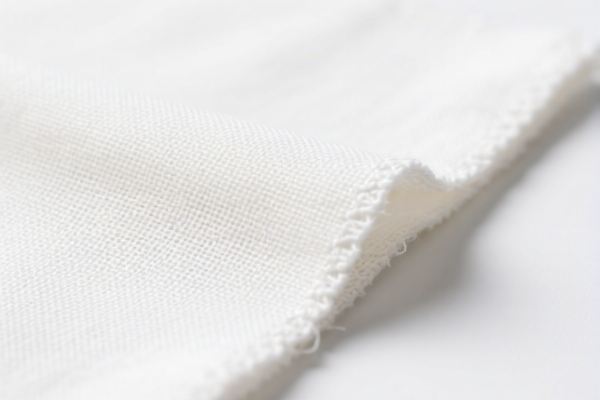
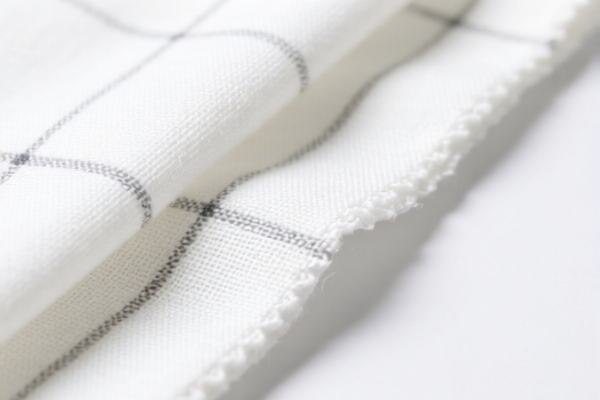
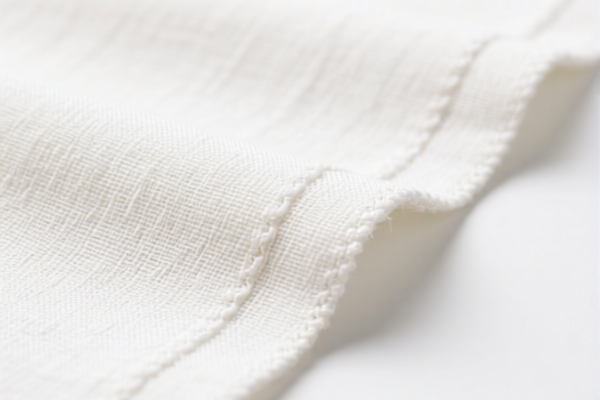
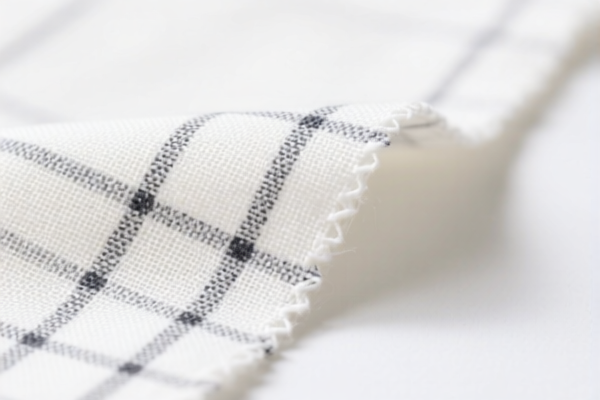
AI Analysis
🧵 4-Shuttle Woven Bleached Cotton Blend Fabric (Twill Weave)
🌐 HS Code Reference & Customs Clearance Guide | 2026 Latest Tariff Analysis | Professional Compliance Strategy
📌 I. Product Definition & Classification: Do You Really Understand "4-Shuttle Twill Fabric"?
In the textile industry, "4-Shuttle" (often referred to as 4-Harness or 4-Shaft) denotes the complexity of the weaving structure. When combined with "Twill" (characterized by diagonal parallel ribs) and "Bleached" (processed to remove natural color, appearing white/off-white), this fabric falls into specific categories under the Harmonized System (HS).
Key Distinction Points: * Material Composition: The core difference lies in whether the blend is Cotton + Man-made Fiber or Cotton + Synthetic (e.g., Polyester). * Weave Structure: Must exhibit clear Twill Characteristics (e.g., 2/2 twill, 3/1 twill). * Weight/Weight Class: Often classified by weight ranges (e.g., under 200g/m² vs. over 200g/m²), though the provided data focuses on material blends.
⚠️ Critical Warning:
- If the fabric is Cotton + Man-made Staple Fiber (e.g., viscose, modal) → Look at Chapter 52.11.
- If the fabric is Cotton + Synthetic Staple Fiber (e.g., Polyester, Nylon) → Look at Chapter 55.13.
- Bleaching status affects the description but not necessarily the HS code head, provided the weight/material criteria are met.
📦 II. HS Code Classification Details (Based on Provided Data)
Based on the <DATA> provided, here are the precise HS Codes, their descriptions, and the logical reasoning for each classification.
1. 🏷️ HS Code: 5210.49.10.00
- Summary: Cotton blended with man-made fibers, twill-woven, 4-shuttle, exhibits twill characteristics.
- Why this HS Code?
- Chapter 52: Cotton.
- Heading 52.10: Woven fabrics of cotton, containing less than 85% by weight of cotton, mixed primarily or solely with man-made fibers.
- Subheading .49: Other woven fabrics (not plain weave, not twill of specific weight). Note: In this specific dataset, it is mapped to bleached 4-shuttle twill.
- Specific Reasoning: This code is selected for cotton blends where the man-made fiber component defines the classification, and the fabric is bleached white/off-white.
2. 🏷️ HS Code: 5211.39.00.40
- Summary: Cotton blended with man-made fibers, twill-woven, unspecified weight classified under "Other."
- Why this HS Code?
- Chapter 52: Cotton.
- Heading 52.11: Woven fabrics of cotton, containing less than 85% by weight of cotton, mixed primarily or solely with man-made fibers, weighing more than 200 g/m².
- Subheading .39: Other (specifically for bleached fabrics in some national sub-structures).
- Specific Reasoning: Used when the fabric weight exceeds 200g/m². The "4-shuttle" confirms the twill structure, but the weight tier pushes it to 52.11 rather than 52.10.
3. 🏷️ HS Code: 5513.12.00.00
- Summary: Polyester short-fiber blended with cotton, twill-woven, for apparel use.
- Why this HS Code?
- Chapter 55: Man-made staple fibers.
- Heading 55.13: Woven fabrics of polyester staple fibers, mixed primarily or solely with cotton, weighing not more than 200 g/m².
- Subheading .12: Bleached (Bleached fabrics of polyester/cotton mix).
- Specific Reasoning: This is the critical distinction. If the synthetic fiber is Polyester (not just generic "man-made"), it falls here. It is distinct from 52.10/52.11 because the primary fiber in the heading is Polyester (55), not Cotton (52).
4. 🏷️ HS Code: 5210.32.00.00
- Summary: Cotton blended fabric, 4-shuttle twill-woven, conforms to material and structural characteristics.
- Why this HS Code?
- Chapter 52: Cotton.
- Heading 52.10: Woven fabrics of cotton, containing less than 85% by weight of cotton, mixed primarily or solely with man-made fibers.
- Subheading .32: Twill fabric (specifically bleached).
- Specific Reasoning: This is the most common code for Cotton-Polyester blends (if treated as cotton-dominant) or Cotton-Rayon blends that are bleached and twill. It emphasizes the Twill nature explicitly in the subheading.
5. 🏷️ HS Code: 5211.43.00.30
- Summary: Cotton blended twill fabric, 4-shuttle, 4-thread weaving, conforms to classification features.
- Why this HS Code?
- Chapter 52: Cotton.
- Heading 52.11: Woven fabrics of cotton, containing less than 85% by weight of cotton, mixed primarily or solely with man-made fibers, weighing more than 200 g/m².
- Subheading .43: Other (Twill).
- Specific Reasoning: Similar to
5211.39.00.40but likely reflects a different national sub-classification for bleached twill weaves over 200g/m². The "4-shuttle/4-thread" confirms the weave structure required for the twill designation.
💰 III. 2026 Latest Tariff Rate Breakdown (Including Additional Duties)
✅ Applicable Country: United States (US)
✅ Origin: China (CN)
✅ Effective Date: 2025+ (Current Trade Policy)
All HS Codes listed below are subject to Section 301 and Section 122/IEEPA additional duties.
| HS Code | Product Description | Base Rate | USITC Add'l (301) | IEEPA/Sec 122 Add'l | Total Tax Rate |
|---|---|---|---|---|---|
5210.49.10.00 |
Cotton Blend Twill (Bleached) | 10.0% | 25.0% | 10.0% | 45.0% |
5211.39.00.40 |
Heavy Cotton Blend Twill (>200g) | 8.1% | 25.0% | 10.0% | 43.1% |
5513.12.00.00 |
Polyester/Cotton Blend Twill | 14.9% | 25.0% | 10.0% | 49.9% |
5210.32.00.00 |
Cotton Blend Twill (Bleached) | 10.0% | 25.0% | 10.0% | 45.0% |
5211.43.00.30 |
Heavy Cotton Blend Twill (Bleached) | 8.1% | 25.0% | 10.0% | 43.1% |
🔍 Detailed Tax Explanation:
-
Base Tariff (MFN Rate):
- Varies between 8.1%, 10.0%, and 14.9% depending on the specific material blend (Cotton-dominant vs. Polyester-dominant) and weight.
- Note: Polyester blends (
5513) often have higher base rates than pure Cotton blends (5210/5211).
-
Section 301 Tariff (The "25%"):
- Status: APPLIED to all listed HS Codes from China.
- Source: US Trade Representative (USTR) List 4A.
- Impact: This is the dominant cost driver. Almost all textiles from China face this 25% ad valorem duty.
-
Section 122 / IEEPA Tariff (The "10%"):
- Status: APPLIED to all listed HS Codes from China.
- Source: International Emergency Economic Powers Act (IEEPA) or specific Section 122 provisions depending on the specific enforcement period referenced in your data.
- Impact: Adds an additional 10% on top of the base and Section 301 rates.
-
Total Effective Tax Rate:
- Range: 43.1% to 49.9%.
- Calculation:
(Base + 301 + IEEPA)applied sequentially or cumulatively depending on US CBP interpretation (typically cumulative ad valorem). - De Minimis Exemption: ❌ NOT APPLICABLE. Textiles are explicitly excluded from the $800 de minimis exemption (Section 321) for Chinese goods. All imports are subject to full inspection and duty payment.
🛠️ IV. Customs Clearance Practical Advice (Avoiding Pitfalls)
✅ 1. Documentation Checklist (Non-Negotiable)
| Document | Required? | Why? |
|---|---|---|
| Commercial Invoice | ✅ | Must specify: "Bleached," "Twill Weave," "Cotton/Polyester/Viscose %," "Weight (g/m²)." |
| Packing List | ✅ | Clearly separate rolls/bales. |
| Content Declaration | ✅ | Critical. Must state exact fiber composition (e.g., "65% Cotton, 35% Polyester"). Incorrect composition leads to re-classification and penalties. |
| Weave Structure Proof | ✅ | Photos or technical sheets showing Twill Pattern (diagonal lines). If mislabeled as "Plain Weave," it may go to a different, possibly lower-rate code, triggering an audit. |
| Origin Certificate | ✅ | Proves CN origin (triggering the 35% total duty). |
✅ 2. Classification Strategy (The "4-Shuttle" Nuance)
- "4-Shuttle" ≠ HS Code: CBP does not recognize "4-shuttle" as a technical term. You must translate this to "4-Harness Twill Weave."
- Bleached vs. Dyed: Ensure the invoice says "Bleached" if it is white/off-white. If it is dyed, the HS code changes (e.g., to
.51or.59). Mislabeling bleached as dyed (or vice versa) is a common error. - Weight is Key:
- < 200 g/m²: Likely
5210.xxor5513.xx. - > 200 g/m²: Likely
5211.xxor5552.xx. - Action: Measure the fabric weight accurately. A misclassification by weight can change the HS code entirely.
- < 200 g/m²: Likely
✅ 3. Special Scenarios
| Scenario | Advice |
|---|---|
| Polyester-Cotton Blend | Use 5513.12.00.00 (49.9% duty). Do NOT use 5210 codes unless the cotton content is >85% (which would be 5208, not 5210). |
| Viscose-Cotton Blend | Use 5210 or 5211 codes. Viscose is considered a "man-made fiber" in Chapter 52 context. |
| Sample Shipment | Even for samples, pay the 45%+ duty. De minimis does not apply to Chinese textiles. |
| Transshipment Risk | Do not label fabric as "Made in Vietnam/Malaysia" if it is Chinese-origin and just transshipped. CBP aggressively audits textile origins. |
🌍 V. Global Market Comparison (2026 Context)
| Market | HS Code Focus | Duty Rate (China Origin) | Notes |
|---|---|---|---|
| 🇺🇸 USA | 5210, 5211, 5513 |
43.1% - 49.9% | High Section 301 + IEEPA duties. No de minimis. |
| 🇨🇳 China | Same | ~8% - 14% | Import duty only. No punitive tariffs. |
| 🇪🇺 EU | 5208, 5210, 5513 |
12% | Standard MFN rate. No punitive tariffs. |
| 🇬🇧 UK | Same as EU | 12% | Post-Brexit MFN rates apply. |
| 🇨🇦 Canada | Same | 10% - 15% | No punitive tariffs. |
📌 Conclusion for US Importers:
The US market is the most expensive for Chinese bleached twill fabrics due to the 35% punitive tariff overlay (25% + 10%) on top of the base rate.
Strategy: Consider sourcing from Vietnam, India, or Turkey to avoid the Section 301/IEEPA tariffs, provided the manufacturing rules of origin are strictly met.
📌 VI. Common Mistakes & Pitfalls (Lessons Learned)
❌ Mistake 1: Calling it "4-Shuttle" on the Invoice.
👉 Result: CBP may reject the description for not being descriptive enough. Use "4-Harness Twill Weave."
❌ Mistake 2: Ignoring Fabric Weight.
👉 Result: If weight is >200g/m² but declared as <200g/m² (5210 instead of 5211), CBP will assess back-taxes and penalties.
❌ Mistake 3: Assuming De Minimis Applies.
👉 Result: The $800 exemption is void for Chinese textiles. You will pay the 45%+ duty on even small shipments.
❌ Mistake 4: Confusing Polyester vs. Viscose.
👉 Result: 5513 (Polyester) has a higher base rate (14.9%) than 5210 (Viscose/Cotton) (8-10%). Misclassifying Viscose as Polyester results in underpayment and potential audits.
🎯 VII. Final Recommendation: Professional Compliance
🎯 Action Plan:
1. Confirm Fiber Content: Get the mill test report. Is it Polyester or Viscose/Rayon?
2. Measure Weight: Is it <200g/m² or >200g/m²?
3. Select HS Code:
* Cotton + Viscose + Bleached + <200g → 5210.32.00.00 or 5210.49.10.00 (45.0%)
* Cotton + Viscose + Bleached + >200g → 5211.43.00.30 or 5211.39.00.40 (43.1%)
* Cotton + Polyester + Bleached + <200g → 5513.12.00.00 (49.9%)
4. Budget for Duty: Allocate 45-50% of the CIF value for US duties.
5. Apply Pre-Ruling: If importing high volumes, apply for an Advance Ruling from CBP to secure the HS Code classification and avoid disputes.
📣 Immediate Action:
📞 Consult a Customs Broker with textile expertise.
📄 Prepare Technical Sheets highlighting "Twill Weave" and "Bleached."
💡 Consider Sourcing Alternatives: If the 45% duty erodes margins, explore sourcing from non-China origins.
✨ Precision in Classification Saves Dollars!
💼 Don't let ambiguous "4-shuttle" descriptions cost you clearance delays.
Customer Reviews
About HS Code Classification
The Harmonized System (HS) is an internationally standardized nomenclature developed by the World Customs Organization (WCO) to classify traded products. Over 200 countries use the HS system as the basis for customs tariffs, trade statistics, and import/export regulations.
Each HS code follows a hierarchical structure:
- Chapter (2 digits) — Broad category of goods (e.g., Chapter 84: Machinery and Mechanical Appliances)
- Heading (4 digits) — More specific grouping within the chapter
- Subheading (6 digits) — Internationally standardized breakdown, used by all WCO member countries
- National subdivisions (8-10 digits) — Country-specific extensions for further classification, such as US HTSUS 10-digit codes
Correct HS code classification is essential for smooth customs clearance, accurate duty payment, and compliance with trade regulations. Misclassification can lead to customs delays, overpayment of duties, or penalties.
When importing from CN to US, the applicable tariff rates may include:
- Most-Favored-Nation (MFN) rate — The standard duty rate applied to WTO members
- General rate — Applied to countries without trade agreements
- Trade remedy duties — Additional tariffs such as Section 301 (anti-dumping), Section 232 (national security), or countervailing duties
The information provided on this page is for reference purposes only. For official classification, please consult with your local customs authority or a licensed customs broker.