4pcs Chainsaw Chain Guide Bar
CN → US| HS Code | Tariff Rate | Origin | Destination | Doc |
|---|---|---|---|---|
| 8467990190 | 35.0% | CN | US | Official Doc |
| 8467910100 | 17.5% | CN | US | Official Doc |
| 8202406030 | 35.0% | CN | US | Official Doc |
| 7326908688 | 87.9% | CN | US | Official Doc |
Product Images
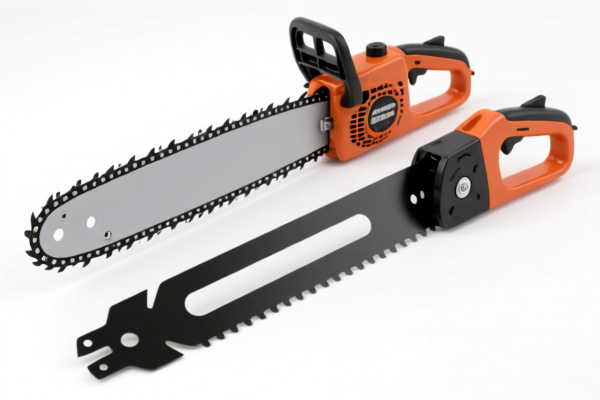
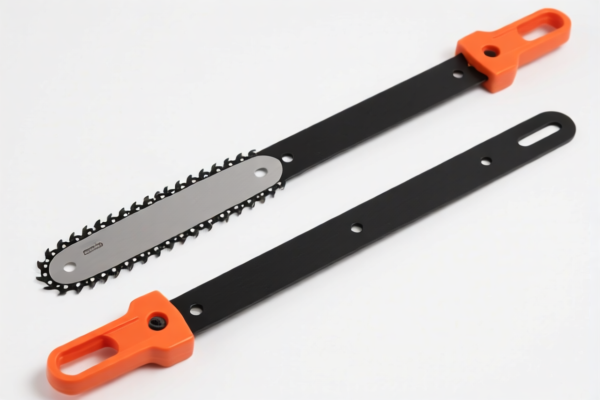
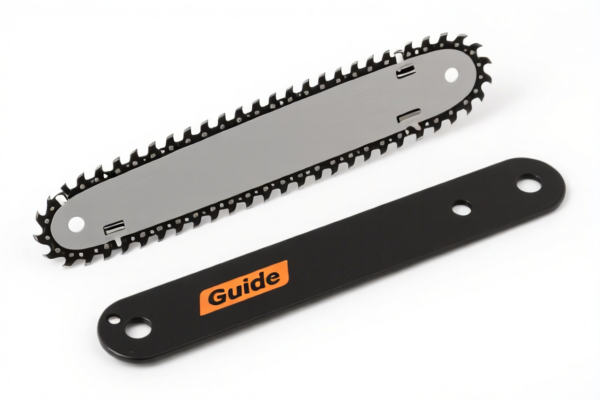
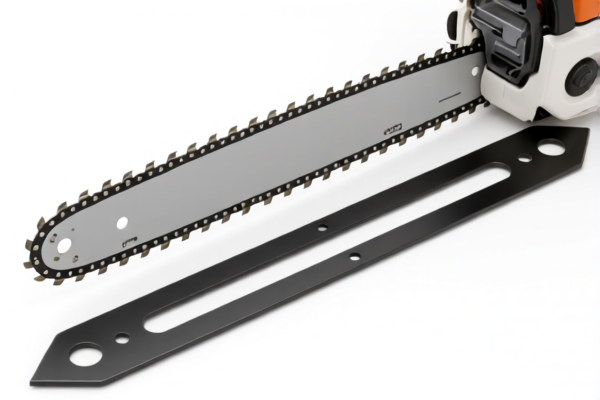
AI Analysis
🪚 Chainsaw Chain & Guide Bars (Saws and Parts)
🌐 HS Code Reference & Customs Clearance Guide | 2026 Latest Tariff Analysis | Professional Clearance Strategy
📌 I. Product Definition & Classification: What Exactly Are You Shipping?
A "4pcs Chainsaw Chain Guide Bar" set consists of two distinct mechanical components crucial for chain saw operation: 1. Guide Bars (Guide Rails): The metal rails upon which the cutting chain runs. These are typically classified as "other articles of iron or steel" or "parts of chain saws" depending on their specific construction and integration. 2. Chains (Cutting Chains): The toothed loop that cuts the wood. These are explicitly classified as "Chain saw blades" in the Harmonized System.
⚠️ Critical Classification Distinction:
- The Chain: Always falls under Heading 82.02 ("Blades for saws... Chain saw blades").
- The Bar: Often falls under Heading 84.67 ("Parts of tools... of chain saws") OR Heading 73.26 ("Other articles of iron or steel") if not deemed a specific "part" of the power tool in certain jurisdictions.
- The Set: If imported together, customs may require split classification for accurate duty calculation. Do not lump them into one vague category if the duty rates differ significantly.
📦 II. HS Code Classification Details (2026 Latest Tariff Authority Comparison)
Based on the provided dataset, here is the breakdown for Chainsaw Chains and Guide Bars/Parts:
| HS Code | Product Description | Applicable Component | Duty Detail (China Origin → US) |
|---|---|---|---|
| 8202.40.60.30 | Chain saw blades, and parts thereof: Other In continuous lengths | Chains (Continuous loop chains) | Base: 0% Additional: 25% Total: 25% |
| 8202.40.60.60 | Chain saw blades, and parts thereof: Other Other | Chains (Other chain types) | Base: 0% Additional: 25% Total: 25% |
| 8467.91.01.00 | Parts of chain saws (for tools with self-contained motor) | Guide Bars & Parts (Specifically designated parts) | Base: 0% Additional: 7.5% Total: 7.5% |
| 8467.99.01.90 | Parts: Other Other | Guide Bars (If not specifically "8467.91") | Base: 0% Additional: 25% Total: 25% |
| 7326.90.86.30 | Other articles of iron or steel: Hangers and similar supports for tubes/pipes | Guide Bars (Sometimes misclassified as generic steel articles) | Base: 2.9% Additional: 25% + 50% (Steel/Alu/Cu Surcharge) Total: 77.9% |
| 7326.90.86.88 | Other articles of iron or steel: Other | Guide Bars (Generic steel classification) | Base: 2.9% Additional: 25% + 50% (Steel/Alu/Cu Surcharge) Total: 77.9% |
🔍 Key Insight:
- Chains (8202.40) are taxed at 25%.
- Parts (8467.91) for chain saws are taxed at a lower 7.5%.
- Generic Steel Articles (7326.90) are taxed at a punitive 77.9%.
- Strategy: You MUST classify Guide Bars under 8467.91.01.00 (Parts of chain saws) to pay only 7.5%. Misclassifying them as generic steel (7326.90) will result in a 70%+ duty overcharge.
💰 III. 2026 Latest Tariff Rate Breakdown (Including Surcharges & Policies)
✅ Applicable Country: United States (US)
✅ Origin: China (CN)
✅ Effective Time: Current rates apply (Section 301 & IEEPA)
🎯 1. 8202.40.60.30 / 8202.40.60.60 — Chain Saw Blades/Chains
| Item | Detail |
|---|---|
| Base Tariff | 0% (Ad valorem) |
| Section 301 Surcharge | +25% |
| Total Effective Rate | 25% |
| De Minimis Exemption | ❌ Not Available (Section 301 goods are excluded from $800 de minimis) |
| Legal Basis | USITC: 8202.40.60.30/60 → Section 301 Footnote |
📌 Explanation:
- Chains are considered "blades for saws" under HS 82.02.
- They are subject to the standard 25% Section 301 tariff on Chinese imports.
- No base duty, but the 25% surcharge is mandatory.
🎯 2. 8467.91.01.00 — Parts of Chain Saws (Recommended for Guide Bars)
| Item | Detail |
|---|---|
| Base Tariff | 0% (Ad valorem) |
| Section 301 Surcharge | +7.5% |
| Total Effective Rate | 7.5% |
| De Minimis Exemption | ❌ Not Available |
| Legal Basis | USITC: 8467.91.01.00 → Section 301 Footnote |
📌 Explanation:
- Guide bars are specifically "parts of tools of heading 84.67" (Hand tools with self-contained motors).
- This classification benefits from a lower 7.5% surcharge compared to generic steel or other parts.
- This is the optimal classification for Guide Bars to minimize costs.
🎯 3. 7326.90.86.30 / 7326.90.86.88 — Generic Steel Articles (AVOID)
| Item | Detail |
|---|---|
| Base Tariff | 2.9% |
| Section 301 Surcharge | +25% |
| Steel/Alu/Cu Surcharge | +50% |
| Total Effective Rate | 77.9% |
| De Minimis Exemption | ❌ Not Available |
| Legal Basis | USITC: 7326.90 → Section 301 + Steel/Alu Surcharge |
📌 Warning:
- Never classify guide bars as "other articles of iron or steel" (7326) unless you cannot prove they are specific parts of chain saws.
- The 77.9% rate is catastrophic for profit margins. It includes a specific 50% surcharge on steel products.
🛠️ IV. Customs Clearance Practical Advice (Avoid Pitfalls)
✅ 1. Documentation Checklist (Mandatory)
| Document | Required? | Notes |
|---|---|---|
| ✅ Commercial Invoice | ✔️ | Must clearly separate Chains and Guide Bars if possible. |
| ✅ Product Photos | ✔️ | Show the chain and the bar separately to prove they are distinct items. |
| ✅ Technical Spec Sheet | ✔️ | Specify: "Guide Bar for Chainsaw" (not "Steel Rod") and "Cutting Chain for Chainsaw". |
| ✅ HS Code Justification | ✔️ | Cite 8467.91.01.00 for bars and 8202.40 for chains. |
| ✅ Packing List | ✔️ | List quantities of chains and bars separately. |
✅ 2. Declaration Strategy (Key Mantra)
🔥 "Chains are Blades (8202), Bars are Parts (8467). Don't call them Steel!"
| Scenario | Correct Declaration | Incorrect Declaration | Risk |
|---|---|---|---|
| Chains | 8202.40.60.30 (Chain Saw Blades) |
7326.90.86.88 (Steel Articles) |
Pay 77.9% instead of 25%. |
| Guide Bars | 8467.91.01.00 (Parts of Chain Saws) |
7326.90.86.30 (Hangers/Steel) |
Pay 77.9% instead of 7.5%. |
| Set (Chain + Bar) | Split line items: 1 Chain, 1 Bar | One line "Chainsaw Accessories" | Customs may audit and reclassify all items to the highest duty (77.9%). |
✅ 3. Special Considerations
| Situation | Advice |
|---|---|
| Pre-assembled Sets | Even if sold as a "kit," declare components separately. The bar is a part (8467), the chain is a blade (8202). |
| "Universal" Bars | Even if marketed as "universal," if it fits a chain saw, it is a part of a chain saw (8467). Do not use 7326. |
| De Minimis ($800) | ❌ Do not attempt to use Section 321 (de minimis) for these items from China. Section 301 surcharges exclude de minimis exemptions. You will face delays and penalties. |
| Origin Labeling | Ensure "Made in China" is clearly marked on packaging. This triggers the Section 301 duties. |
🌍 V. Global Market Comparison (2026)
| Country/Region | Recommended HS Code | Duty Rate (China Origin) | Notes |
|---|---|---|---|
| 🇺🇸 USA | 8202.40 (Chains)8467.91 (Bars) |
25% (Chains) 7.5% (Bars) |
High scrutiny on steel products. Avoid 7326. |
| 🇨🇳 China | 8202.40 / 8467.91 |
0% - 9% | Standard MFN rates, no Section 301. |
| 🇪🇺 EU | 8202.40 / 8467.91 |
4.5% - 10% | No additional surcharges, but strict CE/RoHS compliance for tools. |
| 🇬🇧 UK | 8202.40 / 8467.91 |
4.5% - 10% | Post-Brexit rules apply. Verify UK tariff schedule. |
📌 Conclusion:
- The US market is the most critical due to Section 301 tariffs.
- Correct classification of Guide Bars as Parts (8467.91) saves 70.4% in duties compared to misclassification as generic steel (7326.90).
- Chains are uniformly taxed at 25% in the US.
📌 VI. Common Errors & Pitfalls (Blood Lessons)
❌ Error 1: Labeling Guide Bars as "Steel Flat Bar" or "Metal Support"
👉 Consequence: Classified under 7326.90 → 77.9% Duty.
👉 Loss: Overpaying ~70% on the value of the bar.
❌ Error 2: Shipping Chains and Bars as one line item "Chainsaw Kit"
👉 Consequence: Customs may assign the highest duty rate to the entire shipment (e.g., 77.9% if they view it as steel goods).
👉 Loss: Paying high duty on the cheap chains and expensive bars alike.
❌ Error 3: Assuming De Minimis ($800) exemption applies
👉 Consequence: Package held at border, penalty fees, and forced payment of 7.5%–25% duties.
👉 Loss: Delays, storage fees, and compliance risks.
✅ Correct Practice:
"Line 1: Chain Saw Guide Bar, Steel, Part No. XYZ, HS 8467.91.01.00, Made in China"
"Line 2: Chain Saw Cutting Chain, Steel, Pitch 0.325, HS 8202.40.60.30, Made in China"
🎯 VII. Conclusion: Precision Classification Saves Money!
🎯 Remember the Mantra:
🔹 "Chains = Blades (8202, 25%)
🔹 "Bars = Parts (8467, 7.5%)
🔹 "NO Generic Steel (7326, 77.9%)!"
🔹 "No De Minimis for China!"
📌 Pro Tip:
If you are shipping a set of 4pcs, ensure your invoice lists:
- 4x Guide Bars (HS: 8467.91.01.00)
- 4x Chains (HS: 8202.40.60.30)
This split declaration ensures you pay 7.5% on the bars and 25% on the chains, rather than a blanket high rate.
📣 Immediate Action:
📞 Verify HS Codes with your freight forwarder before shipping.
📄 Update Invoice to reflect separate HS codes for Chains and Bars.
🚀 Optimize Costs: Save up to 70% on guide bar duties by correct classification.
✨ Professional Clearance Starts with Precise Classification!
💼 Your Margins Depend on Getting the HS Code Right!
Customer Reviews
About HS Code Classification
The Harmonized System (HS) is an internationally standardized nomenclature developed by the World Customs Organization (WCO) to classify traded products. Over 200 countries use the HS system as the basis for customs tariffs, trade statistics, and import/export regulations.
Each HS code follows a hierarchical structure:
- Chapter (2 digits) — Broad category of goods (e.g., Chapter 84: Machinery and Mechanical Appliances)
- Heading (4 digits) — More specific grouping within the chapter
- Subheading (6 digits) — Internationally standardized breakdown, used by all WCO member countries
- National subdivisions (8-10 digits) — Country-specific extensions for further classification, such as US HTSUS 10-digit codes
Correct HS code classification is essential for smooth customs clearance, accurate duty payment, and compliance with trade regulations. Misclassification can lead to customs delays, overpayment of duties, or penalties.
When importing from CN to US, the applicable tariff rates may include:
- Most-Favored-Nation (MFN) rate — The standard duty rate applied to WTO members
- General rate — Applied to countries without trade agreements
- Trade remedy duties — Additional tariffs such as Section 301 (anti-dumping), Section 232 (national security), or countervailing duties
The information provided on this page is for reference purposes only. For official classification, please consult with your local customs authority or a licensed customs broker.