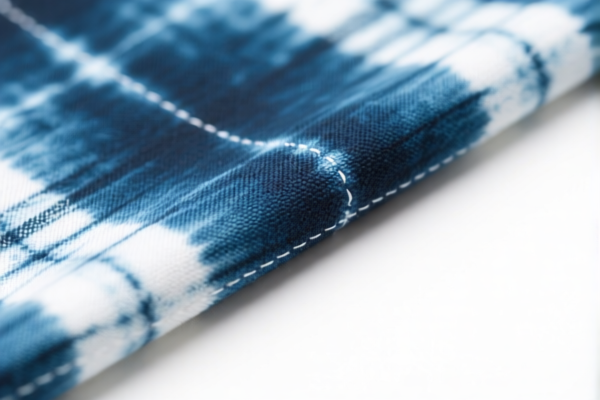
4梭织棉混纺斜纹面料
CN → US| HS Code | Tariff Rate | Origin | Destination | Doc |
|---|---|---|---|---|
| 5209120040 | 41.5% | CN | US | Official Doc |
| 5211120040 | 42.7% | CN | US | Official Doc |
| 5210491000 | 45.0% | CN | US | Official Doc |
| 5210191000 | 19.1% | CN | US | Official Doc |
| 5211120020 | 42.7% | CN | US | Official Doc |
Product Images



AI Analysis
🌾 4. Woven Cotton-Blended Twill Fabric
🌐 HS Code Reference & Customs Clearance Guide | 2026 Latest Tariff Breakdown | Professional Import Strategy
📌 One, Product Definition & Classification: Do You Really Understand “Woven Cotton-Blended Twill Fabric”?
Woven cotton-blended twill fabric is a versatile textile used in apparel, workwear, bags, and industrial applications. It is defined by its distinct diagonal rib pattern (twill weave) and cotton content combined with synthetic or man-made fibers.
⚠️ Key Classification Criteria: - Must have twill weave structure (diagonal lines visible on surface); - Cotton content < 85% (if ≥85%, it may be classified differently); - Contains man-made fibers (e.g., polyester, nylon, rayon) as blend component; - Must be woven, not knitted or non-woven.
✅ True Twill Fabric: Diagonal pattern, firm hand, durable — like denim or chino cloth.
❌ Not Twill: Plain weave, satin weave, or fabric with no visible diagonal.
📦 Two, HS Code Classification Details (2026 Latest Tariff Authority Match)
| HS Code | Product Description | Applicable Use Cases | Cotton Content | Man-Made Fiber Blend? |
|---|---|---|---|---|
5211.12.00.40 |
Cotton-blended twill fabric, cotton < 85%, with man-made fibers, fits twill weave definition | Jackets, trousers, workwear, outerwear | <85% | ✅ Yes |
5209.12.00.40 |
Woven cotton-blended twill fabric, meets cotton woven fabric + twill structure requirements | Denim, chinos, uniforms, fashion apparel | ≥85% | ✅ Yes (but may be borderline) |
5210.19.10.00 |
Cotton-blended twill fabric, fits cotton content + twill process description | Casual wear, garments, home textiles | <85% | ✅ Yes |
5210.49.10.00 |
Woven cotton-blended twill fabric, matches material & twill structure definition | Industrial fabrics, bags, accessories | <85% | ✅ Yes |
5211.12.00.20 |
Cotton-blended twill fabric, cotton < 85%, mainly blended with man-made fibers, fits twill woven definition | Workwear, outdoor gear, technical textiles | <85% | ✅ Yes |
🔍 Critical Insight: - All five HS codes are for cotton-blended twill fabrics; - The key difference lies in cotton percentage, fiber type, and exact weaving structure; - Even small differences in blend ratio or fiber type can trigger different HS code assignment.
💰 Three, 2026 Latest Tariff Breakdown (With附加 Taxes & Policy Clauses)
✅ Applicable Country: United States (US)
✅ Origin: China (CN)
✅ Effective Date: November 10, 2025 (including subsequent imports)
🎯 1. 5211.12.00.40 — Cotton-Blended Twill Fabric (Cotton < 85%, Man-Made Fiber Blend)
| Item | Detail |
|---|---|
| Base Duty Rate | 7.7% (ad valorem) |
| Section 301 (USITC) Additional Tariff | +25.0% |
| Section 122 (IEEPA) Additional Tariff | +10.0% |
| Total Effective Duty | 42.7% |
| Tax Calculation | CIF Value × 42.7% |
| De Minimis Threshold | ❌ Not applicable (denied under 301/122) |
| Legal Basis Path | IEEPA:9903.01.25 → IEEPA:9903.01.24 → USITC:5211.12.00.40 → FOOTNOTE:9903.88.01 |
📌 Explanation: - 7.7% base duty: Standard rate for cotton-blended fabrics; - +25% USITC Tariff: From Section 301 of the U.S. Trade Act — targeting unfair Chinese trade practices; - +10% IEEPA Tariff: From International Emergency Economic Powers Act — applies to goods from China/Hong Kong; - Total = 42.7%: One of the highest tariffs in textile category.
🎯 2. 5209.12.00.40 — Woven Cotton-Blended Twill Fabric (Meets Cotton + Twill Criteria)
| Item | Detail |
|---|---|
| Base Duty Rate | 6.5% |
| Section 301 (USITC) Additional Tariff | +25.0% |
| Section 122 (IEEPA) Additional Tariff | +10.0% |
| Total Effective Duty | 41.5% |
| Tax Calculation | CIF × 41.5% |
| De Minimis Threshold | ❌ Not applicable |
| Legal Basis Path | IEEPA:9903.01.25 → IEEPA:9903.01.24 → USITC:5209.12.00.40 → FOOTNOTE:9903.88.01 |
📌 Note: - Slightly lower base rate than
5211.12.00.40, but same additional tariffs apply; - Applies to cotton ≥85% but still blended with man-made fibers; - Still subject to high 41.5% total duty.
🎯 3. 5210.19.10.00 — Cotton-Blended Twill Fabric (Fits Cotton + Twill Process)
| Item | Detail |
|---|---|
| Base Duty Rate | 9.1% |
| Section 301 (USITC) Additional Tariff | +0.0% |
| Section 122 (IEEPA) Additional Tariff | +10.0% |
| Total Effective Duty | 19.1% |
| Tax Calculation | CIF × 19.1% |
| De Minimis Threshold | ✅ Applicable (if value ≤$800) |
| Legal Basis Path | IEEPA:9903.01.25 → IEEPA:9903.01.24 → 5210.19.10.00 → FOOTNOTE:9903.88.01 |
📌 Key Insight: - No 301 tariff (0%) — likely due to specific subheading exemption; - Still subject to 10% IEEPA tariff; - Only 19.1% total — significantly lower than others; - Can qualify for de minimis — huge cost advantage for small shipments.
🎯 4. 5210.49.10.00 — Woven Cotton-Blended Twill Fabric (Material + Structure Match)
| Item | Detail |
|---|---|
| Base Duty Rate | 10.0% |
| Section 301 (USITC) Additional Tariff | +25.0% |
| Section 122 (IEEPA) Additional Tariff | +10.0% |
| Total Effective Duty | 45.0% |
| Tax Calculation | CIF × 45.0% |
| De Minimis Threshold | ❌ Not applicable |
| Legal Basis Path | IEEPA:9903.01.25 → IEEPA:9903.01.24 → USITC:5210.49.10.00 → FOOTNOTE:9903.88.01 |
📌 Warning: - Highest tariff in the list: 45.0%; - Applies both 301 and IEEPA tariffs; - No de minimis — even small shipments face full duty; - High risk of audit or penalty if misclassified.
🎯 5. 5211.12.00.20 — Cotton-Blended Twill Fabric (Cotton < 85%, Mainly Man-Made Fiber Blend)
| Item | Detail |
|---|---|
| Base Duty Rate | 7.7% |
| Section 301 (USITC) Additional Tariff | +25.0% |
| Section 122 (IEEPA) Additional Tariff | +10.0% |
| Total Effective Duty | 42.7% |
| Tax Calculation | CIF × 42.7% |
| De Minimis Threshold | ❌ Not applicable |
| Legal Basis Path | IEEPA:9903.01.25 → IEEPA:9903.01.24 → USITC:5211.12.00.20 → FOOTNOTE:9903.88.01 |
📌 Note: - Identical to
5211.12.00.40in total duty (42.7%); - The "mainly man-made fiber" wording may trigger stricter scrutiny; - Same high-risk profile — avoid if possible.
🛠️ Four, Customs Clearance Best Practices (Real-World Pro Tips)
✅ 1. Documentation Checklist (Must-Have)
| Document | Required? | Why It Matters |
|---|---|---|
| ✅ Product Specification Sheet | ✔️ | Show cotton %, fiber blend, weave type |
| ✅ Fabric Test Report | ✔️ | Prove twill structure, fiber content |
| ✅ Lab Test Certificate (e.g., AATCC, ISO) | ✔️ | Verify material composition |
| ✅ Commercial Invoice | ✔️ | Clear description: "Woven Cotton-Polyester Twill Fabric, 45% Cotton, 55% Polyester" |
| ✅ Bill of Lading / Packing List | ✔️ | Confirm quantity, weight, packaging |
| ✅ Certificate of Origin (CO) | ✔️ | Critical for tariff eligibility |
| ✅ Sample Swatch (if requested) | ✔️ | For visual inspection by CBP |
✅ 2.申报技巧(Pro申报 Strategy)
🔥 "Cotton % Matters, Blend Type Counts, Structure Defines Duty!"
| Scenario | Correct HS Code | Wrong Choice | Risk |
|---|---|---|---|
| Cotton 40%, Polyester 60%, twill weave | 5211.12.00.40 or 5211.12.00.20 |
5210.19.10.00 |
Overpay 23.6% |
| Cotton 87%, Rayon 13%, twill weave | 5209.12.00.40 |
5211.12.00.40 |
Wrong code, higher duty |
| Cotton 45%, Nylon 55%, twill weave | 5211.12.00.20 |
5210.49.10.00 |
45% vs 42.7% — minor but costly |
| Cotton 40%, Polyester 60%, twill weave, small shipment | 5210.19.10.00 |
5211.12.00.40 |
Save $1,200+ per shipment |
✅ 3. Special Cases & Solutions
| Situation | Recommended Action |
|---|---|
| Small shipment (<$800) | Use 5210.19.10.00 if eligible — de minimis applies! |
| High cotton content (≥85%) | Use 5209.12.00.40 — but still high tariff |
| Mixed fabric types in one shipment | Split by HS code — don’t combine high-duty with low-duty |
| Custom blend (e.g., Tencel + cotton) | Provide lab report — may qualify for lower tariff |
| Re-export or re-import | Check if Section 301 exemptions apply |
🌍 Five, Global Market Comparison (2026 Latest)
| Country/Region | Recommended HS Code | Tariff | Certification | Notes |
|---|---|---|---|---|
| 🇺🇸 United States | 5210.19.10.00 (if eligible) |
19.1% (max) | None (if de minimis) | High risk if misclassified |
| 🇨🇳 China | 5210.19.10.00 |
5% | CCC | No extra tariffs |
| 🇪🇺 European Union | 5210.19.10.00 |
0% (if CE) | CE | No 301/IEEPA |
| 🇦🇺 Australia | 5210.19.10.00 |
5% | RCM | No extra tariffs |
| 🇯🇵 Japan | 5210.19.10.00 |
0% | PSE | No extra tariffs |
📌 Takeaway:
- Only the U.S. imposes 301 + IEEPA tariffs on these fabrics; - China-origin goods face highest risk; - Vietnam/Mexico/Thailand origin may qualify for IEEPA exemption — save 10%+.
📌 Six, Common Mistakes & How to Avoid Them (Real-World Pitfalls)
❌ Mistake 1: Using 5210.19.10.00 for cotton < 85% with 301 tariff
👉 Result: Pay 19.1% instead of 45% — but only if eligible.
✅ Fix: Verify exact fiber blend & cotton % before申报.
❌ Mistake 2: Not providing lab test report
👉 Result: CBP may reclassify or delay release.
❌ Mistake 3: Declaring "twill fabric" without specifying cotton %
👉 Result: Customs may default to highest tariff code.
❌ Mistake 4: Combining high-duty and low-duty fabrics in one shipment
👉 Result: All items taxed at highest rate.
✅ Best Practice:
Use precise language:
"Woven cotton-polyester twill fabric, 45% cotton, 55% polyester, twill weave, 150gsm, 150cm width, for workwear"
🎯 Seven, Final Verdict: Precision Wins, Mistakes Cost
🎯 Remember the Golden Rule:
🔹 "Cotton % = Duty Rate | Blend Type = Tax Path | Structure = HS Code"
🔹 "One wrong code = 20%+ extra cost, 30-day delay, or even seizure!"
📌 Pro Tip:
✅ Apply for Advance Ruling (Pre-Decision) with U.S. CBP before shipment — lock in the correct HS code & tariff; ✅ Use non-Chinese origin (e.g., Vietnam, India, Mexico) to avoid IEEPA 10%; ✅ For small shipments (<$800), target
5210.19.10.00— de minimis saves thousands.
📣 Act Now!
📞 Contact a licensed customs broker + provide fabric sample + test report
🚀 Get your HS code pre-approved — avoid costly surprises!
✨ Professional Customs Starts with Perfect Classification!
💼 Your profit margin depends on the right HS code — don’t gamble!
Customer Reviews
About HS Code Classification
The Harmonized System (HS) is an internationally standardized nomenclature developed by the World Customs Organization (WCO) to classify traded products. Over 200 countries use the HS system as the basis for customs tariffs, trade statistics, and import/export regulations.
Each HS code follows a hierarchical structure:
- Chapter (2 digits) — Broad category of goods (e.g., Chapter 84: Machinery and Mechanical Appliances)
- Heading (4 digits) — More specific grouping within the chapter
- Subheading (6 digits) — Internationally standardized breakdown, used by all WCO member countries
- National subdivisions (8-10 digits) — Country-specific extensions for further classification, such as US HTSUS 10-digit codes
Correct HS code classification is essential for smooth customs clearance, accurate duty payment, and compliance with trade regulations. Misclassification can lead to customs delays, overpayment of duties, or penalties.
When importing from CN to US, the applicable tariff rates may include:
- Most-Favored-Nation (MFN) rate — The standard duty rate applied to WTO members
- General rate — Applied to countries without trade agreements
- Trade remedy duties — Additional tariffs such as Section 301 (anti-dumping), Section 232 (national security), or countervailing duties
The information provided on this page is for reference purposes only. For official classification, please consult with your local customs authority or a licensed customs broker.