5 Gear Armrest
CN → US| HS Code | Tariff Rate | Origin | Destination | Doc |
|---|---|---|---|---|
| 4016993550 | 35.0% | CN | US | Official Doc |
| 4016995500 | 37.5% | CN | US | Official Doc |
Product Images
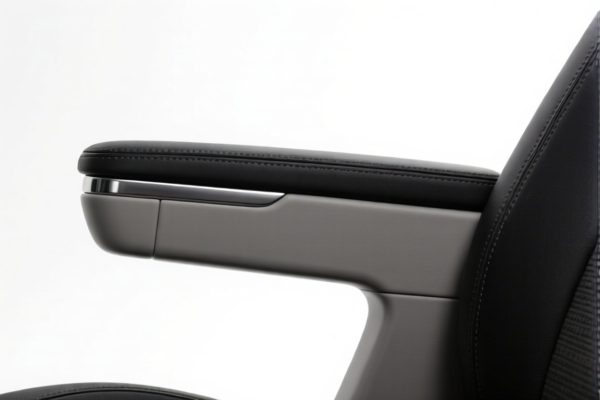
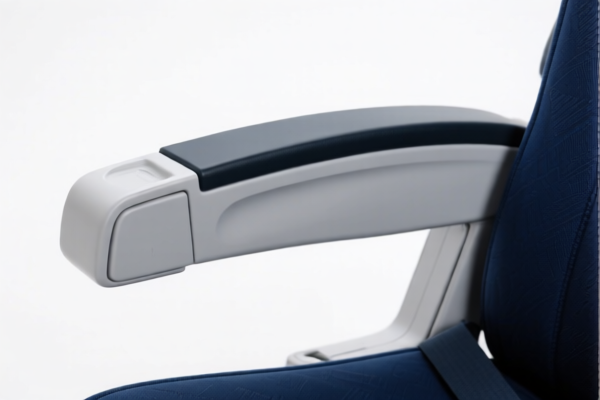
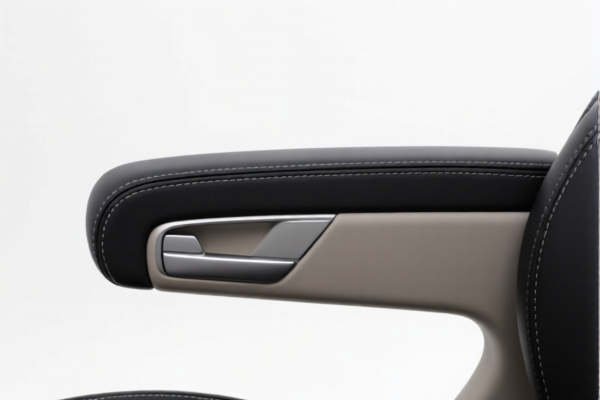
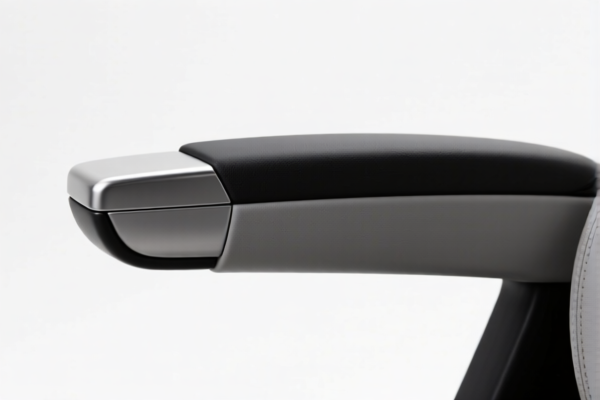
AI Analysis
🪑 5-Gear Armrest (Adjustable Armrests with 5-Speed/Multi-Position Mechanism)
🌐 HS Code Reference & Clearance Guide | 2026 Latest Tariff Analysis | Professional Clearance Strategy
📌 I. Product Definition and Classification: Do You Really Understand "5-Gear Armrest"?
A 5-Gear Armrest typically refers to an adjustable armrest component, commonly used in office chairs, gaming chairs, ergonomic furniture, or medical equipment. The "5-gear" designation usually implies a mechanical locking mechanism with five distinct height or angle adjustment positions.
In international trade, these products are classified based on their material composition and final application. Since the input specifies "Vulcanized Rubber" in the provided data, we focus on rubber components used for vibration control or grip, rather than the metal/plastic frame itself.
Key Distinction: - Vehicle Parts: If the armrest is specifically designed for vehicles (headings 8701–8705) and acts as a vibration control device (e.g., damping the armrest's movement or protecting the vehicle interior), it falls under specific subheadings. - General Rubber Articles: If it is a general-purpose rubber part not specifically for vehicles or is a simple grip/cushion without specialized vehicle integration, it falls under "Other."
⚠️ Critical Classification Point:
- If the product is a vibration control good used in vehicles (Headings 8701–8705) → Use 4016.99.55.00.
- If it is a general rubber armrest (not for vehicles, or not primarily for vibration control) → Use 4016.99.35.50.
📦 II. HS Code Classification Details (2026 Latest Tariff Authority Comparison)
| HS Code | Product Description | Application Scenario | Key Feature |
|---|---|---|---|
4016.99.35.50 |
Other articles of vulcanized rubber other than hard rubber: Other: Other: Other: Of natural rubber: Other Other | General office chairs, home furniture, non-vehicle ergonomic accessories | ❌ Not for vehicles / Not vibration-specific |
4016.99.55.00 |
Other articles of vulcanized rubber other than hard rubber: Other: Other: Other: Vibration control goods of a kind used in the vehicles of headings 8701 through 8705 | Vehicle seats (cars, trucks, buses, tractors), industrial vehicle interiors | ✅ Specifically for Vehicles (8701-8705) & Vibration Control |
🔍 Key Reminder:
- The "5-Gear" mechanism itself (if metal/plastic) would typically be classified elsewhere (e.g., Chapter 84 or 85).
- This classification applies ONLY to the rubber component of the armrest (e.g., the pad, grip, or damping insert).
- If the armrest is a complex assembly with metal frames, it may require splitting the shipment or classifying the whole assembly if it doesn't fit Chapter 40. However, based on the provided data, we are treating the item as a vulcanized rubber article.
💰 III. 2026 Latest Tariff Rate Details (Including Surcharge & Policy Add-ons)
✅ Applicable Country: United States (US)
✅ Origin: China (CN)
✅ Effective Date: 2025/2026 (Current Trade Policies)
🎯 1. 4016.99.35.50 —— General Vulcanized Rubber Armrest (Non-Vehicle)
| Item | Content |
|---|---|
| Basic Tariff | 0.0% |
| Section 301 Surcharge (USITC) | +25.0% |
| Total Tariff Rate | 25.0% |
| Tax Calculation | CIF Value × 25% |
| De Minimis Eligibility | ❌ Not Eligible (For shipments > $800 from China, Section 301 applies) |
| Legal Basis Path | HTSUS:4016.99.35.50 → USITC Footnote 9903.88.01 → Section 301: 25% |
📌 Explanation:
- This is a general rubber product. It attracts the standard 25% Section 301 surcharge on Chinese goods.
- No basic duty (0%), but the 25% penalty tariff makes the total cost significant.
- Risk: High. If misclassified as a vehicle part, you might pay less (see below), but if the US CBP determines it's not a vehicle part, you face back taxes + penalties.
🎯 2. 4016.99.55.00 —— Vibration Control Goods for Vehicles
| Item | Content |
|---|---|
| Basic Tariff | 2.5% |
| Section 301 Surcharge (USITC) | +25.0% |
| Total Tariff Rate | 27.5% |
| Tax Calculation | CIF Value × 27.5% |
| De Minimis Eligibility | ❌ Not Eligible |
| Legal Basis Path | HTSUS:4016.99.55.00 → USITC Footnote 9903.88.01 → Section 301: 25% |
📌 Note:
- Higher Basic Duty: The base rate is 2.5% (vs. 0% for general rubber).
- Same Surcharge: Still subject to the 25% Section 301 surcharge.
- Total Cost: 27.5% is 2.5% higher than the general rubber classification.
- Why? Vehicle parts often have slightly higher base duties due to historical tariff structures.
- ⚠️ Strategic Insight: Do NOT automatically choose this code just to be "safe" for vehicles. If it's NOT for a vehicle, using this code is misclassification (fraud risk). If it IS for a vehicle, you pay more (27.5% vs 25%).
- Exception: If you can prove it is a genuine vehicle part and qualifies for duty-free treatment under specific trade agreements (e.g., USMCA for Canadian/Mexican origin), this could be 0%. But for Chinese origin, it's 27.5%.
🛠️ IV. Clearance Operational Suggestions (Practical Pitfall Avoidance Guide)
✅ 1. Documentation Checklist (Missing items will delay clearance)
| Document | Required | Explanation |
|---|---|---|
| ✅ Product Specifications | ✔️ | Clearly state: "Rubber Armrest Pad," "5-Position Adjustment," "Material: Natural Rubber" |
| ✅ Intended Use Statement | ✔️ | CRITICAL: Must explicitly state: "For use in Office Chairs" OR "For use in Vehicles (Headings 8701-8705)" |
| ✅ Product Photos | ✔️ | Show the rubber component, the locking mechanism (if visible), and labeling |
| ✅ Bill of Lading / Invoice | ✔️ | Consistent description. Avoid vague terms like "Rubber Part" |
| ✅ HS Code Pre-Ruling (Optional) | ✔️ | Highly recommended if unsure whether it's a "vehicle part" or "general good" |
✅ 2. Declaration Strategy (Key Mantra)
🔥 "Specify Use, Avoid Guessing; Vehicle or Office, Pay Differently!"
| Scenario | Correct Declaration | Risk of Error |
|---|---|---|
| Office Chair Armrest | 4016.99.35.50 (0% Base + 25% Surcharge = 25%) |
Using 4016.99.55.00 → 27.5% (Overpay by 2.5%) |
| Car/Truck Seat Armrest | 4016.99.55.00 (2.5% Base + 25% Surcharge = 27.5%) |
Using 4016.99.35.50 → Misclassification Risk. CBP may reclassify and audit. |
| Mixed Shipment | Split HS Codes | Never lump vehicle parts with general goods. Separate line items. |
✅ 3. Special Cases Handling
| Case | Handling Advice |
|---|---|
| OEM Custom Armrests | Provide the end-user manual showing the chair/car model. Prove it fits a vehicle if claiming 55.00. |
| "Vibration Control" Claim | If using 4016.99.55.00, you must prove the primary function is vibration control. If it's just a grip, it may be rejected. |
| Mixed Material | If the armrest is 80% plastic/metal and 20% rubber, it may not classify under Chapter 40. It could be Chapter 84 or 85. Consult a specialist. |
| De Minimis Loophole? | ❌ No. Section 301 goods from China are excluded from the $800 de minimis exemption (Section 321) in most practical import scenarios for commercial goods. |
🌍 V. Global Market Clearance Comparison (2026 Latest)
| Country/Region | Recommended HS Code | Tariff (China Origin) | Notes |
|---|---|---|---|
| 🇺🇸 USA | 4016.99.35.50 or 55.00 |
25% - 27.5% | Heavy Section 301 impact. Choose based on actual use. |
| 🇨🇳 China | 4016.99.30.00 (General) |
5% - 10% | Import into China has different codes and lower rates. |
| 🇪🇺 EU | 4016.93.00 (Other vulcanized rubber) |
3.7% - 6.5% | No US-style 301 surcharge. VAT applies separately. |
| 🇬🇧 UK | 4016.93.00 |
3.7% - 6.5% | Post-Brexit tariffs. Check UK Global Tariff. |
| 🇯🇵 Japan | 4016.93.00 |
0% - 3% | Generally low tariffs for rubber goods. |
📌 Conclusion:
- The US market is the most expensive due to the 25% Section 301 surcharge.
- EU/UK/Japan are more cost-effective for rubber armrests from China.
- Strategy: If targeting the US, consider supply chain diversification (e.g., assemble in Vietnam/Mexico) to avoid the 25% surcharge.
📌 VI. Common Mistakes & Pitfalls (Blood-Teachings)
❌ Mistake 1: Assuming all "Armrests" are the same.
👉 Consequence: Misclassification. If it's for a car, it must be 55.00. If it's for an office chair, it must be 35.50. Wrong code = Audit.
❌ Mistake 2: Ignoring the "Vibration Control" requirement for 55.00.
👉 Consequence: CBP may reject the vehicle classification if the product is just a simple grip. You’ll owe the 2.5% difference + penalties.
❌ Mistake 3: Believing De Minimis ($800) applies.
👉 Consequence: US Customs has tightened enforcement on Section 301 goods. Small shipments of rubber armrests are not exempt.
❌ Mistake 4: Vague Description "Rubber Part".
👉 Consequence: CBP will detain the shipment and assess the highest possible duty (which could be 27.5% or more if misidentified).
✅ Correct Approach:
"Natural Rubber Armrest Pad for Office Chair, 5-Position Height Adjustment, Model XYZ"
vs.
"Vulcanized Rubber Vibration Damping Armrest for Heavy-Duty Truck Seat, Model ABC"
🎯 VII. Conclusion: Precise Classification Saves Money!
🎯 Remember the Mantra:
🔹 "Office Chair? 35.50 (25% Total)."
🔹 "Vehicle Part? 55.00 (27.5% Total)."
🔹 "Don't Guess, Prove Use!"
📌 Pro Tip:
If you are importing large volumes, apply for an Advance Ruling (CBP Ruling) from US Customs. It provides legal certainty on whether your specific 5-gear armrest qualifies as a "vehicle vibration control good" or a "general rubber article." This prevents costly retroactive penalties.
📣 Immediate Action:
📞 Contact a Customs Broker + Provide Product Photos + Confirm Final Use (Office vs. Vehicle)
🚀 Get Your Ruling Today to ensure smooth, compliant, and cost-effective clearance!
✨ Professional Clearance Starts with Accurate Classification!
💼 Every Percentage Point Saved is Pure Profit!
Customer Reviews
About HS Code Classification
The Harmonized System (HS) is an internationally standardized nomenclature developed by the World Customs Organization (WCO) to classify traded products. Over 200 countries use the HS system as the basis for customs tariffs, trade statistics, and import/export regulations.
Each HS code follows a hierarchical structure:
- Chapter (2 digits) — Broad category of goods (e.g., Chapter 84: Machinery and Mechanical Appliances)
- Heading (4 digits) — More specific grouping within the chapter
- Subheading (6 digits) — Internationally standardized breakdown, used by all WCO member countries
- National subdivisions (8-10 digits) — Country-specific extensions for further classification, such as US HTSUS 10-digit codes
Correct HS code classification is essential for smooth customs clearance, accurate duty payment, and compliance with trade regulations. Misclassification can lead to customs delays, overpayment of duties, or penalties.
When importing from CN to US, the applicable tariff rates may include:
- Most-Favored-Nation (MFN) rate — The standard duty rate applied to WTO members
- General rate — Applied to countries without trade agreements
- Trade remedy duties — Additional tariffs such as Section 301 (anti-dumping), Section 232 (national security), or countervailing duties
The information provided on this page is for reference purposes only. For official classification, please consult with your local customs authority or a licensed customs broker.