5 Portable 50ml Plastic Travel Bottles
CN → US| HS Code | Tariff Rate | Origin | Destination | Doc |
|---|---|---|---|---|
| 3926901000 | 20.9% | CN | US | Official Doc |
| 3923300090 | 38.0% | CN | US | Official Doc |
| 3923300010 | 38.0% | CN | US | Official Doc |
| 3926909989 | 22.8% | CN | US | Official Doc |
Product Images
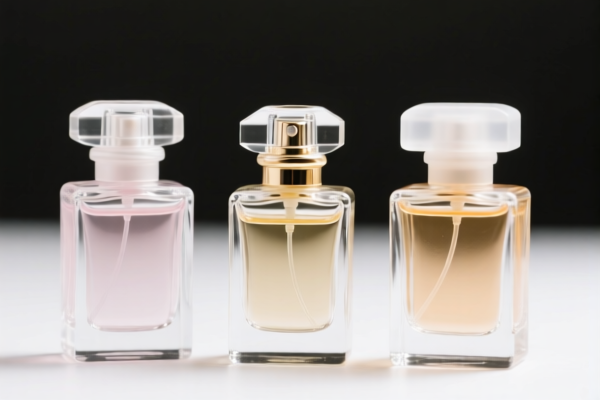
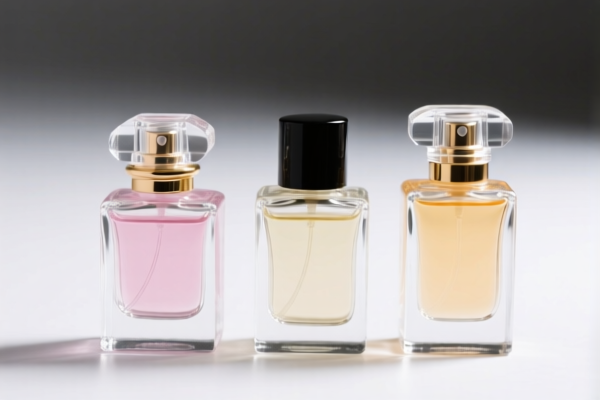
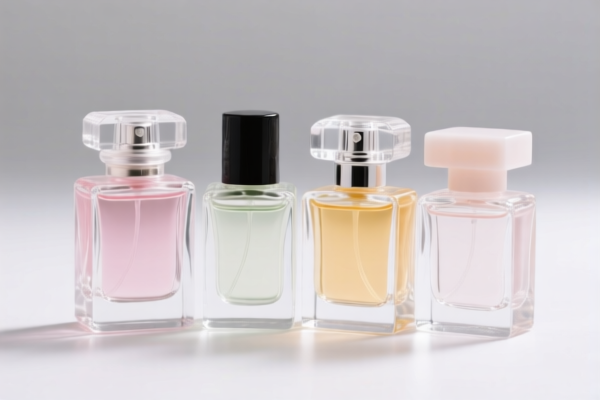
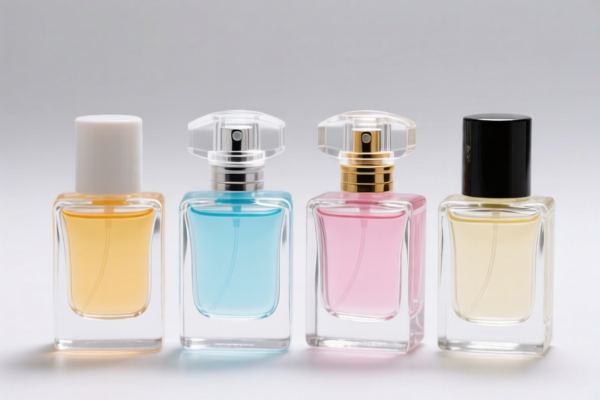
AI Analysis
🧴 5 Portable 50ml Plastic Travel Bottles (Small Capacity)
🌐 HS Code Reference & Customs Clearance Guide | 2026 Latest Tariff Analysis | Professional Entry Strategy
📌 I. Product Definition & Classification: What Exactly Are "50ml Plastic Bottles"?
Portable travel bottles are essential accessories for modern travel, cosmetics, and chemical sampling. In international trade, plastic containers are strictly classified based on capacity and form.
For 50ml plastic bottles (which falls under "not exceeding 50 ml"), the classification is distinct from larger containers.
⚠️ Key Distinction Point:
- Capacity ≤ 50ml: Strictly falls under Heading 3923.30 (Carboys, bottles, flasks...).
- Capacity > 50ml: Generally falls under Heading 3923.29 (Sacks, bags...) or 3923.30 "Other" depending on shape, but often attracts higher scrutiny if it mimics a bag.
- Material: Must be Plastics (Headings 3901-3914). If it’s glass or metal, it belongs to completely different chapters (e.g., Glassware 70).
Since the user input specifies "Plastic" and "50ml", we focus exclusively on HS Code 3923.30.00.
📦 II. HS Code Classification Details (2026 Latest Tariff Authoritative Comparison)
Based on the provided <DATA>, here is the precise breakdown for your 50ml plastic travel bottles:
| HS Code | Product Description | Applicable Scenario | Tax Rate (Total) |
|---|---|---|---|
3923.30.00.10 |
Carboys, bottles, flasks and similar articles: Of a capacity not exceeding 50 ml | Exact Match: 50ml travel bottles, small sample vials, essential oil bottles | 0.0% |
3923.30.00.90 |
Carboys, bottles, flasks and similar articles: Other | Bottles > 50ml (e.g., 100ml, 250ml toiletry bottles) | 0.0% |
3926.90.99.89 |
Other articles of plastics: Other: Other: Other | Generic plastic items not fitting packing headings (e.g., plastic toys, decorative items) | 12.8% |
3926.90.10.00 |
Other articles of plastics: Buckets and pails | Large containers like buckets, pails, or tubs | 0.0% |
🔍 Critical Analysis:
- Your product 50ml falls squarely into3923.30.00.10.
- Do NOT use3923.30.00.90unless the capacity is strictly greater than 50ml (e.g., 51ml+).
- Do NOT use3926.90...series. These are for "general plastic articles" like toys or household goods that do not fit the specific packing/conveyance criteria. Using3926here would be a misclassification leading to higher taxes and delays.
💰 III. 2026 Latest Tariff Rate Breakdown (Including Surtaxes & Policy Add-ons)
✅ Applicable Country: United States (US)
✅ Country of Origin: China (CN)
✅ Effective Date: 2025/2026 (Current Standards)
🎯 1. 3923.30.00.10 —— Plastic Bottles/Flasks (≤ 50ml)
| Item | Content |
|---|---|
| Base Tariff | 0% (ad valorem) |
| Section 301 Surtax (USITC) | 0% |
| IEEPA Surtax (China-specific) | 0% |
| Total Tariff Rate | 0.0% |
| Tax Calculation | CIF Value × 0% = $0 |
| De Minimis Eligibility | ✅ Yes (If value < $800 per person per day, though bottles are small, bulk shipments may exceed) |
| Legal Basis Path | HTSUS:3923.30.00.10 → USITC:Footnote (Generally exempt from 301 for specific plastic packaging if not high-tech) |
📌 Explanation:
- Small plastic packaging materials are often granted 0% duty to facilitate trade in small goods.
- Unlike electronics or steel, small plastic bottles typically do not attract the 25% Section 301 tariff or IEEPA surcharges.
- Total Cost Impact: Negligible. This is a highly favorable HS code.
🎯 2. Comparison: Why Not 3926.90.99.89?
| Item | Content |
|---|---|
| Base Tariff | 5.3% |
| Section 301 Surtax | +7.5% (Note: Data shows 7.5% add-on, total 12.8%) |
| IEEPA Surtax | Potentially applicable depending on specific footnote |
| Total Tariff Rate | 12.8% (at minimum) |
| Risk | High. Misclassifying simple bottles as "other plastic articles" triggers unnecessary taxes. |
⚠️ Warning:
- Using3926.90.99.89would result in a 12.8% tax burden on every shipment.
- For a $1,000 shipment, this means $128 in duties vs. $0 for the correct code.
- Customs authorities may audit if you use a higher-tax code without justification.
🛠️ IV. Customs Clearance Practical Advice (Battle-Tested Pitfall Guide)
✅ 1. Documentation Checklist (Must-Haves)
| Document | Required | Description |
|---|---|---|
| ✅ Commercial Invoice | ✔️ | Must explicitly state: "Plastic Travel Bottles, 50ml, Capacity ≤ 50ml" |
| ✅ Product Description | ✔️ | Include material (e.g., PE, PP, PET), color, and exact capacity. |
| ✅ HS Code Declaration | ✔️ | Declare 3923.30.00.10 specifically. |
| ✅ Photos | ✔️ | Show the bottle with a scale/ ruler to prove capacity ≤ 50ml. |
| ✅ Material Certificate | ✔️ | Confirm it is Plastic (not glass/metal) to justify Heading 39. |
✅ 2. Declaration Tips (Key Mnemonic)
🔥 “Small Bottle, Low Rate, Specify ML, Avoid Tax Gate!”
| Scenario | Correct Declaration | Wrong Practice |
|---|---|---|
| 50ml Bottle | 3923.30.00.10 |
3923.30.00.90 → Might trigger manual review. |
| 100ml Bottle | 3923.30.00.90 |
3923.30.00.10 → Misdeclaration, risk of penalty. |
| Glass Bottle | Heading 70 | 3923... → Wrong Chapter, severe penalty. |
| Plastic Bucket (5L) | 3926.90.10.00 |
3923... → Wrong Form, may be rejected. |
✅ 3. Special Cases Handling
| Situation | Handling Advice |
|---|---|
| Set of 5 Bottles | Declare as "5 Portable 50ml Plastic Travel Bottles". If sold as a set, the total capacity is not aggregated; each unit is ≤50ml. |
| With Caps/Closures | Caps of plastic are usually included in the bottle classification if sold together. Do not separate. |
| Labeled for Cosmetics | If pre-filled with cosmetic liquid, it may be classified as Cosmetics (Chapter 33), not packaging. Empty bottles go to 3923. |
| Bulk vs. Retail | Bulk bottles (no branding) still use 3923.30.00.10. Branding does not change HS code. |
🌍 V. Global Market Comparison (2026 Latest)
| Country/Region | Recommended HS Code | Tariff Rate | Certification | Remarks |
|---|---|---|---|---|
| 🇺🇸 USA | 3923.30.00.10 |
0.0% | None | Most favorable for small plastic bottles. |
| 🇨🇳 China | 3923.30.00.10 |
~5-10% | None | Import duty applies, but low. |
| 🇪🇺 EU | 3923.30.00.10 |
~4-6.5% | REACH (Plastics) | Check for plasticizer restrictions. |
| 🇬🇧 UK | 3923.30.00.10 |
~4-6.5% | UKCA | Post-Brexit rules apply. |
| 🇯🇵 Japan | 3923.30.00.10 |
~5% | None | Standard tariff. |
📌 Conclusion:
- The USA offers the best duty rate (0%) for ≤50ml plastic bottles.
- EU and UK have moderate tariffs but strict REACH/UKCA chemical regulations for plastics. Ensure the plastic is food-grade or compliant if intended for cosmetic use.
📌 VI. Common Errors & Pitfall Guide (Lessons from Tears)
❌ Error 1: Declaring 50ml bottles as 3923.30.00.90 (Other)
👉 Consequence: No immediate tax penalty (since 3923.30.00.90 is also 0%), but it raises red flags for customs inspection because it’s less specific.
👉 Fix: Use .10 for precision.
❌ Error 2: Mixing Glass and Plastic in one shipment without separation
👉 Consequence: Glass bottles (Chapter 70) have different duties and breakage risks. Mixed shipment may be held.
👉 Fix: Separate shipments by material.
❌ Error 3: Not specifying "Capacity ≤ 50ml"
👉 Consequence: Customs may assume it’s >50ml or reject the .10 code, leading to delays.
👉 Fix: Clearly state "Capacity: 50ml (0.05L)" in the commercial invoice.
❌ Error 4: Using 3926.90.99.89
👉 Consequence: You pay 12.8% extra tax.
👉 Fix: Always use 3923.30 for bottles/flasks.
✅ Correct Declaration Example:
"Plastic Travel Bottles, Empty, 50ml Capacity, PE Material, Blue, HS Code: 3923.30.00.10"
🎯 VII. Conclusion: Precision Saves Money!
🎯 Remember the Mnemonic:
🔹 “50ml or less, use .10, zero duty in US, keep it clean!”
🔹 “Over 50ml? Use .90, still zero, but don’t lie about the size!”
📌 Pro Tip:
- If you are importing large quantities (e.g., containers), ensure the plastic meets FDA Food Contact standards if they might be used for food/drink, even if marketed as "travel bottles."
- For cosmetic packaging, ensure the plastic is non-reactive and compatible with common cosmetic bases (alcohol, oils).
📣 Immediate Action:
📞 Verify plastic material (PE/PP/PET)
📦 Confirm exact capacity (must be ≤ 50ml)
📄 Declare as 3923.30.00.10
🚀 Enjoy 0% Duty and Smooth Customs Clearance!
✨ Professional Classification, Starts with Accuracy!
💼 Every Percent of Tax Saved is Pure Profit!
Customer Reviews
About HS Code Classification
The Harmonized System (HS) is an internationally standardized nomenclature developed by the World Customs Organization (WCO) to classify traded products. Over 200 countries use the HS system as the basis for customs tariffs, trade statistics, and import/export regulations.
Each HS code follows a hierarchical structure:
- Chapter (2 digits) — Broad category of goods (e.g., Chapter 84: Machinery and Mechanical Appliances)
- Heading (4 digits) — More specific grouping within the chapter
- Subheading (6 digits) — Internationally standardized breakdown, used by all WCO member countries
- National subdivisions (8-10 digits) — Country-specific extensions for further classification, such as US HTSUS 10-digit codes
Correct HS code classification is essential for smooth customs clearance, accurate duty payment, and compliance with trade regulations. Misclassification can lead to customs delays, overpayment of duties, or penalties.
When importing from CN to US, the applicable tariff rates may include:
- Most-Favored-Nation (MFN) rate — The standard duty rate applied to WTO members
- General rate — Applied to countries without trade agreements
- Trade remedy duties — Additional tariffs such as Section 301 (anti-dumping), Section 232 (national security), or countervailing duties
The information provided on this page is for reference purposes only. For official classification, please consult with your local customs authority or a licensed customs broker.