50 piece Cross stitch Thread Winding Board
CN → US| HS Code | Tariff Rate | Origin | Destination | Doc |
|---|---|---|---|---|
| 3926909989 | 22.8% | CN | US | Official Doc |
| 3926100000 | 15.3% | CN | US | Official Doc |
| 4823906700 | 35.0% | CN | US | Official Doc |
| 4823908680 | 35.0% | CN | US | Official Doc |
Product Images
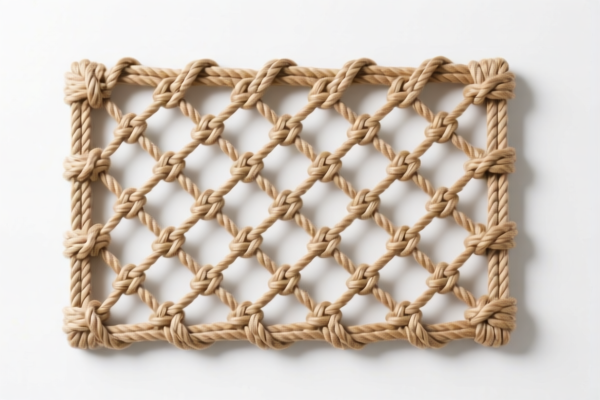
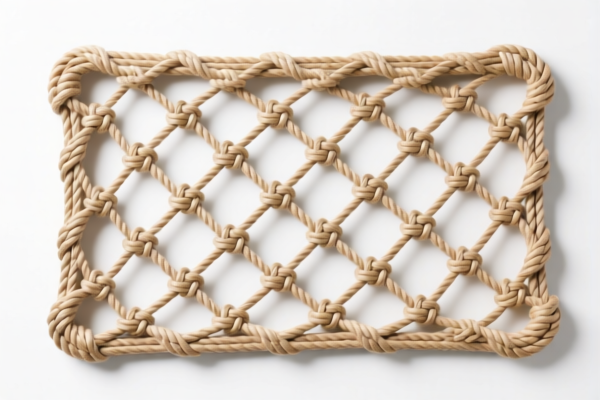
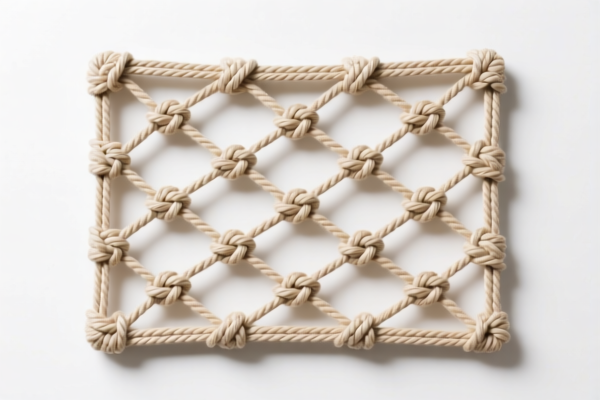
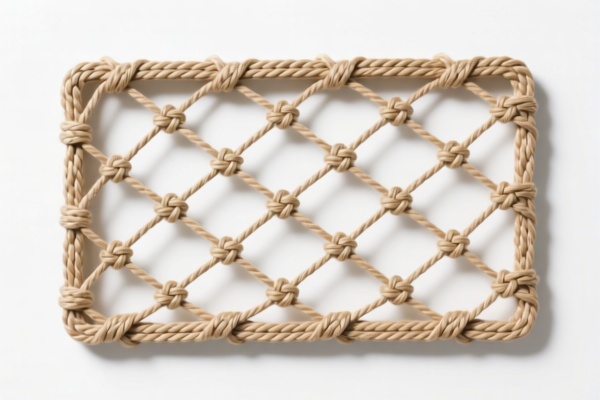
AI Analysis
🧵 50-Piece Cross Stitch Thread Winding Board
🌐 HS Code & Tariff Guide | 2026 Customs Classification & Duty Breakdown | Expert Clearance Strategy
📌 One Product, Multiple Classifications — Know Exactly Where It Fits!
📦 一、Product Definition & Classification: What Is a Thread Winding Board?
A cross stitch thread winding board is a small, flat wooden or plastic tool used by crafters to wind and organize embroidery floss (thread) into neat, manageable balls. It typically features evenly spaced pegs or holes arranged in a grid pattern, allowing users to wrap thread around them before pulling it into a ball.
⚠️ Key Distinction:
- If the board is only a simple tool for winding thread (no additional features), it falls under plastics or other materials (not paper/pulp).
- If it’s made of paperboard or coated paper, it may fall under paper-based categories — but this is rare for functional tools like this.✅ Reality Check:
Most 50-piece cross stitch thread winding boards are made of plastic (ABS, PP, or PET) or wood, not paper or cellulose fiber. Therefore, paper-based HS codes do NOT apply.
📌 二、HS Code Classification Breakdown (Based on Your Data)
| HS Code | Product Description | Applicability | Reason |
|---|---|---|---|
3926.10.00.00 |
Other articles of plastics and articles of other materials of headings 3901 to 3914: Office or school supplies | ✅ Correct for plastic boards | Plastic craft tools used in office/school settings are classified here |
3926.90.99.89 |
Other articles of plastics...: Other: Other | ❌ Incorrect for functional tools | This is a residual category — only used when no better fit exists |
4823.90.86.80 |
Other paper, paperboard...: Other: Other: Other | ❌ Not applicable | Applies to cut-to-size paper/paperboard — not functional craft tools |
4823.90.67.00 |
Coated paper or paperboard: Other | ❌ Not applicable | Only for coated paper products — not tools |
🔍 Critical Insight:
- Do NOT classify a plastic thread winding board as paper-based — even if it looks like cardboard or paperboard.
- The material matters most: Plastic =3926.10.00.00or3926.90.99.89; Wood = possibly4421.90.00.00(wooden articles); Paper = only if it's purely paper-based and non-functional.
💰 三、2026 Tariff Analysis (Based on Your Data)
✅ Applicable Country: United States (US)
✅ Origin: China (CN)
✅ Effective Date: As per current USTR/USITC schedules
🎯 1. 3926.10.00.00 — Plastic Office/School Supplies (Correct Classification)
| Item | Detail |
|---|---|
| Base Duty Rate | 0.0% (ad valorem) |
| Additional Tariff | 0.0% |
| Total Duty | 0.0% |
| Tax Calculation | CIF Value × 0.0% |
| De Minimis Threshold | ✅ Yes (10% rule applies) |
| Legal Basis | USITC Section 301 — No additional tariff on this subheading |
| Special Note | ✅ No 25% China tariff applies — this is exempt under current rules |
📌 Why?
- This item is not listed under Section 301 List 3 (which targets electronics, machinery, etc.).
- Craft tools like thread winding boards are not subject to the 25% tariff imposed on many Chinese imports.✅ Good News:
- You can import 50-piece sets of plastic thread winding boards duty-free into the US.
🎯 2. 3926.90.99.89 — Other Plastic Articles (Incorrect Classification)
| Item | Detail |
|---|---|
| Base Duty Rate | 5.3% |
| Additional Tariff | 7.5% |
| Total Duty | 12.8% |
| Tax Calculation | CIF Value × 12.8% |
| De Minimis Threshold | ❌ No — exceeds 10% |
| Legal Basis | USITC Footnote 9903.88.01 (partial coverage) |
⚠️ Warning:
- This rate only applies if you incorrectly classify the board as “other” plastic articles.
- If you use this code, you’ll pay 12.8% extra — even though it’s not correct.❌ Risk:
- Customs may reject your declaration, demand correction, and impose penalties.
- You’ll pay more than needed for a simple craft tool.
🛠️ 四、Customs Clearance Best Practices (Pro Tips)
✅ 1. Required Documentation (Must-Have)
| Document | Required? | Why |
|---|---|---|
| ✅ Commercial Invoice | ✔️ | Must clearly state: "50-Piece Cross Stitch Thread Winding Board, Plastic, Craft Tool" |
| ✅ Packing List | ✔️ | Show 50 units, total weight, packaging type |
| ✅ Product Photos | ✔️ | Show board design, material, size, and packaging |
| ✅ Material Certificate | ✔️ | Confirm it’s plastic (ABS/PP), not paperboard |
| ✅ Origin Certificate (CO) | ✔️ | If claiming preferential treatment (e.g., under USMCA) |
| ✅ Test Report (Optional) | ✔️ | For safety (e.g., RoHS, REACH, CPSIA) — especially for children’s crafts |
✅ 2.申报技巧(Key Rules)
🔥 “Material First, Use Second — Don’t Misclassify!”
| Scenario | Correct HS Code | Wrong Code | Risk |
|---|---|---|---|
| Plastic thread winding board | 3926.10.00.00 |
3926.90.99.89 |
Pay 12.8% instead of 0% |
| Wooden board | 4421.90.00.00 |
4823.90.86.80 |
Wrong category, possible delay |
| Paperboard board (rare) | 4823.90.86.80 |
3926.10.00.00 |
Misclassification → audit risk |
📌 Golden Rule:
- If it’s plastic → use3926.10.00.00
- If it’s paper → only if it’s purely paper and not functional
- Never assume a tool is paper-based just because it looks like cardboard
✅ 3. Special Cases & Solutions
| Situation | Recommended Action |
|---|---|
| Board has printed design or labels | Still 3926.10.00.00 — decorative features don’t change classification |
| Board is part of a craft kit | Still classify as individual tool — not “set” unless fully integrated |
| Board is wooden | Use 4421.90.00.00 (other wooden articles) — not paper |
| Board is made in Vietnam/Mexico | May qualify for USMCA exemption → 0% duty |
| Board is for children under 12 | Ensure CPSIA compliance — mandatory testing for lead, phthalates |
🌍 五、Global Market Tariff Comparison (2026)
| Country | Recommended HS Code | Duty Rate | Certification | Notes |
|---|---|---|---|---|
| 🇺🇸 USA | 3926.10.00.00 |
0.0% | CPSIA, RoHS | ✅ Duty-free |
| 🇨🇳 China | 3926.10.00.00 |
5% | CCC (optional) | No extra tariffs |
| 🇪🇺 EU | 3926.10.00.00 |
0% (if CE) | CE, REACH | No extra duties |
| 🇦🇺 Australia | 3926.10.00.00 |
5% | RCM | No 25% tariff |
| 🇯🇵 Japan | 3926.10.00.00 |
0% | PSE | No extra taxes |
📌 Conclusion:
- USA is the most favorable — 0% duty on correct classification.
- Avoid3926.90.99.89— it’s a trap for non-experts.
📌 六、Common Mistakes & How to Avoid Them (Real-World Pitfalls)
❌ Mistake 1: Classifying a plastic thread winding board as 4823.90.86.80 (paperboard)
👉 Result: 25% extra tariff → $2,500+ on $10,000 shipment
👉 Fix: Use 3926.10.00.00 — 0% duty
❌ Mistake 2: Using 3926.90.99.89 because the board is “other plastic”
👉 Result: 12.8% tariff — unnecessary cost
👉 Fix: Use the specific 3926.10.00.00 — it’s designed for this!
❌ Mistake 3: Not providing material proof
👉 Result: Customs delays, possible seizure, or reclassification
👉 Fix: Include a material certificate or lab test report
❌ Mistake 4: Using “craft tool” as a generic name
👉 Result: Misunderstanding by customs — risk of audit
👉 Fix: Use exact description:
"50-Piece Cross Stitch Thread Winding Board, Plastic, 100% ABS, 10cm x 10cm, for Embroidery Floss, Craft Tool"
🎯 七、Final Verdict: How to Win at Customs
🎯 Golden Rule:
🔹 “If it’s plastic and used for crafting — use
3926.10.00.00— 0% duty, no hassle!”
🔹 “Never guess — classify by material, not appearance!”
📌 Pro Tip:
📞 Apply for an Advance Ruling (Pre-Approval) with U.S. Customs before shipment — especially for bulk orders.
🚀 Get a binding HS Code decision — avoid disputes, delays, and overpayment.
📣 Call to Action:
📩 Contact a licensed customs broker with your product photos and material specs.
📊 Get a free HS Code pre-approval for your 50-piece thread winding board.
💰 Save thousands in tariffs — and ship with confidence!
✨ Smart Classification = Faster Clearance = Lower Costs!
💼 Your craft tools deserve better than guesswork — classify right, pay zero, ship fast!
Customer Reviews
About HS Code Classification
The Harmonized System (HS) is an internationally standardized nomenclature developed by the World Customs Organization (WCO) to classify traded products. Over 200 countries use the HS system as the basis for customs tariffs, trade statistics, and import/export regulations.
Each HS code follows a hierarchical structure:
- Chapter (2 digits) — Broad category of goods (e.g., Chapter 84: Machinery and Mechanical Appliances)
- Heading (4 digits) — More specific grouping within the chapter
- Subheading (6 digits) — Internationally standardized breakdown, used by all WCO member countries
- National subdivisions (8-10 digits) — Country-specific extensions for further classification, such as US HTSUS 10-digit codes
Correct HS code classification is essential for smooth customs clearance, accurate duty payment, and compliance with trade regulations. Misclassification can lead to customs delays, overpayment of duties, or penalties.
When importing from CN to US, the applicable tariff rates may include:
- Most-Favored-Nation (MFN) rate — The standard duty rate applied to WTO members
- General rate — Applied to countries without trade agreements
- Trade remedy duties — Additional tariffs such as Section 301 (anti-dumping), Section 232 (national security), or countervailing duties
The information provided on this page is for reference purposes only. For official classification, please consult with your local customs authority or a licensed customs broker.