5603 Material Workwear
CN → US| HS Code | Tariff Rate | Origin | Destination | Doc |
|---|---|---|---|---|
| 6114303054 | 32.4% | CN | US | Official Doc |
| 6210109010 | 26.0% | CN | US | Official Doc |
| 6210405540 | 24.6% | CN | US | Official Doc |
| 6114303044 | 32.4% | CN | US | Official Doc |
Product Images


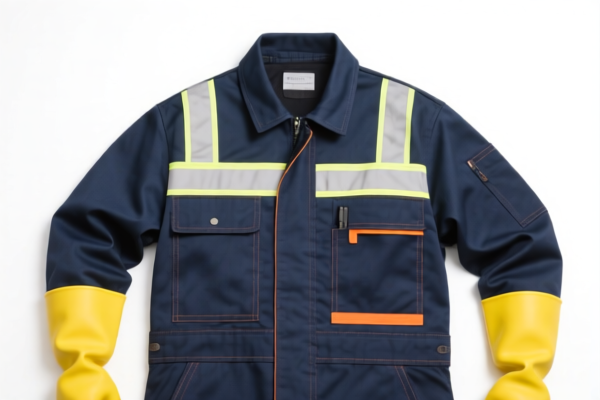

AI Analysis
🛡️ 5603 Material Workwear: HS Code Guide & Customs Clearance Strategy
🌐 HS Code Reference & Clearance Guide | 2026 Latest Tariff Analysis | Professional Customs Strategy
📌 I. Product Definition & Classification: Do You Truly Understand "5603 Workwear"?
5603 Material Workwear refers to protective or occupational clothing manufactured from non-woven fabrics of chemical filaments (heading 5603). These are typically synthetic (man-made) fibers such as polyester, nylon, or viscose, processed into non-woven sheets.
In international trade, these items are classified primarily under Chapter 61 (Knitted or Crocheted) or Chapter 62 (Woven, Not Knitted) garments, depending on the construction method and specific design (e.g., coveralls vs. jackets).
⚠️ Key Classification Logic:
- Material: Must be confirmed as 5603 Non-woven fabric (Chemical filaments).
- Garment Type: Is it a Coverall (Jumpsuit), a General Work Jacket, or a Protective Suit?
- Composition: If the fabric is predominantly man-made, it often falls under 6114 (if knitted) or 6210 (if made up of specific protective fabrics or woven).
📦 II. HS Code Classification Details (2026 Latest Tariff Authority)
Based on the specific attributes of 5603 material workwear, here are the precise classifications and their corresponding tax structures:
| HS Code | Product Description | Fabric/Structure | Total Tax Rate | Tax Breakdown Details |
|---|---|---|---|---|
| 6114.30.30.54 | Workwear made of 5603 material, inferred as Man-made Fibers, fits usage definition. | 5603 (Inferred Man-made) | 32.4% | Base: 14.9% + Added: 7.5% + Section 122: 10% |
| 6210.10.90.10 | Workwear made of 5603 fabric, explicitly includes material & usage keywords. | 5603 (Woven/Specific) | 26.0% | Base: 16.0% + Added: 0.0% + Section 122: 10% |
| 6210.40.55.40 | Workwear made of 5603 fabric, specifically Coveralls/Overalls. | 5603 (Coverall Form) | 24.6% | Base: 7.1% + Added: 7.5% + Section 122: 10% |
| 6114.30.30.44 | Workwear made of 5603 material, covering Man-made Fibers, fits usage definition. | 5603 (Inferred Man-made) | 32.4% | Base: 14.9% + Added: 7.5% + Section 122: 10% |
| 6210.10.90.40 | Protective workwear made of 5603 fabric, fits finished garment classification. | 5603 (Protective Type) | 26.0% | Base: 16.0% + Added: 0.0% + Section 122: 10% |
🔍 Critical Insight:
- 6114.30.xxxx items generally incur a higher base tariff (14.9%) compared to specific 6210 items (7.1% - 16.0%).
- Section 122 Tariff (10%) is consistently applied across all 5603 workwear categories in this dataset.
- Coveralls (6210.40.55.40) offer the lowest total tax (24.6%) due to a lower base rate.
💰 III. 2026 Latest Tariff Rate Breakdown (Including Surcharges)
✅ Applicable Region: China (CN) Export Context
✅ Product Origin: China (Implied)
✅ Tariff Components: Base Tariff + Additional Duties + Section 122
🎯 1. High-Tax Categories: 6114.30.30.54 & 6114.30.30.44
Category: Workwear (Man-made Fibers, Knitted or Crocheted) | Item | Content | |------|---------| | Base Tariff | 14.9% | | Additional Tariff | 7.5% (Added Duty) | | Section 122 Tariff | 10% | | Total Tax Rate | 32.4% | | Calculation | CIF Value × 32.4% | | Legal Path | Base (14.9%) + Added (7.5%) + Sec 122 (10%) |
📌 Explanation:
These codes represent general workwear made from 5603 non-woven material, assuming man-made fiber composition. The 7.5% Added Duty significantly increases the cost compared to the 6210 series.
🎯 2. Moderate-Tax Categories: 6210.10.90.10 & 6210.10.90.40
Category: Workwear / Protective Workwear (Woven/Specific) | Item | Content | |------|---------| | Base Tariff | 16.0% | | Additional Tariff | 0.0% | | Section 122 Tariff | 10% | | Total Tax Rate | 26.0% | | Calculation | CIF Value × 26.0% | | Legal Path | Base (16.0%) + No Added + Sec 122 (10%) |
📌 Note:
While the base tariff (16.0%) is higher than the 7.1% in coveralls, the absence of the 7.5% Added Duty makes this category cheaper overall (26.0% vs 32.4%).
🎯 3. Low-Tax Category: 6210.40.55.40
Category: Coveralls (5603 Fabric) | Item | Content | |------|---------| | Base Tariff | 7.1% | | Additional Tariff | 7.5% | | Section 122 Tariff | 10% | | Total Tax Rate | 24.6% | | Calculation | CIF Value × 24.6% | | Legal Path | Base (7.1%) + Added (7.5%) + Sec 122 (10%) |
📌 Strategy:
If your product is a Coverall (Jumpsuit), this is the most cost-effective classification, offering the lowest total duty rate (24.6%).
🛠️ IV. Customs Clearance Practical Advice (Avoid Pitfalls)
✅ 1. Preparation Checklist (Must-Haves)
| Material | Mandatory? | Explanation |
|---|---|---|
| ✅ Product Specification Sheet | ✔️ | Must explicitly state "Made of 5603 Non-woven Fabric". |
| ✅ Fabric Composition Certificate | ✔️ | Prove the fiber type (Man-made vs. Natural) to avoid misclassification. |
| ✅ Product Photos (Clear) | ✔️ | Show the garment type (Coverall vs. Jacket) and 5603 fabric texture. |
| ✅ Technical Data Sheet | ✔️ | Detail the non-woven process (Spunbond, Meltblown, etc.). |
| ✅ Commercial Invoice | ✔️ | Must use terms like "5603 Material Workwear" or "Non-woven Coverall". |
| ✅ Packing List | ✔️ | Ensure no mixing of different garment types to avoid rate disputes. |
✅ 2. Declaration Strategy (Golden Rules)
🔥 "Material First, Type Second, No Hidden Surprises!"
| Scenario | Correct Declaration | Incorrect Action |
|---|---|---|
| Coveralls made of 5603 | 6210.40.55.40 (24.6%) | Report as General Workwear (32.4%) → Overpay 7.8% |
| General Workwear (Non-Coverall) | 6210.10.90.10 (26.0%) | Report as Knitted (6114) → Overpay 6.4% |
| Protective Workwear | 6210.10.90.40 (26.0%) | Omit "Protective" keyword → Risk of Audit |
| Fabric Ambiguity | Provide 5603 Cert | Guess "Man-made" → Risk of Base Tariff 14.9% |
✅ 3. Special Situation Handling
| Situation | Handling Advice |
|---|---|
| OEM Workwear | Provide client order + Design drawings to confirm "Workwear" status. |
| Mixed Fabric (5603 + Other) | If 5603 is the principal fabric, declare under 5603 codes. If <50%, re-classify! |
| Special Coating | If coated with chemicals, specify if it changes the "Protective" status (6210.10.90.40). |
| Seasonal Workwear | Ensure the definition matches "Workwear" (Safety/Utility) vs. "Fashion" (6114/6203). |
🌍 V. Global Market Comparison (2026 Context)
| Country/Region | Recommended HS Code | Total Tax | Certification | Note |
|---|---|---|---|---|
| 🇺🇸 USA | 6210.40.55.40 |
24.6% | CPSIA (if kids) | 122 Sec (10%) applies to China origin |
| 🇪🇺 EU | 6210.10.90.10 |
26.0% | CE (PPE) | No Section 122, but check Anti-Dumping |
| 🇨🇳 China | 6210.40.55.40 |
24.6% | CCC (if applicable) | Domestic production tax varies |
| 🇯🇵 Japan | 6114.30.30.54 |
32.4% | JIS (Safety) | Higher base tariff for knitted |
| 🇦🇺 Australia | 6210.10.90.40 |
26.0% | AS/NZS | Check PPE regulations |
📌 Conclusion:
- USA applies the Section 122 Tariff (10%) strictly on 5603 workwear.
- Coveralls (6210.40.55.40) are the most tax-efficient structure globally.
- Avoid general "Workwear" classification if a specific type (Coverall/Protective) fits.
📌 VI. Common Mistakes & Pitfall Avoidance
❌ Mistake 1: Failing to specify "5603 Non-woven" on the invoice.
👉 Consequence: Customs may classify as general chemical fiber (higher base rate) → Tax Jump.
❌ Mistake 2: Classifying Coveralls as general "Jackets" (6114/6210.10).
👉 Consequence: Paying 32.4% instead of 24.6% → 7.8% loss.
❌ Mistake 3: Ignoring the Section 122 Tariff (10%).
👉 Consequence: Unexpected cost increase → Profit Margin Erosion.
❌ Mistake 4: Misidentifying "Knitted" vs. "Woven".
👉 Consequence: 6114 (Knitted) often has different duty structures than 6210 (Woven).
✅ Correct Approach:
"Non-woven (5603) Protective Coveralls, Man-made Fibers, Model XYZ, Compliance with Safety Standards."
🎯 VII. Conclusion: Precise Classification = Maximum Savings!
🎯 Remember the Mantra:
🔹 "5603 is King, Coveralls Win (24.6%), General Costs More (32.4%)!"
🔹 "Section 122 adds 10%, always budget for it!"
🔹 "Knitted (6114) vs. Woven (6210) – Check the fabric weave!"
📌 Pro Tip:
If your 5603 material workwear is specifically designed for hazardous environments (oil, chemicals, fire), emphasize "Protective" in the description to potentially qualify for 6210.10.90.40 or even seek exemptions if applicable.
Recommendation: Always apply for an Advance Ruling (Pre-classification) to secure the correct HS Code before shipping!
📣 Act Now:
📞 Contact Professional Customs Broker + Provide 5603 Certificate + Request HS Code Pre-Ruling
🚀 Let your workwear Clear Customs Fast, Efficiently, and Profitably!
✨ Professional Clearance Starts with Accurate Classification!
💼 Every cent in your budget deserves precise calculation!
Customer Reviews
About HS Code Classification
The Harmonized System (HS) is an internationally standardized nomenclature developed by the World Customs Organization (WCO) to classify traded products. Over 200 countries use the HS system as the basis for customs tariffs, trade statistics, and import/export regulations.
Each HS code follows a hierarchical structure:
- Chapter (2 digits) — Broad category of goods (e.g., Chapter 84: Machinery and Mechanical Appliances)
- Heading (4 digits) — More specific grouping within the chapter
- Subheading (6 digits) — Internationally standardized breakdown, used by all WCO member countries
- National subdivisions (8-10 digits) — Country-specific extensions for further classification, such as US HTSUS 10-digit codes
Correct HS code classification is essential for smooth customs clearance, accurate duty payment, and compliance with trade regulations. Misclassification can lead to customs delays, overpayment of duties, or penalties.
When importing from CN to US, the applicable tariff rates may include:
- Most-Favored-Nation (MFN) rate — The standard duty rate applied to WTO members
- General rate — Applied to countries without trade agreements
- Trade remedy duties — Additional tariffs such as Section 301 (anti-dumping), Section 232 (national security), or countervailing duties
The information provided on this page is for reference purposes only. For official classification, please consult with your local customs authority or a licensed customs broker.