5W Connector
CN → US| HS Code | Tariff Rate | Origin | Destination | Doc |
|---|---|---|---|---|
| 8536694020 | 35.0% | CN | US | Official Doc |
| 8544429090 | 87.6% | CN | US | Official Doc |
| 8544429010 | 87.6% | CN | US | Official Doc |
| 8536694030 | 35.0% | CN | US | Official Doc |
Product Images
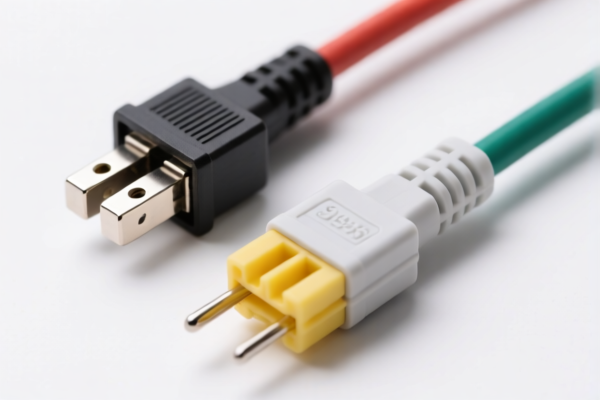
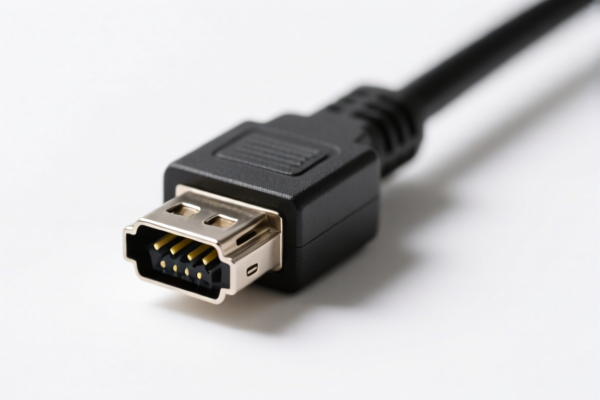
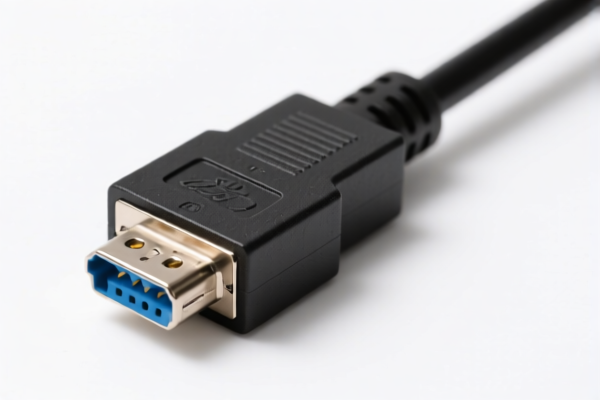
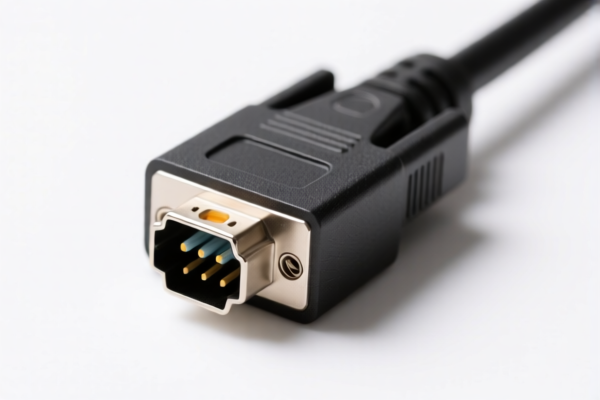
AI Analysis
🔌 5W Connector (Electrical Connectors & Wiring Accessories)
🌐 HS Code Reference & Customs Clearance Guide | 2026 Latest Tariff Analysis | Professional Clearance Strategy
📌 I. Product Definition & Classification: Do You Really Know What "5W Connector" Means?
In international trade, "5W" typically refers to the wattage rating of a connected device (e.g., a 5-watt lamp, sensor, or low-power electrical component) rather than a specific technical standard for the connector itself. However, the HS Code classification depends strictly on the voltage, construction (insulated vs. bare), and whether it has connectors.
For a "5W Connector" usually implying a plug/socket/cable assembly for low-power devices: 1. Insulated Conductors/Cables with Connectors: If the item includes the wire/cable with fitted plugs/sockets (e.g., an extension cord or a specific adapter cable for a 5W device), it falls under Chapter 8544. 2. Standalone Connectors (Plugs/Sockets): If it is just the plastic/metal housing (plug or socket) without attached insulated wires, it falls under Chapter 8536.
⚠️ Key Distinction:
- If it’s a complete cable assembly (wire + plugs) for ≤1,000V → Chapter 8544
- If it’s a standalone plug, socket, or rack connector for ≤1,000V → Chapter 8536
📦 II. HS Code Classification Details (2026 Latest Tariff Authority Comparison)
| HS Code | Product Description | Application Scenario | Voltage Limit |
|---|---|---|---|
8544.42.90.10 |
Other electric conductors, ≤1,000V, Fitted with connectors | Extension Cords, specific 5W device cables with plugs | ≤ 1,000 V |
8544.42.90.90 |
Other electric conductors, ≤1,000V, Fitted with connectors | Other cables with connectors (not extension cords) | ≤ 1,000 V |
8536.69.40.20 |
Cylindrical multicontact connectors | Modular jacks, RJ-style connectors for low-voltage signals/power | ≤ 1,000 V |
8536.69.40.30 |
Rack and panel connectors | Industrial panel mounts, DIN-rail mounts | ≤ 1,000 V |
🔍 Critical Reminder:
- The term "5W" does not determine the HS Code. The Voltage and Physical Form (cable vs. standalone connector) do. - Most low-power "5W" devices operate at 12V, 24V, or 110-240V, all of which are ≤ 1,000 V. - Misclassification Risk: Do not classify a cable with plugs as a standalone connector (8536) or vice versa. The presence of insulated conductors dictates Chapter 8544.
💰 III. 2026 Latest Tariff Rate Details (Including Surcharges & Policy Add-ons)
✅ Applicable Country: United States (US)
✅ Origin: China (CN)
✅ Effective Date: 2025 November 10 onwards (including subsequent imports)
🎯 1. 8544.42.90.10 —— Extension Cords (Insulated Conductors with Connectors)
| Item | Content |
|---|---|
| Base Tariff | 0.0% |
| Section 301 Surcharge (Steel/Aluminum/Copper) | +50.0% |
| Total Tariff Rate | 50.0% |
| Tax Calculation | CIF Value × 50.0% |
| De Minimis Exemption Eligible? | ❌ No (deny_de_minimis) |
| Legal Basis Path | Chapter 8544 → Note 6 → Section 301 List 4A → 50% Surcharge |
📌 Explanation:
- Although the base tariff is 0%, copper and aluminum electrical conductors are subject to a 50% additional duty under Section 301 (Steel, Aluminum, Copper products surcharge). - This is a very high tariff. Importers must budget for 50% cost increase. - No de minimis (Section 321) exemption applies for these goods.
🎯 2. 8544.42.90.90 —— Other Insulated Conductors with Connectors
| Item | Content |
|---|---|
| Base Tariff | 0.0% |
| Section 301 Surcharge (Steel/Aluminum/Copper) | +50.0% |
| Total Tariff Rate | 50.0% |
| Tax Calculation | CIF Value × 50.0% |
| De Minimis Exemption Eligible? | ❌ No (deny_de_minimis) |
| Legal Basis Path | Chapter 8544 → Section 301 List 4A → 50% Surcharge |
📌 Note:
- Same as above. Any insulated wire/cable with connectors for ≤1,000V falls here. - Even if the plastic housing is the majority volume, the presence of conductive material (copper/aluminum) triggers the 50% surcharge.
🎯 3. 8536.69.40.20 —— Cylindrical Multicontact Connectors
| Item | Content |
|---|---|
| Base Tariff | 0.0% |
| USITC Surcharge (Section 301) | +25.0% |
| Total Tariff Rate | 25.0% |
| Tax Calculation | CIF Value × 25.0% |
| De Minimis Exemption Eligible? | ❌ No (deny_de_minimis) |
| Legal Basis Path | Chapter 8536 → Footnote 9903.88.01 → 25% Surcharge |
📌 Explanation:
- Standalone connectors (RJ45, circular connectors, etc.) are classified here. - Subject to a 25% Section 301 surcharge (distinct from the 50% copper/conductor surcharge). - Lower than cables, but still significant.
🎯 4. 8536.69.40.30 —— Rack and Panel Connectors
| Item | Content |
|---|---|
| Base Tariff | 0.0% |
| USITC Surcharge (Section 301) | +25.0% |
| Total Tariff Rate | 25.0% |
| Tax Calculation | CIF Value × 25.0% |
| De Minimis Exemption Eligible? | ❌ No (deny_de_minimis) |
| Legal Basis Path | Chapter 8536 → Footnote 9903.88.01 → 25% Surcharge |
📌 Note:
- Industrial panel connectors are taxed at 25%. - Ensure the product is truly a "rack and panel" type; otherwise, it may fall under8536.69.40.20or other connector subheadings with similar rates.
🛠️ IV. Customs Clearance Practical Advice (Battle-Tested Pitfall Avoidance Guide)
✅ 1. Required Documentation Checklist (None Can Be Missed)
| Document | Must Provide | Description |
|---|---|---|
| ✅ Product Specification Sheet | ✔️ | Must clearly state Voltage Rating (e.g., "Rated for 12V/5W") and Current Rating |
| ✅ Photos of Product & Packaging | ✔️ | Show connectors, cable type, and labeling |
| ✅ Bill of Materials (BOM) | ✔️ | Detail materials: Copper wire gauge, Plastic type, Connector type |
| ✅ Commercial Invoice | ✔️ | Accurate description: "Insulated Electrical Cable with Connectors, ≤1000V" or "Cylindrical Connector for Electronics" |
| ✅ Packing List | ✔️ | Weight and dimensions per carton |
| ✅ Origin Certificate | ❌ | If from China, no preferential rate applies for these HS codes |
✅ 2. Declaration Tips (Key Mantras)
🔥 "Cable with plugs goes to 8544 (50% tax); Standalone plugs go to 8536 (25% tax). Do not mix!"
| Scenario | Correct Declaration | Wrong Practice |
|---|---|---|
| Extension cord with plugs | 8544.42.90.10 |
Misdeclare as "Plug" → 25% (Under-declaration risk) |
| Data cable with RJ45 | 8544.42.90.90 |
Misdeclare as "Connector" → 25% (Under-declaration risk) |
| Stand-alone RJ45 jack | 8536.69.40.20 |
Misdeclare as "Cable" → 50% (Over-taxation) |
| Panel mount connector | 8536.69.40.30 |
Misdeclare as "Other Connector" → 25% (Same, but ensure accuracy) |
⚠️ Warning:
- If you import cables with connectors, you pay 50%.
- If you import connectors only, you pay 25%.
- Strategy: If your product allows, consider separating the cable and connectors. Import cables without connectors (if possible) might fall under a different subheading, but 8544.42 is specific for "fitted with connectors." Bare insulated wires (8544.30) may have different rates, but most "5W" products are pre-assembled.
✅ 3. Special Circumstances Handling
| Situation | Handling Advice |
|---|---|
| "5W" is just the load rating | Clarify in docs that 5W is the device power, not the connector rating. Focus on Voltage ≤ 1,000V. |
| Coaxial Cables | If the "connector" is coaxial (e.g., BNC, F-type), it may fall under 8544.42.90.90 (50%) or specific coaxial codes. Verify. |
| OEM Custom Cables | Provide design drawings. Ensure the description matches the physical product (insulated + connector). |
| Mixed Shipments | If a container has both cables and standalone connectors, declare separately. Mixing HS codes can cause customs holds. |
🌍 V. Global Market Clearance Comparison (2026 Latest)
| Country/Region | Recommended HS Code | Tariff Rate | Certification | Notes |
|---|---|---|---|---|
| 🇺🇸 USA | 8544.42.90.10 / 90 |
50% | UL, ETL (if applicable) | High Tax. Copper/Antal surcharge applies. |
| 🇺🇸 USA | 8536.69.40.20 / 30 |
25% | UL, ETL | Medium Tax. Standalone connectors. |
| 🇨🇳 China | 8544.42.90 |
0% - 5% | CCC | No surcharges. |
| 🇪🇺 EU | 8544.42.90 |
0% | CE, RoHS | No surcharges. |
| 🇬🇧 UK | 8544.42.90 |
0% | UKCA | No surcharges. |
| 🇦🇺 Australia | 8544.42.90 |
5% | RCM | No surcharges. |
📌 Conclusion:
- USA is the only major market with high surcharges for these electrical accessories. - China-origin products face 25-50% extra duties due to Section 301 and Copper/Aluminum surcharges. - EU/UK/Asia have 0% to 5% duties, making them more cost-effective for re-export or local use.
📌 VI. Common Mistakes & Pitfall Avoidance Guide (Blood & Tears Lessons)
❌ Mistake 1: Declaring "5W Cable" as "Connector" to save tax
👉 Consequence: If inspected and found to have wires, back taxes + penalties apply (50% vs 25%).
❌ Mistake 2: Ignoring the "Copper/Aluminum" surcharge
👉 Consequence: Budgeting for 0% base tariff leads to massive unexpected costs (50% total).
❌ Mistake 3: Using vague descriptions like "Electric Parts"
👉 Consequence: Customs delays, potential reclassification to higher tax rates or denial of entry.
❌ Mistake 4: Assuming "De Minimis" applies
👉 Consequence: Section 321 exemptions are denied for these HS codes. Every shipment, even small parcels, is taxed.
✅ Correct Practice:
"Insulated Electric Cable, Voltage ≤1000V, Fitted with Plugs, Model XYZ, Copper Conductor"
HS Code:8544.42.90.10
Tariff: 50%
🎯 VII. Conclusion: Professional Declaration, Save Money & Time!
🎯 Remember the Mantra:
🔹 "Cable with Plug? 50% Tax! Standalone Plug? 25% Tax! No De Minimis!"
🔹 "HS Code Dictates Destiny! A 25% Difference Can Break Your Margin!"
📌 Pro Tip:
If you are importing into the USA, consider supply chain diversification (e.g., from Vietnam or Mexico) if possible, as these countries may be exempt from Section 301 surcharges.
For standalone connectors, use8536to save 25% compared to cable assemblies.
📣 Immediate Action:
📞 Consult a Customs Broker for Pre- Classification Rulings.
🚀 Verify the exact physical structure (cable vs. connector) before shipping to avoid 50% surprises.
✨ Professional Clearance Starts with Accurate Classification!
💼 Every Penny of Cost Deserves Precise Calculation!
Customer Reviews
About HS Code Classification
The Harmonized System (HS) is an internationally standardized nomenclature developed by the World Customs Organization (WCO) to classify traded products. Over 200 countries use the HS system as the basis for customs tariffs, trade statistics, and import/export regulations.
Each HS code follows a hierarchical structure:
- Chapter (2 digits) — Broad category of goods (e.g., Chapter 84: Machinery and Mechanical Appliances)
- Heading (4 digits) — More specific grouping within the chapter
- Subheading (6 digits) — Internationally standardized breakdown, used by all WCO member countries
- National subdivisions (8-10 digits) — Country-specific extensions for further classification, such as US HTSUS 10-digit codes
Correct HS code classification is essential for smooth customs clearance, accurate duty payment, and compliance with trade regulations. Misclassification can lead to customs delays, overpayment of duties, or penalties.
When importing from CN to US, the applicable tariff rates may include:
- Most-Favored-Nation (MFN) rate — The standard duty rate applied to WTO members
- General rate — Applied to countries without trade agreements
- Trade remedy duties — Additional tariffs such as Section 301 (anti-dumping), Section 232 (national security), or countervailing duties
The information provided on this page is for reference purposes only. For official classification, please consult with your local customs authority or a licensed customs broker.