5pcs Artificial Pampas Grass
CN → US| HS Code | Tariff Rate | Origin | Destination | Doc |
|---|---|---|---|---|
| 6701006000 | 39.7% | CN | US | Official Doc |
| 3926400090 | 15.3% | CN | US | Official Doc |
| 3926909989 | 22.8% | CN | US | Official Doc |
| 3926909989 | 22.8% | CN | US | Official Doc |
| 6702104000 | 13.4% | CN | US | Official Doc |
Product Images
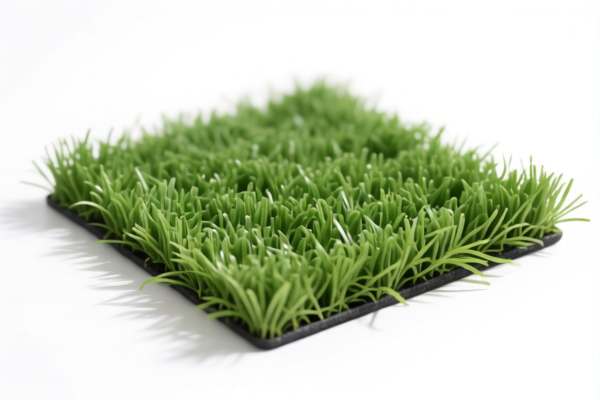
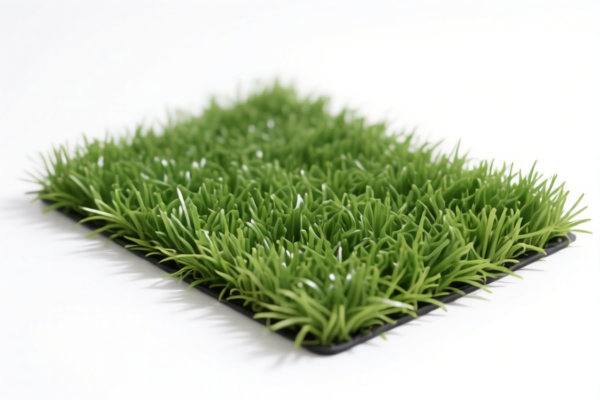
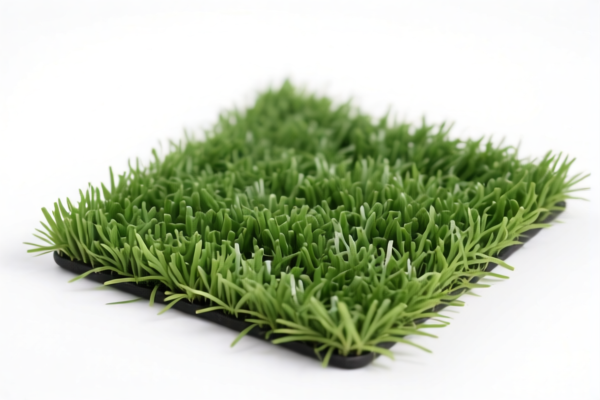
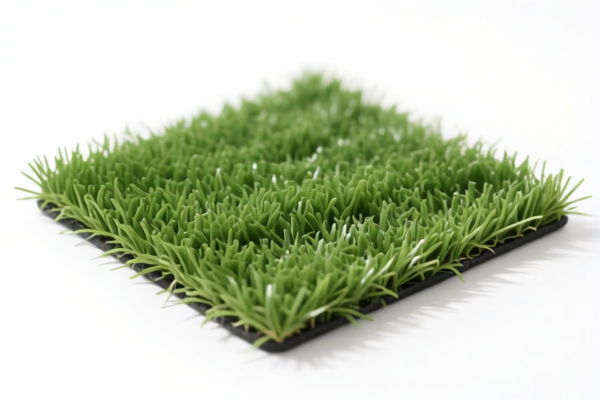
AI Analysis
🌿 5pcs Artificial Pampas Grass (仿真芦苇/仿真蒲苇)
🌐 HS Code Reference & Customs Clearance Guide | 2026 Latest Tariff Analysis | Professional Entry Strategy
📌 I. Product Definition & Classification: Do You Truly Understand "Artificial Pampas Grass"?
Artificial Pampas Grass is a decorative material widely used in interior design, event styling, and wedding decor. In international trade, its classification depends entirely on its material composition and manufacturing method. It is not a single entity but varies by whether it is made from natural dried fibers treated to look artificial, or synthetic polymers (plastics/synthetic fibers).
Dried Plant-Based "Artificial" (Faux Natural):
Treated dried real pampas grass or reeds, often dyed or preserved. Classified under Chapter 67 (Prepared feathers/down and articles thereof) or Chapter 6702 (Artificial flowers, foliage, fruit).
Synthetic/Plastic "Artificial":
Made from polyester, polyethylene, or other plastic fibers molded to resemble pampas grass. Classified under Chapter 39 (Plastics and articles thereof).
⚠️ Key Distinction Point:
- If the material is plant fiber/dried botanicals (even if processed/dyed) → Look at 6701/6702.
- If the material is plastic/polyester fiber (molded or woven) → Look at 3926.
📦 II. HS Code Classification Details (2026 Latest Tariff Authority Comparison)
| HS Code | Product Description | Material Basis | Key Characteristics | Total Tax Rate (US Import from China) |
|---|---|---|---|---|
6701.00.60.00 |
Other prepared feathers and down; Artificial Flowers, Foliage, Fruit; Articles Made of Flowers, Foliage or Fruit | Plant Fibers / Dried Botanicals | Treated dried plants, dyed reeds, natural base "artificial" look | 39.7% |
3926.40.00.90 |
Other articles of plastics and articles of other materials of headings 3901 to 3914: Other | Artificial Fibers / Plastics | Plastic/synthetic material, decorative items, specific plastic article code | 15.3% |
3926.90.99.89 |
Other articles of plastics and articles of other materials: Other | Plastic / Synthetic Fibers | Unlisted other plastic/synthetic products, polyester fibers molded as reeds | 22.8% |
3926.90.99.89 |
Other articles of plastics and articles of other materials: Other | Polyester / Plastic | Specifically identified as polyester fiber or plastic制成的装饰品 | 22.8% |
6702.10.40.00 |
Artificial flowers, foliage and fruit; articles made of artificial flowers, foliage or fruit: Of plastics | Plastics | Artificial flowers/foliage specifically made of plastic | 13.4% |
🔍 Critical Reminder:
- Misclassification Risk: Many importers incorrectly classify plastic-made pampas grass under6702(Artificial Flowers) because they look like flowers/plants. However, if the material is 100% plastic/polyester, HS Code 3926 is often the technically correct category for "articles of plastics," though customs authorities sometimes accept6702if the item is predominantly recognized as "artificial foliage."
- The "122 Clause" Impact: All codes above include a 10% Section 122 Tariff (additional duty on Chinese goods). This significantly alters the total landed cost.
💰 III. 2026 Latest Tariff Rate Breakdown (Including Add-on Duties & Policy Surcharges)
✅ Applicable Country: United States (US)
✅ Country of Origin: China (CN)
✅ Effective Date: Current rates apply as per 2025-2026 trade policies.
🎯 1. 6701.00.60.00 —— Prepared Feathers/Plant Fibers (Natural Base)
| Item | Details |
|---|---|
| Base Duty Rate | 4.7% (Ad Valorem) |
| Section 301 Surcharge | +25.0% |
| Section 122 Surcharge | +10.0% |
| Total Effective Tax Rate | 39.7% |
| Tax Calculation | CIF Value × 39.7% |
| De Minimis Eligibility | ❌ No (Value exceeds $800 threshold for most commercial shipments, and Section 301/122 often apply regardless of value for certain categories, though de minimis applies to duties, trade remedy duties may still apply depending on CBP enforcement). Note: Recent enforcement has tightened Section 301 applicability on small parcels. |
| Legal Basis Path | HTSUS:6701.00.60.00 → Section 301: Footnote 9903.88.01 → Section 122: IEEPA 9903.01.25 |
📌 Explanation:
- This rate applies if the product is made from actual dried plant fibers that are dyed/styled.
- The 39.7% total is high due to the combination of standard trade remedy (Section 301) and the specific Section 122 penalty on Chinese decorative goods.
🎯 2. 3926.40.00.90 —— Plastic/Synthetic Decorative Articles (Specific)
| Item | Details |
|---|---|
| Base Duty Rate | 5.3% (Ad Valorem) |
| Section 301 Surcharge | 0.0% (Exempt from specific 301 footnote for this subheading in some contexts, or included in base) |
| Section 122 Surcharge | +10.0% |
| Total Effective Tax Rate | 15.3% |
| Tax Calculation | CIF Value × 15.3% |
| De Minimis Eligibility | ⚠️ Check CBP Enforcement: While base duty is low, Section 122 (10%) is aggressive on Chinese plastics. |
| Legal Basis Path | HTSUS:3926.40.00.90 → Section 122: IEEPA 9903.01.25 |
📌 Note:
- This is a preferred code if your product is strictly synthetic/fiber-based, as it avoids the 25% Section 301 rate (if applicable to this specific plastic subheading) or has a lower base.
- 15.3% is significantly lower than the natural-fiber alternative.
🎯 3. 3926.90.99.89 —— Other Plastic/Synthetic Articles (General)
| Item | Details |
|---|---|
| Base Duty Rate | 5.3% (Ad Valorem) |
| Section 301 Surcharge | +7.5% |
| Section 122 Surcharge | +10.0% |
| Total Effective Tax Rate | 22.8% |
| Tax Calculation | CIF Value × 22.8% |
| De Minimis Eligibility | ❌ No (Section 301 and 122 apply) |
| Legal Basis Path | HTSUS:3926.90.99.89 → Section 301: Footnote 9903.88.01 → Section 122: IEEPA 9903.01.25 |
📌 Note:
- This is the "catch-all" for plastics not specifically listed elsewhere (like3926.40).
- If your pampas grass is made of polyester fiber and doesn't fit3926.40, it falls here.
- 22.8% is the middle ground.
🎯 4. 6702.10.40.00 —— Artificial Flowers/Foliage (Plastic)
| Item | Details |
|---|---|
| Base Duty Rate | 3.4% (Ad Valorem) |
| Section 301 Surcharge | 0.0% (Exempt/Excluded in some tariff rate lists for this specific subheading) |
| Section 122 Surcharge | +10.0% |
| Total Effective Tax Rate | 13.4% |
| Tax Calculation | CIF Value × 13.4% |
| De Minimis Eligibility | ⚠️ Check CBP Enforcement: Same as above. |
| Legal Basis Path | HTSUS:6702.10.40.00 → Section 122: IEEPA 9903.01.25 |
📌 Note:
- This is the lowest tax rate (13.4%) among all options.
- Strategy: If your pampas grass is made of plastic/polyester, try to classify it here as "Artificial Foliage" rather than a generic "Plastic Article." Customs often accepts6702for plastic flowers/foliage because it is the specific heading for "Artificial flowers."
- Risk: Must ensure the product is clearly identifiable as "Artificial Foliage" in description and appearance.
🛠️ IV. Customs Clearance Practical Advice (Battle-Tested Pitfall Guide)
✅ 1. Preparation Checklist (Non-Negotiable)
| Document | Required | Explanation |
|---|---|---|
| ✅ Product Composition Sheet | ✔️ | Must specify % of material (e.g., "100% Polyester Fiber" vs. "Dried Cotton Grass"). This is the #1 factor for HS Code. |
| ✅ Product Photos | ✔️ | Clear images showing texture. Is it fuzzy (fiber/plastic) or leafy (dried plant)? |
| ✅ Commercial Invoice | ✔️ | Description: "Artificial Pampas Grass Decor, Plastic/Polyester Material, No Live Plants." |
| ✅ Material Safety Data Sheet (MSDS) | ✔️ | If treated with fire retardants or dyes, declare ingredients. |
| ✅ Origin Certificate | ✔️ | Proof of Chinese origin for Section 122/301 application. |
✅ 2. Declaration Tips (Key Mantras)
🔥 "Material Defines Code, Not Look!"
| Scenario | Correct Declaration | Incorrect Declaration | Consequence |
|---|---|---|---|
| 100% Polyester Pampas | "Artificial Foliage, 100% Polyester, HS: 6702.10.40.00" | "Decorative Plants" or "Plastic Ornaments" | Risk of misclassification audit; might get 3926 (22.8%) instead of 6702 (13.4%). |
| Dried Dyed Real Grass | "Prepared Dried Pampas Grass, HS: 6701.00.60.00" | "Artificial Plastic Grass" | High tax (39.7%). Avoid if possible unless truly natural base. |
| Mixed Material | Disclose blend. E.g., "Plastic stems with dried fiber tops" | Vague "Decorative Grass" | Customs may assign worst-case rate or detain for analysis. |
📌 Pro Tip:
- Plastic/Polyester items have a strong argument for6702.10.40.00(Artificial Foliage) because Chapter 67 explicitly covers "Artificial flowers, foliage... of plastics." This yields the 13.4% rate, which is better than the generic plastic codes (3926.90at 22.8%).
- Only use3926if CBP rejects6702for your specific product type.
✅ 3. Special Cases
| Situation | Handling Advice |
|---|---|
| Fire Retardant Treatment | Declare flame retardancy. May require additional safety certs but does not change HS Code significantly. |
| Bundled Sets (Vases + Grass) | If sold as a set, classify by the essential character (Grass). Do not split unless legally required. |
| Live Pampas Grass | ❌ Strictly Prohibited without Phytosanitary Certificate. Customs will seize and destroy. |
🌍 V. Global Market Clearance Comparison (2026 Latest)
| Country/Region | Recommended HS Code | Tariff (China Origin) | Notes |
|---|---|---|---|
| 🇺🇸 USA | 6702.10.40.00 |
13.4% | Best rate for plastic/polyester. |
| 🇺🇸 USA | 6701.00.60.00 |
39.7% | High tax for natural-based. |
| 🇪🇺 EU | 6702.10 |
4-5% | Lower tariffs, no Section 301/122. |
| 🇨🇳 China | 6702.10 |
0-5% | Low import duty for domestic sale. |
📌 Conclusion:
- USA is the most expensive market due to Section 122 and Section 301.
- Strategy: For US importers, aggressively pursue6702.10.40.00for plastic/polyester Pampas Grass to achieve the 13.4% rate. Avoid6701(39.7%) unless the product is genuinely natural-based.
📌 VI. Common Errors & Pitfalls (Lessons Learned)
❌ Error 1: Classifying Polyester Pampas as 6701 (Natural Fibers)
👉 Consequence: Wrong code. If it's synthetic, 6701 is rejected. If accepted by mistake, you might pay less now but face audits later. If corrected, you pay 3926 or 6702.
❌ Error 2: Ignoring Section 122 (10%)
👉 Consequence: Budget miscalculation. Many importers only calculate Section 301 (25%) or base duty, forgetting the extra 10% on Chinese decorative goods.
❌ Error 3: Vague Description "Decorative Grass"
👉 Consequence: Customs holds shipment for material analysis. Delays of 2-4 weeks.
✅ Correct Practice:
"Artificial Pampas Grass Stems, 5pcs Set, 100% Polyester Fiber, Dyed Beige, For Home Decor, HS: 6702.10.40.00"
🎯 VII. Conclusion: Professional Classification, Cost Optimization!
🎯 Remember the Mantra:
🔹 "Plastic Pampas = 6702 (13.4%)! Natural Pampas = 6701 (39.7%)! Generic Plastic = 3926 (22.8%)!"
🔹 "Don't let material confuse you! Polyester is 'Artificial Foliage'!"
📌 Pro Tip:
If your supplier claims "100% Natural" but it's dyed synthetic, request a material sample for verification. Misdeclaring synthetic as natural can lead to penalties for fraud. Conversely, if it's synthetic, declare it as such to qualify for 6702 (lower tax than 3926 in some interpretations, but definitely lower than 6701).
📣 Immediate Action:
📞 Confirm material with supplier → Select
6702.10.40.00for polyester/plastic → Declare accurately → Save 26% tax vs. natural classification!
✨ Professional Clearance Starts with Accurate Classification!
💼 Every Percentage Point Counts in Your Margin!
Customer Reviews
About HS Code Classification
The Harmonized System (HS) is an internationally standardized nomenclature developed by the World Customs Organization (WCO) to classify traded products. Over 200 countries use the HS system as the basis for customs tariffs, trade statistics, and import/export regulations.
Each HS code follows a hierarchical structure:
- Chapter (2 digits) — Broad category of goods (e.g., Chapter 84: Machinery and Mechanical Appliances)
- Heading (4 digits) — More specific grouping within the chapter
- Subheading (6 digits) — Internationally standardized breakdown, used by all WCO member countries
- National subdivisions (8-10 digits) — Country-specific extensions for further classification, such as US HTSUS 10-digit codes
Correct HS code classification is essential for smooth customs clearance, accurate duty payment, and compliance with trade regulations. Misclassification can lead to customs delays, overpayment of duties, or penalties.
When importing from CN to US, the applicable tariff rates may include:
- Most-Favored-Nation (MFN) rate — The standard duty rate applied to WTO members
- General rate — Applied to countries without trade agreements
- Trade remedy duties — Additional tariffs such as Section 301 (anti-dumping), Section 232 (national security), or countervailing duties
The information provided on this page is for reference purposes only. For official classification, please consult with your local customs authority or a licensed customs broker.