6 Pack White Silicone Food Storage Lids
CN → US| HS Code | Tariff Rate | Origin | Destination | Doc |
|---|---|---|---|---|
| 3924103000 | 22.8% | CN | US | Official Doc |
| 3924104000 | 13.4% | CN | US | Official Doc |
| 3923500000 | 40.3% | CN | US | Official Doc |
| 3923900080 | 38.0% | CN | US | Official Doc |
| 3926909989 | 22.8% | CN | US | Official Doc |
Product Images
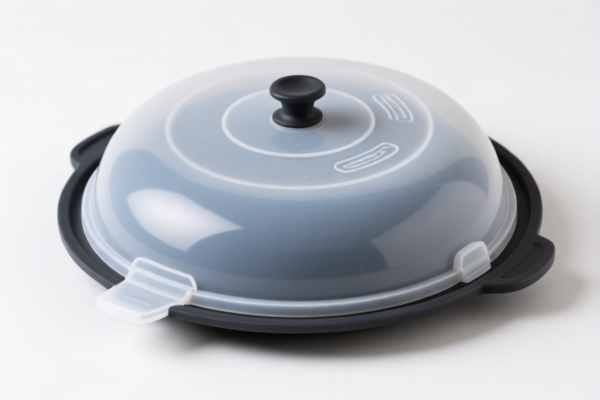
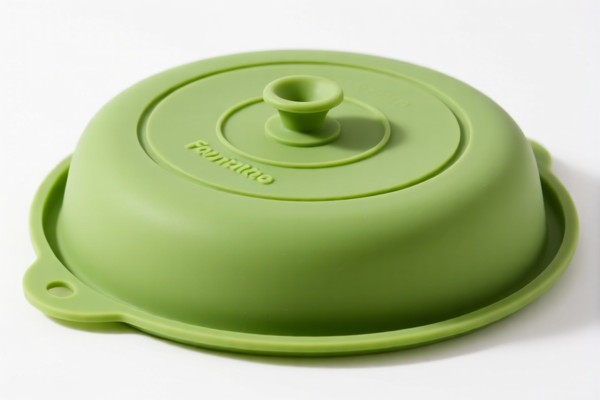
AI Analysis
🥗 6 Pack White Silicone Food Storage Lids
🌐 HS Code Reference & Customs Clearance Guide | 2024-2026 Tariff Analysis | Professional Strategy
📌 I. Product Definition & Classification: Do You Really Know "Silicone Lids"?
Silicone food storage lids are versatile kitchen accessories designed to seal containers of various shapes and sizes. In international trade, the classification of these items can be tricky because they sit at the intersection of "Plastic Articles" and "Household/Kitchen Utensils."
The core distinction lies in: * Material Perception: Are they treated as generic "Plastic Sealing Containers" (Chapter 39, Heading 3923) or specific "Plastic Household/Kitchen Articles" (Chapter 39, Heading 3924)? * Function vs. Form: Are they classified strictly as "lids/closures" for packaging, or as standalone utensils for food preparation/storage?
⚠️ Key Differentiator:
- If viewed as generic plastic closures for jars/containers → 3923 (Packaging Articles).
- If viewed as kitchenware/household utensils → 3924 (Household/Kitchen Articles).
- If viewed as miscellaneous plastic articles with no specific fit → 3926 (Other Articles).
📦 II. HS Code Classification Details (Based on Provided Data)
| HS Code | Product Description (from Data) | Applicability Scenario | Key Characteristic |
|---|---|---|---|
3924.10.30.00 |
Silicone food storage lids; kitchen/household items; shape: lids; matches tableware/kitchenware usage. | General kitchen storage, reusable lid sets. | ✅ Best Fit for Kitchenware |
3924.10.40.00 |
Silicone lids; cutlery/kitchenware category; classified as other plastic household items; shape matches kitchen accessory features. | Broader kitchen accessory classification. | ✅ Good Alternative |
3923.50.00.00 |
Item use: lids; material inferred as plastic (silicone = synthetic polymer); fits plastic sealing lid classification. | Strict "plastic closure" interpretation. | ⚠️ High Tariff Risk |
3923.90.00.80 |
Item shape: lids; material: silicone (plastic/synthetic rubber); fits plastic sealing parts/lids usage classification. | General plastic sealing articles. | ⚠️ High Tariff Risk |
3926.90.99.89 |
Silicone material food preservation lids; other articles of plastic/synthetic material products; no material conflict. | Catch-all for miscellaneous plastic goods. | ✅ Safe but Higher Tax than 3924 |
🔍 Critical Insight:
-3924codes are generally preferred for food-contact kitchenware, acknowledging their role as "utensils." -3923codes treat the item purely as a "package/closure," which often attracts higher trade remedies (Section 301). -3926codes are a fallback if the specific "kitchen" designation is disputed, but they carry significant "Other" tax burdens.
💰 III. 2024-2026 Latest Tariff Rate Breakdown (Including Surtaxes)
✅ Applicable Country: United States (US)
✅ Origin: China (CN)
✅ Note: Rates include Base, Section 301 (Add-on), and Section 122 (if applicable as per data).
🎯 1. 3924.10.30.00 —— Silicone Food Storage Lids (Kitchenware)
| Item | Details |
|---|---|
| Base Rate | 5.3% (Ad Valorem) |
| Add-on Tariff (Section 301) | 7.5% |
| Section 122 Tariff | 10% |
| Total Tax Rate | 22.8% |
| Calculation | CIF Value × 22.8% |
| De Minimis Eligibility | ❌ No (Subject to high scrutiny) |
| Legal Basis Path | HTSUS:3924.10.30.00 → Section 301 List 4 → Section 122 |
📌 Explanation:
- This is the most favorable option among the listed codes due to its classification as a "kitchen/household article." - The 10% Section 122 tariff is applied based on specific trade enforcement measures. - Total 22.8% is manageable compared to the 40%+ brackets.
🎯 2. 3924.10.40.00 —— Silicone Lids (General Kitchenware)
| Item | Details |
|---|---|
| Base Rate | 3.4% (Ad Valorem) |
| Add-on Tariff (Section 301) | 0.0% |
| Section 122 Tariff | 10% |
| Total Tax Rate | 13.4% |
| Calculation | CIF Value × 13.4% |
| De Minimis Eligibility | ❌ No |
| Legal Basis Path | HTSUS:3924.10.40.00 → Section 122 |
📌 Note:
- Lowest Total Tax (13.4%)! - If customs accepts the "0% add-on" interpretation for this specific subheading (possibly due to recent exclusions or specific category definitions), this is the gold standard for cost optimization. - Risk: Customs may scrutinize the 0% add-on claim aggressively. Ensure product description explicitly states "Household/Kitchen Utensil."
🎯 3. 3923.50.00.00 —— Plastic Sealing Lids (Packaging)
| Item | Details |
|---|---|
| Base Rate | 5.3% (Ad Valorem) |
| Add-on Tariff (Section 301) | 25.0% |
| Section 122 Tariff | 10% |
| Total Tax Rate | 40.3% |
| Calculation | CIF Value × 40.3% |
| De Minimis Eligibility | ❌ No |
| Legal Basis Path | HTSUS:3923.50.00.00 → Section 301 List 3/4 → Section 122 |
📌 Explanation:
- Classified as "Packaging/Plastic Articles." - Subject to the standard 25% Section 301 tariff for Chinese plastics. - 40.3% makes this option significantly less profitable.
🎯 4. 3923.90.00.80 —— Other Plastic Sealing Articles
| Item | Details |
|---|---|
| Base Rate | 3.0% (Ad Valorem) |
| Add-on Tariff (Section 301) | 25.0% |
| Section 122 Tariff | 10% |
| Total Tax Rate | 38.0% |
| Calculation | CIF Value × 38.0% |
| De Minimis Eligibility | ❌ No |
| Legal Basis Path | HTSUS:3923.90.00.80 → Section 301 → Section 122 |
📌 Note:
- Similar to3923.50.00.00, this falls under general plastic articles. - 38.0% is high, though slightly better than 40.3% due to a lower base rate (3.0% vs 5.3%).
🎯 5. 3926.90.99.89 —— Other Plastic Articles (Miscellaneous)
| Item | Details |
|---|---|
| Base Rate | 5.3% (Ad Valorem) |
| Add-on Tariff (Section 301) | 7.5% |
| Section 122 Tariff | 10% |
| Total Tax Rate | 22.8% |
| Calculation | CIF Value × 22.8% |
| De Minimis Eligibility | ❌ No |
| Legal Basis Path | HTSUS:3926.90.99.89 → Section 301 → Section 122 |
📌 Note:
- Same total tax (22.8%) as3924.10.30.00. - However,3926is a "catch-all" and may attract more customs scrutiny for lacking a specific functional description (like "kitchenware").
🛠️ IV. Customs Clearance Practical Advice (Pitfall Avoidance Guide)
✅ 1. Documentation Checklist (Non-Negotiable)
| Document | Required? | Description |
|---|---|---|
| ✅ Product Photos | ✔️ | Show the lids stretched over bowls/jars to prove kitchen/storage use. |
| ✅ Material Specification | ✔️ | Explicitly state "100% Food-Grade Silicone" (No plastic filler). |
| ✅ Commercial Invoice | ✔️ | Clear description: "Silicone Food Storage Lids, Kitchen Utensils." |
| ✅ Customs Ruling/Pre-decision | ✔️ | If possible, obtain a binding ruling for 3924 to secure the 13.4%-22.8% rate. |
| ✅ FDA Compliance Doc | ✔️ | Proof of food-contact safety (crucial for kitchenware entry). |
✅ 2. Declaration Strategy (Key Mantra)
🔥 "Highlight Kitchen Use, Avoid 'Packaging' Terms, Choose 3924 for Lower Risk!"
| Scenario | Correct Declaration | Wrong Declaration |
|---|---|---|
| Ideal | "Silicone Kitchen Lids for Food Storage" | "Plastic Lids for Bottles" |
| HS Choice | 3924.10.30.00 or 3924.10.40.00 |
3923.50.00.00 |
| Material | "Food-Grade Silicone" | "Rubber" or "Plastic" |
| Usage | "Household/Kitchen Utensil" | "Packaging Material" |
⚠️ Warning:
- Do NOT describe them as "Packaging" or "Containers." This pushes them into Chapter 3923, triggering the 25% Section 301 tariff. - Do NOT use vague terms like "Miscellaneous Plastic Parts." This leads to 3926, which is 22.8% but harder to defend than 3924.
✅ 3. Special Handling Tips
| Situation | Recommendation |
|---|---|
| Mixed Sizes | Declare as "Assorted Sizes" but ensure the primary use is clear. |
| White Color | Mentioning "White" does not affect HS code but helps in inventory matching. |
| Set Packaging | If sold as a "6 Pack," declare the set as one unit to simplify valuation. |
| Section 122 | Be prepared for the 10% S122 tariff regardless of the subheading (3924/3926). Focus on minimizing the Section 301 portion (7.5% vs 25%). |
🌍 V. Global Market Comparison (2026 Outlook)
| Country/Region | Recommended HS Code | Estimated Total Tax | Certification | Note |
|---|---|---|---|---|
| 🇺🇸 USA | 3924.10.40.00 (Ideal) |
13.4% | FDA + CPSIA | Lowest cost if S301 exemption applies. |
| 🇺🇸 USA | 3923.50.00.00 (Risk) |
40.3% | FDA | Avoid if possible. |
| 🇨🇳 China | 3924.10.00.00 |
~5% | GB Standards | No major surtaxes for domestic sales. |
| 🇪🇺 EU | 3924.10.00.00 |
4.2% | LFGB/Food Contact | No Section 301/122. |
| 🇬🇧 UK | 3924.10.00.00 |
4.0% | UKCA/Food Safe | Post-Brexit alignment with EU. |
📌 Conclusion:
- The USA market is the most complex due to Section 301 and 122 tariffs. - Goal: Secure3924.10.40.00for the 13.4% rate. If rejected, fall back to3924.10.30.00(22.8%). - Never accept3923(40.3%) unless no other option exists.
📌 VI. Common Mistakes & Pitfalls (Lessons Learned)
❌ Mistake 1: Calling the product "Plastic Lid"
👉 Result: Customs may classify as general plastic (3923), leading to 40.3% tax.
✅ Fix: Always use "Silicone" and "Kitchen Utensil" in description.
❌ Mistake 2: Ignoring Section 122
👉 Result: Surprise 10% tax at border.
✅ Fix: Factor 10% into all cost calculations, regardless of HS code.
❌ Mistake 3: Over-declaring "Packaging"
👉 Result: Triggers higher Section 301 tariffs (25%).
✅ Fix: Emphasize "Reusability" and "Household Use."
🎯 VII. Conclusion: Precision Classification, Profit Maximization!
🎯 Key Takeaways:
🔹 "Silicone + Kitchen = 3924 (Low Tax)"
🔹 "Plastic + Packaging = 3923 (High Tax)"
🔹 "Section 301 is the Killer: 7.5% vs 25% = Huge Difference!"
🔹 "Section 122 is Always On: Add 10% to Every Code!"
📌 Pro Tip:
For "6 Pack White Silicone Food Storage Lids," the optimal strategy is:
1. Declare as: "Silicone Kitchen Storage Lids, Food-Grade, Reusable."
2. Target HS Code: 3924.10.40.00 (if 0% S301 applies) or 3924.10.30.00 (if 7.5% S301 applies).
3. Prepare: FDA compliance docs and photos showing use on bowls/containers.
4. Budget: 13.4% - 22.8% total landed cost impact.
📣 Take Action Now:
📞 Consult your customs broker to verify if
3924.10.40.00is currently accepted with 0% S301.
🚀 Protect your margins with precise classification!
✨ Smart Customs, Smart Business!
💼 Don't let misclassification cost you 27% of your profit!
Customer Reviews
About HS Code Classification
The Harmonized System (HS) is an internationally standardized nomenclature developed by the World Customs Organization (WCO) to classify traded products. Over 200 countries use the HS system as the basis for customs tariffs, trade statistics, and import/export regulations.
Each HS code follows a hierarchical structure:
- Chapter (2 digits) — Broad category of goods (e.g., Chapter 84: Machinery and Mechanical Appliances)
- Heading (4 digits) — More specific grouping within the chapter
- Subheading (6 digits) — Internationally standardized breakdown, used by all WCO member countries
- National subdivisions (8-10 digits) — Country-specific extensions for further classification, such as US HTSUS 10-digit codes
Correct HS code classification is essential for smooth customs clearance, accurate duty payment, and compliance with trade regulations. Misclassification can lead to customs delays, overpayment of duties, or penalties.
When importing from CN to US, the applicable tariff rates may include:
- Most-Favored-Nation (MFN) rate — The standard duty rate applied to WTO members
- General rate — Applied to countries without trade agreements
- Trade remedy duties — Additional tariffs such as Section 301 (anti-dumping), Section 232 (national security), or countervailing duties
The information provided on this page is for reference purposes only. For official classification, please consult with your local customs authority or a licensed customs broker.