6 piece Silicone Food Storage Lids White
CN → US| HS Code | Tariff Rate | Origin | Destination | Doc |
|---|---|---|---|---|
| 3924104000 | 13.4% | CN | US | Official Doc |
| 3923500000 | 40.3% | CN | US | Official Doc |
| 3923900080 | 38.0% | CN | US | Official Doc |
| 3926909989 | 22.8% | CN | US | Official Doc |
| 3926904590 | 13.5% | CN | US | Official Doc |
Product Images
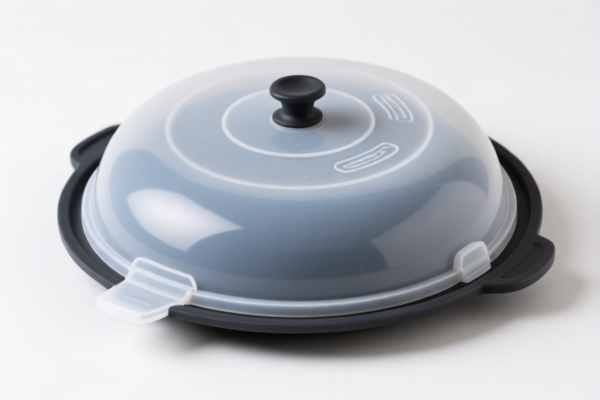
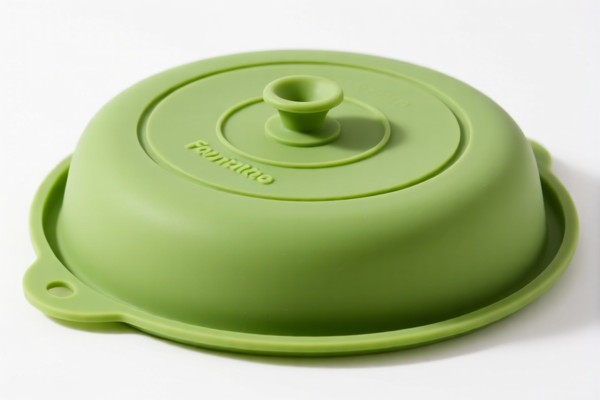
AI Analysis
🥗 Silicone Food Storage Lids – 6 Piece Set (White)
🌐 HS Code Reference & Customs Clearance Guide | 2026 Latest Tariff Analysis | Professional Clearance Strategy
📌 I. Product Definition & Classification: Do You Really Understand "Silicone Lids"?
Silicone food storage lids are flexible, reusable covers designed to seal bowls, plates, and containers for food preservation. In international trade, they are primarily classified under Chapter 39 (Plastics and Articles Thereof). However, the specific HS Code depends heavily on the intended use (kitchenware vs. general sealing) and material composition.
⚠️ Key Distinction Point:
- If marketed as "Kitchenware/Tableware" → Classified under 3924.10.40.00
- If marketed as "General Purpose Sealing Lids/Caps" → Classified under 3923.50.00.00 or 3923.90.00.80
- If considered "Other Plastic Articles" (miscellaneous) → Classified under 3926.90.99.89 or 3926.90.45.90
📦 II. HS Code Classification Details (2026 Latest Tariff Authority Comparison)
| HS Code | Product Description | Applicable Scenario | Total Tax Rate | Reason for Classification |
|---|---|---|---|---|
3924.10.40.00 |
Other tableware/kitchenware of plastics (Silicone Lids) | Marketed as kitchenware/tableware | 13.4% | Base Tariff: 3.4%, Add-on: 0%, Section 122: 10% |
3923.50.00.00 |
Plastic stoppers, caps, and lids | General sealing lids, plastic material inferred | 40.3% | Base Tariff: 5.3%, Add-on: 25%, Section 122: 10% |
3923.90.00.80 |
Other plastic articles for conveyance/packaging | Plastic sealing components/lids | 38.0% | Base Tariff: 3.0%, Add-on: 25%, Section 122: 10% |
3926.90.99.89 |
Other plastic articles | Silicone food preservation lids, miscellaneous plastic articles | 22.8% | Base Tariff: 5.3%, Add-on: 7.5%, Section 122: 10% |
3926.90.45.90 |
Gaskets, washers, and other sealing devices of plastic | Silicone gaskets/sealing pads, no material conflict | 13.5% | Base Tariff: 3.5%, Add-on: 0%, Section 122: 10% |
🔍 Important Note:
- 3924 is the most favorable if the product is clearly marketed as tableware/kitchenware.
- 3923 codes attract higher tariffs due to the "Packaging/Closure" classification and additional duties.
- 3926 codes are for "Other" plastic articles, with rates varying based on specific subcategory.
💰 III. 2026 Latest Tariff Rate Breakdown (Including Surtaxes & Policy Add-ons)
✅ Applicable Country: United States (US)
✅ Origin: China (CN)
✅ Effective Date: From November 10, 2025 (including subsequent imports)
🎯 1. 3924.10.40.00 —— Silicone Lids (Classified as Tableware/Kitchenware)
| Item | Content |
|---|---|
| Base Tariff | 3.4% |
| USITC Add-on Tariff | +0.0% |
| Section 122 Tariff | +10.0% (Under specific trade remedy measures) |
| Total Tax Rate | 13.4% |
| Tax Calculation | CIF Value × 13.4% |
| De Minimis Eligibility | ❌ Not Eligible (Section 122 applies) |
| Legal Basis Path | Section 122: Tariff Line 3924.10.40.00 → Base: 3.4% + Sec 122: 10% |
📌 Explanation:
- This is the most cost-effective classification for silicone lids.
- The 0% add-on makes it significantly cheaper than other plastic lid classifications.
- Ensure the product is marketed as kitchenware to justify this code.
🎯 2. 3923.50.00.00 —— Plastic Stoppers, Caps, and Lids
| Item | Content |
|---|---|
| Base Tariff | 5.3% |
| USITC Add-on Tariff | +25.0% (Section 301) |
| Section 122 Tariff | +10.0% |
| Total Tax Rate | 40.3% |
| Tax Calculation | CIF Value × 40.3% |
| De Minimis Eligibility | ❌ Not Eligible |
| Legal Basis Path | Section 301: Footnote 9903.88.01 → Section 122: 10% → HS: 3923.50.00.00 |
📌 Warning:
- This classification incurs a high tariff due to the 25% Section 301 surtax on packaging materials.
- Avoid this code unless the product is clearly a closure for packaging containers.
🎯 3. 3923.90.00.80 —— Other Plastic Articles for Conveyance/Packaging
| Item | Content |
|---|---|
| Base Tariff | 3.0% |
| USITC Add-on Tariff | +25.0% (Section 301) |
| Section 122 Tariff | +10.0% |
| Total Tax Rate | 38.0% |
| Tax Calculation | CIF Value × 38.0% |
| De Minimis Eligibility | ❌ Not Eligible |
| Legal Basis Path | Section 301: Footnote 9903.88.01 → Section 122: 10% → HS: 3923.90.00.80 |
📌 Note:
- Similar to3923.50.00.00, this code attracts the 25% Section 301 surtax.
- Use only if the product is considered a packaging seal rather than kitchenware.
🎯 4. 3926.90.99.89 —— Other Plastic Articles (Miscellaneous)
| Item | Content |
|---|---|
| Base Tariff | 5.3% |
| USITC Add-on Tariff | +7.5% |
| Section 122 Tariff | +10.0% |
| Total Tax Rate | 22.8% |
| Tax Calculation | CIF Value × 22.8% |
| De Minimis Eligibility | ❌ Not Eligible |
| Legal Basis Path | Section 301: Specific Footnote → Section 122: 10% → HS: 3926.90.99.89 |
📌 Explanation:
- This is a middle-ground option if the product is considered a miscellaneous plastic article.
- Lower than3923codes but higher than3924.
🎯 5. 3926.90.45.90 —— Gaskets, Washers, and Sealing Devices
| Item | Content |
|---|---|
| Base Tariff | 3.5% |
| USITC Add-on Tariff | +0.0% |
| Section 122 Tariff | +10.0% |
| Total Tax Rate | 13.5% |
| Tax Calculation | CIF Value × 13.5% |
| De Minimis Eligibility | ❌ Not Eligible |
| Legal Basis Path | Section 122: Tariff Line 3926.90.45.90 → Base: 3.5% + Sec 122: 10% |
📌 Note:
- This code is suitable if the lids are considered gaskets or sealing pads.
- Very low tariff (13.5%) comparable to3924, but requires specific justification.
🛠️ IV. Customs Clearance Practical Advice (Avoid Pitfalls)
✅ 1. Required Documents Checklist (Mandatory)
| Document | Required | Description |
|---|---|---|
| ✅ Product Specifications | ✔️ | Size, material (100% Food-Grade Silicone), color, set size |
| ✅ Product Photos | ✔️ | Clear images showing the lids on various containers |
| ✅ Commercial Invoice | ✔️ | Clearly state "Silicone Food Storage Lids, Kitchenware" |
| ✅ Packing List | ✔️ | Details of packaging, quantity per set |
| ✅ Certificate of Analysis (COA) | ✔️ | Proof of food-grade silicone compliance |
| ✅ FCC/CE/RoHS Certificates | ✔️ | If applicable, for safety standards |
✅ 2. Declaration Tips (Key Principles)
🔥 "Kitchenware Code 3924, Packaging Code 3923, Tariff Difference Huge!"
| Scenario | Correct Declaration | Wrong Practice |
|---|---|---|
| Silicone Lids for Home Use | 3924.10.40.00 (Kitchenware) |
Misdeclare as 3923.50.00.00 → 40.3% Tax |
| Lids for Packaging Storage | 3923.50.00.00 |
Misdeclare as 3924 → Risk of Audit |
| Silicone Gaskets | 3926.90.45.90 |
Misdeclare as 3924 → Disallowed |
| Miscellaneous Plastic Parts | 3926.90.99.89 |
Misdeclare as 3924 → Disallowed |
✅ 3. Special Cases Handling
| Case | Handling Advice |
|---|---|
| OEM/Private Label | Provide supplier contracts and design sheets to prove "Kitchenware" intent |
| Multi-Purpose Lids | If marketed for both food and industrial sealing, choose the lower tax code with justification |
| Food-Grade Certification | Provide FDA/LFGB compliance documents to support 3924 classification |
| Set vs. Single Units | Declare as "Set" to avoid item-by-item tax complications |
🌍 V. Global Market Clearance Comparison (2026 Latest)
| Country/Region | Recommended HS Code | Tariff | Certification Requirement | Remarks |
|---|---|---|---|---|
| 🇺🇸 USA | 3924.10.40.00 |
13.4% | FDA + RoHS | Best option for kitchenware |
| 🇨🇳 China | 3924.10.40.00 |
5% | GB Standards | No additional surtax |
| 🇪🇺 EU | 3924.10.40.00 |
0% | CE + LFGB | No surtax |
| 🇦🇺 Australia | 3924.10.40.00 |
5% | TGA | No surtax |
| 🇯🇵 Japan | 3924.10.40.00 |
0% | JIS | No surtax |
📌 Conclusion:
- USA has higher tariffs due to Section 122 and potential Section 301 duties.
- China, EU, Australia, Japan offer lower or zero tariffs for the same classification.
- Proper classification is critical to avoid unexpected costs.
📌 VI. Common Mistakes & Pitfalls (Lessons Learned)
❌ Mistake 1: Declaring silicone lids as "Plastic Caps" (3923.50.00.00)
👉 Consequence: Tax jumps from 13.4% to 40.3% → Extra cost of 26.9%!
❌ Mistake 2: Not providing food-grade certification
👉 Consequence: Customs may reclassify or delay clearance → Fines & Delays
❌ Mistake 3: Using vague terms like "Plastic Lid"
👉 Consequence: Ambiguity leads to higher tariff assessment
✅ Correct Practice:
"6 Piece Silicone Food Storage Lids, White, Food-Grade Silicone, Kitchenware, Model XYZ, FDA Compliant"
🎯 VII. Conclusion: Professional Declaration Saves Money!
🎯 Remember:
🔹 "Kitchenware = 3924 = 13.4%"
🔹 "Packaging = 3923 = 38-40.3%"
🔹 "Choose Wisely, Save Big!"
📌 Tips:
If your silicone lids are originating from Vietnam, Thailand, or Malaysia, you may qualify for preferential tariffs under certain trade agreements.
Apply for Advance Ruling to secure your HS Code classification.
📣 Immediate Action:
📞 Contact a professional customs broker + Provide product images + Apply for HS Code Advance Ruling
🚀 Ensure smooth clearance, reduced costs, and increased profits!
✨ Professional Clearance Starts with Accurate Classification!
💼 Every Penny Counts in International Trade!
Customer Reviews
About HS Code Classification
The Harmonized System (HS) is an internationally standardized nomenclature developed by the World Customs Organization (WCO) to classify traded products. Over 200 countries use the HS system as the basis for customs tariffs, trade statistics, and import/export regulations.
Each HS code follows a hierarchical structure:
- Chapter (2 digits) — Broad category of goods (e.g., Chapter 84: Machinery and Mechanical Appliances)
- Heading (4 digits) — More specific grouping within the chapter
- Subheading (6 digits) — Internationally standardized breakdown, used by all WCO member countries
- National subdivisions (8-10 digits) — Country-specific extensions for further classification, such as US HTSUS 10-digit codes
Correct HS code classification is essential for smooth customs clearance, accurate duty payment, and compliance with trade regulations. Misclassification can lead to customs delays, overpayment of duties, or penalties.
When importing from CN to US, the applicable tariff rates may include:
- Most-Favored-Nation (MFN) rate — The standard duty rate applied to WTO members
- General rate — Applied to countries without trade agreements
- Trade remedy duties — Additional tariffs such as Section 301 (anti-dumping), Section 232 (national security), or countervailing duties
The information provided on this page is for reference purposes only. For official classification, please consult with your local customs authority or a licensed customs broker.