610mm Wide X ray Film
CN → US| HS Code | Tariff Rate | Origin | Destination | Doc |
|---|---|---|---|---|
| 4810131120 | 35.0% | CN | US | Official Doc |
| 3921904010 | 39.2% | CN | US | Official Doc |
| 3921904090 | 39.2% | CN | US | Official Doc |
| 3919905010 | 40.8% | CN | US | Official Doc |
Product Images


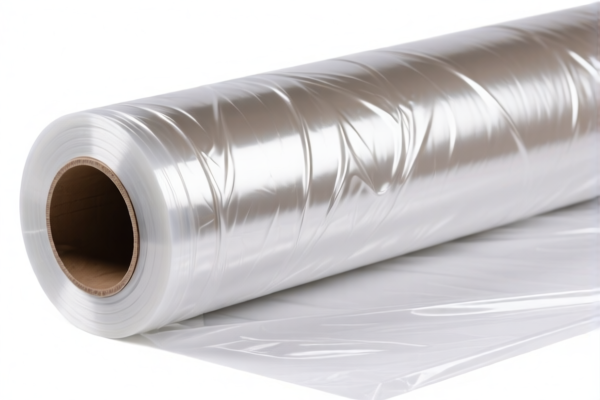
AI Analysis
🎞️ 610mm Wide X-ray Film (Sensitized Material)
🌐 HS Code Reference & Customs Clearance Guide | 2026 Latest Tariff Analysis | Professional-Level Entry Strategy
📌 I. Product Definition & Classification: Do You Truly Understand "X-ray Film"?
"610mm Wide X-ray Film" refers to large-format sensitized materials used primarily for industrial radiography, non-destructive testing (NDT), or large-area medical imaging. In international trade, the classification hinges on the substrate material (Paper vs. Plastic/Polyester) and the application (Photographic/Sensitized).
Since the product name "X-ray Film" is a functional description but not a strict HS definition, it falls into one of two main categories: 1. Paper-based Sensitized Material: If the base is paper coated with emulsion → Chapter 48. 2. Plastic/Polymer-based Film: If the base is polyester, polypropylene, or other plastic film coated with emulsion → Chapter 39.
⚠️ Key Distinction Point:
- If the substrate is Paper → Look to 4810 (Coated Paper).
- If the substrate is Plastic/Polymer → Look to 3921 (Plastic Plates/Sheets) or 3919 (Self-adhesive/Flat Rolls).
- "Sensitized" (Chemically Coated) is the trigger word that moves it from general industrial rolls to specific chemical/photo categories.
📦 II. HS Code Classification Details (Based on Provided Data)
| HS Code | Product Description | Application Logic | Substrate Assumption |
|---|---|---|---|
4810.13.11.20 |
Sensitized Paper for Photographic Purposes | Industrial/Photographic use; "Sensitized Material" matches chemical coating; 610mm width confirms roll/sheet format. | Paper (Coated) |
3921.90.40.10 |
Plastic Plates, Sheets, Films (Other) | "Sensitized Material" often implies a plastic base (e.g., Polyester). Fallback category for coated plastic films not elsewhere specified. | Plastic (General) |
3921.90.40.90 |
Plastic Plates, Sheets, Films (Other - "Other") | Broad "catch-all" for coated plastic sheets/films. Used if specific plastic sub-categories don't apply. | Plastic (Other) |
3919.90.50.10 |
Plastic Flat Shapes/Rolls (Self-adhesive/Other) | Based on common sense, sensitized films are often rolled (flat shape). Matches the form factor of plastic rolls. | Plastic (Roll) |
🔍 Critical Insight:
- Chapter 48 is preferred if the film is explicitly paper-based (common in some industrial NDT contexts).
- Chapter 39 is preferred if the film is polyester/plastic-based (common in high-resolution digital/industrial radiography).
- Without explicit material confirmation, customs may use the "Fallback Principle" (兜底类目), often leaning towards 3921 or 3919 for plastic-based sensitized films, or 4810 if paper is confirmed.
💰 III. 2026 Latest Tariff Rate Breakdown (Including Additional Taxes & Policy Surcharges)
✅ Applicable Country: United States (US)
✅ Origin: China (CN)
✅ Effective Time: Post-November 10, 2025 (Including subsequent imports)
🎯 1. 4810.13.11.20 —— Sensitized Paper (Photographic Use)
| Item | Details |
|---|---|
| Base Rate | 0.0% (Ad Valorem) |
| Section 301 Additional Tariff | +25.0% (USITC Footnote 9903.88.01 equivalent) |
| Section 122 Tariff (IEEPA) | +10.0% (Specific to China/Hong Kong products) |
| Total Tax Rate | 35.0% |
| Tax Calculation | CIF Value × 35% |
| De Minimis Exemption | ❌ Not Eligible (deny_de_minimis) |
| Legal Basis Path | IEEPA:9903.01.25 → IEEPA:9903.01.24 → USITC:4810.13.11.20 → FOOTNOTE:301_351 |
📌 Explanation:
- The 0% base makes this attractive, but the 35% total is still significant.
- Section 122 Tariff (+10%) is a critical, often overlooked surcharge on Chinese goods.
- Total 35% is lower than plastic-based alternatives (39-40.8%) but requires proof of paper substrate.
🎯 2. 3921.90.40.10 & 3921.90.40.90 —— Plastic Plates/Sheets (Sensitized)
| Item | Details |
|---|---|
| Base Rate | 4.2% |
| Section 301 Additional Tariff | +25.0% |
| Section 122 Tariff (IEEPA) | +10.0% |
| Total Tax Rate | 39.2% |
| Tax Calculation | CIF Value × 39.2% |
| De Minimis Exemption | ❌ Not Eligible |
| Legal Basis Path | IEEPA:9903.01.25 → IEEPA:9903.01.24 → USITC:3921.90.40.10/90 → FOOTNOTE:301_351 |
📌 Explanation:
- Higher base rate (4.2%) due to plastic classification.
- Total 39.2% is the standard for plastic-based sensitized films from China.
- Common for Polyester (PET) base X-ray films.
🎯 3. 3919.90.50.10 —— Plastic Flat Shapes/Rolls
| Item | Details |
|---|---|
| Base Rate | 5.8% |
| Section 301 Additional Tariff | +25.0% |
| Section 122 Tariff (IEEPA) | +10.0% |
| Total Tax Rate | 40.8% |
| Tax Calculation | CIF Value × 40.8% |
| De Minimis Exemption | ❌ Not Eligible |
| Legal Basis Path | IEEPA:9903.01.25 → IEEPA:9903.01.24 → USITC:3919.90.50.10 → FOOTNOTE:301_351 |
📌 Explanation:
- Highest base rate (5.8%) among the options.
- Total 40.8% is the most expensive option.
- Only use if the film is definitively a plastic roll and doesn't fit the "plate/sheet" definition of 3921.
🛠️ IV. Customs Clearance Practical Advice (Battle-Tested Pitfall Guide)
✅ 1. Required Documentation Checklist (Non-Negotiable)
| Document | Mandatory? | Purpose |
|---|---|---|
| ✅ Product Specification Sheet | ✔️ | Must state Substrate Material (Paper vs. Polyester/Plastic). This is the #1 determinant for HS Code. |
| ✅ Composition Analysis | ✔️ | Confirms chemical coating ("Sensitized") vs. plain film. |
| ✅ Product Photos | ✔️ | Show roll width (610mm), packaging, and any labels indicating material. |
| ✅ Commercial Invoice | ✔️ | Describe as "Sensitized X-ray Film, [Paper/Plastic] Base, 610mm Wide." Avoid vague terms like "Industrial Material." |
| ✅ Packing List | ✔️ | Weight and dimensions to verify roll size. |
| ✅ Certificate of Origin (CO) | ✔️ | To confirm Chinese origin (triggers Section 122/301 taxes). |
✅ 2. Declaration Strategy (Key Mnemonic)
🔥 "Base Defines Code, Sensitization Triggers Chapter, 301+122 Double Whammy!"
| Scenario | Correct HS Code | Why? |
|---|---|---|
| Paper-based X-ray film | 4810.13.11.20 |
Paper substrate + Photographic/Sensitized use = Chapter 48. Lowest total tax (35%). |
| Plastic (PET) X-ray film | 3921.90.40.10 |
Plastic sheet/film + Sensitized coating = Chapter 39 (Plastic Plates/Sheets). |
| Unknown Material | Request Pre-Ruling | Do not guess. If material is unclear, customs may assign the highest applicable rate or request re-inspection. |
| Roll Format | 3919.90.50.10 |
Only if it’s clearly a plastic roll and not a "sheet/plate" per USITC definitions. Higher tax (40.8%). |
⚠️ Warning:
- Do NOT declare as "X-ray Machine Parts" (Chapter 90) unless it’s a detector/sensor. Sensitized film is a material, not a device part.
- Do NOT ignore the "Sensitized" keyword. If omitted, customs might classify it as plain plastic/paper rolls, which could lead to underpayment penalties later.
✅ 3. Special Case Handling
| Situation | Recommendation |
|---|---|
| Hybrid Film (e.g., Paper-Plastic Composite) | Declare based on essential character. If paper is base → 4810. If plastic is base → 3921. Provide technical data. |
| Large Area Industrial Use (NDT) | Even if used for industrial radiography, if it’s "sensitized," it’s likely 4810 (if paper) or 3921 (if plastic). Do not use Chapter 84 (Machinery) codes. |
| Sample vs. Bulk | Tax rates are the same. De Minimis does not apply (as per data: deny_de_minimis). |
🌍 V. Global Market Comparison (2026 Snapshot)
| Country/Region | Recommended HS Code | Total Tax Rate (China Origin) | Key Certification | Note |
|---|---|---|---|---|
| 🇺🇸 USA | 4810.13.11.20 (Paper) |
35.0% | N/A | Lowest cost if paper. Plastic options are 39.2-40.8%. |
| 🇺🇸 USA | 3921.90.40.10 (Plastic) |
39.2% | N/A | Standard for PET film. |
| 🇨🇳 China | 4810.13.11.20 |
~0-5% (Import Duty) | N/A | Low import duty, but export taxes may apply. |
| 🇪🇺 EU | 4810.13 / 3920.99 |
0-6.5% | CE (if applicable) | No Section 301/122 equivalents. |
| 🇬🇧 UK | 4810.13 / 3920.99 |
0-5% | UKCA | Post-Brexit rules apply. |
📌 Conclusion:
- USA is the most expensive market due to Section 301 (25%) and Section 122 (10%) tariffs.
- Paper-based film (4810) offers the lowest duty burden (35%) among US options.
- Plastic-based film (3921/3919) incurs higher taxes (39.2-40.8%).
📌 VI. Common Errors & Pitfall Guide (Lessons Learned)
❌ Error 1: Declaring as "Plastic Film" without specifying "Sensitized"
👉 Consequence: Customs may classify as plain plastic rolls (lower duty initially) but later audit and assess back taxes + penalties for misclassification.
❌ Error 2: Using HS Code 9022.29 (X-ray Apparatus Parts)
👉 Consequence: Incorrect. Sensitized film is a consumable material, not a device part. High risk of seizure or rejection.
❌ Error 3: Ignoring the "122 Tariff" (10%)
👉 Consequence: Underpaying by 10%. US CBP actively audits for Section 122 compliance.
❌ Error 4: Assuming De Minimis ($800) applies
👉 Consequence: Strictly Forbidden. The data explicitly states deny_de_minimis. All shipments, regardless of value, must declare full duty.
✅ Correct Practice:
"Sensitized X-ray Film, Polyester Base, 610mm Width, for Industrial Radiography, HS Code 3921.90.40.10, Country of Origin: China"
🎯 VII. Conclusion: Precision in Classification Saves Money!
🎯 Remember:
🔹 "Base Material Dictates HS: Paper = 4810 (35%), Plastic = 3921 (39.2%)"
🔹 "Sensitized is Key: Don't omit it, or risk reclassification"
🔹 "US Importers: Prepare for 35-40% Total Duty, No De Minimis!"
📌 Pro Tip:
If your X-ray film is originally from Vietnam, Malaysia, or Thailand, you may qualify for IEEPA Exemptions, reducing duties to 0-5%.
Action Item: Apply for a Binding Ruling with US CBP if your substrate material is ambiguous. This avoids costly misclassification risks.
📣 Immediate Action:
📞 Contact your customs broker with the Material Safety Data Sheet (MSDS) and Technical Specs.
🚀 Optimize your supply chain by choosing paper-based substrates if possible, to save ~4-6% in US duties.
✨ Professional Customs Clearance Starts with Precise Classification!
💼 Every Percent of Duty Saved is Pure Profit!
Customer Reviews
About HS Code Classification
The Harmonized System (HS) is an internationally standardized nomenclature developed by the World Customs Organization (WCO) to classify traded products. Over 200 countries use the HS system as the basis for customs tariffs, trade statistics, and import/export regulations.
Each HS code follows a hierarchical structure:
- Chapter (2 digits) — Broad category of goods (e.g., Chapter 84: Machinery and Mechanical Appliances)
- Heading (4 digits) — More specific grouping within the chapter
- Subheading (6 digits) — Internationally standardized breakdown, used by all WCO member countries
- National subdivisions (8-10 digits) — Country-specific extensions for further classification, such as US HTSUS 10-digit codes
Correct HS code classification is essential for smooth customs clearance, accurate duty payment, and compliance with trade regulations. Misclassification can lead to customs delays, overpayment of duties, or penalties.
When importing from CN to US, the applicable tariff rates may include:
- Most-Favored-Nation (MFN) rate — The standard duty rate applied to WTO members
- General rate — Applied to countries without trade agreements
- Trade remedy duties — Additional tariffs such as Section 301 (anti-dumping), Section 232 (national security), or countervailing duties
The information provided on this page is for reference purposes only. For official classification, please consult with your local customs authority or a licensed customs broker.