6402993177
CN → USProduct Images

AI Analysis
HS Code 6402.99.31.77: Detailed Product Classification and Trade Analysis
1. Product Description
HS Code: 6402.99.31.77
Product Category: Other footwear with outer soles and uppers of rubber or plastics.
Specific Sub-classification: Footwear where the upper's external surface area (including any attachments or reinforcements) is composed of more than 90% rubber or plastic.
Technical Definition:
This code specifically covers footwear where the upper portion—encompassing the primary material, seams, linings, straps, and any attached reinforcements—is predominantly (over 90% by surface area) constructed from rubber or synthetic/plastic materials. This classification applies to non-specialized footwear made entirely or almost entirely of rubberized or plastic compounds.
Key Exclusions:
The classification explicitly excludes the following categories, which fall under separate, more specific HS codes:
* Foxed Footwear: Footwear featuring a "foxing" tape (a strip of material, typically rubber or plastic, that wraps around the junction of the upper and the sole).
* Protective Footwear: Specialized safety shoes designed to provide specific defense against water, oil, grease, chemicals, extreme cold, or harsh weather conditions (often classified under safety footwear codes).
* Specific Footwear Types: It does not apply to:
* Household slippers.
* Athletic footwear (e.g., tennis shoes, basketball shoes).
* Men's work boots or shoes.
* Women's work boots or shoes.
* Infant/toddler footwear.
Typical Applications:
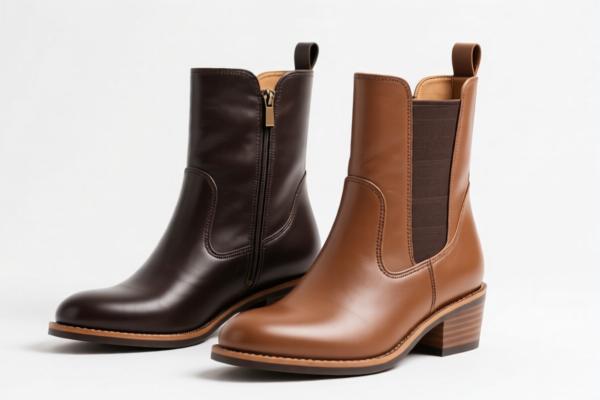
This category often encompasses general-purpose rubber boots (that are not specialized safety gear), fashion rubber shoes, and casual plastic footwear that do not fit into the highly specific "athletic" or "protective" sub-categories. It is a residual category for rubber/plastic shoes that do not meet the criteria for the more specific exclusions listed above.
2. Applicable Tariff Rates (Duty Estimates)
Note: Tariff rates are subject to variation based on the importing country, trade agreements (e.g., GSP, FTA), and specific trade policy adjustments at the time of entry. The figures below represent standard Most-Favored-Nation (MFN) rates for major markets like the US and EU for reference.
| Jurisdiction | HS Code Match | Standard MFN Duty Rate | Remarks |
|---|---|---|---|
| United States (US) | 6402.99.31 (US HTS 6402.99.31.77) | 3.5 cents per pair + ad valorem (typically 0%) | US tariffs for rubber footwear are often specific (cents/pair) rather than percentage-based, though this varies by exact sub-classification. |
| European Union (EU) | 6402.99.31 | ~4.8% - 10.2% | Rates depend on the specific origin (EU tariff schedules vary for non-EU countries). |
| China (Export) | 6402.99.31.77 | 0% (Export Duty) | China generally does not levy export duties on standard footwear. |
| General Developing Markets | 6402.99.31 | 5% - 15% | Rates vary significantly based on local protectionist policies. |
Disclaimer: For precise duty calculation, users must consult the specific customs tariff database of the destination country, as "Other" categories often carry the baseline MFN rate unless a specific exemption applies.
3. Duty Breakdown and Calculation Example
To illustrate the duty calculation, consider an import of 1,000 pairs of this specific footwear to the United States from China.
Scenario Parameters: * Product: Rubber/Plastic casual shoes (HS 6402.99.31.77). * Quantity: 1,000 pairs. * Declared Value: $10.00 USD per pair (FOB). * Applicable Rate (US Example): Specific duty of 3.5 cents per pair (simplified for this example; actual US rates may vary by sub-classification).
Calculation Steps:
1. Specific Duty Calculation:
$1,000 \text{ pairs} \times \$0.035/\text{pair} = \$35.00$
*(If an ad valorem rate were applicable, e.g., 5%: $10,000 \text{ total value} \times 5\% = \$500.00$)*
-
Total Duty Payable:
$35.00 (Specific duty only scenario)
OR $500.00 (Ad valorem scenario)
Note: Most rubber footwear in the US is taxed via the specific rate unless the product falls under a higher-tier classification. -
Total Cost of Goods (Landed Cost):
Product Value: $10,000.00
Shipping/Insurance: $500.00
Duty: $35.00
Total: $10,535.00
4. Trade Regulations and Compliance Requirements
Importing or exporting goods under HS Code 6402.99.31.77 requires strict adherence to the following international and domestic regulations:
A. Rules of Origin (ROO) * Substantial Transformation: To qualify for the specific tariff preference (if applicable), the footwear must undergo a substantial transformation in the exporting country. For rubber/plastic footwear, this usually requires the uppers and soles to be molded or vulcanized in the country of export, not merely assembled from parts. * Proof of Origin: Exporters must provide a Certificate of Origin or a declaration (e.g., on the Commercial Invoice) to claim preferential treatment under Free Trade Agreements (FTAs).
B. Material Restrictions and Safety Standards * REACH (EU): The rubber and plastic components must comply with EU Regulation (EC) No 1907/2006 regarding chemical safety (REACH), specifically limiting restricted substances like phthalates, azo dyes, and heavy metals (Lead, Cadmium) in footwear materials. * CPSIA (USA): If the footwear is intended for children, it must comply with the Consumer Product Safety Improvement Act, which strictly limits lead and phthalate content in plastics and rubbers. * CPC/Prop 65 (California): Products entering the US market, particularly California, must not contain listed carcinogenic or reproductive toxicants (e.g., certain plasticizers used in rubber uppers).
C. Anti-Dumping and Countervailing Duties (AD/CVD) * Certain countries have anti-dumping orders against footwear imports from specific nations (e.g., China, Vietnam) for rubber or plastic soles. Even if the product falls under the "Other" category, if the anti-dumping investigation covered the broader "rubber/plastic footwear" sector, the importer must verify if a specific AD rate applies to this sub-code.
D. Labeling and Marking * Country of Origin Marking: Every pair must be permanently marked with the country of origin (e.g., "Made in [Country]"), visible to the ultimate purchaser. * Material Composition: While not always mandatory for all jurisdictions, detailed labeling of the upper and sole material composition (e.g., "100% Rubber/Plastic") is standard practice to avoid misclassification disputes.
E. Environmental Regulations * WEEE/Recyclability: In the EU and increasingly in other markets, footwear made of rubber/plastic must consider end-of-life recyclability. Some jurisdictions require reporting on the recyclability rate of polymer components.
Summary
HS Code 6402.99.31.77 represents a niche category of rubber/plastic footwear characterized by an upper surface area of >90% rubber/plastic, excluding specialized safety, athletic, or foxed designs. Importers must be vigilant regarding material safety compliance (REACH/CPSIA) and verify origin rules to avoid unexpected anti-dumping duties or classification disputes.