6pcs Curtain Rod Brackets
CN → US| HS Code | Tariff Rate | Origin | Destination | Doc |
|---|---|---|---|---|
| 8302416050 | 88.9% | CN | US | Official Doc |
| 4421919880 | 38.3% | CN | US | Official Doc |
| 4421999880 | 38.3% | CN | US | Official Doc |
| 8302419050 | 38.5% | CN | US | Official Doc |
| 3926305000 | 22.8% | CN | US | Official Doc |
Product Images
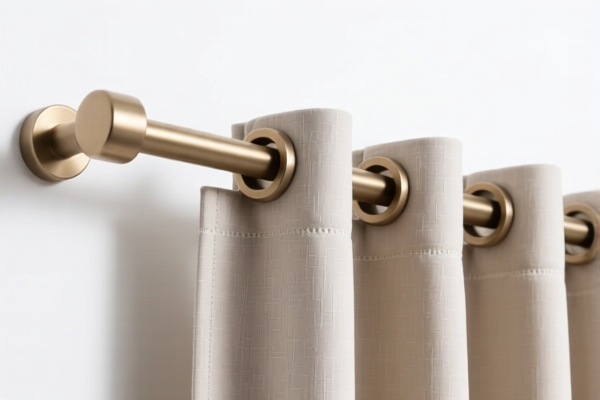
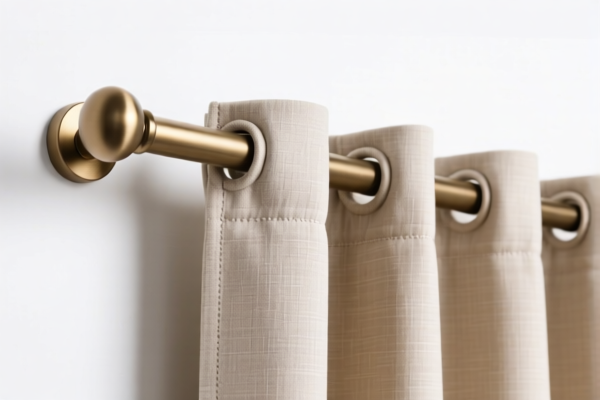
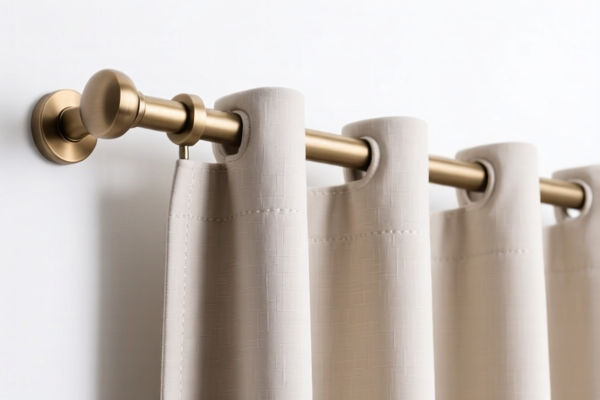
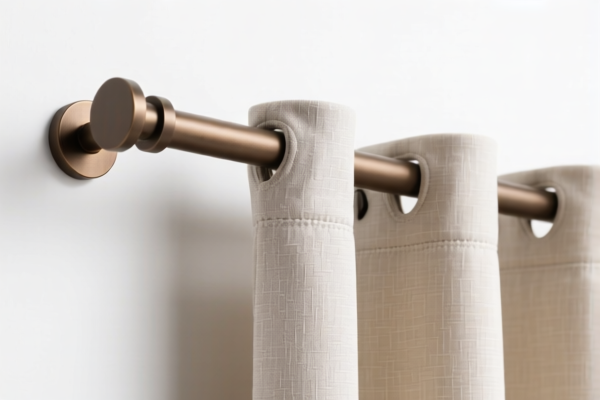
AI Analysis
🏠 6pcs Curtain Rod Brackets: HS Code Classification & US Customs Clearance Guide 2026
🌐 HS Code Reference & Customs Clearance Strategy | 2026 Latest Tariff Analysis | Professional Compliance Guide
📌 1. Product Definition & Classification: What Exactly Are "Curtain Rod Brackets"?
Curtain rod brackets are functional hardware accessories used to support curtain rods for window treatments. In international trade, they are classified based on their material composition and intended use. Misclassification can lead to severe tariff discrepancies, especially under current US trade policies.
⚠️ Key Distinction:
- If made of Base Metals (Iron, Steel, Aluminum, Copper) → Classified under Chapter 83
- If made of Wood → Classified under Chapter 44
- If made of Plastic → Classified under Chapter 39
📦 2. HS Code Classification Details (2026 Latest Tariff Authority)
| HS Code | Product Description | Material | Application |
|---|---|---|---|
8302.41.60.50 |
Base metal mountings, fittings & similar articles for furniture, doors, windows... | Base Metal (Steel/Aluminum/Copper) | Curtain rod brackets, metallic |
8302.41.90.50 |
Other base metal mountings for furniture, doors, windows | Base Metal (Inferred Metal) | Curtain rod brackets, generic metal |
4421.91.98.80 |
Wooden articles (other than wooden floors, furniture, etc.) | Wood | Wooden curtain rod brackets (as parts) |
4421.99.98.80 |
Other wooden articles | Wood/Metal Mix | Mixed material curtain rod brackets (as parts) |
3926.30.50.00 |
Other articles of plastics, for furniture, offices, etc. | Plastic | Plastic curtain rod brackets (as connectors) |
🔍 Important Note:
- Chapter 83 products are subject to the highest tariffs due to Section 232 and Section 301 measures.
- Chapter 44 (Wood) and Chapter 39 (Plastic) have different tariff structures and may offer slight advantages depending on specific material claims.
💰 3. 2026 US Tariff Rate Breakdown (Including Additional Duties)
✅ Applicable Country: United States (US)
✅ Origin: China (CN)
✅ Effective Date: Current US Trade Policies (Section 301, Section 232, IEEPA)
🎯 1. 8302.41.60.50 —— Base Metal Curtain Rod Brackets (Steel/Aluminum/Copper)
| Item | Details |
|---|---|
| Base Duty | 3.9% |
| Section 301 Duty | +25.0% |
| Section 122 Duty (Steel/Aluminum/Copper) | +10% |
| Additional Section 232 Duty | +50.0% |
| Total Effective Rate | 88.9% |
| Tax Calculation | CIF Value × 88.9% |
| De Minimis Exemption | ❌ Not Eligible |
| Legal Basis | Section 301, Section 232, Section 122 |
📌 Explanation:
- This is the highest possible tariff for this product category.
- The 50% Section 232 duty applies specifically to steel, aluminum, and copper products.
- Combined with 301 (25%) and 122 (10%), the total burden is 88.9%.
- Risk: Extremely high. Consider material substitution if possible.
🎯 2. 8302.41.90.50 —— Other Base Metal Curtain Rod Brackets (Generic Metal)
| Item | Details |
|---|---|
| Base Duty | 3.5% |
| Section 301 Duty | +25.0% |
| Section 122 Duty | +10% |
| Total Effective Rate | 38.5% |
| Tax Calculation | CIF Value × 38.5% |
| De Minimis Exemption | ❌ Not Eligible |
| Legal Basis | Section 301, Section 122 |
📌 Explanation:
- If the product is not specifically steel, aluminum, or copper, it may qualify for this lower category.
- Total rate is 38.5%, significantly lower than 88.9%.
- Strategy: Ensure product description clearly states it is not made of Section 232 materials (steel/aluminum/copper) to avoid the 50% add-on.
🎯 3. 4421.91.98.80 & 4421.99.98.80 —— Wooden Curtain Rod Brackets
| Item | Details |
|---|---|
| Base Duty | 3.3% |
| Section 301 Duty | +25.0% |
| Section 122 Duty | +10% |
| Total Effective Rate | 38.3% |
| Tax Calculation | CIF Value × 38.3% |
| De Minimis Exemption | ❌ Not Eligible |
| Legal Basis | Section 301, Section 122 |
📌 Explanation:
- Wood-based brackets incur 38.3%.
- No Section 232 duty applies to wood.
- Note: If the product contains both wood and metal, customs may classify based on the essential character (usually metal if structural). Be precise in labeling.
🎯 4. 3926.30.50.00 —— Plastic Curtain Rod Brackets
| Item | Details |
|---|---|
| Base Duty | 5.3% |
| Section 301 Duty | +7.5% |
| Section 122 Duty | +10% |
| Total Effective Rate | 22.8% |
| Tax Calculation | CIF Value × 22.8% |
| De Minimis Exemption | ❌ Not Eligible |
| Legal Basis | Section 301, Section 122 |
📌 Explanation:
- Plastic brackets have the lowest total duty at 22.8%.
- Section 301 duty for plastics is lower (7.5%) compared to metals (25%).
- Strategy: If feasible, consider sourcing or manufacturing plastic brackets to reduce tariff burden.
🛠️ 4. Customs Clearance Practical Advice (Avoid Pitfalls)
✅ 1. Documentation Checklist (Essential for Smooth Clearance)
| Document | Required | Notes |
|---|---|---|
| ✅ Product Specification Sheet | ✔️ | Must clearly state material composition (e.g., "Stainless Steel," "Bamboo," "ABS Plastic") |
| ✅ Commercial Invoice | ✔️ | Must match HS Code and declare "Curtain Rod Brackets" accurately |
| ✅ Packing List | ✔️ | Include quantity (6pcs) and weight |
| ✅ Material Declaration | ✔️ | Critical for avoiding Section 232 duties. Specify if NOT steel/aluminum/copper |
| ✅ Photos of Product | ✔️ | Show mounting mechanism, material finish, and any labels |
| ✅ FCC/CE Certification (if applicable) | ✔️ | Not always required for hardware, but good practice |
✅ 2. Declaration Tips (Key Mnemonic)
🔥 "Material Defines HS, Metal Means Pain, Plastic Saves Money!"
| Scenario | Correct HS Code | Risk Level |
|---|---|---|
| Steel/Aluminum/Copper Brackets | 8302.41.60.50 |
🚨 HIGH (88.9%) |
| Generic Metal (Non-Sec 232) | 8302.41.90.50 |
⚠️ MEDIUM (38.5%) |
| Wooden Brackets | 4421.91.98.80 |
⚠️ MEDIUM (38.3%) |
| Plastic Brackets | 3926.30.50.00 |
✅ LOW (22.8%) |
📌 Warning:
- Never declare steel brackets as "wood" or "plastic" to avoid tariffs. This is customs fraud and can lead to seizure, fines, and blacklisting.
- If the bracket has both metal and wood, determine the essential character. If metal is structural, it’s likely Chapter 83.
✅ 3. Special Case Handling
| Scenario | Recommendation |
|---|---|
| Mixed Material (Wood + Metal) | Declare based on the primary structural material. If metal screws/brackets are dominant, use Chapter 83. |
| Set of 6 Brackets | Declare as a single set if packaged together. Do not split into individual brackets unless necessary. |
| OEM/Custom Designs | Provide design drawings to prove material composition. |
| Plastic Coated Metal | If coating is minimal, still classified as metal. If thick plastic layer, may qualify as plastic. Provide proof. |
🌍 5. Global Market Comparison (2026)
| Country | Recommended HS Code | Total Duty (China Origin) | Notes |
|---|---|---|---|
| 🇺🇸 USA | 8302.41.60.50 / 3926.30.50.00 |
22.8% – 88.9% | High Section 301 & 232 tariffs |
| 🇨🇳 China | 8302.41.60.50 |
~5% | Low import duty, no Section 301 |
| 🇪🇺 EU | 8302.41.60.50 |
~6% | No Section 301, but anti-dumping may apply |
| 🇬🇧 UK | 8302.41.60.50 |
~6% | Post-Brexit tariffs similar to EU |
| 🇨🇦 Canada | 8302.41.60.50 |
~6% | CUSMA benefits may apply for US/Mexico origin |
📌 Conclusion:
- USA is the most challenging market due to Section 301 and 232 tariffs.
- Plastic brackets offer the best cost efficiency in the US.
- Consider supply chain diversification (e.g., sourcing from Vietnam or Mexico) if tariffs exceed profit margins.
📌 6. Common Mistakes & Pitfalls (Lessons Learned)
❌ Mistake 1: Declaring steel brackets as "plastic"
👉 Result: Customs seizure, penalties, and potential criminal charges.
✅ Fix: Always declare accurate material.
❌ Mistake 2: Ignoring Section 232 for steel/aluminum products
👉 Result: Underpayment of duties, leading to back-taxes and interest.
✅ Fix: Verify material against Section 232 list.
❌ Mistake 3: Splitting a set of 6 brackets into separate entries
👉 Result: Higher administrative fees and potential misclassification.
✅ Fix: Declare as "6pcs Curtain Rod Brackets" in one line item.
❌ Mistake 4: Using vague terms like "Hardware" or "Fittings"
👉 Result: Customs query, delays, and potential downgrading to higher-duty categories.
✅ Fix: Use precise terms like "Curtain Rod Brackets, Stainless Steel."
🎯 7. Final Recommendations: Save Time, Reduce Costs, Stay Compliant!
🎯 Remember the Key Points:
🔹 "Plastic is Cheapest (22.8%), Steel is Priciest (88.9%)"
🔹 "Always Declare Material Accurately"
🔹 "Mixed Materials Need Clear Essential Character Determination"
📌 Pro Tip:
If your product is originally from Vietnam, Mexico, or Thailand, you may qualify for lower or zero tariffs under USMCA or other trade agreements.
Action:
📞 Consult a Licensed Customs Broker
📄 Apply for a Binding Ruling if unsure about classification
🚀 Optimize Supply Chain to mitigate tariff risks
✨ Professional Clearance Starts with Precise Classification!
💼 Every Percent of Duty Counts – Protect Your Margins!
Customer Reviews
About HS Code Classification
The Harmonized System (HS) is an internationally standardized nomenclature developed by the World Customs Organization (WCO) to classify traded products. Over 200 countries use the HS system as the basis for customs tariffs, trade statistics, and import/export regulations.
Each HS code follows a hierarchical structure:
- Chapter (2 digits) — Broad category of goods (e.g., Chapter 84: Machinery and Mechanical Appliances)
- Heading (4 digits) — More specific grouping within the chapter
- Subheading (6 digits) — Internationally standardized breakdown, used by all WCO member countries
- National subdivisions (8-10 digits) — Country-specific extensions for further classification, such as US HTSUS 10-digit codes
Correct HS code classification is essential for smooth customs clearance, accurate duty payment, and compliance with trade regulations. Misclassification can lead to customs delays, overpayment of duties, or penalties.
When importing from CN to US, the applicable tariff rates may include:
- Most-Favored-Nation (MFN) rate — The standard duty rate applied to WTO members
- General rate — Applied to countries without trade agreements
- Trade remedy duties — Additional tariffs such as Section 301 (anti-dumping), Section 232 (national security), or countervailing duties
The information provided on this page is for reference purposes only. For official classification, please consult with your local customs authority or a licensed customs broker.