6pcs S shaped Hooks Black
CN → US| HS Code | Tariff Rate | Origin | Destination | Doc |
|---|---|---|---|---|
| 7326908630 | 87.9% | CN | US | Official Doc |
| 8302500000 | 85.0% | CN | US | Official Doc |
| 8302419015 | 38.5% | CN | US | Official Doc |
| 7326200090 | 88.9% | CN | US | Official Doc |
| 3926906550 | 14.2% | CN | US | Official Doc |
Product Images
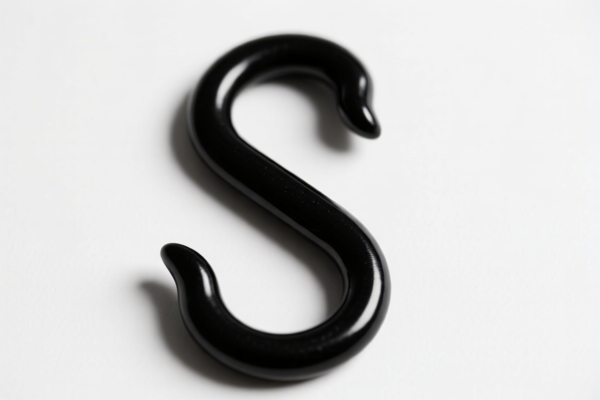
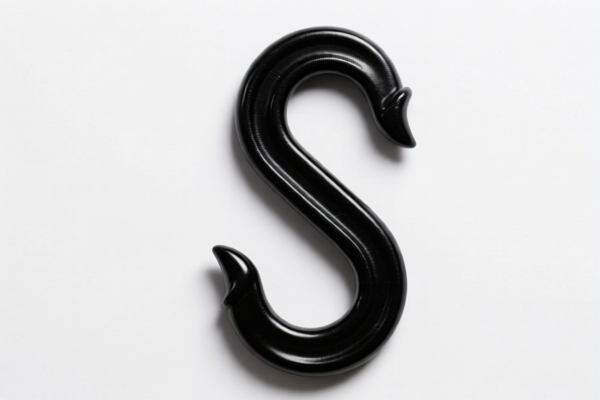
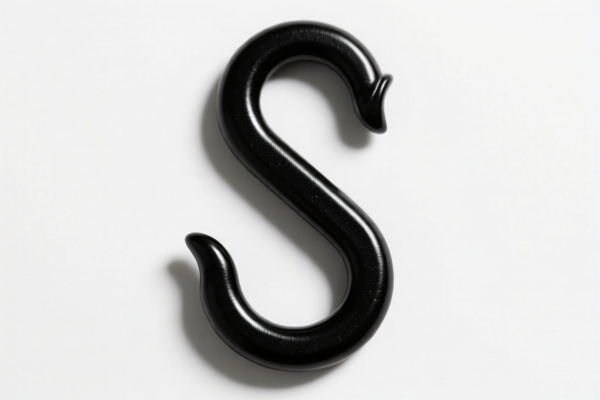
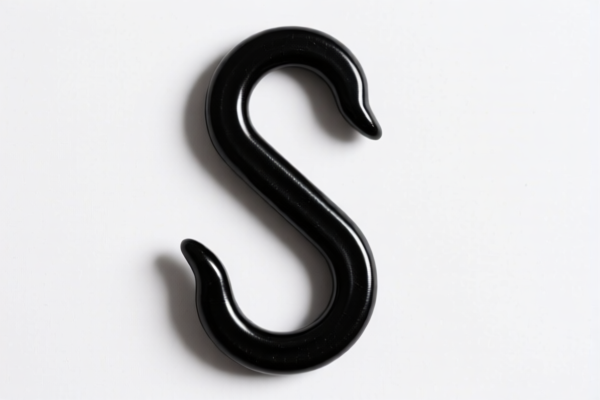
AI Analysis
🪝 6pcs S-Shaped Hooks (Black) – HS Code Classification & Tariff Breakdown
🌐 HS Code Reference & Customs Clearance Guide | 2026 Latest Tariff Analysis | Professional Compliance Strategy
📌 I. Product Definition & Classification: Do You Really Understand "S-Hooks"?
The "S-shaped hook" is a versatile hardware item used for hanging, lifting, or connecting objects. In international trade, its HS Code classification is highly dependent on its material and specific application. Misclassification can lead to significant duty differences, especially under current US trade policies (Section 301 and IEEPA).
⚠️ Key Distinction Point:
- Material Matters: Is it made of Iron/Steel (Chapter 73) or Base Metal like Brass/Zinc (Chapter 83)?
- Function Matters: Is it a general-purpose support hook (Chapter 83) or a wire product (Chapter 73)?
- Packaging: "6pcs Black" suggests a retail package, but the material dictates the heading, not the color or quantity.
📦 II. HS Code Classification Details (2026 Authoritative Reference)
Based on the provided data, here are the four possible HS Codes for "S-shaped Hooks," sorted by risk and applicability.
| HS Code | Product Description | Material/Application | Total Tax Rate* |
|---|---|---|---|
3926.90.65.50 |
Other Plastic Articles | Plastic or Metal-coated Plastic | 14.2% |
8302.41.90.15 |
Door Accessories / Fasteners | Base Metal (Brass, Zinc, etc.) | 38.5% |
8302.50.00.00 |
Brackets & Supports | Base Metal (General Supports) | 85.0% |
7326.90.86.30 |
Hooks / Supports | Iron or Steel (General Hooks) | 87.9% |
7326.20.00.90 |
Wire Products | Iron or Steel (Wire Goods) | 88.9% |
* Total Tax Rate includes Base Duty, Section 301 Additional Duty (25%), and IEEPA Duty (10%) where applicable.
💰 III. 2026 Latest Tariff Rate Detailed Breakdown
✅ Applicable Country: United States (US)
✅ Origin: China (CN) (Note: Rates vary if origin is non-China, but data implies Chinese origin taxes)
✅ Effective Time: Current US Trade Policy (Section 301 + IEEPA)
🎯 1. 3926.90.65.50 – The "Low Risk" Option (If Plastic)
Applicable ONLY if the S-hooks are primarily made of plastic or have a plastic coating that defines their character.
| Item | Content |
|---|---|
| Base Duty | 4.2% |
| Section 301 Add'l Duty | 0.0% (Not subject to steel/aluminum surcharges) |
| IEEPA Duty | 10% |
| Total Effective Rate | 14.2% |
| Calculation | CIF Value × 14.2% |
| De Minimis Exemption | ✅ Potentially Eligible (If value <$800 per shipment) |
📌 Explanation:
- This is the most cost-effective classification IF the product is plastic.
- Many "black" coated hooks might be mistaken for steel, but if they are plastic with a matte black finish, this code applies.
- Warning: If customs finds the core material is steel, this will be reclassified to Chapter 73, leading to back taxes and penalties.
🎯 2. 8302.41.90.15 – The "Door Hardware" Option
Applicable if the S-hooks are specifically designed as door accessories, fasteners, or hinges.
| Item | Content |
|---|---|
| Base Duty | 3.5% |
| Section 301 Add'l Duty | 25.0% |
| IEEPA Duty | 10% |
| Total Effective Rate | 38.5% |
| Calculation | CIF Value × 38.5% |
| De Minimis Exemption | ❌ Not Eligible (Steel/Base Metal surcharges apply) |
📌 Explanation:
- This is the best rate for Base Metal (non-iron/steel, e.g., brass, zinc alloy).
- If your "black" hooks are zinc-plated steel, customs might accept this if you can prove they are used as door accessories.
- Crucial: If they are standard industrial steel wire hooks, this code is risky.
🎯 3. 8302.50.00.00 – The "General Bracket" Option
Applicable for base metal brackets and supports not elsewhere specified.
| Item | Content |
|---|---|
| Base Duty | 0.0% |
| Section 301 Add'l Duty | 25.0% |
| IEEPA Duty | 10% |
| Total Effective Rate | 85.0% |
| Calculation | CIF Value × 85.0% |
| De Minimis Exemption | ❌ Not Eligible |
📌 Explanation:
- Base duty is 0%, but the high additional taxes push the total to 85%.
- Use this if the hooks are considered "brackets" rather than "fasteners" or "wire goods."
🎯 4. 7326.90.86.30 & 7326.20.00.90 – The "Iron/Steel" Options (High Risk/High Cost)
Applicable if the hooks are made of Iron or Steel.
A. 7326.90.86.30 – Hooks/Supports (Iron/Steel)
| Item | Content |
|---|---|
| Base Duty | 2.9% |
| Section 301 Add'l Duty | 25.0% |
| Section 122 (Steel/Al/Cu) | 50.0% |
| IEEPA Duty | 10% |
| Total Effective Rate | 87.9% |
B. 7326.20.00.90 – Wire Products (Iron/Steel)
| Item | Content |
|---|---|
| Base Duty | 3.9% |
| Section 301 Add'l Duty | 25.0% |
| Section 122 (Steel/Al/Cu) | 50.0% |
| IEEPA Duty | 10% |
| Total Effective Rate | 88.9% |
📌 Explanation:
- This is the most likely classification for standard black metal S-hooks.
- The Section 122 Tariff (50%) is the killer. It applies to steel, aluminum, and copper articles imported from China.
- Result: You pay nearly 90% tax on the value of the goods.
- De Minimis: ❌ Strictly Prohibited. Even small shipments will face these duties.
🛠️ IV. Customs Clearance Practical Advice (Avoid Pitfalls)
✅ 1. Material Verification is Key
- If Plastic: Declare as
3926.90.65.50. Ensure the product is NOT primarily metal with a plastic coating. If it's a metal hook with black paint, this code is wrong. - If Steel/Iron: Expect 87.9% - 88.9% total duty. This is the standard for "Black S-Hooks" in hardware stores.
- If Base Metal (Brass/Zinc): Try to argue for
8302.41.90.15(38.5%) if used as door accessories.
✅ 2. Documentation Requirements
| Document | Requirement | Note |
|---|---|---|
| Commercial Invoice | Must specify Material explicitly (e.g., "100% Steel S-Hook") | Do not just say "Hooks" |
| Product Photos | Show cross-section if possible | To prove material type |
| Material Safety Data Sheet (MSDS) | If coated, show coating material | Helps prove if it's plastic-coated steel |
| Country of Origin | Must state "Made in China" | Triggers IEEPA + Section 301 + Section 122 |
✅ 3. Strategic Clearance Tips
- Avoid "Steel" Labeling if Plastic: If your hooks are plastic, emphasize "Polymer" or "Plastic" in the description.
- Section 122 Exclusion Check: Check if your specific steel product type is excluded from Section 122. (Most common wire products are NOT excluded).
- Consolidation: If using De Minimis (for plastic), ensure no other taxable steel items are in the same shipment.
- Pre-Ruling: For large shipments, apply for a Customs Ruling to lock in the HS Code before shipping.
🌍 V. Global Market Comparison (2026)
| Market | Recommended HS Code | Est. Total Duty | Notes |
|---|---|---|---|
| 🇺🇸 USA | 7326.90.86.30 |
87.9% | High tariffs due to Section 122 & 301 |
| 🇪🇺 EU | 7326.90.98 |
~6-9% | No Section 122/301 equivalents |
| 🇬🇧 UK | 7326.90.98 |
~6-9% | Post-Brexit tariffs apply |
| 🇨🇦 Canada | 7326.90.90 |
~9.5% | MFN rate applies |
| 🇯🇵 Japan | 7326.90.90 |
~6-10% | No major additional duties |
📌 Conclusion:
- The USA is the most expensive market for steel S-hooks due to overlapping tariffs.
- For the US, plastic alternatives (3926.90.65.50) are significantly cheaper to import.
- If you must import steel hooks to the US, budget for ~90% duty.
📌 VI. Common Errors & Pitfalls (Lessons Learned)
❌ Error 1: Declaring Steel S-Hooks as 3926.90.65.50 (Plastic)
👉 Consequence: Customs seizes shipment, reclassifies, charges 87.9% duty + penalties.
❌ Error 2: Ignoring Section 122 Tariff
👉 Consequence: Underpayment of 50% on steel goods. Audit risk is high.
❌ Error 3: Using "Black" as the primary description
👉 Consequence: Vague description leads to customs inquiry and delays.
👉 Fix: Use "Black-Painted Steel S-Hook, 6pcs, for Hanging."
🎯 VII. Final Recommendation
- Confirm Material: If they are Plastic, use
3926.90.65.50(14.2% duty). - If Steel: You are stuck with 87.9% - 88.9%.
- Strategy:
- Check if you can source from a non-China origin to avoid IEEPA.
- Consider if a Base Metal (e.g., Zinc) variant can be classified under
8302.41.90.15(38.5%).
- Strategy:
- Documentation: Ensure your invoice clearly states "Iron/Steel" or "Plastic" based on reality. Never misdeclare.
📣 Action Plan:
📞 Consult a Customs Broker: For high-value steel imports, get a pre-ruling.
📦 Material Test: If unsure, send samples to a lab to confirm if the core is steel or plastic.
💡 Cost-Benefit Analysis: With 88% duty, ask your supplier if they can offer DDP (Delivered Duty Paid) pricing to shift the risk.
✨ Accurate Classification Saves Money!
💼 Don't let 90% tariffs eat your profit margin!
Customer Reviews
About HS Code Classification
The Harmonized System (HS) is an internationally standardized nomenclature developed by the World Customs Organization (WCO) to classify traded products. Over 200 countries use the HS system as the basis for customs tariffs, trade statistics, and import/export regulations.
Each HS code follows a hierarchical structure:
- Chapter (2 digits) — Broad category of goods (e.g., Chapter 84: Machinery and Mechanical Appliances)
- Heading (4 digits) — More specific grouping within the chapter
- Subheading (6 digits) — Internationally standardized breakdown, used by all WCO member countries
- National subdivisions (8-10 digits) — Country-specific extensions for further classification, such as US HTSUS 10-digit codes
Correct HS code classification is essential for smooth customs clearance, accurate duty payment, and compliance with trade regulations. Misclassification can lead to customs delays, overpayment of duties, or penalties.
When importing from CN to US, the applicable tariff rates may include:
- Most-Favored-Nation (MFN) rate — The standard duty rate applied to WTO members
- General rate — Applied to countries without trade agreements
- Trade remedy duties — Additional tariffs such as Section 301 (anti-dumping), Section 232 (national security), or countervailing duties
The information provided on this page is for reference purposes only. For official classification, please consult with your local customs authority or a licensed customs broker.