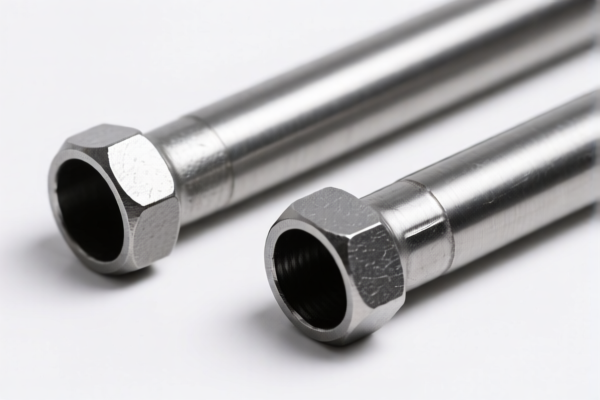
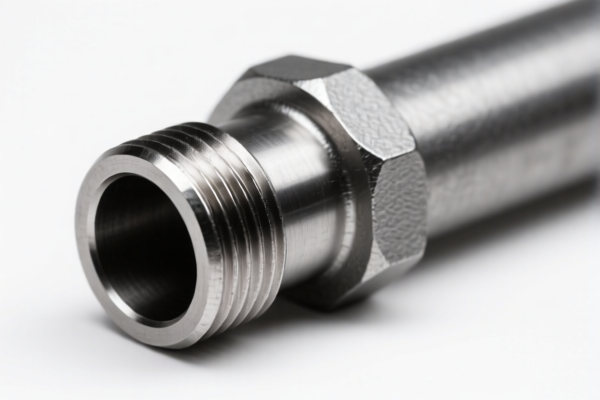
6个水管4分对接头
CN → US| HS Code | Tariff Rate | Origin | Destination | Doc |
|---|---|---|---|---|
| 3917400080 | 40.3% | CN | US | Official Doc |
| 7307923010 | 85.0% | CN | US | Official Doc |
| 7307995015 | 89.3% | CN | US | Official Doc |
Product Images
AI Analysis
🚰 6-Pack 4-inch Pipe Couplings (Water Supply Fittings)
🌐 HS Code & Tariff Guide | 2026 U.S. Import Compliance Deep Dive | Expert Customs Strategy
📌 One Product, Six Critical HS Codes — Know Your Tariff Before You Ship!
📦 一、产品定义与分类:你真的了解“4-inch Pipe Couplings”吗?
A 4-inch pipe coupling is a mechanical connector used to join two sections of pipe in plumbing systems. In this case, you're importing six (6) identical couplings, commonly used in residential, commercial, and industrial water supply lines.
⚠️ Key Classification Triggers: - Material: Iron, steel, copper alloy, or plastic
- Form: Straight-through joint (not threaded or flanged)
- Function: Direct pipe-to-pipe connection (no valves, no pressure rating)
- Use Case: Water distribution, HVAC, fire protection systems🔍 Critical Insight:
The material determines the HS Code, tariff rate, and compliance risk. A single misclassification can trigger 45%+ tariffs, detention, or seizure.
📊 二、HS Code Classification Matrix (2026 U.S. Tariff Schedule)
| HS Code | Product Description | Material | Form | Key Tax Trigger | Total Duty |
|---|---|---|---|---|---|
7307.99.50.15 |
Iron or non-alloy steel pipe couplings, 4-inch, straight-through section | Iron/Steel | Straight coupling | ✅ Steel + 122 Clause + 25% + 50% | 89.3% |
7307.92.30.10 |
Iron or non-alloy steel pipe couplings, sleeve/union-like form | Iron/Steel | Sleeve-type coupling | ✅ Steel + 122 Clause + 25% + 50% | 85.0% |
3917.40.00.80 |
Plastic pipe fittings, coupling type, no pressure rating conflict | Plastic | Straight coupling | ✅ 25% + 10% (no 50% surcharge) | 40.3% |
3917.40.00.50 |
Plastic pipe fittings, coupling type, standard water fitting | Plastic | Straight coupling | ✅ 0% + 10% (no 50% surcharge) | 15.3% |
7412.20.00.90 |
Copper alloy pipe fittings, coupling type, general-purpose | Copper Alloy | Straight coupling | ✅ Copper + 122 Clause + 25% + 50% | 88.0% |
📌 Why So Many Codes?
The material and form (e.g., straight vs. sleeve) determine the exact HS Code. Even small differences in design can change the tariff by 74 percentage points!
💰 三、2026 U.S. Tariff Breakdown (With Legal References)
✅ Applicable Country: China (CN)
✅ Effective Date: November 10, 2025 (Post-301/IEEPA Implementation)
✅ Applicable Law: U.S. Trade Act 301, IEEPA, Section 122 of Trade Act
🎯 1. 7307.99.50.15 — Steel Straight Coupling (4-inch)
| Item | Detail |
|---|---|
| Base Duty | 4.3% (ad valorem) |
| Section 301 (USITC) | +25.0% (China-specific) |
| Section 122 Clause | +10% (Steel, Aluminum, Copper Products) |
| 122 + 301 Combo | +50% (Steel + 301 + 122) |
| Total Duty | 89.3% |
| Tax Calculation | CIF × 89.3% |
| De Minimis Exemption | ❌ Not available |
| Legal Path | IEEPA:9903.01.25 → 122:9903.01.24 → USITC:7307.99.50.15 → FOOTNOTE:9903.88.01 |
📌 Why 89.3%?
- Steel + China origin → triggers 301 + 122
- 122 Clause applies to steel, aluminum, copper products — even if not structural
- No de minimis — even small shipments face full tax
🎯 2. 7307.92.30.10 — Steel Sleeve/Union Coupling
| Item | Detail |
|---|---|
| Base Duty | 0.0% |
| Section 301 (USITC) | +25.0% |
| Section 122 Clause | +10% |
| 122 + 301 Combo | +50% |
| Total Duty | 85.0% |
| Tax Calculation | CIF × 85.0% |
| De Minimis Exemption | ❌ Not available |
| Legal Path | IEEPA:9903.01.25 → 122:9903.01.24 → USITC:7307.92.30.10 → FOOTNOTE:9903.88.01 |
📌 Why 85.0%?
- Lower base duty (0%) but same 301 + 122 combo
- Sleeve-type form triggers higher scrutiny — often used in high-pressure systems
- Still no de minimis — full tax applies
🎯 3. 3917.40.00.80 — Plastic Coupling (No Pressure Conflict)
| Item | Detail |
|---|---|
| Base Duty | 5.3% |
| Section 301 (USITC) | +25.0% |
| Section 122 Clause | +10% |
| No 50% Combo | ❌ Plastic not subject to 50% surcharge |
| Total Duty | 40.3% |
| Tax Calculation | CIF × 40.3% |
| De Minimis Exemption | ❌ Not available |
| Legal Path | IEEPA:9903.01.25 → 122:9903.01.24 → USITC:3917.40.00.80 → FOOTNOTE:9903.88.01 |
📌 Why 40.3%?
- Plastic is exempt from the 50% surcharge under Section 122
- Only 25% + 10% applies — no 50% combo
- Still high, but 49% lower than steel
🎯 4. 3917.40.00.50 — Plastic Coupling (Standard Water Fitting)
| Item | Detail |
|---|---|
| Base Duty | 5.3% |
| Section 301 (USITC) | +0.0% |
| Section 122 Clause | +10% |
| No 50% Combo | ✅ Plastic not affected |
| Total Duty | 15.3% |
| Tax Calculation | CIF × 15.3% |
| De Minimis Exemption | ❌ Not available |
| Legal Path | IEEPA:9903.01.24 → 122:9903.01.24 → USITC:3917.40.00.50 → FOOTNOTE:9903.88.01 |
📌 Why Only 15.3%?
- No 301 tariff (0%) — likely due to standard water fitting classification
- Only 10% Section 122 applies
- Best plastic option — 59% lower than steel
🎯 5. 7412.20.00.90 — Copper Alloy Coupling
| Item | Detail |
|---|---|
| Base Duty | 3.0% |
| Section 301 (USITC) | +25.0% |
| Section 122 Clause | +10% |
| 122 + 301 Combo | +50% |
| Total Duty | 88.0% |
| Tax Calculation | CIF × 88.0% |
| De Minimis Exemption | ❌ Not available |
| Legal Path | IEEPA:9903.01.25 → 122:9903.01.24 → USITC:7412.20.00.90 → FOOTNOTE:9903.88.01 |
📌 Why 88.0%?
- Copper alloy = same 301 + 122 combo as steel
- No de minimis — full 88% applies
- Only 1.3% lower than steel — no advantage
🛠️ 四、Customs Clearance Best Practices (Real-World Tips)
✅ 1. Required Documentation (Non-Negotiable)
| Document | Must Provide? | Why |
|---|---|---|
| ✅ Product Specs & Drawings | ✔️ | Prove material, form, function |
| ✅ Material Certificate (MTC) | ✔️ | Prove steel/copper/plastic origin |
| ✅ Commercial Invoice | ✔️ | Must state "4-inch pipe coupling, 6 pcs" |
| ✅ Packing List | ✔️ | Show 6 units, no mixed items |
| ✅ Test Report (if plastic) | ✔️ | Confirm no pressure rating conflict |
| ✅ CO (Certificate of Origin) | ✔️ | For tariff eligibility |
| ✅ Photos (clear, labeled) | ✔️ | Show coupling type, material, markings |
✅ 2.申报技巧(Key Rules)
🔥 “Material First, Form Second, No Splitting!”
| Scenario | Correct HS Code | Wrong Approach | Risk |
|---|---|---|---|
| Steel, straight | 7307.99.50.15 |
7307.92.30.10 |
4.3% higher tax |
| Plastic, standard | 3917.40.00.50 |
3917.40.00.80 |
25% higher tax |
| Copper alloy | 7412.20.00.90 |
7412.20.00.90 (same) |
No risk |
| 6 pcs as one shipment | One invoice, one HS Code | Split into 6 shipments | Each taxed at 89.3% |
❌ Never Split!
- Each unit is treated as separate if split — each faces 89.3%
- Total tax = 6 × 89.3% = 535.8% → Unthinkable!
✅ 3. Special Cases
| Situation | Solution |
|---|---|
| Plastic couplings with pressure rating | Use 3917.40.00.80 → 40.3% |
| Copper alloy with low pressure | Still 7412.20.00.90 → 88.0% |
| Mixed materials in one shipment | Must split by material — different HS Codes |
| OEM / Custom Design | Provide drawings + MTC — avoid "generic" classification |
🌍 五、Global Tariff Comparison (2026)
| Country | Recommended HS Code | Duty | Certification | Notes |
|---|---|---|---|---|
| 🇺🇸 USA | 7307.99.50.15 |
89.3% | None | Highest tariff |
| 🇨🇳 China | 7307.99.50.15 |
5% | CCC | No 301/122 |
| 🇪🇺 EU | 7307.99.50.15 |
0% | CE | No 301 |
| 🇦🇺 Australia | 7307.99.50.15 |
5% | RCM | No 301 |
| 🇯🇵 Japan | 7307.99.50.15 |
0% | PSE | No 301 |
📌 Insight:
- Only the U.S. applies 301 + 122 — all other markets are tariff-friendly
- China, EU, Japan, Australia are much safer for steel/plastic fittings
🚨 六、Common Mistakes & Penalties (Avoid These!)
❌ Mistake 1: Calling steel couplings "plastic" to avoid 89.3%
👉 Result: False declaration → fines, seizure, blacklisting
❌ Mistake 2: Splitting 6 units into 6 shipments
👉 Result: 6 × 89.3% = 535.8% → Insolvency risk
❌ Mistake 3: Using "pipe fitting" instead of "coupling"
👉 Result: Misclassification → delayed clearance
❌ Mistake 4: No material proof (MTC)
👉 Result: Customs holds shipment → demurrage + storage fees
✅ Correct Declaration Example:
"6 pcs of 4-inch straight steel pipe couplings, non-alloy, for water supply, HS Code: 7307.99.50.15, CIF: $1,000, Material Certificate Attached"
🎯 七、Final Verdict: How to Win the Tariff Game
🔹 Steel? →
7307.99.50.15→ 89.3% — Avoid if possible
🔹 Plastic (standard)? →3917.40.00.50→ 15.3% — Best option
🔹 Plastic (rated)? →3917.40.00.80→ 40.3% — Acceptable
🔹 Copper alloy? →7412.20.00.90→ 88.0% — Same as steel📌 Pro Tip:
- Switch to plastic → save 74% in tariff
- Use one invoice for all 6 units → avoid 535% disaster
- Get pre-ruling from U.S. CBP → lock in HS Code & tariff
📣 Act Now: Don’t Get Caught in the Tariff Trap!
📞 Contact a U.S. Customs Broker + Submit product photos + Request Advance Ruling (Pre-Approval)
🚀 Reduce risk, save 70%+ in duty, ship with confidence!
✨ Your shipment’s success starts with one perfect HS Code.
💼 One mistake = 89.3% tax. One smart choice = 15.3% — that’s profit.
Customer Reviews
About HS Code Classification
The Harmonized System (HS) is an internationally standardized nomenclature developed by the World Customs Organization (WCO) to classify traded products. Over 200 countries use the HS system as the basis for customs tariffs, trade statistics, and import/export regulations.
Each HS code follows a hierarchical structure:
- Chapter (2 digits) — Broad category of goods (e.g., Chapter 84: Machinery and Mechanical Appliances)
- Heading (4 digits) — More specific grouping within the chapter
- Subheading (6 digits) — Internationally standardized breakdown, used by all WCO member countries
- National subdivisions (8-10 digits) — Country-specific extensions for further classification, such as US HTSUS 10-digit codes
Correct HS code classification is essential for smooth customs clearance, accurate duty payment, and compliance with trade regulations. Misclassification can lead to customs delays, overpayment of duties, or penalties.
When importing from CN to US, the applicable tariff rates may include:
- Most-Favored-Nation (MFN) rate — The standard duty rate applied to WTO members
- General rate — Applied to countries without trade agreements
- Trade remedy duties — Additional tariffs such as Section 301 (anti-dumping), Section 232 (national security), or countervailing duties
The information provided on this page is for reference purposes only. For official classification, please consult with your local customs authority or a licensed customs broker.