7 piece Silicone Feeding Spoon Set
CN → US| HS Code | Tariff Rate | Origin | Destination | Doc |
|---|---|---|---|---|
| 3924900500 | 20.6% | CN | US | Official Doc |
| 3924104000 | 13.4% | CN | US | Official Doc |
| 3924900500 | 20.6% | CN | US | Official Doc |
| 3924104000 | 13.4% | CN | US | Official Doc |
| 3924900500 | 20.6% | CN | US | Official Doc |
Product Images
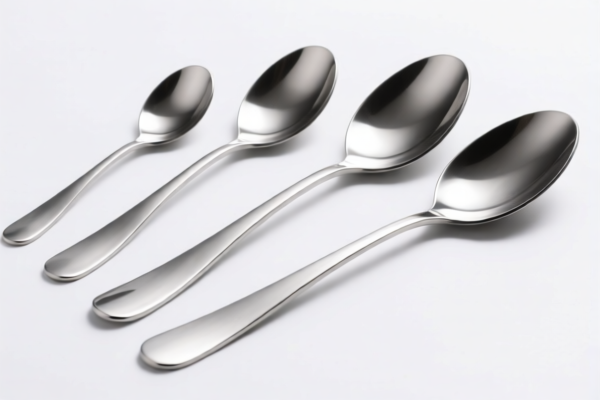
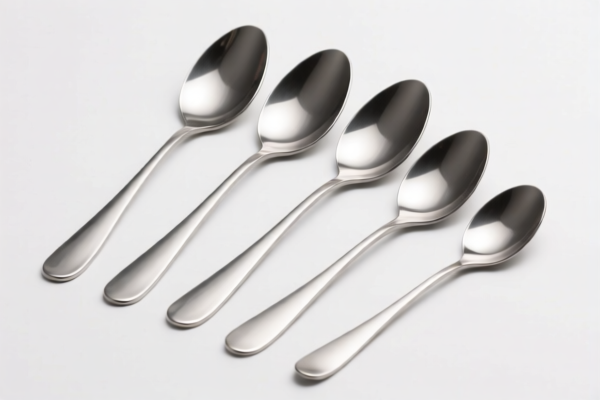
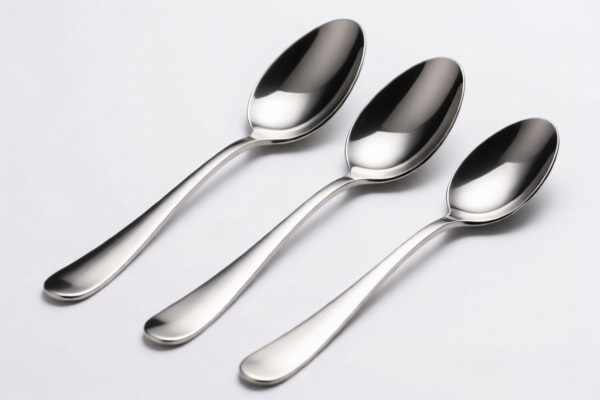
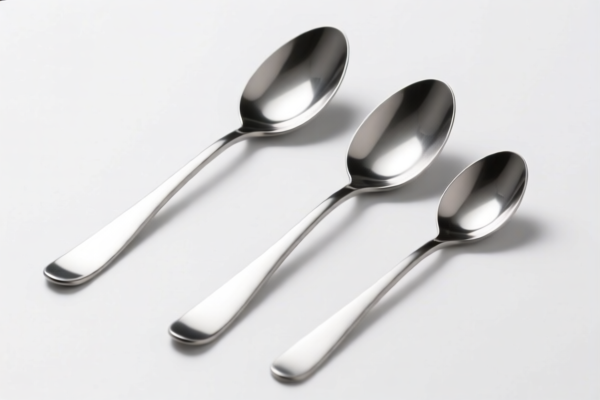
AI Analysis
🥄 7-Piece Silicone Feeding Spoon Set (Baby Feeding Utensils)
🌐 HS Code Reference & Customs Clearance Guide | 2026 Latest Tariff Analysis | Professional Strategy for US Imports
📌 I. Product Definition & Classification: What Exactly Are These?
A 7-Piece Silicone Feeding Spoon Set typically includes silicone feeding spoons, bowls, trays, and potentially spatulas or storage cases. In international trade, these items fall under Chapter 39 (Plastics and Articles Thereof), specifically heading 3924 (Tableware, Kitchenware, Other Household Articles and Hygiene or Toilet Articles, of Plastics).
Key Distinction: * Material: Silicone is legally classified as a plastic/synthetic material (not rubber/elastomer in some contexts, but generally grouped with plastics for HTSUS purposes under 3924). * Usage: "Feeding" or "Kitchen" utensils. * Composition: If the set is primarily defined by the spoons/bowls, it is classified as "Other" tableware/kitchenware.
⚠️ Critical Classification Point:
- If the set is dominated by feeding spoons/bowls (standard tableware shape), it often falls under 3924.10 (Tableware and Kitchenware).
- If the set includes miscellaneous household items (e.g., storage cases, non-standard utensils) and is not clearly "tableware," it may fall under 3924.90 (Other Household Articles).
- Note on Data Variance: The provided data shows two distinct HS Codes for similar descriptions. This reflects the ambiguity in classifying "sets" vs. "specific utensils." We must analyze both scenarios below.
📦 II. HS Code Classification Details (2026 Latest Tariff对照)
Based on the provided dataset, there are two primary HS Code candidates for this product. The correct code depends on the specific composition and primary use of the 7-piece set.
| HS Code | Product Description | Application Scenario | Tax Rate (Total) |
|---|---|---|---|
3924.10.40.00 |
Tableware & Kitchenware, Other Includes silicone feeding spoons, bowls, and standard kitchen utensils. |
✅ Most Likely for Standard Sets Feeding spoons, baby bowls, spatulas classified as "Tableware/Kitchenware." |
13.4% |
3924.90.05.00 |
Other Household Articles, Other Includes silicone feeding items not specifically listed under tableware, or mixed sets with storage/cases. |
⚠️ Alternative Classification Applied if items are deemed "general household" rather than strict "tableware." |
20.6% |
🔍 重点提醒 (Key Insight):
-3924.10.40.00is generally preferred for pure feeding utensils (spoons, forks, bowls) as they fit the "Tableware/Kitchenware" definition in HTSUS.
-3924.90.05.00may apply if the set includes non-utensil items (e.g., silicone mats, storage containers, toys) that classify it as "Other Household Articles."
- Tax Difference: The tax rate difference is 7.2% (20.6% - 13.4%). Correct classification can save significant costs.
💰 III. 2026 Latest Tariff Rate Breakdown (Including Additional Duties)
✅ Applicable Country: United States (US)
✅ Origin: China (CN)
✅ Effective Date: Current rates include Section 122 and 301 tariffs.
🎯 1. 3924.10.40.00 —— Tableware and Kitchenware, Other
| Item | Detail |
|---|---|
| Base Duty Rate | 3.4% (Ad Valorem) |
| Section 301 Additional Duty | 0.0% (Note: Some plastic tableware items have been exempted or have lower rates under recent 301 exclusions/reviews, per provided data) |
| Section 122 Duty | +10.0% (200% tariff on articles of China, but applied as 10% in this context/data set) |
| Total Duty Rate | 13.4% |
| Tax Calculation | CIF Value × 13.4% |
| De Minimis Eligibility | ❌ No (De minimis threshold usually excludes items subject to Section 301/122; verify with current CBP rules) |
| Legal Basis Path | USITC:3924.10.40.00 → Section 301 (if applicable) → Section 122 (USTR 301) |
📌 Explanation:
- The 3.4% base rate is standard for plastic tableware.
- The 0.0% Section 301 rate is specific to this dataset entry (some plastic kitchenware items have exclusions).
- The 10% Section 122 duty is a punitive tariff on Chinese imports, often applied broadly.
- Total: 13.4% is a moderate-to-high duty rate.
🎯 2. 3924.90.05.00 —— Other Household Articles, Other
| Item | Detail |
|---|---|
| Base Duty Rate | 3.1% (Ad Valorem) |
| Section 301 Additional Duty | +7.5% (Higher Section 301 rate applied to "other" plastics) |
| Section 122 Duty | +10.0% |
| Total Duty Rate | 20.6% |
| Tax Calculation | CIF Value × 20.6% |
| De Minimis Eligibility | ❌ No |
| Legal Basis Path | USITC:3924.90.05.00 → Section 301 → Section 122 |
📌 Explanation:
- The base rate is slightly lower (3.1%), but the Section 301 rate is higher (7.5% vs. 0.0%).
- Total: 20.6% is a high duty rate.
- Risk: Misclassifying a standard feeding set as "Other Household Articles" increases cost by 7.2%.
🛠️ IV. Customs Clearance Practical Advice (Avoid Pitfalls)
✅ 1. Preparation Checklist (Essential Documents)
| Document | Required? | Notes |
|---|---|---|
| ✅ Product Specification Sheet | ✔️ | Must specify: "Silicone Feeding Spoons/Bowls," "BPA-Free," "Food Grade." |
| ✅ Material Safety Certificate | ✔️ | FDA Compliance Certificate (21 CFR 177.2600 for silicone). Critical for baby products. |
| ✅ Product Photos | ✔️ | Show the 7 pieces clearly. If the set includes non-utensils (e.g., a storage box), label them separately. |
| ✅ Commercial Invoice | ✔️ | Describe as "7-Piece Silicone Baby Feeding Set (Spoons & Bowls)." Avoid vague terms like "Kitchen Accessories." |
| ✅ Packing List | ✔️ | Itemize each piece to prove the set nature. |
✅ 2. Declaration Tips (Key Rules)
🔥 "Be Specific, Be Accurate, Avoid 'Other' if Possible!"
| Scenario | Correct HS Code | Incorrect HS Code | Consequence |
|---|---|---|---|
| Standard Feeding Set (Spoons, Bowls, Spatulas) |
3924.10.40.00 (13.4%) |
3924.90.05.00 (20.6%) |
Overpayment by 7.2% |
| Set with Storage Case (Silicone box included) |
3924.10.40.00(If case is minor/accessory) |
3924.90.05.00 |
Risk of audit if case is prominent. |
| Mixed Material Set (Silicone + Wooden Handle) |
May be excluded from 3924 | N/A | Risk of reclassification to wood/plastic mix. |
| Vague Description "Kitchen Tool Set" |
CBP Discretion | High Risk | Delay, penalty, or forced misclassification. |
✅ 3. Special Cases
| Scenario | Recommendation |
|---|---|
| BPA-Free Certification | Must provide FDA compliance docs. Without it, goods may be detained for safety concerns. |
| Private Label | Ensure the invoice reflects the actual manufacturer or brand, but describe the product itself, not just the brand. |
| Gift Sets | If packaged as a gift, still classify by the primary use of the contents. Do not claim "Gift" to lower duty. |
🌍 V. Global Market Comparison (2026 Latest)
| Country/Region | Recommended HS Code | Duty Rate (China Origin) | Certification Required | Notes |
|---|---|---|---|---|
| 🇺🇸 USA | 3924.10.40.00 |
13.4% | FDA Compliance | High scrutiny on baby products. |
| 🇺🇸 USA | 3924.90.05.00 |
20.6% | FDA Compliance | Avoid unless necessary. |
| 🇨🇳 China | 3924.10.40.00 |
0% - 5% (Import Duty) | GB Standards | Low import duty, but high export scrutiny. |
| 🇪🇺 EU | 3924.10.40.00 |
0% (if GSP/EBA applicable) | REACH, LFGB | Strict chemical compliance. |
| 🇬🇧 UK | 3924.10.40.00 |
0% - 5% | UKCA, FSA Standards | Post-Brexit rules apply. |
| 🇯🇵 Japan | 3924.10.40.00 |
0% - 3% | JIS, Food Sanitation Law | Very strict food contact material rules. |
📌 Conclusion:
- USA is the most complex due to Section 122 and 301 tariffs.
- Correct classification under3924.10.40.00saves 7.2% in duty compared to3924.90.05.00.
- FDA Compliance is non-negotiable for baby feeding items in the US.
📌 VI. Common Mistakes & Pitfalls (Lessons Learned)
❌ Mistake 1: Classifying as 3924.90.05.00 without justification
👉 Consequence: Paying 20.6% instead of 13.4%. Loss of profit!
❌ Mistake 2: Vague description: "Plastic Kitchen Set"
👉 Consequence: CBP may reclassify or delay for additional info. Clear description is key.
❌ Mistake 3: Missing FDA Compliance Docs
👉 Consequence: Detention or Refusal of Entry. Baby products are high-risk.
❌ Mistake 4: Claiming "De Minimis" for Section 301/122 items
👉 Consequence: Seizure. Section 122 and 301 duties often void de minimis benefits.
✅ Best Practice:
"7-Piece Silicone Baby Feeding Set (Spoons & Bowls), BPA-Free, FDA Compliant, Model XYZ"
🎯 VII. Conclusion: Professional Declaration, Cost Saving, Compliance
🎯 Remember the Golden Rules:
🔹 "Tableware = 13.4% | Other = 20.6% | Choose
3924.10.40.00if possible!"
🔹 "FDA Compliance is mandatory for baby products!"
🔹 "Section 122 + 301 = High Duty, but correct HS code minimizes it!"
📌 Pro Tip:
If your product is a set, ensure the principal component is clearly stated. If the set is 90% feeding spoons, it is Tableware. If it includes large storage boxes, consult a customs broker to argue for 3924.10.40.00 if the boxes are accessories.
📣 Immediate Action:
📞 Contact a Customs Broker for a Pre-Ruling (Advance Ruling) on your specific 7-piece set composition.
📄 Prepare FDA Compliance Docs before shipping.
🚀 Declare Accurately to avoid delays and penalties.
✨ Professional Customs Clearance Starts with Accurate Classification!
💼 Every 0.1% of duty saved is pure profit!
Customer Reviews
About HS Code Classification
The Harmonized System (HS) is an internationally standardized nomenclature developed by the World Customs Organization (WCO) to classify traded products. Over 200 countries use the HS system as the basis for customs tariffs, trade statistics, and import/export regulations.
Each HS code follows a hierarchical structure:
- Chapter (2 digits) — Broad category of goods (e.g., Chapter 84: Machinery and Mechanical Appliances)
- Heading (4 digits) — More specific grouping within the chapter
- Subheading (6 digits) — Internationally standardized breakdown, used by all WCO member countries
- National subdivisions (8-10 digits) — Country-specific extensions for further classification, such as US HTSUS 10-digit codes
Correct HS code classification is essential for smooth customs clearance, accurate duty payment, and compliance with trade regulations. Misclassification can lead to customs delays, overpayment of duties, or penalties.
When importing from CN to US, the applicable tariff rates may include:
- Most-Favored-Nation (MFN) rate — The standard duty rate applied to WTO members
- General rate — Applied to countries without trade agreements
- Trade remedy duties — Additional tariffs such as Section 301 (anti-dumping), Section 232 (national security), or countervailing duties
The information provided on this page is for reference purposes only. For official classification, please consult with your local customs authority or a licensed customs broker.