7 piece window cleaning set
CN → US| HS Code | Tariff Rate | Origin | Destination | Doc |
|---|---|---|---|---|
| 9603908050 | 70.3% | CN | US | Official Doc |
| 9603904000 | 17.5% | CN | US | Official Doc |
| 8205593080 | 35.0% | CN | US | Official Doc |
| 8205517500 | 38.7% | CN | US | Official Doc |
Product Images
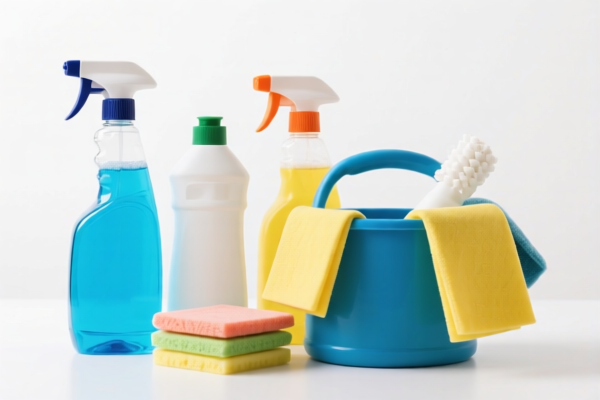
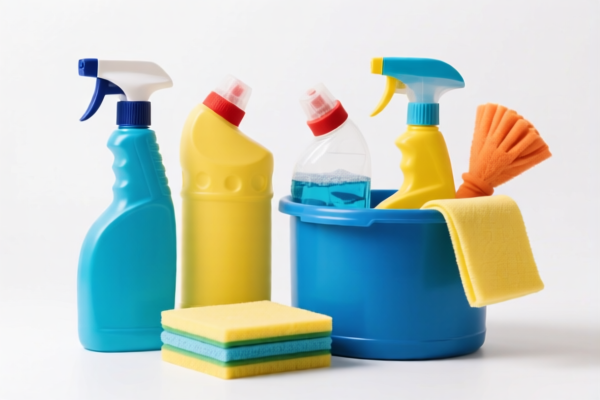
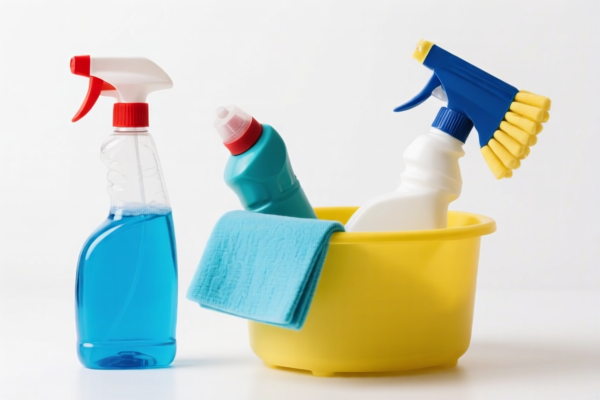
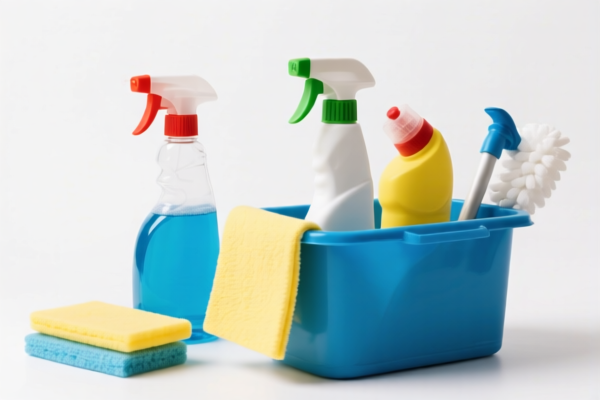
AI Analysis
🧹 Window Cleaning Set (7-Piece Kit)
🌐 HS Code Reference & Clearance Guide | 2026 Latest Tariff Breakdown | Professional Clearance Strategy
📌 I. Product Definition & Classification: Is It a "Broom" or a "Tool"?
A 7-piece window cleaning set typically includes tools like squeegees, scrubbers, extension poles, buckets, and cleaning solutions. In international trade, the classification depends heavily on the primary material and the specific nature of the components.
Because a "set" combines multiple items, customs authorities often look at: 1. The component that gives the set its essential character (e.g., if it’s mostly plastic squeegees vs. metal poles). 2. General "Other" categories if no single item dominates. 3. Material composition (plastic, rubber, metal, etc.) which drastically affects tariffs, especially under US Section 301 and Section 232 rules.
⚠️ Key Distinction:
- If the set is primarily plastic/rubber squeegees/brushes → Often classified under 9603 (Brooms, brushes, cleaning implements).
- If the set is primarily metal handles/poles/tools → Often classified under 8205 (Hand tools of base metal).
- Risk: Misclassification can lead to massive tariff differences (e.g., 17.5% vs. 70.3%).
📦 II. HS Code Classification Details (Based on Provided Data)
| HS Code | Product Description | Summary from Data | Total Tax Rate | Key Tariff Components |
|---|---|---|---|---|
9603.90.80.50 |
Brooms, Brushes & Cleaning Implements | "Matching use, belongs to the large category of brooms, brushes, scrapers, and other cleaning tools." | 70.3% | Base: 2.8%, Add'l: 7.5%, Section 122: 10%, Steel/Aluminum/Copper Surcharge: 50% |
9603.90.40.00 |
Other Cleaning Tools | "Belongs to the cleaning tool category; function and attributes are consistent with sweeping/cleaning tools." | 17.5% | Base: 0.0%, Add'l: 7.5%, Section 122: 10% |
8205.59.30.80 |
Hand Tools (Other) | "Belongs to the tools/cleaning utensil category; matches the scope of 'other hand tools.'" | 35.0% | Base: 0.0%, Add'l: 25.0%, Section 122: 10% |
8205.51.75.00 |
Household Hand Tools | "Belongs to the cleaning tool group; conforms to the scope of 'other household tools.'" | 38.7% | Base: 3.7%, Add'l: 25.0%, Section 122: 10% |
🔍 Important Note on
9603.90.80.50(70.3% Rate):
This high rate includes a 50% surcharge for steel, aluminum, or copper products. If your window cleaning set contains metal poles, brackets, or heavy metal parts, this tariff applies. If it’s purely plastic/rubber, you might qualify for the lower9603.90.40.00rate (17.5%), provided you can prove it’s not primarily a "hand tool of base metal."
💰 III. Detailed Tariff Breakdown (2026 Context)
✅ Applicable Market: United States (US)
✅ Origin: China (CN) (Assumed based on Section 122 and 301 references)
✅ Effective Time: Current regulations (Section 122 & 301 active)
🎯 1. 9603.90.40.00 – Other Cleaning Tools (Lowest Risk if Purely Plastic/Rubber)
| Item | Detail |
|---|---|
| Base Tariff | 0.0% (ad valorem) |
| Section 301 Add'l Tariff | +7.5% |
| Section 122 Tariff | +10% (Specific to certain imported goods, often applies to cleaning supplies or broadly to Chinese imports depending on specific HTS notes) |
| Total Effective Rate | 17.5% |
| Calculation | CIF Value × 17.5% |
| De Minimis Eligibility | ⚠️ Check Specific Rules – Generally, Section 122 may restrict de minimis for certain categories. |
| Legal Basis | USITC:9603.90.40.00 → Section 301: 7.5% → Section 122: 10% |
📌 Explanation:
- This is the most favorable rate for window cleaning sets if they can be classified strictly as "other cleaning tools" and do not contain significant metal components that would push them into8205or trigger the 50% metal surcharge in9603.90.80.50. - Critical: You must ensure the set is not considered a "hand tool of base metal" (which would shift it to8205and incur 25%+ tariffs).
🎯 2. 9603.90.80.50 – Brooms/Brushes (High Risk if Metal Present)
| Item | Detail |
|---|---|
| Base Tariff | 2.8% |
| Section 301 Add'l Tariff | +7.5% |
| Section 122 Tariff | +10% |
| Section 232 (Steel/Aluminum) Surcharge | +50% |
| Total Effective Rate | 70.3% |
| Calculation | CIF Value × 70.3% |
| De Minimis Eligibility | ❌ Not Eligible (Due to high tariffs and Section 232/122) |
| Legal Basis | USITC:9603.90.80.50 → Section 301: 7.5% → Section 122: 10% → Section 232: 50% |
📌 Explanation:
- This rate applies if the product is classified under "brooms, brushes, mops, feather dusters, and hand-operated floor scrubbers" AND contains steel, aluminum, or copper. - The 50% Section 232 surcharge is the killer here. If your 7-piece set has a metal pole, metal scraper handle, or metal bucket, this likely applies. - Result: A $100 set could incur $70.30 in duties alone.
🎯 3. 8205.59.30.80 & 8205.51.75.00 – Hand Tools (If Classified as Tools)
| HS Code | Total Tax Rate | Key Components |
|---|---|---|
8205.59.30.80 |
35.0% | Base: 0.0%, Section 301: 25.0%, Section 122: 10% |
8205.51.75.00 |
38.7% | Base: 3.7%, Section 301: 25.0%, Section 122: 10% |
📌 Explanation:
- If Customs determines the primary function is "scratching, scraping, or cleaning with a hand tool" rather than a "broom/brush," they may classify it here. - These rates are moderate compared to9603.90.80.50but higher than9603.90.40.00. - Avoid this classification if possible, as the 25% Section 301 rate is steep.
🛠️ IV. Clearance Practical Advice (Avoiding Pitfalls)
✅ 1. Preparation Checklist (Mandatory)
| Document | Required? | Purpose |
|---|---|---|
| ✅ Product Photos | ✔️ | Show materials (plastic vs. metal), components (squeegee, brush, pole). |
| ✅ Bill of Materials (BOM) | ✔️ | List each item’s material (e.g., "Rubber squeegee," "Plastic handle," "Aluminum pole"). |
| ✅ Composition Weight % | ✔️ | Crucial for proving if the set is primarily plastic (favorable) or metal (unfavorable). |
| ✅ Commercial Invoice | ✔️ | Clearly describe as "Window Cleaning Set, Plastic & Rubber Components, Aluminum Pole." |
| ✅ Packing List | ✔️ | Detail the 7 pieces (e.g., 1 Squeegee, 1 Brush, 1 Bucket, 1 Pole, etc.). |
✅ 2. Classification Strategy (Key Tips)
🔥 "Material Matters, Function Follows!"
| Scenario | Recommended HS Code | Why? |
|---|---|---|
| Set is 90% Plastic/Rubber (e.g., plastic bucket, plastic handle, rubber blade) | 9603.90.40.00 (17.5%) |
Minimal metal, classified as "other cleaning tools." Avoids 50% metal surcharge. |
| Set has Metal Pole/Handle | 9603.90.80.80.50 (70.3%) OR 8205... (35-38.7%) |
Metal triggers Section 232 (50%) or Section 301 (25%). You must choose the most favorable if possible, but 9603.90.80.50 is often applied if it’s a "brush/squeegee" with metal parts. |
| Set is Primarily Metal Tools (e.g., metal scrapers, metal poles) | 8205.59.30.80 (35.0%) |
Classified as "hand tools of base metal." No 50% Section 232 surcharge if not steel/aluminum (check specific metal type), but 25% Section 301 applies. |
✅ 3. Special Handling
| Issue | Solution |
|---|---|
| Metal Pole Included | Consider removing the metal pole from the set if possible, or shipping it separately. Or, use a plastic/fiberglass pole to stay under 9603.90.40.00. |
| "7-Piece" Complexity | Clearly list all 7 items in the invoice. If one item (e.g., a metal bucket) dominates the value, it may dictate the classification. |
| Section 122 Application | Verify if your specific product falls under Section 122 exemptions. If not, budget for the extra 10%. |
| De Minimis ($800) | ⚠️ High Risk: Section 122 and Section 301 tariffs often do not apply to de minimis shipments for certain goods. If the total value is under $800, check if the carrier will still assess duties. Do not assume duty-free. |
🌍 V. Global Market Comparison (2026)
| Country/Region | Recommended HS Code | Est. Tariff (China Origin) | Notes |
|---|---|---|---|
| 🇺🇸 USA | 9603.90.40.00 |
17.5% | Best if plastic-heavy. Avoid metal. |
| 🇺🇸 USA | 9603.90.80.50 |
70.3% | If metal components present. |
| 🇪🇺 EU | 9603.30.00.00 |
3.9% | No Section 301/122. Lower duties. |
| 🇨🇳 China | 9603.30.00.00 |
3.9% | Import duty low. No Section 301. |
| 🇯🇵 Japan | 9603.30.00.00 |
3.8% | Low duty. No anti-dumping. |
📌 Conclusion:
- The USA is the highest-tariff market for this product due to Section 301, 122, and 232.
- Strategy: Minimize metal content. Use plastic, rubber, or fiberglass for poles and handles to qualify for the 17.5% rate instead of 70.3%.
📌 VI. Common Mistakes & Pitfalls (Learn from Others!)
❌ Mistake 1: Assuming "Cleaning Set" = Low Duty
👉 Reality: If it contains metal, it could be 70.3%. Always check material composition.
❌ Mistake 2: Using "De Minimis" for High-Tariff Goods
👉 Reality: Section 122 and 301 may apply to shipments under $800. Contact your carrier early to confirm if duties will be charged.
❌ Mistake 3: Vague Description ("Cleaning Kit")
👉 Reality: Customs will classify based on actual contents. Be specific: "7-Piece Window Cleaning Set, Includes Rubber Squeegee, Plastic Scrubber, Fiberglass Pole."
✅ Correct Approach:
"Window Cleaning Set, 7-Piece: 1x Rubber Squeegee (Blade), 1x Microfiber Scrubber, 1x Plastic Bucket, 1x Fiberglass Extension Pole, 1x Sponge, 1x Squeegee Handle, 1x Spray Bottle. Primary Material: Plastic & Rubber."
🎯 VII. Final Recommendations
🎯 Remember:
🔹 "Less Metal, Less Money!" – Avoid steel/aluminum components to escape the 50% Section 232 surcharge.
🔹 "Plastic is King!" – Classify under9603.90.40.00for 17.5% instead of 70.3%.
🔹 "Declare Everything!" – List all 7 items and their materials to avoid penalties for misdeclaration.
📌 Pro Tip:
If you must include a metal pole, consider shipping it separately or using a composite/fiberglass pole. This simple change can save you 52.8% in tariffs (from 70.3% to 17.5%).
📣 Immediate Action:
📞 Consult a Customs Broker – Submit product photos and BOM for pre-classification.
🚀 Optimize Your Product – Switch to plastic/fiberglass components to reduce costs and simplify clearance.
✨ Professional Clearance Starts with Precise Classification!
💼 Every Tariff Point Counts – Don’t Let Metal Cost You Profit!
Customer Reviews
About HS Code Classification
The Harmonized System (HS) is an internationally standardized nomenclature developed by the World Customs Organization (WCO) to classify traded products. Over 200 countries use the HS system as the basis for customs tariffs, trade statistics, and import/export regulations.
Each HS code follows a hierarchical structure:
- Chapter (2 digits) — Broad category of goods (e.g., Chapter 84: Machinery and Mechanical Appliances)
- Heading (4 digits) — More specific grouping within the chapter
- Subheading (6 digits) — Internationally standardized breakdown, used by all WCO member countries
- National subdivisions (8-10 digits) — Country-specific extensions for further classification, such as US HTSUS 10-digit codes
Correct HS code classification is essential for smooth customs clearance, accurate duty payment, and compliance with trade regulations. Misclassification can lead to customs delays, overpayment of duties, or penalties.
When importing from CN to US, the applicable tariff rates may include:
- Most-Favored-Nation (MFN) rate — The standard duty rate applied to WTO members
- General rate — Applied to countries without trade agreements
- Trade remedy duties — Additional tariffs such as Section 301 (anti-dumping), Section 232 (national security), or countervailing duties
The information provided on this page is for reference purposes only. For official classification, please consult with your local customs authority or a licensed customs broker.