70mm Color Motion Picture Film
CN → US| HS Code | Tariff Rate | Origin | Destination | Doc |
|---|---|---|---|---|
| 3706106060 | 35.0% | CN | US | Official Doc |
| 3706106030 | 35.0% | CN | US | Official Doc |
Product Images

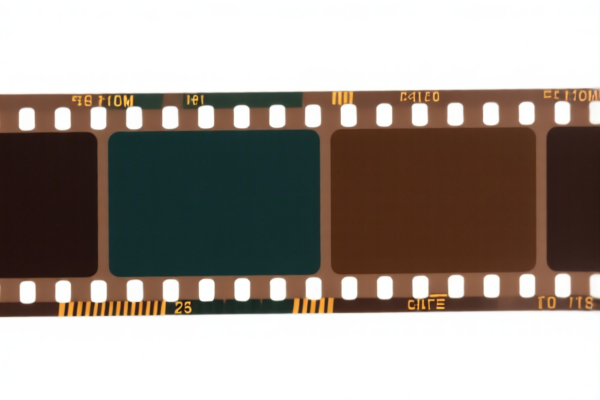

AI Analysis
🎞️ 70mm Color Motion Picture Film (Exposed & Developed)
🌐 HS Code Reference & Customs Clearance Guide | 2026 Updated Tariff Analysis | Professional Strategy for Cinematic Imports
📌 I. Product Definition & Classification: What is "70mm Film"?
70mm Color Motion Picture Film, whether exposed and developed, is the highest resolution analog medium for cinema, widely used for blockbuster features, IMAX presentations, and archival restoration. Unlike standard 35mm film, 70mm offers superior image quality, wider aspect ratios, and enhanced grain structure.
In international trade, this product falls under Chapter 37 (Photographic or cinematographic goods). It is specifically categorized based on its format (width ≥ 35mm) and purpose (Feature Films).
⚠️ Key Distinction:
- 70mm Width: Automatically qualifies as "Of a width of 35 mm or more."
- Exposed & Developed: Means it is not raw stock but finished film ready for projection or archival.
- Feature Films: Distinguishes it from newsreels, educational films, or raw negatives.
📦 II. HS Code Classification Details (2026 Latest Tariff Authority)
Based on the provided data, there are two primary HS Codes for 70mm Color Motion Picture Film, differentiated by their final form (Master vs. Release Print).
| HS Code | Product Description | Application Scenario | Type |
|---|---|---|---|
3706.10.60.60 |
Other Feature Films (General) | Masters, duplicates, or prints not classified elsewhere. Includes various formats of developed 70mm film for features. | Other |
3706.10.60.30 |
Positive Release Prints | Final copies distributed to cinemas for public screening. These are the physical reels shown to audiences. | Positive Release Prints |
🔍 Critical Note:
- Both codes apply to 70mm film because 70mm > 35mm.
- If you are importing distribution copies to be shown in theaters, use3706.10.60.30.
- If you are importing master copies, dailies, or non-release specific prints, use3706.10.60.60.
💰 III. 2026 Latest Tariff Rate Breakdown (Detailed Tax Clause Explanation)
✅ Applicable Country: United States (US)
✅ Origin: China (CN) (Assumed based on tax data context)
✅ Effective Date: Current rates apply as per USITC Section 301 and IEEPA regulations.
🎯 1. HS Code 3706.10.60.60 – Other Feature Films (70mm)
| Item | Detail |
|---|---|
| Base Tariff Rate | 0.0% (Ad Valorem) |
| Section 301 Additional Duty | +25.0% |
| Total Tariff Rate | 25.0% |
| Tax Calculation | CIF Value × 25% |
| De Minimis Exemption | ❌ Not Eligible (Section 301 goods are excluded from de minimis treatment) |
| Legal Authority | USITC Section 301 Tariff List |
📌 Explanation:
- The 0% base rate reflects that cinematographic film is generally not protected by domestic manufacturing tariffs.
- The 25% surcharge is the standard penalty for Chinese-origin goods under the US-China Trade War (Section 301).
- Total Cost Impact: You must pay 25% of the CIF value in duties alone. No base tax is applied, but the surcharge is significant.
🎯 2. HS Code 3706.10.60.30 – Positive Release Prints (70mm)
| Item | Detail |
|---|---|
| Base Tariff Rate | 0.0% (Ad Valorem) |
| Section 301 Additional Duty | +25.0% |
| Total Tariff Rate | 25.0% |
| Tax Calculation | CIF Value × 25% |
| De Minimis Exemption | ❌ Not Eligible |
| Legal Authority | USITC Section 301 Tariff List |
📌 Note:
- The tax treatment is identical to the "Other" category.
- Whether it is a release print or a master, the 25% additional duty applies equally.
- Do not confuse this with raw film stock (Chapter 37, Heading 37.02), which may have different tariff structures. This is exposed/developed film.
🛠️ IV. Customs Clearance Practical Advice (Avoid Pitfalls)
✅ 1. Required Documentation Checklist
| Document | Mandatory? | Purpose |
|---|---|---|
| Commercial Invoice | ✅ Yes | Must clearly state: "70mm Color Motion Picture Film, Exposed and Developed." |
| Packing List | ✅ Yes | Detail the number of reels, canisters, and protective packaging. |
| Product Specification Sheet | ✅ Yes | Confirm width (70mm), format (Color), and status (Exposed/Developed). |
| Certificate of Origin | ✅ Yes | To prove origin (China) and assess Section 301 applicability. |
| Customs Bond | ✅ Yes | Required for all commercial imports. |
✅ 2. Declaration Tips (Key Mnemonics)
🔥 "Be Precise: 70mm is Wide, Exposed is Ready, Section 301 is Heavy!"
| Scenario | Correct Declaration | Incorrect Practice |
|---|---|---|
| Importing Release Prints | Use 3706.10.60.30 |
Declare as "Photographic Film" (Too vague) |
| Importing Masters/Duplicates | Use 3706.10.60.60 |
Declare as "Raw Film Stock" (Wrong chapter/heading) |
| Value Declaration | CIF Value (Cost + Insurance + Freight) | Declare only FOB value (Under-declaration risk) |
| Material Description | "70mm Color Motion Picture Film" | "Video Tape" or "Digital Files" (Wrong category) |
⚠️ Warning:
- Do not misclassify 70mm film as 35mm or 16mm. While the HS Code3706.10covers ≥35mm, specific sub-classifications might differ in other jurisdictions. In the US,3706.10is the correct heading for ≥35mm.
- Do not claim "De Minimis" exemption (Section 321) for these goods. Section 301 goods (including Chinese film) are excluded from the $800 de minimis threshold.
✅ 3. Special Circumstances
| Situation | Handling Advice |
|---|---|
| Sample Copies | Even samples are subject to duty if they are "commercial samples." Declare accurately. |
| Archival Imports | No special exemption for film archives. Standard 25% tariff applies. |
| Damaged Goods | If film is damaged upon arrival, file a claim immediately. Duties are based on CIF value at time of import. |
🌍 V. Global Market Comparison (2026 Latest)
| Country/Region | Recommended HS Code | Tariff Rate (China Origin) | Key Certification | Notes |
|---|---|---|---|---|
| 🇺🇸 USA | 3706.10.60.30 / .60 |
25% (Section 301) | None specific for film | High tariff due to trade tensions |
| 🇨🇳 China | 3706.10.60 |
~0-6% (Varies) | CCC (if applicable) | Lower tariff for imports into China |
| 🇪🇺 EU | 3706.10 |
0% | CE (if electronic components) | No Section 301 equivalent |
| 🇬🇧 UK | 3706.10 |
0% | UKCA | Post-Brexit trade agreements may apply |
📌 Conclusion:
- The USA imposes a 25% additional duty on Chinese-made 70mm film.
- Other major markets (EU, UK) generally have 0% tariffs on this product, making it more cost-effective to export to Europe if possible.
- Strategic Advice: If your target market is the US, factor in the 25% duty in your pricing strategy. Consider sourcing from non-China origins (e.g., Japan, Europe) to avoid Section 301 duties, if feasible.
📌 VI. Common Errors & Pitfalls (Lessons Learned)
❌ Error 1: Classifying 70mm film under "Raw Film Stock" (3702.43)
👉 Consequence: Wrong HS Code, potential penalty, and incorrect tax calculation.
✅ Fix: Ensure the description explicitly states "Exposed and Developed."
❌ Error 2: Claiming De Minimis Exemption for small shipments
👉 Consequence: Seizure of goods, fines, and entry refusal.
✅ Fix: All Section 301 goods, regardless of value, are subject to duty.
❌ Error 3: Vague Description "Cinema Film"
👉 Consequence: Customs may request additional information, causing delays.
✅ Fix: Use full description: "70mm Color Motion Picture Film, Exposed and Developed, Feature Film Prints."
🎯 VII. Conclusion: Precision in Classification, Efficiency in Clearance
🎯 Remember the Key Takeaways:
🔹 "70mm is ≥35mm, so it falls under 3706.10."
🔹 "Exposed & Developed means it's not raw stock."
🔹 "Chinese Origin = 25% Section 301 Duty in the USA."
🔹 "No De Minimis Exemption for Section 301 Goods."
📌 Pro Tip:
If you are importing large volumes of 70mm film, consider applying for a Section 301 Exclusion (if still available for specific product types) or explore FTA (Free Trade Agreement) routes by sourcing from countries with favorable trade agreements with the US.
📣 Immediate Action:
📞 Consult a licensed customs broker.
📄 Verify the "Exposed and Developed" status on invoices.
🚀 Prepare for 25% duty payment in advance to ensure smooth clearance.
✨ Professional customs clearance starts with accurate classification!
💼 Every dollar saved in duties is a dollar earned in profit!
Customer Reviews
About HS Code Classification
The Harmonized System (HS) is an internationally standardized nomenclature developed by the World Customs Organization (WCO) to classify traded products. Over 200 countries use the HS system as the basis for customs tariffs, trade statistics, and import/export regulations.
Each HS code follows a hierarchical structure:
- Chapter (2 digits) — Broad category of goods (e.g., Chapter 84: Machinery and Mechanical Appliances)
- Heading (4 digits) — More specific grouping within the chapter
- Subheading (6 digits) — Internationally standardized breakdown, used by all WCO member countries
- National subdivisions (8-10 digits) — Country-specific extensions for further classification, such as US HTSUS 10-digit codes
Correct HS code classification is essential for smooth customs clearance, accurate duty payment, and compliance with trade regulations. Misclassification can lead to customs delays, overpayment of duties, or penalties.
When importing from CN to US, the applicable tariff rates may include:
- Most-Favored-Nation (MFN) rate — The standard duty rate applied to WTO members
- General rate — Applied to countries without trade agreements
- Trade remedy duties — Additional tariffs such as Section 301 (anti-dumping), Section 232 (national security), or countervailing duties
The information provided on this page is for reference purposes only. For official classification, please consult with your local customs authority or a licensed customs broker.