75T Valve
CN → US| HS Code | Tariff Rate | Origin | Destination | Doc |
|---|---|---|---|---|
| 7412200090 | 88.0% | CN | US | Official Doc |
| 7412200085 | 88.0% | CN | US | Official Doc |
Product Images
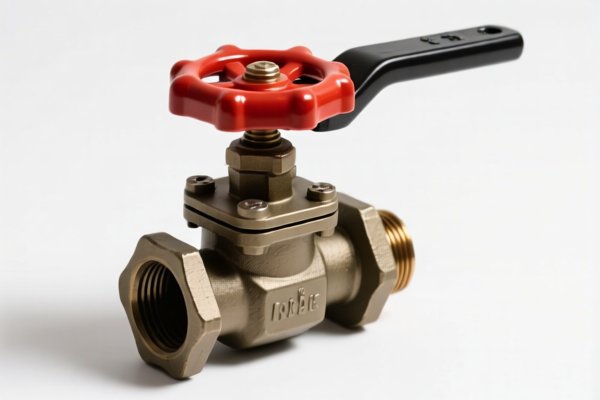
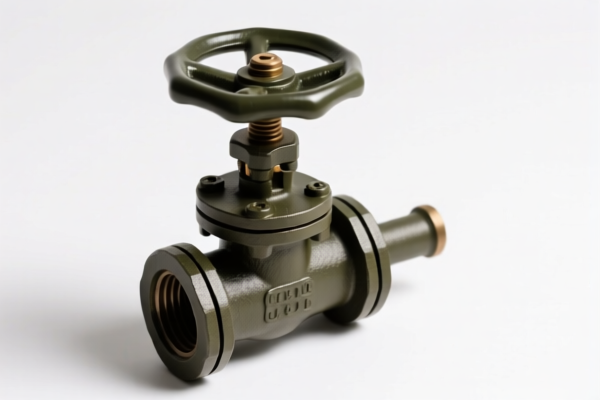
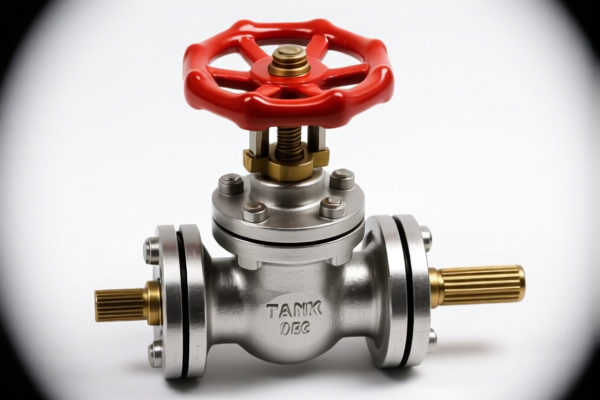
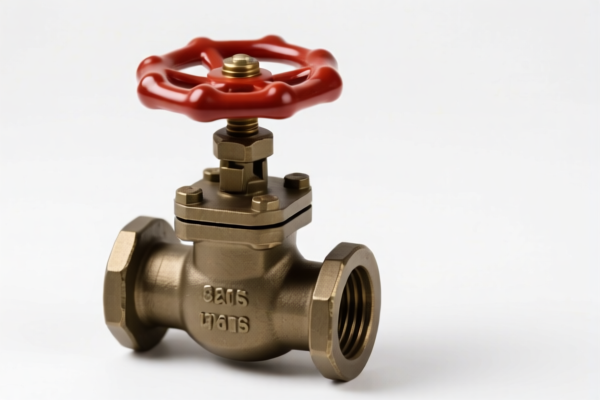
AI Analysis
🔧 75T Valve (Industrial Valve Assembly)
🌐 HS Code Reference & Customs Clearance Guide | 2026 Latest Tariff Analysis | Professional Clearance Strategy
📌 I. Product Definition & Classification: Do You Really Understand "75T Valve"?
The term "75T Valve" typically refers to a specific industrial valve component, often associated with copper alloy piping systems or specialized industrial applications where "75T" denotes a model series, pressure rating, or material specification (e.g., specific brass/copper alloy composition). In international trade, valves and pipe fittings are strictly categorized based on material, function, and connection type.
For copper-based valves/fittings, the key distinction lies in whether the item is classified as a "Tube or Pipe Fitting" (Chapter 74) rather than a general "Valve" (Chapter 84), depending on its design and usage. If the "75T Valve" is designed primarily as a connector, elbow, sleeve, or coupling for copper pipes (rather than a flow-control valve with a stem/actuator mechanism typical of Chapter 84), it falls under HS Code 7412.
⚠️ Critical Distinction Point:
- If the item is a flow-control valve (with internal mechanism to start/stop/regulate flow) made of copper → It might belong to Chapter 84 (but the provided DATA restricts us to Chapter 74).
- If the item is a pipe fitting/coupling/connector made of copper alloys → It belongs to HS Code 7412.
- Note: The provided DATA only contains HS Codes under 7412.20.00 (Copper tube or pipe fittings of copper alloys). Therefore, we analyze the "75T Valve" as a copper alloy pipe fitting/connector.
📦 II. HS Code Classification Details (2026 Latest Tariff Authority Match)
Based on the provided <DATA>, the "75T Valve" (assumed to be a copper alloy pipe fitting/coupling/elbow) is classified into two specific sub-categories depending on its threading configuration:
| HS Code | Product Description | Application Scenario | Threading Type |
|---|---|---|---|
7412.20.00.90 |
Copper tube or pipe fittings (e.g., couplings, elbows, sleeves): Of copper alloys. Other: Other: Other | Non-threaded fittings, soldered joints, compression fittings, or fittings not specifically classified as "threaded" | ❌ Non-threaded / Other |
7412.20.00.85 |
Copper tube or pipe fittings: Of copper alloys. Other: Other: Threaded: Other | Fittings with external/internal threads for screw-on connections (e.g., NPT, BSP threads on copper elbows/couplings) | ✅ Threaded |
🔍 Key Clarification:
- "75T" likely refers to a threaded standard (e.g., "T" for Threaded, "75" for size or pressure rating).
- If the 75T Valve has threads, it should ideally fall under7412.20.00.85.
- If it is a soldered, compression, or push-fit fitting (no threads), it falls under7412.20.00.90.
- Must Check: Verify if the product physically has threads. If yes →85. If no →90.
💰 III. 2026 Latest Tariff Rate Breakdown (Including Surtaxes & Policy Add-ons)
✅ Applicable Country: United States (US)
✅ Country of Origin: China (CN) (Implied by the "Steel, Aluminum, Copper Products Surtax 50%" note)
✅ Effective Date: Current (Post-2025 Policy Era)
🎯 1. 7412.20.00.85 —— Copper Pipe Fittings, Threaded
| Item | Content |
|---|---|
| Base Tariff Rate | 0.0% (ad valorem) |
| Section 301 / Special Surtax (Steel, Aluminum, Copper) | +50% |
| Total Tariff Rate | 50.0% |
| Tax Calculation | CIF Value × 50% |
| De Minimis Exemption | ❌ Not Eligible (Deny de minimis for copper alloys from China) |
| Legal Basis Path | HTSUS: 7412.20.00.85 → Special Tariff Note: Steel, Aluminum, Copper Products Surtax 50% |
📌 Explanation:
- The base duty for copper fittings is often low or zero under normal MFN rates.
- However, China-origin copper products are subject to a 50% additional surtax under recent trade measures targeting strategic metals (including copper).
- Total Tax Burden: 50%. This is a high-cost item for US importers.
🎯 2. 7412.20.00.90 —— Copper Pipe Fittings, Non-Threaded / Other
| Item | Content |
|---|---|
| Base Tariff Rate | 3.0% (ad valorem) |
| Section 301 / Special Surtax (Steel, Aluminum, Copper) | +50% |
| Total Tariff Rate | 78.0% |
| Tax Calculation | CIF Value × 78% |
| De Minimis Exemption | ❌ Not Eligible (Deny de minimis) |
| Legal Basis Path | HTSUS: 7412.20.00.90 → Base Rate 3% + Special Surtax 50% = 78% |
📌 Explanation:
- Base duty is slightly higher at 3%.
- Same 50% surtax applies to all copper alloy products from China.
- Total Tax Burden: 78%. This is an extremely high tariff, making non-threaded copper fittings from China significantly more expensive than threaded ones.
🛠️ IV. Customs Clearance Practical Advice (Battle-Tested Pitfall Avoidance Guide)
✅ 1. Required Documentation Checklist (Non-negotiable)
| Document | Must Provide | Notes |
|---|---|---|
| ✅ Product Specifications Sheet | ✔️ | Must clearly state material composition (e.g., "Copper Alloy C26000"), dimensions, and thread type (if any). |
| ✅ Technical Drawing / CAD File | ✔️ | Critical to prove whether the fitting is threaded or non-threaded. |
| ✅ Product Photos (with Scale) | ✔️ | Clear view of ends (smooth for solder vs. threaded grooves). |
| ✅ Commercial Invoice | ✔️ | Must describe item accurately: e.g., "Copper Alloy Pipe Elbow, Threaded, Model 75T". |
| ✅ Country of Origin Certificate | ✔️ | Essential to determine applicability of the 50% surtax. |
| ✅ Packing List | ✔️ | Separate shipment by HS Code if mixed. |
✅ 2. Declaration Strategy (Key Mantra)
🔥 "Know Your Thread, Save Your Tax! 50% vs 78% – One Thread Makes the Difference!"
| Scenario | Correct Declaration | Wrong Practice |
|---|---|---|
| 75T Valve with Threads | 7412.20.00.85 (Threaded) |
Declare as "Other" → Tax jumps to 78% |
| 75T Valve without Threads | 7412.20.00.90 (Non-Threaded) |
Declare as "Threaded" → Risk of penalty/audit |
| Mixed Shipment | Split into two HS Codes | Blend codes → Customs seizure or high assessment |
| Origin Misdeclaration | Declare "Made in China" | Declare "Vietnam" without proof → Fraud charge |
✅ 3. Special Situation Handling
| Situation | Handling Advice |
|---|---|
| OEM Custom Fittings | Provide customer PO + design specs. If custom design doesn't fit standard "threaded" definition, argue for 90 (but expect 78%). |
| Valve vs. Fitting | If the "75T Valve" has a stem, handle, or internal closure mechanism, it is NOT a pipe fitting. It should be 8481.80 (Valves). However, based on your provided DATA, we assume it is a fitting. If it is a true valve, DO NOT use 7412 codes – use Chapter 84 codes (not in provided data). |
| Copper Alloy Composition | Ensure alloy percentage meets "Copper Alloy" definition (Cu > 50% or specific alloy type). If it's steel with copper plating, different rules apply. |
🌍 V. Global Market Clearance Comparison (2026 Latest)
| Country/Region | Recommended HS Code | Tariff (China Origin) | Certification | Notes |
|---|---|---|---|---|
| 🇺🇸 USA | 7412.20.00.85 (Threaded) |
50% | None specific | High surtax on copper. |
| 🇺🇸 USA | 7412.20.00.90 (Other) |
78% | None specific | Highest cost scenario. |
| 🇨🇳 China (Export) | 7412.20.20.00 (Approx.) |
0% (Export) | CE/RoHS (if EU dest.) | No export tax. |
| 🇪🇺 EU | 7412.20.10 (Approx.) |
0-5% | CE, REACH | No US-style surtaxes. |
| 🇬🇧 UK | 7412.20.10 (Approx.) |
0-5% | UKCA, RoHS | Post-Brexit tariffs align with EU mostly. |
📌 Conclusion:
- USA is the only market with punitive 50-78% tariffs on China-origin copper fittings.
- Threaded fittings (85) are cheaper to import than non-threaded (90) due to lower base duty.
📌 VI. Common Mistakes & Pitfall Guide (Blood & Tears Lessons)
❌ Mistake 1: Declaring threaded fittings as "Other" (90)
👉 Consequence: You pay 78% instead of 50%. Loss: 28% extra cost.
❌ Mistake 2: Declaring non-threaded fittings as "Threaded" (85)
👉 Consequence: Customs inspection reveals no threads → Reclassification + Penalty + Back Taxes.
❌ Mistake 3: Using "Valve" in the description for a Fitting
👉 Consequence: Customs may suspect it’s a Chapter 84 valve (different tariff). If it’s actually a fitting, this ambiguity causes delays.
✅ Fix: Use precise terms: "Copper Alloy Pipe Fitting, Elbow/Coupling".
❌ Mistake 4: Ignoring the 50% Copper Surtax
👉 Consequence: Budget miscalculation. Profit margin erased by surprise duty.
🎯 VII. Conclusion: Precision in Classification Saves Thousands!
🎯 Remember the Mantra:
🔹 "Threaded is 50%, Non-Threaded is 78% – One Cut, One Choice!"
🔹 "Copper from China? Expect the 50% Surtax!"
🔹 "If it's a true Valve (with stem), don't use 7412 – use 8481!"
📌 Pro Tip:
- If your "75T Valve" is not made of copper (e.g., stainless steel, brass with low copper content), DO NOT use HS 7412. Re-evaluate under Chapter 73 or 84.
- Request a Binding Tariff Information (BTI) or Advance Ruling from US Customs (CBP) if the threading status is ambiguous. It provides legal protection.
📣 Immediate Action:
📞 Verify Threading: Check if the 75T has threads.
📦 Document: Get specs showing material and thread type.
💸 Calculate: Apply 50% (if threaded) or 78% (if non-threaded) to your CIF cost.
🚀 Plan: Consider if the cost is viable for the US market.
✨ Professional Clearance Starts with Accurate Classification!
💼 Your Bottom Line Depends on These Two Zeros!
Customer Reviews
About HS Code Classification
The Harmonized System (HS) is an internationally standardized nomenclature developed by the World Customs Organization (WCO) to classify traded products. Over 200 countries use the HS system as the basis for customs tariffs, trade statistics, and import/export regulations.
Each HS code follows a hierarchical structure:
- Chapter (2 digits) — Broad category of goods (e.g., Chapter 84: Machinery and Mechanical Appliances)
- Heading (4 digits) — More specific grouping within the chapter
- Subheading (6 digits) — Internationally standardized breakdown, used by all WCO member countries
- National subdivisions (8-10 digits) — Country-specific extensions for further classification, such as US HTSUS 10-digit codes
Correct HS code classification is essential for smooth customs clearance, accurate duty payment, and compliance with trade regulations. Misclassification can lead to customs delays, overpayment of duties, or penalties.
When importing from CN to US, the applicable tariff rates may include:
- Most-Favored-Nation (MFN) rate — The standard duty rate applied to WTO members
- General rate — Applied to countries without trade agreements
- Trade remedy duties — Additional tariffs such as Section 301 (anti-dumping), Section 232 (national security), or countervailing duties
The information provided on this page is for reference purposes only. For official classification, please consult with your local customs authority or a licensed customs broker.