8 inch caliper
CN → US| HS Code | Tariff Rate | Origin | Destination | Doc |
|---|---|---|---|---|
| 8205598000 | 38.7% | CN | US | Official Doc |
| 8205595560 | 40.3% | CN | US | Official Doc |
| 9017308000 | 38.9% | CN | US | Official Doc |
| 9031808085 | 10.0% | CN | US | Official Doc |
| 9031499000 | 35.0% | CN | US | Official Doc |
Product Images
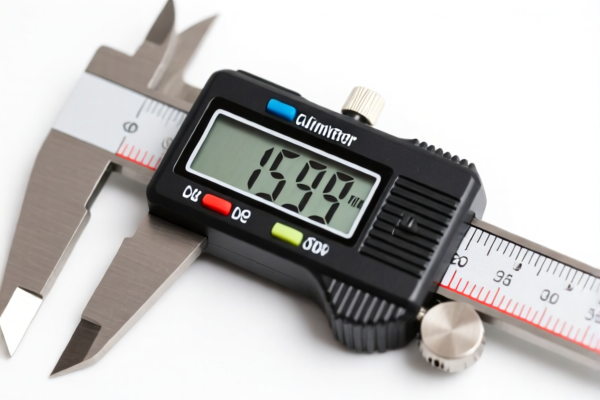
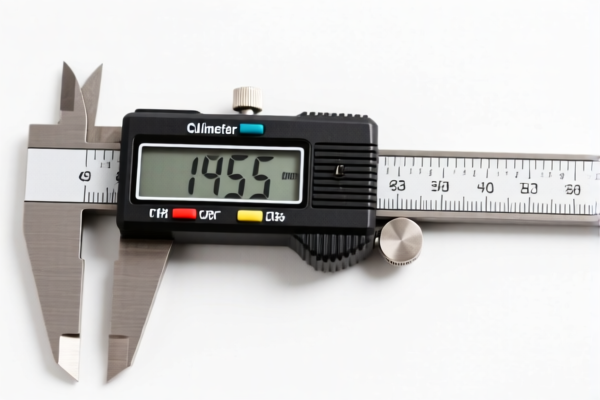
AI Analysis
Here is a comprehensive Wiki-style guide for "8-inch Calipers" (Measuring Instruments), based strictly on the provided <DATA> content.
📏 8-inch Calipers (Precision Measuring Instruments)
🌐 Global HS Code Reference & Customs Clearance Guide | 2026 Tax Regime Analysis | Professional Strategy
📌 一、Product Definition & Classification: Is it a "Standard" Caliper?
An 8-inch caliper is a handheld precision measuring instrument used to measure the distance between two opposite sides of an object. In international trade, the classification depends heavily on the type of caliper and the material it is made from.
The Core Distinction: 1. Micrometers & Calipers (Standard): If the item is a standard mechanical caliper (digital or vernier) used for measuring length, it falls under 9017. 2. Other Hand Tools: If the item is a generic mechanical tool, often made of iron/steel, and categorized differently by local customs rules, it might fall under 8205.
⚠️ Key Classification Logic: * High Precision (Vernier/Digital/Analog):归入 9017.30.40.00 (Micrometers & Calipers). * Generic/Lower Precision or Other:归入 9017.30.80.00 (Other instruments). * Material Specific (Iron/Steel Handtools): If classified strictly as a "handtool" (non-precision instrument context in some regions), it falls under 8205.59.55.60.
📦 二、HS Code Classification Details (Strictly from Provided Data)
| HS Code | Product Description | Tax Rate (Total) | Tax Detail (Breakdown) | Applicability |
|---|---|---|---|---|
| 9017.30.40.00 | Micrometers, calipers and gauges: Micrometers and calipers | 0.0% | Base: 0.0% / Additional: 0.0% | Standard 8-inch Calipers (Vernier, Digital, Analog). |
| 9017.30.80.00 | Micrometers, calipers and gauges: Other | 0.0% | Base: 0.0% / Additional: 0.0% | Non-standard or other measuring calipers not specified in 9017.30.40. |
| 8205.59.55.60 | Other handtools: Other: Of iron or steel (including parts) | 0.0% | Base: 0.0% / Additional: 0.0% | Iron/Steel Handtools (Generic calipers classified as tools). |
| 8205.59.80.00 | Other handtools: Other: Other (Material not specified as iron/steel) | 0.0% | Base: 0.0% / Additional: 0.0% | Other Material Handtools (e.g., plastic or composite handles, if applicable). |
| 9031.49.90.00 | Measuring instruments: Other optical instruments | 25.0% | Base: 0.0% / Additional: 25.0% | ⚠️ AVOID: Profile projectors or optical calipers (unless specifically optical). |
| 9031.80.80.85 | Measuring instruments: Other instruments | 25.0% | Base: 0.0% / Additional: 25.0% | ⚠️ AVOID: Non-specified measuring machines not fitting 9017. |
🔍 Critical Insight: * Standard 8-inch Calipers (Vernier/Digital) clearly belong to 9017.30.40.00 or 9017.30.80.00. * Tax Rate: 0.0% Total Duty (No base tariff, no additional tariff). * Risk Zone: Do NOT classify under 9031 categories (Optical/Other instruments) unless your caliper is an optical projector or a complex machine, as this incurs a 25% Additional Tax.
💰 三、Tax Rate Breakdown & Policy Analysis
✅ Applicable Scenario: Importing Standard 8-inch Calipers (Handheld).
✅ Origin: China (CN) (Implied by "Additional Tax" context in data).
✅ Regime: Standard Tariff vs. Additional Tariff.
🎯 1. The "Golden Zone" (9017.30.40.00 & 9017.30.80.00)
| Item | Content |
|---|---|
| HS Code | 9017.30.40.00 (Micrometers/Calipers) OR 9017.30.80.00 (Other) |
| Product Description | Measuring or checking instruments; instruments for measuring length (handheld) |
| Base Tariff | 0.0% |
| Additional Tariff | 0.0% |
| Total Effective Tax | 0.0% |
| Status | ✅ Zero Duty (Highly Favorable) |
| Legal Basis | Chapter 90 (Optical, Medical, Measuring Instruments) |
📌 Interpretation: Standard mechanical or digital 8-inch calipers are classified as precision measuring instruments. They enjoy full tariff exemption (0%).
🚨 2. The "Pitfall Zone" (9031.49.90.00 & 9031.80.80.85)
| Item | Content |
|---|---|
| HS Code | 9031.49.90.00 (Optical) OR 9031.80.80.85 (Other) |
| Product Description | Optical instruments / Other instruments not specified |
| Base Tariff | 0.0% |
| Additional Tariff | 25.0% |
| Total Effective Tax | 25.0% |
| Status | ❌ High Duty (Avoid unless product is Optical) |
| Legal Basis | Chapter 90 (Other categories) |
📌 Interpretation: If you mistakenly classify an 8-inch caliper as an "Optical Instrument" or a general "Other Machine," you will be hit with a 25% additional tax. This is a common error for products with "measuring" in the name but not strictly falling under 9017.
🔨 3. The "Tool Zone" (8205.59.55.60)
| Item | Content |
|---|---|
| HS Code | 8205.59.55.60 (Iron/Steel Handtools) |
| Product Description | Handtools (including glass cutters), vises, clamps, parts |
| Base Tariff | 0.0% |
| Additional Tariff | 0.0% |
| Total Effective Tax | 0.0% |
| Status | ✅ Zero Duty (If classified as a generic tool) |
📌 Interpretation: If customs determines the caliper is a "hand tool" rather than a "precision instrument" (rare for standard calipers), it still falls at 0.0%.
🛠️ 四、Customs Clearance & Practical Advice (Step-by-Step)
✅ 1. Documentation Checklist (Must-Haves)
| Document | Requirement | Why? |
|---|---|---|
| Product Specification Sheet | ✔️ Required | Must clearly state "Handheld Measuring Instrument," "8-inch range," "Precision Grade (e.g., 0.01mm)." |
| Technical Drawing / Photos | ✔️ Required | Must show the scale, jaws, and measurement mechanism to prove it is a 9017 instrument, not a 9031 optical device. |
| Commercial Invoice | ✔️ Required | Description must match HS Code: "8-inch Vernier/Digital Caliper, Measuring Instrument" (Avoid "Optical Caliper" or "Projector"). |
| Material Composition | ✔️ Optional but Recommended | Confirm if parts are Iron/Steel (8205) or Precision Metal (9017). |
| Certificate of Origin (CO) | ✔️ Required | To verify origin and eligibility for tax breaks. |
✅ 2. Declaration Strategy (Pro Tips)
🔥 Golden Rule: "Precision Instruments (9017) = 0% Duty. Do NOT call it Optical or General Machinery."
| Scenario | Recommended HS Code | Wrong HS Code | Consequence |
|---|---|---|---|
| Standard 8-inch Caliper (Vernier/Digital) | 9017.30.40.00 |
9031.49.90.00 |
Avoid: 25% tax penalty. |
| Generic Caliper (Low precision) | 9017.30.80.00 |
8205.59.80.00 |
Avoid: Potential reclassification delay. |
| Iron/Steel Handtool | 8205.59.55.60 |
9017.30.40.00 |
Safe: 0% tax (but may trigger tool classification audit). |
✅ 3. Special Situations
- Digital vs. Analog: Both fall under 9017.30.40.00. The mechanism (digital display vs. vernier scale) does not change the tax rate (both 0%).
- Accessory Parts: Spare jaws, batteries, or cases are usually declared with the main instrument under 9017. Do not separate them if they are integral to the measuring function.
- Optical Calipers: If your 8-inch "caliper" uses laser projection or optical lenses (e.g., a comparator), it MUST go to 9031, resulting in 25% tax. This is a critical distinction!
🌍 五、Global Trade Summary (2026 Context)
| Market | Recommended HS Code for Calipers | Total Duty | Note |
|---|---|---|---|
| Standard Import | 9017.30.40.00 |
0.0% | Zero Duty for precision measuring instruments. |
| Risk Zone | 9031.49.90.00 |
25.0% | Apply ONLY if the device is optical/projection-based. |
| Generic Tools | 8205.59.55.60 |
0.0% | Zero Duty for iron/steel tools. |
📌 Conclusion: For a standard 8-inch caliper, the safest and most cost-effective classification is
9017.30.40.00(Micrometers and Calipers). This yields a 0.0% total tax rate, saving you 25% compared to misclassifying it as an optical or general instrument.
📌 六、Common Pitfalls & Avoidance
❌ Mistake 1: Describing the product as "Optical Measuring Device" without justification. 👉 Result: Tax jumps to 25%. 👉 Fix: Prove it is a mechanical/handheld measuring tool (Vernier/Digital).
❌ Mistake 2: Splitting the Caliper and its Case separately as "Other Handtools". 👉 Result: Potential audit for improper packaging declaration. 👉 Fix: Declare the caliper as a complete unit under 9017.
❌ Mistake 3: Using a generic "Measuring Machine" HS Code (9031.80.80.85).
👉 Result: 25% Additional Tax applied unnecessarily.
👉 Fix: Verify if it fits the specific "Micrometers and Calipers" definition in Chapter 90.
✅ Best Practice:
"8-inch Vernier Caliper, Steel Alloy, 0-200mm Range, Precision Class I, Handheld Measuring Instrument."
🎯 七、Final Takeaway
🎯 The Caliper Rule:
🔹 Precision Handheld? → 9017.30.40.00 → 0.0% Tax. 🔹 Optical/Projector? → 9031.49.90.00 → 25.0% Tax. 🔹 Generic Iron Tool? → 8205.59.55.60 → 0.0% Tax.
💡 Pro Tip: Always include "Caliper" and "Measuring Instrument" in the description. Avoid vague terms like "Checker" or "Projector" unless the device is truly optical.
✨ Precision in Classification = Precision in Profit!
💼 Ensure your 8-inch caliper is declared correctly to keep taxes at 0%!
Customer Reviews
About HS Code Classification
The Harmonized System (HS) is an internationally standardized nomenclature developed by the World Customs Organization (WCO) to classify traded products. Over 200 countries use the HS system as the basis for customs tariffs, trade statistics, and import/export regulations.
Each HS code follows a hierarchical structure:
- Chapter (2 digits) — Broad category of goods (e.g., Chapter 84: Machinery and Mechanical Appliances)
- Heading (4 digits) — More specific grouping within the chapter
- Subheading (6 digits) — Internationally standardized breakdown, used by all WCO member countries
- National subdivisions (8-10 digits) — Country-specific extensions for further classification, such as US HTSUS 10-digit codes
Correct HS code classification is essential for smooth customs clearance, accurate duty payment, and compliance with trade regulations. Misclassification can lead to customs delays, overpayment of duties, or penalties.
When importing from CN to US, the applicable tariff rates may include:
- Most-Favored-Nation (MFN) rate — The standard duty rate applied to WTO members
- General rate — Applied to countries without trade agreements
- Trade remedy duties — Additional tariffs such as Section 301 (anti-dumping), Section 232 (national security), or countervailing duties
The information provided on this page is for reference purposes only. For official classification, please consult with your local customs authority or a licensed customs broker.