802 Remote Control Boat
CN → US| HS Code | Tariff Rate | Origin | Destination | Doc |
|---|---|---|---|---|
| 9503000073 | 10.0% | CN | US | Official Doc |
| 9503000071 | 10.0% | CN | US | Official Doc |
| 8903999100 | 36.0% | CN | US | Official Doc |
| 8903939000 | 36.0% | CN | US | Official Doc |
Product Images
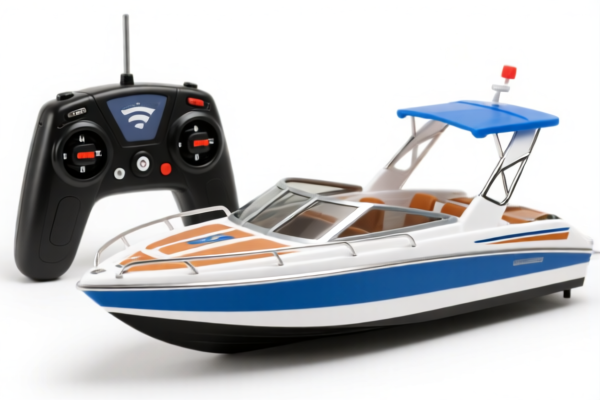
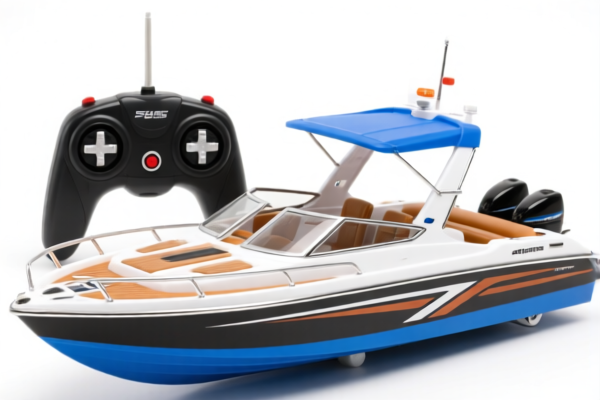
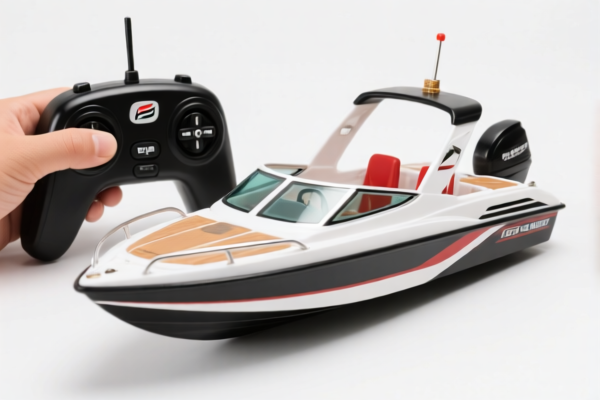
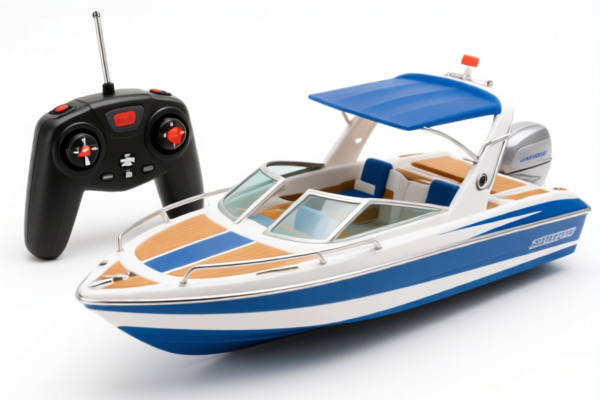
AI Analysis
🛥️ 802 Remote Control Boat (RC Boat)
🌐 HS Code Reference & Customs Clearance Guide | 2026 Latest Tariff Analysis | Professional Strategy for US Imports
📌 1. Product Definition & Classification: What Exactly is an "RC Boat"?
The "802 Remote Control Boat" is a versatile consumer product that sits at the intersection of Toys/Recreational Models and Marine Vessels. In international trade, its classification depends heavily on its size, power source, and intended use.
- Toy/Model Category: If the boat is small, low-power, and primarily intended for children or casual hobbyists as a "toy," it falls under Chapter 95 (Toys).
- Vessel Category: If the boat is larger, equipped with marine-grade engines, or intended for serious recreational boating sports, it may be classified as a "Yacht or other vessels for pleasure or sports" under Chapter 89.
⚠️ Key Distinction Point:
- If it’s a small-scale model for entertainment → Chapter 95 (Lower Duty).
- If it’s a full-scale recreational vessel → Chapter 89 (Higher Duty due to Section 301 & IEEPA).
📦 2. HS Code Classification Details (2026 Latest Tariff Authority Comparison)
Based on the provided data, here are the four possible HS Codes for the "802 Remote Control Boat," ranging from toy classification to vessel classification.
| HS Code | Product Description | Application Scenario | Tax Burden |
|---|---|---|---|
9503.00.00.73 |
Remote control boats classified as toys/recreational models (Finished Consumer Goods). | Small RC boats, child-friendly, battery-operated toys. | 10% |
9503.00.00.71 |
Remote control boats classified as reduced-scale models or entertainment products. | Hobbyist models, detailed replicas, non-toy grade but still "model." | 10% |
8903.99.91.00 |
Other vessels for pleasure or sports (Catch-all provision for boats not elsewhere specified). | Larger RC boats, gas-powered, or "yacht-style" recreational vessels. | 36% |
8903.93.90.00 |
Recreational/Sports vessels, falling under the specific category of pleasure boats. | Serious recreational boats, sport-class RC vessels. | 36% |
🔍 Critical Insight:
- The 10% tariff (9503.xx) applies if the boat is clearly a toy or model.
- The 36% tariff (8903.xx) applies if the boat is classified as a vessel, triggering higher base duties and aggressive US trade barriers.
- Misclassification Risk: Declaring a "vessel" as a "toy" to save tax can lead to severe penalties. Conversely, declaring a "toy" as a "vessel" unnecessarily increases costs by 26%.
💰 3. 2026 Latest Tariff Rate Breakdown (Including Additional Duties & Policy Add-ons)
✅ Applicable Country: United States (US)
✅ Origin: China (CN) (Assumed based on typical import context for this product; if non-China, rates vary)
✅ Effective Time: 2025/2026 (Current Trade War Status)
🎯 1. 9503.00.00.73 & 9503.00.00.71 —— Toy/Model Classification
| Item | Content |
|---|---|
| Base Duty | 0.0% (Ad valorem) |
| Section 301 Duty (122 Clause) | +10% (Specific 122 Clause Tariff) |
| Total Effective Rate | 10.0% |
| Tax Calculation | CIF Value × 10% |
| De Minimis Eligibility | ✅ Yes (For shipments < $800, usually duty-free via Section 321, but B2B imports pay this). |
| Legal Basis Path | HTSUS:9503.00.00.71/73 → Section 301: 122 Clause |
📌 Explanation:
- Base Rate: Toys generally have low or zero base MFN tariffs.
- 122 Clause: This specific 10% tariff applies to certain toy/model categories under current US trade policy.
- Total: Only 10%. This is the optimal classification for cost-efficiency if the product qualifies as a toy/model.
🎯 2. 8903.99.91.00 & 8903.93.90.00 —— Vessel Classification
| Item | Content |
|---|---|
| Base Duty | 1.0% (Ad valorem) |
| Section 301 Duty | +25% (Standard 301 Tariff for Chinese Vessels/Parts) |
| 122 Clause Tariff | +10% (Additional specific levy) |
| Total Effective Rate | 36.0% |
| Tax Calculation | CIF Value × 36% |
| De Minimis Eligibility | ❌ No (Vessels often excluded or strictly scrutinized) |
| Legal Basis Path | HTSUS:8903.99.91/8903.93.90 → Section 301: Footnote 9903.88.01 + 122 Clause |
📌 Explanation:
- Base Rate: Vessels have a 1% base duty.
- 301 Duty: A heavy 25% surcharge is applied to Chinese-made vessels and parts.
- 122 Clause: An additional 10% is added.
- Total: 36%. This is a high-cost classification.
🛠️ 4. Customs Clearance Practical Advice (Battle-Tested Pitfall Avoidance)
✅ 1. Documentation Checklist (Non-Negotiable)
| Document | Required? | Details |
|---|---|---|
| Product Specs | ✔️ | Dimensions, scale (e.g., 1:10), power source (Li-ion, Gas), max speed. |
| HS Code Justification | ✔️ | Letter explaining why it is a "Toy/Model" vs. "Vessel." |
| Photos | ✔️ | Clear shots of the boat, remote control, and any "Warning: Adult Supervision" labels. |
| Commercial Invoice | ✔️ | Must describe item as "Remote Control Toy Boat" if claiming 9503. |
| Certifications | ✔️ | FCC (for RF controller), CPC (if marketed to children), CE/RoHS. |
✅ 2. Classification Strategy (Key Mantra)
🔥 “Toy Mode = 10%, Vessel Mode = 36%! Define Scale to Save Money!”
| Scenario | Recommended HS Code | Reasoning |
|---|---|---|
| Small, Battery-Powered, Kids' Toy | 9503.00.00.73 |
Clearly a "finished consumer good/toy." Lowest tax. |
| Detailed Hobby Model, Adult Hobbyist | 9503.00.00.71 |
"Reduced-scale model." Still falls under Toy/Model Chapter 95. |
| Large, Gas-Powered, Serious Sport Boat | 8903.93.90.00 |
If it mimics a real yacht, it must be 8903. Avoid 9503 here to prevent fraud allegations. |
⚠️ Warning:
- If you declare a large, expensive, gas-powered RC boat as a "Toy" (9503), Customs may reclassify it, issuing a Bill of Additional Duty + Penalties.
- If you declare a small toy as a "Vessel" (8903), you overpay 26% unnecessarily.
✅ 3. Special Cases & Tips
| Case | Handling Advice |
|---|---|
| FCC Compliance | RC boats use RF frequencies. FCC ID is mandatory for US clearance. No FCC → Seized. |
| Lithium Batteries | Must be declared as UN3481 (if packed with device) or UN3090 (if standalone). IMDG/IATA compliant packaging required. |
| "Toy" vs. "Model" | If the product says "For Children" or "Play," use 9503.73. If it says "Hobby Grade," "Collectible," or "1:4 Scale," use 9503.71. |
| Vessel Registration | If classified under 8903, some states may require boat registration. Check local laws. |
🌍 5. Global Market Comparison (2026 Snapshot)
| Region | Recommended HS Code | Est. Duty (China Origin) | Key Requirement |
|---|---|---|---|
| 🇺🇸 USA | 9503.00.00.73 |
10% | FCC, CPC (if toy), Section 301/122 Clause |
| 🇨🇳 China | 9503.00.00.73 |
5-10% | CCC (if applicable), Import License |
| 🇪🇺 EU | 9503.00.00.73 |
6.5% | CE Marking, REACH, CPSR |
| 🇬🇧 UK | 9503.00.00.73 |
6.5% | UKCA Marking, UK Safety Standards |
📌 Conclusion:
- The USA is the most complex market due to the 122 Clause and Section 301 layers.
- Europe/UK are simpler: Standard duty (~6.5%) + VAT, but strict safety certifications (CE/UKCA).
- Optimal Strategy for US: Aggressively but honestly classify as9503(Toy/Model) if the product’s nature allows it.
📌 6. Common Errors & Pitfalls (Blood Lessons)
❌ Error 1: Declaring a Gas-Powered RC Yacht as a 9503 Toy.
👉 Consequence: Customs reclassifies to 8903. You pay 26% extra + penalties.
👉 Fix: Be honest. If it’s a "yacht," use 8903. Budget for 36%.
❌ Error 2: Missing FCC ID on the Remote Controller.
👉 Consequence: Cargo held at port, potential destruction.
👉 Fix: Ensure all RF devices have valid FCC IDs.
❌ Error 3: Ignoring Battery Hazmat Rules.
👉 Consequence: Air freight refused, or sea freight misdeclaration fines.
👉 Fix: Label lithium batteries correctly. Provide MSDS and UN38.3 test reports.
❌ Error 4: Using vague descriptions like "Boat" on Invoice.
👉 Consequence: Customs officer uses discretion, likely defaulting to higher duty or requesting more docs.
👉 Fix: Use specific terms: "Plastic Remote Control Toy Boat, Battery Operated, Model 802".
✅ Best Practice:
"RC Boat, 1:10 Scale, Electric, For Play/Collectible, FCC Certified, HS 9503.00.00.73"
🎯 7. Conclusion: Professional Declaration, Cost Saving, Risk Mitigation
🎯 Remember the Mantra:
🔹 "Toy/Model = 10%, Vessel = 36%. Don't Risk the 26% Gap!"
🔹 "FCC & Battery Docs are Mandatory. No Docs = No Entry."
🔹 "Be Honest on Scale and Power. Customs Knows the Difference."
📌 Pro Tip:
If your RC boat is small, electric, and toy-like, stick to 9503.00.00.73. It’s the sweet spot for cost and compliance.
If it’s a high-end, gas-powered hobby model, consider 9503.00.00.71 (Model) if it can be argued as a "reduced-scale model" rather than a "vessel." This keeps you at 10% instead of 36%.
Always consult a licensed customs broker for high-value shipments to file a Pre-Ruling if the classification is borderline.
📣 Immediate Action:
📞 Verify FCC ID for your RC Controller.
📦 Check Battery Compliance (UN38.3).
📄 Prepare Invoice with clear HS Code9503.00.00.73(if eligible).
🚀 Clear Customs Smoothly, Maximize Profit, Minimize Headaches!
✨ Professional Customs Clearance Starts with Precise Classification!
💼 Your Every Dollar Saved is a Dollar Earned!
Customer Reviews
About HS Code Classification
The Harmonized System (HS) is an internationally standardized nomenclature developed by the World Customs Organization (WCO) to classify traded products. Over 200 countries use the HS system as the basis for customs tariffs, trade statistics, and import/export regulations.
Each HS code follows a hierarchical structure:
- Chapter (2 digits) — Broad category of goods (e.g., Chapter 84: Machinery and Mechanical Appliances)
- Heading (4 digits) — More specific grouping within the chapter
- Subheading (6 digits) — Internationally standardized breakdown, used by all WCO member countries
- National subdivisions (8-10 digits) — Country-specific extensions for further classification, such as US HTSUS 10-digit codes
Correct HS code classification is essential for smooth customs clearance, accurate duty payment, and compliance with trade regulations. Misclassification can lead to customs delays, overpayment of duties, or penalties.
When importing from CN to US, the applicable tariff rates may include:
- Most-Favored-Nation (MFN) rate — The standard duty rate applied to WTO members
- General rate — Applied to countries without trade agreements
- Trade remedy duties — Additional tariffs such as Section 301 (anti-dumping), Section 232 (national security), or countervailing duties
The information provided on this page is for reference purposes only. For official classification, please consult with your local customs authority or a licensed customs broker.