A5 Binding Notebook
CN → US| HS Code | Tariff Rate | Origin | Destination | Doc |
|---|---|---|---|---|
| 4823908680 | 35.0% | CN | US | Official Doc |
| 4823906700 | 35.0% | CN | US | Official Doc |
| 4820300020 | 35.0% | CN | US | Official Doc |
| 3926100000 | 15.3% | CN | US | Official Doc |
| 4820102060 | 35.0% | CN | US | Official Doc |
Product Images
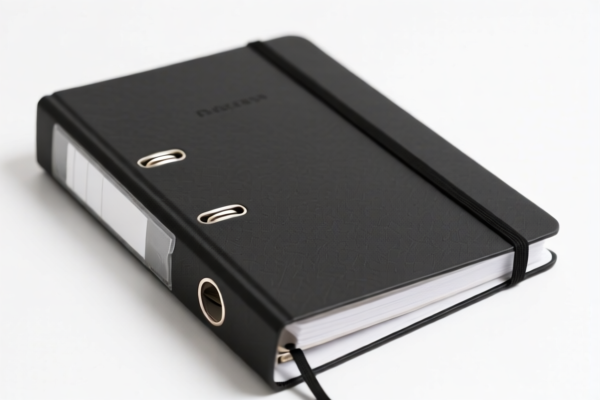
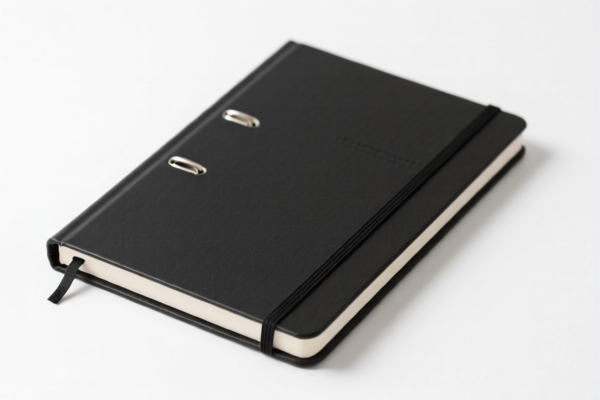
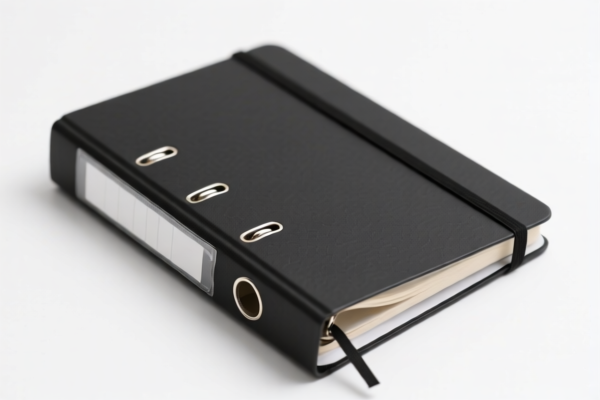
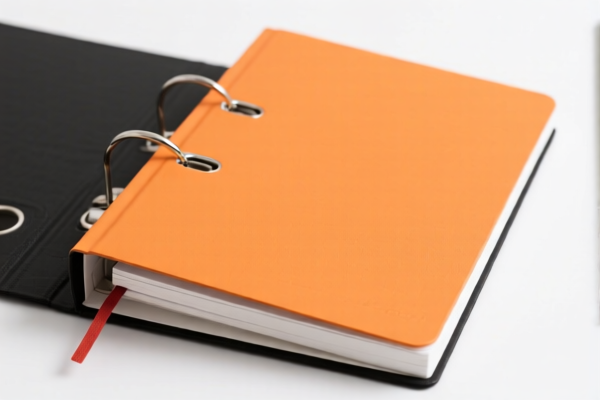
AI Analysis
📓 A5 Binding Notebook (Loose Leaf Notebook)
🌐 HS Code Reference & Customs Clearance Guide | 2026 Latest Tariff Analysis | Professional Entry Strategy
📌 I. Product Definition: What is an "A5 Binding Notebook"?
The term "A5 Binding Notebook" typically refers to a stationery item with standard A5 dimensions (148 x 210 mm) used for writing or note-taking. The core ambiguity lies in the "Binding" method. In customs classification, this determines whether it is treated as a binding assembly (notebook) or loose-leaf components (paper sheets + plastic/metal fixtures).
Key Distinctions: * Traditional Binding (Spiral/Stitching/Glued): Treated as a finished "Notebook" or "Loose-leaf Pad." * Loose-Leaf System: Often categorized by its functional components—either the paper inserts (4823/4820) or the binding mechanism (4820/3926).
⚠️ Critical Classification Point:
- If the product is a complete, ready-to-use notebook (even if loose-leaf rings are attached), it often falls under Chapter 48 (Notebooks/Loose-leaf Volumes).
- If declared as separate components (e.g., loose paper sheets + plastic binders), it may be split into Paper Products (4823/4820) or Plastic Office Supplies (3926).
- Material Matters: Most notebooks are paper-based. If significant plastic components (covers, rings) dominate, 3926.10.00.00 becomes a competitive alternative.
📦 II. HS Code Classification Matrix (2026 Latest Tariff Alignment)
Based on the provided data, here are the 5 valid HS Codes for an "A5 Binding Notebook," categorized by their logical basis and tax implications.
| HS Code | Product Description | Classification Basis | Tax Rate (Total) |
|---|---|---|---|
4823.90.86.80 |
Other Paper Articles (Loose Leaf Notebook) | Material Focus: Paper product. Classified as "Other paper articles" since it doesn't fit standard "notebooks with binding" in 4820. | 35.0% |
4823.90.67.00 |
Cut Paper Products (Loose Leaf) | Form Focus: Paper cut to specific size (A5). Classified as paper products cut to size. | 35.0% |
4820.30.00.20 |
Loose-leaf Binders (Paper-based) | Functional Focus: Treated as a "Loose-leaf Binder" rather than a notebook. Fits "Paper office supplies." | 35.0% |
3926.10.00.00 |
Plastic Office/Stationery Articles | Material Focus: If the notebook is primarily plastic (cover/rings) or classified as a generic plastic office item. | 15.3% |
4820.10.20.60 |
Notebooks, Account Books, etc. | Functional Focus: Standard "Notebook" classification. Covers registered books, notebooks, and pads. | 35.0% |
🔍 Key Insight:
- 4 out of 5 codes carry a 35% Total Tax Rate (High Tariff).
- Only3926.10.00.00offers a significantly lower rate of 15.3%.
- Strategy: If your product has substantial plastic components (e.g., plastic cover, plastic spiral rings),3926.10.00.00is the cost-saving optimal choice.
💰 III. Detailed Tax Breakdown (USA Import from China)
✅ Applicable Country: United States (US)
✅ Origin: China (CN)
✅ Effective Time: 2025/2026 (Current Trade Policies)
🎯 1. High-Tariff Codes (4823.90.86.80, 4823.90.67.00, 4820.30.00.20, 4820.10.20.60)
Total Tax Rate: 35.0%
| Tax Component | Rate | Legal Basis | Explanation |
|---|---|---|---|
| MFN Base Duty | 0.0% | WTO Tariff Schedule | Most paper products have 0% base duty. |
| Section 301 Duty | 25.0% | USITC Footnote 9903.88.01 | Additional tariff on Chinese goods. |
| IEEPA Duty | 10.0% | IEEPA Section 122 | Additional tariff under International Emergency Economic Powers Act. |
| Total | 35.0% |
📌 Warning: These 4 codes are excluded from De Minimis (Section 321). You must file a formal entry and pay the full 35% tax.
🎯 2. Low-Tariff Code (3926.10.00.00)
Total Tax Rate: 15.3%
| Tax Component | Rate | Legal Basis | Explanation |
|---|---|---|---|
| MFN Base Duty | 5.3% | WTO Tariff Schedule | Base duty for plastic articles. |
| Section 301 Duty | 0.0% | N/A | Exempt from 301 additional tariffs in this subheading. |
| IEEPA Duty | 10.0% | IEEPA Section 122 | Still subject to the 10% IEEPA surcharge. |
| Total | 15.3% |
📌 Advantage: This is 19.7 percentage points cheaper than the paper-based codes. Ideal for notebooks with plastic covers or binding elements.
🛠️ IV. Customs Clearance Strategy & Practical Advice
✅ 1. Documentation Checklist (Essential for Clearance)
| Document | Required? | Purpose |
|---|---|---|
| Product Specification Sheet | ✔️ | Must detail dimensions (A5), binding type (spiral, ring, glued), and material composition (e.g., "Paper cover + Plastic rings"). |
| Material Composition Statement | ✔️ | Crucial for choosing between 48xx (Paper) and 39xx (Plastic). Specify % by weight or value. |
| Commercial Invoice | ✔️ | Describe as "A5 Loose Leaf Notebook, Paper/Plastic, Model XYZ." |
| Packing List | ✔️ | Show quantities, gross weight, net weight. |
| Photos of Product | ✔️ | Show the binding mechanism, cover material, and any plastic components. |
✅ 2. Strategic Declaration Tips
🔥 "Material Determines Cost!"
| Scenario | Recommended HS Code | Tax Rate | Why? |
|---|---|---|---|
| Pure Paper Notebook (Cardstock cover, metal spiral) | 4820.10.20.60 or 4823.90.86.80 |
35.0% | Paper dominates. Cannot avoid 301 duties. |
| Plastic Cover Notebook (Polypropylene cover, plastic rings) | 3926.10.00.00 |
15.3% | Plastic components allow classification as "Plastic Office Article," avoiding 25% 301 duty. |
| Loose Paper + Separate Binders | 4823.90.67.00 + 3926.10.00.00 |
35.0% + 15.3% | Not recommended. Splitting may trigger scrutiny. Better to declare as complete unit. |
| Loose-leaf Paper Sheets Only | 4823.90.67.00 |
35.0% | Even if sold without rings, it's paper. |
✅ 3. Critical Avoidance Tips
❌ Mistake 1: Declaring a plastic-covered notebook as 4820.10.20.60 (Paper Notebook).
👉 Result: Pay 35% tax instead of 15.3%. You overpay by nearly 20%!
❌ Mistake 2: Using "Notebook" as the only description.
👉 Result: Customs may choose the highest-tax code arbitrarily. Always specify "Plastic Cover" or "Paper Binders" in the description.
❌ Mistake 3: Assuming De Minimis applies.
👉 Result: None of these codes qualify for $800 De Minimis exemption. Formal entry is mandatory.
🌍 V. Global Market Comparison (2026)
| Market | Recommended HS Code | Estimated Tax | Notes |
|---|---|---|---|
| 🇺🇸 USA | 3926.10.00.00 |
15.3% | Best for plastic components. Avoid 35% paper codes if possible. |
| 🇨🇳 China | 4820.10.20.60 |
~5% | Lower base duty, no 301/IEEPA. |
| 🇪🇺 EU | 4820.10.00 |
0-6% | No IEEPA. Check local VAT. |
| 🇬🇧 UK | 4820.10.00 |
0-6% | Post-Brexit tariff structure applies. |
📌 VI. Final Recommendation: How to Optimize?
🏆 Winning Strategy:
- Analyze Material: If your A5 Notebook has a plastic cover or plastic binding rings, declare it under
3926.10.00.00(Plastic Office/Stationery Articles). - Save 19.7%: You reduce your total duty from 35% to 15.3%.
- Document Clearly: In the commercial invoice, write:
"A5 Loose Leaf Notebook with Plastic Cover and Plastic Binding Rings, Plastic Component >50% by weight/value."
- If Pure Paper: If it’s 100% paper/cardstock, you must accept 35% tax. No legal workaround exists for paper products under current US-China trade rules.
🚀 Pro Tip:
For high-volume imports, consider Pre-Ruling (ACE Portal) with CBP to lock in the3926.10.00.00classification if your plastic content is borderline.
💼 Accurate Classification = Maximized Profit!
✨ Don't let a 20% tax difference eat your margin. Declare wisely!
Customer Reviews
About HS Code Classification
The Harmonized System (HS) is an internationally standardized nomenclature developed by the World Customs Organization (WCO) to classify traded products. Over 200 countries use the HS system as the basis for customs tariffs, trade statistics, and import/export regulations.
Each HS code follows a hierarchical structure:
- Chapter (2 digits) — Broad category of goods (e.g., Chapter 84: Machinery and Mechanical Appliances)
- Heading (4 digits) — More specific grouping within the chapter
- Subheading (6 digits) — Internationally standardized breakdown, used by all WCO member countries
- National subdivisions (8-10 digits) — Country-specific extensions for further classification, such as US HTSUS 10-digit codes
Correct HS code classification is essential for smooth customs clearance, accurate duty payment, and compliance with trade regulations. Misclassification can lead to customs delays, overpayment of duties, or penalties.
When importing from CN to US, the applicable tariff rates may include:
- Most-Favored-Nation (MFN) rate — The standard duty rate applied to WTO members
- General rate — Applied to countries without trade agreements
- Trade remedy duties — Additional tariffs such as Section 301 (anti-dumping), Section 232 (national security), or countervailing duties
The information provided on this page is for reference purposes only. For official classification, please consult with your local customs authority or a licensed customs broker.