A5 Business Notebook
CN → US| HS Code | Tariff Rate | Origin | Destination | Doc |
|---|---|---|---|---|
| 4820102060 | 35.0% | CN | US | Official Doc |
| 4817202000 | 35.0% | CN | US | Official Doc |
| 4820104000 | 10.0% | CN | US | Official Doc |
Product Images
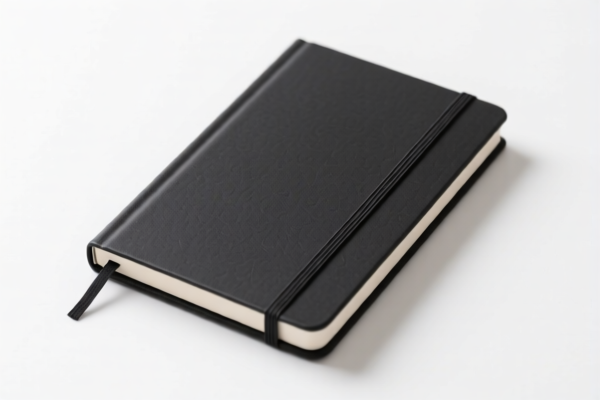
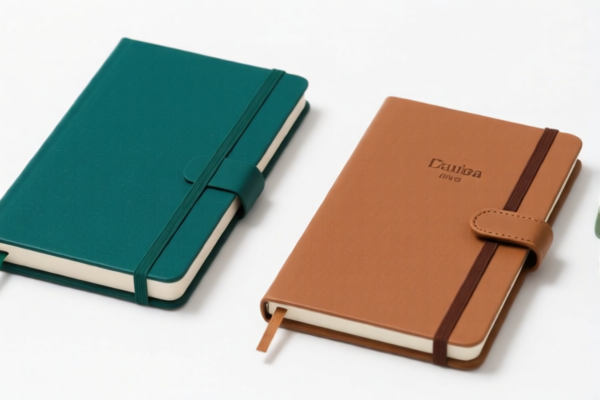


AI Analysis
📒 A5 Business Notebook: Ultimate HS Code Guide & US Clearance Strategy (2026)
🌐 HS Code Reference & Clearance Guide | 2026 Latest Duty Breakdown | Professional Export Strategy
📌 Part 1: Product Definition & Classification: Do You Truly Understand the "A5 Notebook"?
The A5 Business Notebook is a staple of global office productivity, student organization, and field data collection. In international trade, it falls under the broader category of Paper Products (Chapter 48). However, its classification hinges on two critical factors: 1. Physical Structure: Is it a simple bound block of paper, or does it have a specific binding structure (stitched/sewn)? 2. Material Composition: Is it purely paper/cardboard, or does it contain non-paper elements (like leather covers with significant mechanical parts)?
⚠️ Critical Distinction:
- Simple Bound Notebooks (Sewn or Glued): Often fall under 4820 (Writing Pads, Notebooks, etc.).
- Stationery Sets/Combinations: If sold as a "set" with rulers, pens, etc., it may shift to 4817.
- Size Matters: A5 is a standard size, NOT a specific "sewn combination" or "custom bound" exemption, meaning it generally falls under standard "Notebook" categories.
📦 Part 2: Detailed HS Code Classification (2026 Tax Regime Authority)
Based on the specific product description "A5 Business Notebook," here are the three most relevant HS Codes with their logic and tax implications.
| HS Code | Product Description | Logic for Classification | Tax Rate (Total) |
|---|---|---|---|
| 4820.10.20.60 | A5 Notebooks (Standard) | Fits the definition of a "Notebook." A5 size does not qualify for "sewn combination" or "specific size" exemptions. | 35.0% |
| 4817.20.20.00 | Paper/Board Stationery Sets | Classified as "Paper/Cardboard stationery." If the notebook is part of a stationery set or logically grouped as a paper文具 (wenju) item. | 35.0% |
| 4820.10.40.00 | General Notebooks | Fits the definition of "Notebook" based on usage. Material is inferred to be paper. Note: This is the lowest tax option. | 10.0% |
🔍 Key Insight:
- 4820.10.20.60 is the most specific for "A5 Notebooks" but carries a higher tax burden (35%) due to specific tariff add-ons. - 4820.10.40.00 is the "cleaner" classification for general notebooks, offering the lowest duty (10%), assuming it doesn't trigger the specific "A5" rule in 4820.10.20. - 4817.20.20.00 is a fallback if the notebook is marketed as part of a "Stationery Set" or "Office Supply Combination."
💰 Part 3: 2026 Latest Tariff Rate Breakdown (US Market)
✅ Applicable Country: United States (US)
✅ Origin: China (CN)
✅ Effective Date: 2025/2026 Regime (Based on latest data)
🎯 1. 4820.10.20.60 & 4817.20.20.00 – The High-Tax Track
Both codes share identical tax structures due to their classification in the "Notebook/Stationery" high-risk category.
| Item | Content |
|---|---|
| Base Duty | 0.0% (Ad Valorem) |
| Section 301 (Added Duty) | +25.0% (From USITC Footnotes for China imports) |
| Section 122 (Additional Duty) | +10.0% (Specific 122 Clause for China) |
| Total Duty Rate | 35.0% |
| Calculation Basis | CIF Value × 35% |
| De Minimis Exemption | ❌ Not Available |
| Legal Path | USITC:4820.10.20.60 → Section 301 Footnote → Section 122 Clause |
📌 Explanation:
- The 25% Section 301 is the standard "China Tariff" for non-exempt paper products.
- The 10% Section 122 is an additional punitive tariff specifically targeting this category.
- Total: 35% is a heavy tax burden, significantly impacting profit margins.
🎯 2. 4820.10.40.00 – The Low-Tax Track
This code benefits from a more favorable treatment under Section 122.
| Item | Content |
|---|---|
| Base Duty | 0.0% (Ad Valorem) |
| Section 301 (Added Duty) | 0.0% (Exempt or not applicable) |
| Section 122 (Additional Duty) | +10.0% (Standard 122 Clause) |
| Total Duty Rate | 10.0% |
| Calculation Basis | CIF Value × 10% |
| De Minimis Exemption | ❌ Not Available |
| Legal Path | USITC:4820.10.40.00 → Section 122 Clause |
📌 Explanation:
- This code avoids the 25% Section 301 surcharge, likely because it falls under a specific sub-category of "Notebooks" that was either exempted or classified differently under the 301 List.
- Total: Only 10% makes this the most cost-effective classification if the product specifications align.
🛠️ Part 4: Clearance Practical Advice (Avoiding Pitfalls)
✅ 1. Preparation Checklist (Must-Have Documents)
| Document | Status | Reason |
|---|---|---|
| Product Specification Sheet | ✅ Required | Must explicitly state "A5 Size," "Paper Content," and "Binding Type" (Sewn vs. Glued). |
| Material Composition Proof | ✅ Required | Confirm the cover is paper/cardboard, not leather or heavy plastic (which might change HS Code). |
| Commercial Invoice | ✅ Required | Must clearly state "A5 Business Notebook" and avoid vague terms like "Stationery." |
| Packing List | ✅ Required | Detail the quantity and weight to verify volume calculations for duties. |
| Origin Certificate (CO) | ✅ Required | To prove Chinese origin and confirm 301/122 applicability. |
✅ 2. Declaration Strategy (Golden Rules)
🔥 口诀 (Mantra): "Size Matters, Category Wins, Avoid Set Traps!"
| Scenario | Correct Declaration | Wrong Approach | Consequence |
|---|---|---|---|
| Single A5 Notebook | 4820.10.40.00 (Try to argue general notebook) | Reporting as "Stationery Set" | Avoid 35% tax; aim for 10%. |
| Notebook + Pen + Ruler | 4817.20.20.00 (If sold as a set) | Reporting as "Notebook Only" | Set is taxed at 35%; splitting is illegal. |
| Sewn A5 Notebook | 4820.10.20.60 (Specific size rule) | Reporting as "Glued Notebook" | May trigger audit or misclassification fines. |
| Digital/Smart Notebook | Different HS Code (e.g., Electronics) | Reporting as "Paper Notebook" | Severe penalty; potential fraud charge. |
✅ 3. Special Handling Scenarios
| Situation | Recommendation |
|---|---|
| Bulk Import (Container Load) | Verify if the "A5" size triggers the 25% 301 surcharge. Consider 4820.10.40.00 if the binding is standard and not "sewn combination." |
| Custom Covers (Leather/Vinyl) | If the cover is >50% leather, the HS Code changes completely (likely Chapter 42). Do not use 48xx codes! |
| "Business" Label | The word "Business" does not change the HS Code. Stick to material and structure. |
| Pre-Order / FOB Terms | Ensure the CIF Value includes freight and insurance to calculate the 10% or 35% correctly. |
🌍 Part 5: Global Market Comparison (2026)
| Country/Region | Recommended HS Code | Total Duty | Key Requirement |
|---|---|---|---|
| 🇺🇸 USA | 4820.10.40.00 |
10% | Avoid 301 surcharge; precise description |
| 🇨🇳 China | 4820.10.40.00 |
5% | No additional 301/122 |
| 🇪🇺 EU | 4820.10.40.00 |
0-5% | CE Mark not required; EPR for paper |
| 🇦🇺 Australia | 4820.10.40.00 |
5% | Standard paper import |
| 🇯🇵 Japan | 4820.10.40.00 |
0-6% | FSC Certification preferred |
📌 Conclusion:
- USA is the most aggressive market with 10% to 35% duties depending on the exact sub-code.
- Optimization Strategy: Push for 4820.10.40.00 by ensuring the notebook is described as a "General Notebook" rather than a "Specific Size Sewn Notebook" if possible.
📌 Part 6: Common Mistakes & Lessons Learned
❌ Mistake 1: Calling it "Stationery" to avoid the "Notebook" classification.
👉 Result: It gets classified as 4817.20.20.00 (35% tax) because "Stationery" sets are heavily taxed.
❌ Mistake 2: Ignoring the "A5" size rule in 4820.10.20.60.
👉 Result: If the notebook is strictly A5 and sewn, it must go to 4820.10.20.60 (35%). Trying to hide it leads to audits.
❌ Mistake 3: Mixing "Notebooks" with "Pens" in one line item.
👉 Result: The whole shipment may be re-classified as a "Set" (35%) instead of separate items. Separate invoices are best!
✅ Correct Action:
"Business Notebook, A5 Size, Paper Binding, 100% Recycled Paper, Model XYZ."
Target Code:4820.10.40.00(If not sewn) or4820.10.20.60(If sewn A5).
🎯 Part 7: Conclusion: Smart Classification = Lower Costs!
🎯 Remember:
🔹 "A5 + Sewn = 35%" (4820.10.20.60)
🔹 "General Notebook = 10%" (4820.10.40.00)
🔹 "Set/Combo = 35%" (4817.20.20.00)Strategy:
- Review your binding method. If not "sewn combination," try to claim 4820.10.40.00.
- Separate notebooks from other stationery items in your invoice to avoid "Set" classification.
- Always verify if the A5 size triggers the specific 25% 301 surcharge.
📌 Pro Tip:
If your supply chain allows, consider repackaging or designing the notebook slightly differently (e.g., A6 size, or non-sewn binding) to qualify for the 10% tax bracket.
Consult a Customs Broker for a Binding Ruling before shipping a container load!
✨ Professional Clearance Starts with Precise Classification!
💼 Every 25% saved on duty is a 25% boost in your profit margin!
Customer Reviews
About HS Code Classification
The Harmonized System (HS) is an internationally standardized nomenclature developed by the World Customs Organization (WCO) to classify traded products. Over 200 countries use the HS system as the basis for customs tariffs, trade statistics, and import/export regulations.
Each HS code follows a hierarchical structure:
- Chapter (2 digits) — Broad category of goods (e.g., Chapter 84: Machinery and Mechanical Appliances)
- Heading (4 digits) — More specific grouping within the chapter
- Subheading (6 digits) — Internationally standardized breakdown, used by all WCO member countries
- National subdivisions (8-10 digits) — Country-specific extensions for further classification, such as US HTSUS 10-digit codes
Correct HS code classification is essential for smooth customs clearance, accurate duty payment, and compliance with trade regulations. Misclassification can lead to customs delays, overpayment of duties, or penalties.
When importing from CN to US, the applicable tariff rates may include:
- Most-Favored-Nation (MFN) rate — The standard duty rate applied to WTO members
- General rate — Applied to countries without trade agreements
- Trade remedy duties — Additional tariffs such as Section 301 (anti-dumping), Section 232 (national security), or countervailing duties
The information provided on this page is for reference purposes only. For official classification, please consult with your local customs authority or a licensed customs broker.