A5 Mesh Document Bag
CN → USProduct Images


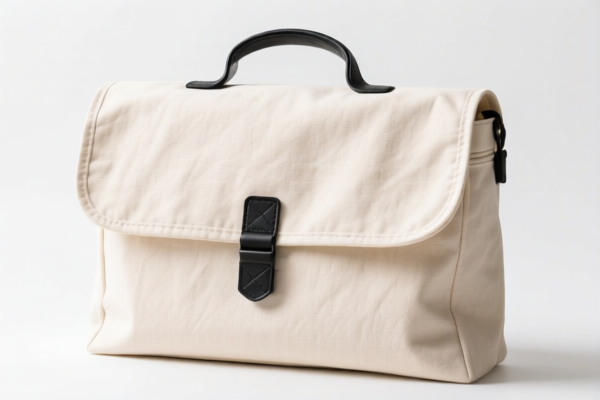
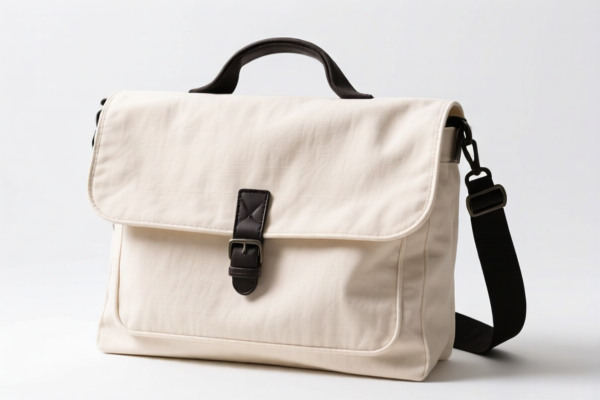
AI Analysis
🎒 A5 Mesh Document Bag: Global Classification & 2026 Customs Strategy
🌐 HS Code Reference & Clearance Guide | 2026 Tariff Deep Dive | Professional Logistics Strategy
📌 I. Product Definition & Classification: Do You Truly Know "Mesh Bags"?
The A5 Mesh Document Bag is a ubiquitous accessory for professionals, students, and logistics personnel. In international trade, it is often misunderstood as a simple container, but its material composition dictates its classification.
It falls into two distinct categories based on material:
-
Textile Mesh Bags (Plastic/Polyester/Nylon): Made from synthetic mesh or woven fabric.
- Classification: Generally Chapter 42 (Leather Goods) or Chapter 63 (Textiles), depending on the weave and usage.
- Most Common: 4202.22.00 (Trunks, suitcases, and similar containers, with outer surface of plastics or of textile materials).
-
Plastic Mesh Bags (All-Plastic): Made entirely of plastic mesh without textile lining.
- Classification: Chapter 39 (Plastics).
⚠️ Critical Distinction Point:
- If the bag has a textile outer surface (e.g., polyester mesh, nylon) with plastic trim → 4202.22 (Textile Category).
- If the bag is pure plastic mesh (no fabric lining) → 3926.90 (Plastic Category).
- If it is a book bag/school bag specifically designed for A5 paper but has a textile body → 4202.92 (Schoolbags).
📦 II. HS Code Classification Details (2026 Latest Tariff Authority)
| HS Code | Product Description | Applicable Scenario | Material Composition |
|---|---|---|---|
4202.22.00.00 |
Travel cases, suitcases, and similar containers | Mesh Document Bags (Textile/Plastic outer) | Outer surface: Textile (Poly/Nylon) or Plastic |
4202.92.00.00 |
Other containers (Book bags, laptop cases) | A5 Mesh Bags used as School/Office Bags | Outer surface: Textile |
3926.90.99.99 |
Other articles of plastics | Pure Plastic Mesh Bags | 100% Plastic Mesh, no fabric lining |
4205.00.90.00 |
Other articles of leather or composition leather | Rarely applies unless "leather-mesh" hybrid | Leather/Mesh composite |
4202.91.00.00 |
Containers (Textile, Paper, etc.) | General purpose organizers | Textile/Paper outer |
🔍 Key Reminder:
- Most A5 Mesh Document Bags sold globally are made of Polyester/Polypropylene mesh. They are typically classified under4202.22.00.00because they function as "similar containers" with an outer surface of textile material.
- Do not classify purely plastic mesh bags (no fabric) as4202; they belong to3926.90.99.99.
- If the bag has a handle made of leather but the body is mesh, it still follows the material of the outer surface (Textile/Plastic).
💰 III. 2026 Latest Tariff Rate Analysis (Including Additional Taxes)
✅ Target Market: United States (US)
✅ Origin: China (CN)
✅ Effective Date: Post-November 2025 Regulations
🎯 1. 4202.22.00.00 —— Mesh Document Bag (Textile/Plastic Outer)
| Item | Content |
|---|---|
| Base Rate | 6.5% (General) |
| Section I Footnote | May apply "Section I" tariff if classified under "Textile" in Chapter 42. |
| USITC Section 301 | +25% (If designated as a specific textile/plastic accessory under Section 301). |
| IEEPA China Surcharge | +10% (Effective Nov 2025, targeting China-origin accessories). |
| Total Effective Rate | 41.5% (Base 6.5% + 25% + 10%) |
| Calculation Basis | CIF Value × 41.5% |
| De Minimis Exemption | ❌ No (Section 321 exemption usually excludes Section 301 items). |
| Legal Path | 301:6214.22.00 → 301:4202.22 → IEEPA:9903.01.24 |
📌 Explanation:
- While the base MFN rate is low (6.5%), the Section 301 and IEEPA surcharges push the total to 41.5%.
- This is a high-cost category for China-origin mesh bags entering the US.
🎯 2. 3926.90.99.99 —— Pure Plastic Mesh Bag
| Item | Content |
|---|---|
| Base Rate | 4.2% |
| USITC Section 301 | +25% (Plastic accessories often caught in Section 301). |
| IEEPA Surcharge | +10% |
| Total Rate | 39.2% |
| De Minimis Exemption | ❌ No |
| Legal Path | 301:3926.90 → IEEPA:9903.01.24 |
🛠️ IV. Customs Clearance Practical Advice (Real-World Pitfall Guide)
✅ 1. Documentation Checklist (Non-Negotiable)
| Document | Required? | Key Requirement |
|---|---|---|
| ✅ Product Spec Sheet | ✔️ | Must specify material composition (e.g., "100% Polyester Mesh" vs. "Pure PP Plastic"). |
| ✅ Material Composition Certificate | ✔️ | Crucial: Distinguish between Textile vs. Plastic outer surface. |
| ✅ Product Photos | ✔️ | Clear view of mesh texture, handles, and any leather/textile trim. |
| ✅ Commercial Invoice | ✔️ | Must explicitly state: "A5 Mesh Document Bag, Material: [Type], Origin: China". |
| ✅ Packing List | ✔️ | No "loose" items; ensure bags are not sold with unlisted accessories (e.g., extra keys) that might re-classify the item. |
| ✅ Origin Declaration | ✔️ | If using a Form for preferential rates (e.g., Vietnam), ensure it's not just "transshipment". |
✅ 2. Declaration Strategy (The "Golden Rules")
🔥 Mnemonic: "Material First, Function Second, Mesh Must Be Clear!"
| Scenario | Correct Declaration | Dangerous Mistake |
|---|---|---|
| Polyester Mesh Bag | HS 4202.22.00.00 + "Textile Material" |
Declaring as "Plastic Bag" → Misclassification Penalty |
| Pure Plastic Mesh | HS 3926.90.99.99 |
Declaring as "Textile Bag" → 0% Duty Claim Denied |
| Bag + Laptop Sleeve | Split Declaration (Bag 4202, Sleeve 9018 or 4202) |
Bundled as "Office Kit" → Risk of "Kit" Classification |
| A5 Size Only | Do not declare based on "A5" alone | A5 is a size standard, not a tariff code! |
✅ 3. Special Circumstances
| Situation | Handling Advice |
|---|---|
| "A5" in Name | Ignore "A5" in HS Code search! It only affects the size, not the tariff. Focus on material. |
| Mesh with Metal Frame | If metal is structural, it may still be 4202, but if the metal is the primary feature, check 8306 (Metal containers). |
| Bulk vs. Retail | Bulk mesh bags (no handles) might be classified differently than retail bags with zippers/handles. Check "Carrying" feature. |
| Origin Transshipment | High Risk: Do not ship China-origin mesh bags through Vietnam/Mexico without substantial transformation. US Customs tracks "mesh bag" origins closely. |
🌍 V. Global Market Comparison (2026)
| Country/Region | Recommended HS Code | Base Duty | Additional Tax (China) | Remarks |
|---|---|---|---|---|
| 🇺🇸 USA | 4202.22.00.00 |
41.5% | +25% + 10% | Highest cost market. Consider shifting production. |
| 🇪🇺 EU | 4202.22.00 |
6.2% | 0% | No Section 301 equivalent, but CE marking required. |
| 🇨🇦 Canada | 4202.22.00 |
0% (CPTPP) | 0% | Preferential duty if using CPTPP (e.g., from Vietnam). |
| 🇯🇵 Japan | 4202.22.00 |
0% | 0% | RCEP/CPTPP friendly. |
| 🇦🇺 Australia | 4202.22.00 |
0% | 0% | Free trade agreement (RCEP) benefits. |
📌 Conclusion:
- The US is the only major market imposing severe additional duties on A5 Mesh Bags (41.5% total).
- EU, Japan, Australia are much more favorable (0-6.2%).
- Strategy: If your target is the US, relocate production to Vietnam or Thailand to utilize "substantial transformation" rules and avoid the +35% surcharge.
📌 VI. Common Errors & "Blood-Soaked" Lessons
❌ Error 1: Declaring "Mesh Bag" as "School Bag" (4202.92) to get lower duty.
👉 Consequence: Customs detects it's a document organizer, not a school bag. Penalty + Audit.
❌ Error 2: Failing to distinguish "Textile Mesh" vs. "Plastic Mesh".
👉 Consequence: Wrong Chapter. 4202 (Textile) vs 3926 (Plastic). Misclassification fines.
❌ Error 3: Shipping from China to US via "A5" size loophole.
👉 Consequence: "A5" is not a tariff code. Customs will seize goods.
❌ Error 4: Claiming "De Minimis" for mesh bags under $800.
👉 Consequence: Section 301 items are exempt from de minimis. Duty still charged.
✅ Correct Way:
"A5 Mesh Document Organizer, 100% Polyester Mesh, with Zipper, Outer Surface: Textile, Origin: China, Model: MD-2026"
🎯 VII. Conclusion: Strategic Sourcing for 2026
🎯 Golden Rules:
🔹 "Material Dictates Code, Not Size" (A5 is irrelevant for HS).
🔹 "US Duty is 41.5% for China-Mesh Bags" (Plan for this cost).
🔹 "Textile vs. Plastic is the Key" (One misstep = 30%+ cost increase).🚀 Action Plan:
1. Audit your Supply Chain: Are you importing from China directly to the US? Risk is too high.
2. Diversify: Move production to Vietnam/Mexico to access Section 301 exemptions.
3. Pre-Ruling: Apply for Advance Ruling with US Customs to confirm4202.22vs3926.90.
📣 Final Warning:
"A5" is just a paper size. "Mesh" is a tariff code!
Don't let a bag cost you 41.5% of its value in duties!
✨ Professional Clearance Starts with Precise Classification!
💼 Your Profit Margin Depends on This 4-Number Code!
Customer Reviews
About HS Code Classification
The Harmonized System (HS) is an internationally standardized nomenclature developed by the World Customs Organization (WCO) to classify traded products. Over 200 countries use the HS system as the basis for customs tariffs, trade statistics, and import/export regulations.
Each HS code follows a hierarchical structure:
- Chapter (2 digits) — Broad category of goods (e.g., Chapter 84: Machinery and Mechanical Appliances)
- Heading (4 digits) — More specific grouping within the chapter
- Subheading (6 digits) — Internationally standardized breakdown, used by all WCO member countries
- National subdivisions (8-10 digits) — Country-specific extensions for further classification, such as US HTSUS 10-digit codes
Correct HS code classification is essential for smooth customs clearance, accurate duty payment, and compliance with trade regulations. Misclassification can lead to customs delays, overpayment of duties, or penalties.
When importing from CN to US, the applicable tariff rates may include:
- Most-Favored-Nation (MFN) rate — The standard duty rate applied to WTO members
- General rate — Applied to countries without trade agreements
- Trade remedy duties — Additional tariffs such as Section 301 (anti-dumping), Section 232 (national security), or countervailing duties
The information provided on this page is for reference purposes only. For official classification, please consult with your local customs authority or a licensed customs broker.