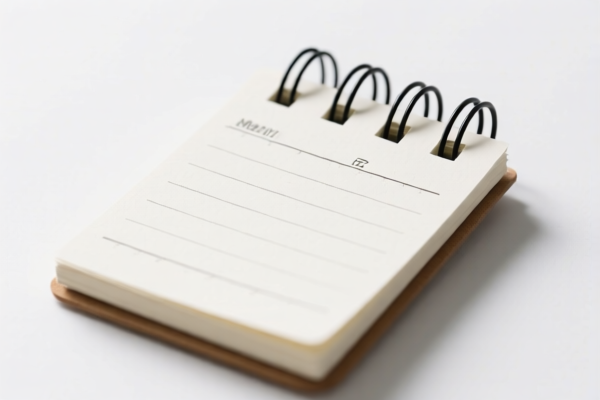
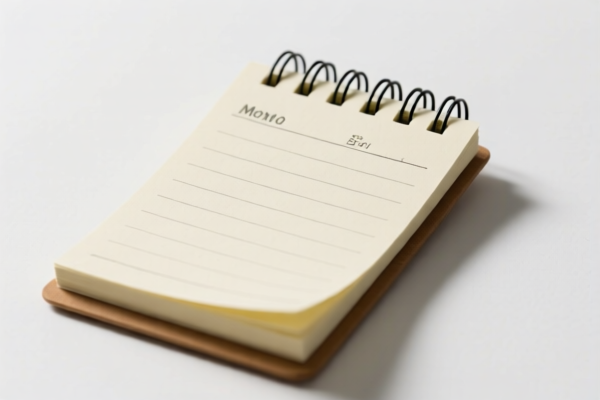
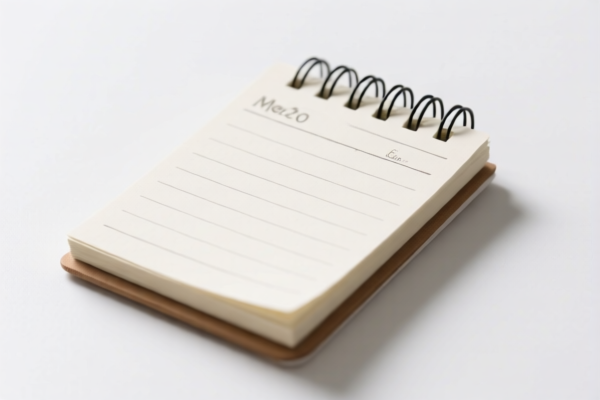
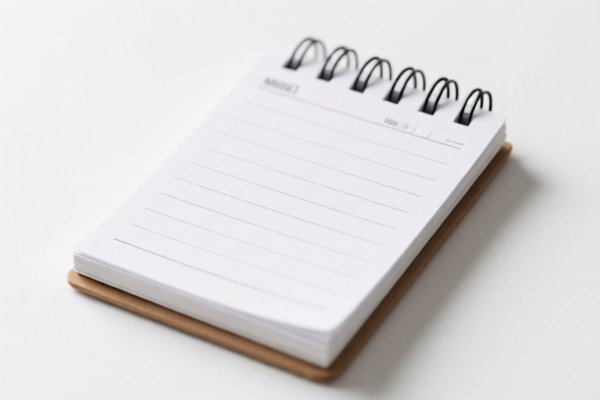
A6 Memo Pad
CN → US| HS Code | Tariff Rate | Origin | Destination | Doc |
|---|---|---|---|---|
| 4820102020 | 35.0% | CN | US | Official Doc |
| 3926100000 | 15.3% | CN | US | Official Doc |
| 4820104000 | 35.0% | CN | US | Official Doc |
Product Images
AI Analysis
📒 A6 Memo Pad (Small Format Stationery)
🌐 HS Code Reference & Customs Clearance Guide | 2026 Latest Tariff Analysis | Professional Entry Strategy
📌 1. Product Definition & Classification: Do You Know What an "A6 Memo Pad" Is?
An A6 Memo Pad is a small-sized stationery item, typically measuring approximately 105mm × 148mm. It is designed for quick notes, to-do lists, or scratch papers. In international trade, its classification depends heavily on its manufacturing material and specific type (bound vs. loose).
Key Distinction: * Paper-Based Memo Pads: If made of paper/paperboard, they fall under Chapter 48. * Plastic/Synthetic Memo Pads: If made of plastics, they fall under Chapter 39.
⚠️ Critical Classification Point: * If the memo pad is bound (e.g., spiral, glued spine) or comes in a specific format like a "notebook" or "address book," it may fall under 4820.10.20.20. * If it is a simple loose stack or a standard "memorandum pad" without complex binding, it often falls under 4820.10.40.00. * If it is made of plastic (e.g., reusable dry-erase pad or plastic-covered notepad), it falls under 3926.10.00.00.
📦 2. HS Code Classification Details (2026 Latest Tariff Alignment)
| HS Code | Product Description | Applicable Scenario | Material | Binding Type |
|---|---|---|---|---|
4820.10.20.20 |
Diaries, notebooks, and address books, bound | Small diaries, bound notepads, address books | Paper/Paperboard | Bound (Spiral, Glued, etc.) |
4820.10.40.00 |
Other registers, account books, notebooks, etc. | Simple memo pads, loose leaf notes, standard A6 pads | Paper/Paperboard | Usually unbound or simple stapled |
3926.10.00.00 |
Plastic office or school supplies | Reusable plastic memo pads, plastic-covered notepads | Plastics | N/A |
🔍 Key Reminder: * "Bound" vs. "Other": If the A6 pad has a permanent binding (like a diary), use 4820.10.20.20. If it’s a simple stack of paper or a loosely stapled pad, use 4820.10.40.00. * Material Matters: A plastic memo pad is not classified under Chapter 48. It must go to 3926.10.00.00. * Do Not Mix: Ensure your invoice clearly states "Paper Memo Pad" or "Plastic Memo Pad" to avoid classification disputes.
💰 3. 2026 Latest Tariff Rate Breakdown (Including Surcharges)
✅ Applicable Country: USA
✅ Origin: China (CN)
✅ Effective Date: From November 10, 2025 (and subsequent imports)
🎯 1. 4820.10.20.20 – Bound Diaries, Notebooks, Address Books (Paper)
| Item | Content |
|---|---|
| Base Tariff | 0.0% (ad valorem) |
| Section 301 Surcharge | +25.0% |
| IEEPA Surcharge | 0.0% (Note: Data shows 0% for this specific code in the provided dataset) |
| Total Tariff Rate | 25.0% |
| Tax Calculation | CIF Value × 25% |
| De Minimis Exemption | ❌ Not Available (Deny de minimis) |
| Legal Basis | Section 301 Tariff List |
📌 Explanation: * This classification applies to bound paper stationery (e.g., small diaries, bound notepads). * Despite a 0% base tariff, the 25% Section 301 surcharge applies to all Chinese-origin goods in this category. * Total cost impact: 25% of CIF value.
🎯 2. 4820.10.40.00 – Other Paper Stationery (e.g., Simple Memo Pads)
| Item | Content |
|---|---|
| Base Tariff | 0.0% (ad valorem) |
| Section 301 Surcharge | +25.0% |
| IEEPA Surcharge | 0.0% |
| Total Tariff Rate | 25.0% |
| Tax Calculation | CIF Value × 25% |
| De Minimis Exemption | ❌ Not Available (Deny de minimis) |
| Legal Basis | Section 301 Tariff List |
📌 Explanation: * This classification applies to other paper stationery items, such as standard A6 memo pads that are not bound like a diary. * Same tariff structure as above: 0% base + 25% surcharge = 25% total. * Total cost impact: 25% of CIF value.
🎯 3. 3926.10.00.00 – Plastic Office/Stationery Supplies
| Item | Content |
|---|---|
| Base Tariff | 5.3% (ad valorem) |
| Section 301 Surcharge | 0.0% |
| IEEPA Surcharge | 0.0% |
| Total Tariff Rate | 5.3% |
| Tax Calculation | CIF Value × 5.3% |
| De Minimis Exemption | ❌ Not Available (Deny de minimis) |
| Legal Basis | Standard HTSUS |
📌 Explanation: * This classification applies if the A6 memo pad is made of plastics (e.g., a plastic-covered notepad or a reusable plastic dry-erase memo pad). * Significant Cost Saving: Only 5.3% total tariff, compared to 25% for paper products. * Strategy: If your product can be made of plastic (or has significant plastic components), consider this classification to reduce tariffs by nearly 20%.
🛠️ 4. Customs Clearance Practical Advice (Real-World Pitfall Guide)
✅ 1. Required Documents Checklist (Non-Negotiable)
| Document | Mandatory | Description |
|---|---|---|
| ✅ Product Specification Sheet | ✔️ | Include dimensions (A6 = 105x148mm), material (Paper vs. Plastic), and number of pages. |
| ✅ Product Photos | ✔️ | Clear images of the front, back, and binding (if any) to prove "bound" vs. "loose." |
| ✅ Commercial Invoice | ✔️ | Must clearly state: "A6 Memo Pad, Paper, Unbound" or "A6 Diary, Paper, Bound." |
| ✅ Packing List | ✔️ | Itemize quantities and weights. |
| ✅ Material Declaration | ✔️ | Explicitly state if the product is 100% paper or contains plastic. |
✅ 2. Declaration Tips (Key Mnemonics)
🔥 "Material First, Binding Second, Name Specific, Tariff Clear!"
| Scenario | Correct Declaration | Incorrect Practice |
|---|---|---|
| Paper Memo Pad (Simple) | 4820.10.40.00 – "Paper Memo Pad, A6, Unbound" |
Calling it "Notebook" → May be questioned |
| Paper Memo Pad (Bound) | 4820.10.20.20 – "Bound Memo Book, A6" |
Calling it "Memo Pad" → May be downgraded |
| Plastic Memo Pad | 3926.10.00.00 – "Plastic Office Supply, Memo Pad" |
Calling it "Paper Pad" → Major misclassification |
| Mixed Package | Split by material | Mixing paper and plastic in one HS Code → Audit Risk |
✅ 3. Special Situations
| Situation | Handling Advice |
|---|---|
| Custom Branding | If the memo pad has a printed logo, it is still classified under the same HS Code. No change. |
| Plastic-Coated Paper | If the paper has a thin plastic coating, consult a customs broker. It may still be classified under Chapter 48, but if the plastic is structural, it could fall under Chapter 39. |
| Bulk vs. Retail | Tariff rates are the same, but retail packaging may require additional labeling (e.g., "Made in China"). |
🌍 5. Global Market Comparison (2026 Latest)
| Country/Region | Recommended HS Code | Tariff | Certification | Notes |
|---|---|---|---|---|
| 🇺🇸 USA | 4820.10.40.00 |
25% | None | High tariff on paper stationery |
| 🇺🇸 USA | 3926.10.00.00 |
5.3% | None | Lower tariff for plastic items |
| 🇨🇳 China | 4820.10.40.00 |
0% | N/A | Export from China has no export tax |
| 🇪🇺 EU | 4820.10.00 |
0% | CE (if applicable) | Generally low/no tariffs on paper stationery |
| 🇬🇧 UK | 4820.10.00 |
0% | UKCA (if applicable) | Post-Brexit alignment with EU |
📌 Conclusion: * USA Market: Paper memo pads are heavily taxed (25%). Plastic memo pads are significantly cheaper (5.3%). * EU/UK/China: No significant tariffs on paper stationery, making them competitive markets.
📌 6. Common Mistakes & Pitfall Guide (Blood & Tears Lessons)
❌ Mistake 1: Calling a bound diary a "memo pad" to avoid the "bound" category. 👉 Consequence: Customs may reclassify it, leading to delays or penalties. If it’s bound, use 4820.10.20.20.
❌ Mistake 2: Claiming a plastic memo pad is "paper" to avoid Section 301. 👉 Consequence: Major Fraud Risk. If found to be plastic, you face misdeclaration penalties. Use 3926.10.00.00.
❌ Mistake 3: Not specifying "A6" size. 👉 Consequence: While size doesn’t change HS code, it helps customs verify the product. Lack of detail may trigger manual inspection.
✅ Correct Practice:
"A6 Memo Pad, 50 Sheets, Paper, Unbound, Plain White" or "A6 Plastic Memo Pad, Reusable, Blue Cover"
🎯 7. Conclusion: Precise Classification, Cost Optimization!
🎯 Remember the Mnemonic:
🔹 "Paper Bound: 25%, Paper Loose: 25%, Plastic: 5.3%!"
🔹 "Material is King, Binding is Queen, Declare Both to Avoid Mean!"
📌 Pro Tip:
If your A6 memo pad is paper-based, the tariff is 25%. If you can switch to a plastic-based design (e.g., a reusable dry-erase pad), the tariff drops to 5.3%. Evaluate your product material carefully to save 19.7% in duties!
📣 Immediate Action:
📞 Contact a customs broker to confirm the material composition. 🚀 Ensure your invoice description is precise: "Paper" or "Plastic", "Bound" or "Unbound".
✨ Professional Clearance, Starting from Accurate Classification!
💼 Every cent of duty saved is pure profit!
Customer Reviews
About HS Code Classification
The Harmonized System (HS) is an internationally standardized nomenclature developed by the World Customs Organization (WCO) to classify traded products. Over 200 countries use the HS system as the basis for customs tariffs, trade statistics, and import/export regulations.
Each HS code follows a hierarchical structure:
- Chapter (2 digits) — Broad category of goods (e.g., Chapter 84: Machinery and Mechanical Appliances)
- Heading (4 digits) — More specific grouping within the chapter
- Subheading (6 digits) — Internationally standardized breakdown, used by all WCO member countries
- National subdivisions (8-10 digits) — Country-specific extensions for further classification, such as US HTSUS 10-digit codes
Correct HS code classification is essential for smooth customs clearance, accurate duty payment, and compliance with trade regulations. Misclassification can lead to customs delays, overpayment of duties, or penalties.
When importing from CN to US, the applicable tariff rates may include:
- Most-Favored-Nation (MFN) rate — The standard duty rate applied to WTO members
- General rate — Applied to countries without trade agreements
- Trade remedy duties — Additional tariffs such as Section 301 (anti-dumping), Section 232 (national security), or countervailing duties
The information provided on this page is for reference purposes only. For official classification, please consult with your local customs authority or a licensed customs broker.