ABC Dry Powder Fire Extinguishing Agent Filler
CN → US| HS Code | Tariff Rate | Origin | Destination | Doc |
|---|---|---|---|---|
| 3808594000 | 40.0% | CN | US | Official Doc |
| 3824993990 | 35.0% | CN | US | Official Doc |
| 3813005000 | 38.7% | CN | US | Official Doc |
| 3813001000 | 35.0% | CN | US | Official Doc |
| 3808595000 | 15.0% | CN | US | Official Doc |
Product Images
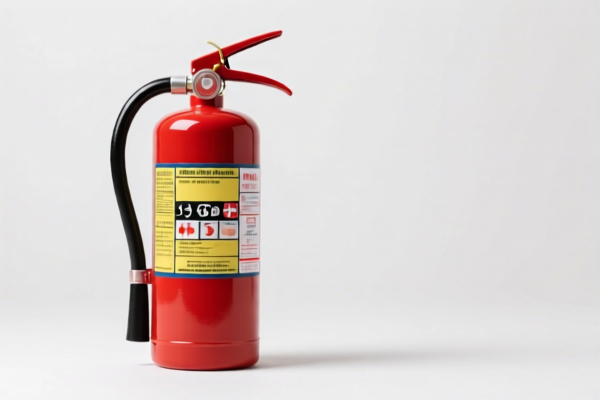
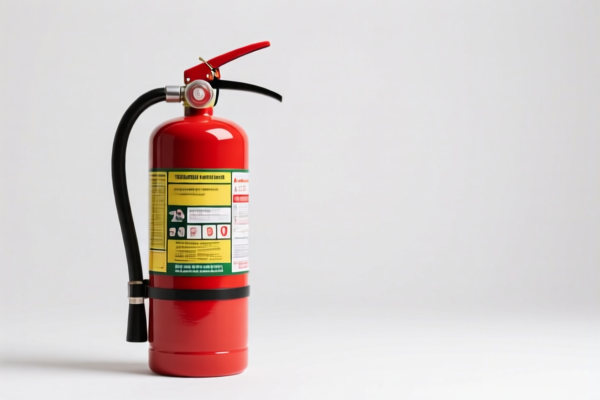
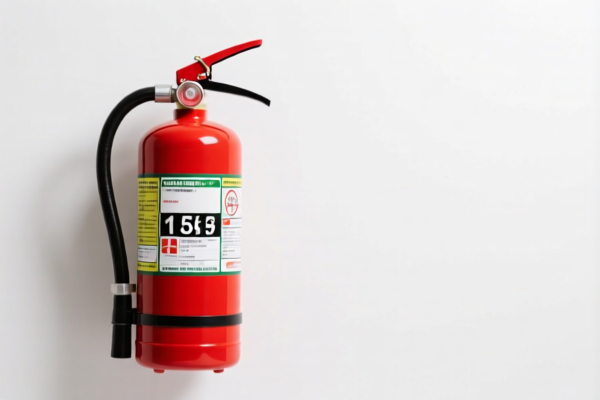

AI Analysis
🚒 ABC Dry Powder Fire Extinguishing Agent Filler
🌐 HS Code Reference & Customs Clearance Guide | 2026 Latest Tariff Analysis | Strategic Import Strategy for Chemical Fillers
📌 I. Product Definition & Classification: What Exactly is "ABC Dry Powder Filler"?
ABC Dry Powder Fire Extinguishing Agent Filler is a critical chemical component used in fire safety equipment. It is not a pre-mixed, ready-to-use extinguisher, but rather the raw material or bulk filler containing Ammonium Phosphate (mono/diammonium) and other additives (such as silica aerogel, anti-caking agents, and flame retardants).
In international trade, the classification depends heavily on: 1. Chemical Composition: Is it primarily a specific inorganic compound or a complex mixture? 2. Function: Is it explicitly a "fire extinguishing preparation" or just a general chemical intermediate? 3. Form: Fine powder, granular, etc.
⚠️ Key Distinction Point:
- If classified as a specific chemical preparation for fire fighting → Likely 3813 (Preparations for fire extinguishing).
- If classified as a chemical filler/intermediate → Likely 3808 (Insecticides, rodenticides, fungicides... or other chemical preparations).
- If classified as a mixed chemical product not elsewhere specified → Likely 3824 (Prepared binders for foundry molds, chemical products...).
📦 II. HS Code Classification Details (2026 Latest Tariff Authority Comparison)
Based on the provided data, there are 5 potential HS Codes for "ABC Dry Powder Fire Extinguishing Agent Filler," each with distinct tax implications.
| HS Code | Product Description (Summary) | Key Characteristics | Total Tax Rate |
|---|---|---|---|
| 3808.59.40.00 | Filler for ABC dry powder; powder form; chemical preparation; used for fire extinguishing filling. | Classified under general chemical preparations for fire suppression. | 40.0% |
| 3824.99.39.90 | Filler for ABC dry powder; chemical industry preparation; mixture of inorganic/organic compounds. | Classified as a "miscellaneous chemical product" or prepared binder/mixture. | 35.0% |
| 3813.00.50.00 | Filler for ABC dry powder; fire extinguishing preparation; used for filling extinguishing equipment. | Explicitly classified as a "fire extinguishing preparation" (most direct functional classification). | 38.7% |
| 3813.00.10.00 | Filler for ABC dry powder; inorganic substance-based fire extinguishing agent. | Specific subheading for inorganic-based fire extinguishing agents. | 35.0% |
| 3808.59.50.00 | Filler for ABC dry powder; chemical powder form; use similar to disinfectants/bactericides. | Misclassification risk: Treated as a disinfectant-like chemical preparation. | 15.0% |
🔍 Critical Observation:
- The lowest tax rate (15%) under3808.59.50.00is highly suspicious. It classifies a fire-fighting agent as a "disinfectant-like" product. This is likely a misclassification risk unless the product contains specific bactericidal additives intended for dual-use.
- The standard functional classification should be 3813 (Fire Extinguishing Preparations).
- The most common "fallback" classification for complex mixtures is 3824 or 3808.
💰 III. 2026 Latest Tariff Rate Breakdown (Including Surtaxes & Policy Add-ons)
✅ Applicable Country: United States (US)
✅ Origin: China (CN)
✅ Effective Date: 2025/2026 (Based on Section 301 & IEEPA rules)
🎯 1. HS Code 3808.59.40.00 — General Chemical Preparation
| Item | Content |
|---|---|
| Base Duty | 5.0% |
| Section 301 Surtax | +25.0% |
| IEEPA (122 Clauses) | +10.0% |
| Total Tax Rate | 40.0% |
| Tax Calculation | CIF Value × 40% |
| De Minimis Exemption | ❌ Not Eligible (High-risk chemical category) |
| Legal Basis Path | USITC:3808.59.40.00 → Section 301: Footnote 9903.08.01 → IEEPA:9903.01.25 |
📌 Explanation:
- This is a standard high-tariff classification for chemical preparations.
- The 25% Section 301 and 10% IEEPA are additive, leading to a total of 40%.
- No de minimis exemption applies due to the chemical nature.
🎯 2. HS Code 3824.99.39.90 — Chemical Industry Mixture
| Item | Content |
|---|---|
| Base Duty | 0.0% |
| Section 301 Surtax | +25.0% |
| IEEPA (122 Clauses) | +10.0% |
| Total Tax Rate | 35.0% |
| Tax Calculation | CIF Value × 35% |
| De Minimis Exemption | ❌ Not Eligible |
| Legal Basis Path | USITC:3824.99.39.90 → Section 301: Footnote 9903.88.01 → IEEPA:9903.01.24 |
📌 Explanation:
- The base duty is 0%, but the surtaxes remain high.
- This classification is often used for "other chemical products" not elsewhere specified.
- Savings vs. 3808.59.40.00: 5% lower total duty.
🎯 3. HS Code 3813.00.50.00 — Fire Extinguishing Preparation
| Item | Content |
|---|---|
| Base Duty | 3.7% |
| Section 301 Surtax | +25.0% |
| IEEPA (122 Clauses) | +10.0% |
| Total Tax Rate | 38.7% |
| Tax Calculation | CIF Value × 38.7% |
| De Minimis Exemption | ❌ Not Eligible |
| Legal Basis Path | USITC:3813.00.50.00 → Section 301: Footnote 9903.08.01 → IEEPA:9903.01.25 |
📌 Explanation:
- This is the most functionally accurate classification for "fire extinguishing preparation."
- Base duty is 3.7%, making it slightly cheaper than the general chemical category but more expensive than 3824.
- Recommendation: Use this if the product is explicitly marketed as a "fire extinguishing agent."
🎯 4. HS Code 3813.00.10.00 — Inorganic Fire Extinguishing Agent
| Item | Content |
|---|---|
| Base Duty | 0.0% |
| Section 301 Surtax | +25.0% |
| > IEEPA (122 Clauses) | +10.0% |
| Total Tax Rate | 35.0% |
| Tax Calculation | CIF Value × 35% |
| De Minimis Exemption | ❌ Not Eligible |
| Legal Basis Path | USITC:3813.00.10.00 → Section 301: Footnote 9903.08.01 → IEEPA:9903.01.24 |
📌 Explanation:
- Base duty is 0%.
- Applicable only if the filler is predominantly inorganic (e.g., monoammonium phosphate-based without significant organic binders).
- Best Option if the product meets the inorganic criteria.
🎯 5. HS Code 3808.59.50.00 — Chemical Powder (Disinfectant-like)
| Item | Content |
|---|---|
| Base Duty | 5.0% |
| Section 301 Surtax | 0.0% |
| IEEPA (122 Clauses) | +10.0% |
| Total Tax Rate | 15.0% |
| Tax Calculation | CIF Value × 15% |
| De Minimis Exemption | ❌ Not Eligible |
| Legal Basis Path | USITC:3808.59.50.00 → Section 301: Exempted → IEEPA:9903.01.24 |
📌 Explanation:
- Lowest tax rate (15%) due to 0% Section 301 surtax.
- ⚠️ High Risk: This classification implies the product is not primarily for fire extinguishing but for disinfection/bactericidal purposes.
- Customs Alert: If declared as "ABC Filler" but coded here, it may trigger an audit for misdeclaration. Only use if the product has dual-use certification.
🛠️ IV. Customs Clearance Practical Advice (Real-World Pitfall Avoidance)
✅ 1. Required Documentation Checklist (Non-Negotiable)
| Document | Must Provide? | Notes |
|---|---|---|
| ✅ Product Specification Sheet | ✔️ | Must list chemical composition (e.g., % Ammonium Phosphate, % Silica). |
| ✅ MSDS (SDS) | ✔️ | Critical for Class 9 Dangerous Goods classification. |
| ✅ Safety Data Sheet (Fire Extinguishing Agent) | ✔️ | Proves end-use (fire suppression). |
| ✅ Certificate of Origin (CO) | ✔️ | Required for IEEPA/Section 301 assessment. |
| ✅ Commercial Invoice | ✔️ | Must clearly state "Dry Powder Filler for Fire Extinguishers." |
| ✅ Packing List | ✔️ | Include gross/net weight, number of packages. |
| ✅ Third-Party Lab Report | ✔️ | Proves chemical composition to support HS Code choice. |
✅ 2. Declaration Tips (Key Mnemonics)
🔥 "Be Specific, Avoid Ambiguity, Match the Composition!"
| Scenario | Correct Declaration | Wrong Practice |
|---|---|---|
| Inorganic-based Filler | 3813.00.10.00 – "Inorganic ABC Dry Powder Filler" |
Call it "Chemical Mixture" → Higher tax |
| General Fire Extinguishing Prep | 3813.00.50.00 – "Fire Extinguishing Preparation" |
Call it "Disinfectant" → High audit risk |
| Complex Chemical Mixture | 3824.99.39.90 – "Chemical Industry Preparation" |
Vague terms like "Powder" → 40% tax |
| Dual-Use (Fire + Disinfectant) | 3808.59.50.00 – "Antibacterial Powder Filler" |
Declare as fire agent → Audit for misclassification |
✅ 3. Special Cases Handling
| Situation | Handling Advice |
|---|---|
| OEM Custom Filler | Provide customer order + formula sheet. Avoid generic names. |
| Mixed Organic/Inorganic | Use 3824.99.39.90 or 3808.59.40.00. Do not claim inorganic if organics >20%. |
| Dangerous Goods Classification | ABC Powder is often UN1325 (Combustible solid, inorganic, n.o.s.). Ensure IMDG/IATA compliance for air freight. |
| Section 301 Exemption | No exemption available for fire extinguishing agents from China. Budget for 25% + 10% surtax. |
🌍 V. Global Customs Comparison (2026 Latest)
| Country/Region | Recommended HS Code | Duty Rate (China Origin) | Certification Requirements | Notes |
|---|---|---|---|---|
| 🇺🇸 United States | 3813.00.10.00 / 3824.99.39.90 |
35% - 38.7% | SDS, UN1325 Label | High surtaxes apply. |
| 🇪🇺 European Union | 3813.00.00 |
6.5% | REACH Registration, CLP Label | Lower base duty, but REACH costs are high. |
| 🇨🇳 China | 3813.00.00 |
5.0% | GB18309 Standard | No surtaxes. Domestic production preferred. |
| 🇬🇧 United Kingdom | 3813.00.00 |
6.5% | UK REACH | Post-Brexit rules apply. |
| 🇯🇵 Japan | 3813.00.00 |
5.0% | PSE (if component), Fire Service Act | Strict safety standards. |
📌 Conclusion:
- US is the highest cost market due to Section 301 + IEEPA surtaxes.
- EU/UK have lower base duties but high compliance costs (REACH).
- Recommendation: For US imports, optimize for3813.00.10.00(35%) if the product is predominantly inorganic. Avoid3808.59.40.00(40%) unless composition is complex.
📌 VI. Common Errors & Pitfall Guide (Lessons from Real Cases)
❌ Error 1: Declaring "ABC Powder" as 3808.59.50.00 (Disinfectant) to save tax.
👉 Consequence: Customs audit for misdeclaration. Back taxes + penalties.
👉 Fix: Only use if dual-use is certified and documented.
❌ Error 2: Misclassifying as 3824.99.39.90 when it's clearly a fire extinguishing agent.
👉 Consequence: Possible reclassification to 3813 with higher base duty.
👉 Fix: Use 3813 if function is explicitly fire suppression.
❌ Error 3: Ignoring UN1325 Dangerous Goods classification.
👉 Consequence: Freight carrier rejects shipment. Delays + demurrage fees.
👉 Fix: Always include SDS and UN Number on commercial invoice.
❌ Error 4: Using vague terms like "Chemical Powder" on invoice.
👉 Consequence: Customs holds shipment for further classification.
👉 Fix: Use precise terms: "ABC Dry Powder Fire Extinguishing Filler, Inorganic-Based."
🎯 VII. Conclusion: Smart Classification, Cost Savings, Smooth Clearance!
🎯 Remember the Mnemonic:
🔹 "Inorganic? Go 3813.00.10.00 (35%).
🔹 Complex Mix? Try 3824.99.39.90 (35%).
🔹 Dual-Use? Only then 3808.59.50.00 (15%) – Risky!
🔹 General Chem? 3808.59.40.00 (40%) – Avoid if possible!"🔹 "HS Code defines your cost. 5% difference = Thousands saved!"
📌 Pro Tip:
If your filler is sourced from Vietnam, Thailand, or Malaysia, you may qualify for lower or zero Section 301 surtaxes.
Consider supply chain diversification for US-bound goods.
Apply for a Binding Ruling from US CBP before large shipments to confirm HS Code and tax rate.
📣 Immediate Action:
📞 Contact a licensed customs broker + Provide MSDS/Spec Sheet + Apply for Pre-Ruling.
🚀 Ensure your ABC Dry Powder Filler clears smoothly, avoids penalties, and maximizes profit!
✨ Professional Customs Clearance Starts with Accurate Classification!
💼 Every percent of duty counts!
Customer Reviews
About HS Code Classification
The Harmonized System (HS) is an internationally standardized nomenclature developed by the World Customs Organization (WCO) to classify traded products. Over 200 countries use the HS system as the basis for customs tariffs, trade statistics, and import/export regulations.
Each HS code follows a hierarchical structure:
- Chapter (2 digits) — Broad category of goods (e.g., Chapter 84: Machinery and Mechanical Appliances)
- Heading (4 digits) — More specific grouping within the chapter
- Subheading (6 digits) — Internationally standardized breakdown, used by all WCO member countries
- National subdivisions (8-10 digits) — Country-specific extensions for further classification, such as US HTSUS 10-digit codes
Correct HS code classification is essential for smooth customs clearance, accurate duty payment, and compliance with trade regulations. Misclassification can lead to customs delays, overpayment of duties, or penalties.
When importing from CN to US, the applicable tariff rates may include:
- Most-Favored-Nation (MFN) rate — The standard duty rate applied to WTO members
- General rate — Applied to countries without trade agreements
- Trade remedy duties — Additional tariffs such as Section 301 (anti-dumping), Section 232 (national security), or countervailing duties
The information provided on this page is for reference purposes only. For official classification, please consult with your local customs authority or a licensed customs broker.