ABS Extrusion Grade Resin
CN → US| HS Code | Tariff Rate | Origin | Destination | Doc |
|---|---|---|---|---|
| 3907995050 | 41.5% | CN | US | Official Doc |
| 3907690050 | 41.5% | CN | US | Official Doc |
| 3906902000 | 41.3% | CN | US | Official Doc |
| 3906905000 | 39.2% | CN | US | Official Doc |
| 3903901000 | 41.5% | CN | US | Official Doc |
Product Images

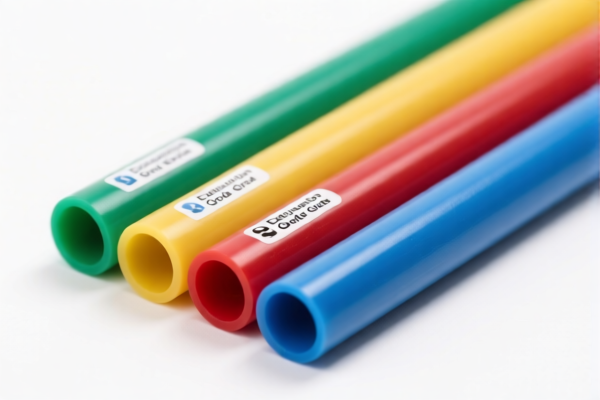
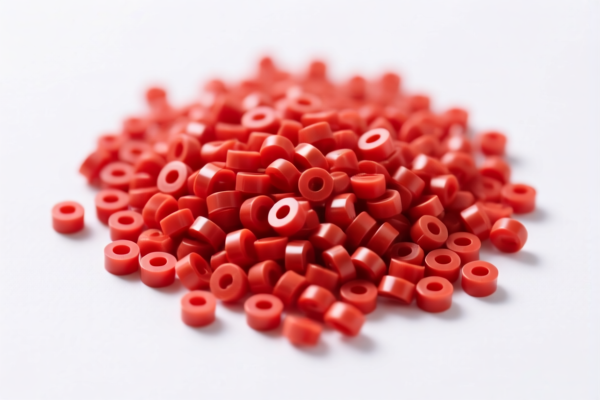
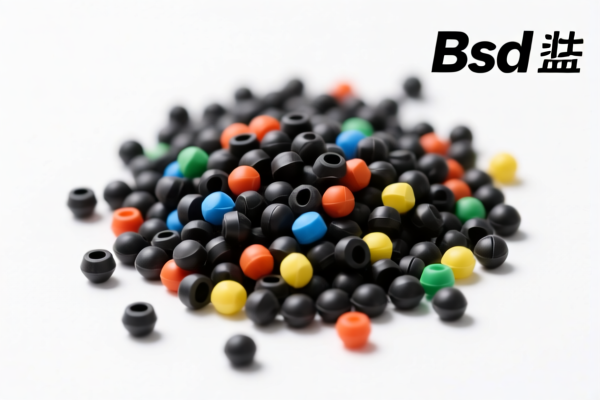
AI Analysis
🧪 ABS Extrusion Grade Resin (MBS Resin / Acrylic Copolymer)
🌐 HS Code Reference & Customs Clearance Guide | 2026 Latest Tariff Analysis | Professional Customs Strategy
📌 I. Product Definition & Classification: What Exactly is "MBS/ABS Extrusion Grade Resin"?
In international trade, ABS (Acrylonitrile Butadiene Styrene) and its related copolymers (such as MBS, which often refers to Methyl Methacrylate-Butadiene-Styrene, an acrylic polymer impact modifier) are categorized based on their chemical composition and physical form.
The key characteristics are: * Material: Polymeric resin (Acrylic copolymers, MBS resin, or general ABS). * Form: "Extrusion Grade" indicates it is in its primary form (granules, pellets, powder, or beads), ready for further processing (extrusion, injection molding). It is NOT a finished article (like pipes or sheets).
⚠️ Critical Distinction:
- If it is primary form (granules/powder) → Classified under Chapter 39 (Plastics and Articles Thereof).
- If it is finished form (e.g., pipes, sheets, molded parts) → Classified under specific end-use codes (e.g., 3917, 3920, etc.).
Since the input is "Extrusion Grade Resin," it is strictly a raw material.
📦 II. HS Code Classification Details (2026 Latest Tariff Authority Comparison)
Based on the provided data, the resin falls into three potential categories depending on the specific chemical classification (Acrylic vs. Polyester vs. Styrene-based).
| HS Code | Product Description | Matching Basis | Total Tax Rate |
|---|---|---|---|
3906.90.20.00 |
Acrylic Polymers in Primary Forms (Other) | "MBS Resin" is an acrylic copolymer (Methyl Methacrylate-Butadiene-Styrene). "Extrusion Grade" is primary form (granules). This is the most chemically accurate classification for MBS. | 41.3% |
3906.90.50.00 |
Acrylic Polymers in Primary Forms (Other) | Similar to above; specific sub-category for other acrylic polymers in primary form. Matches "MBS Resin" as acrylic polymer + "Extrusion Grade" as primary form. | 39.2% |
3907.99.50.50 |
Other Polyesters, Polyethers, and Other Resins | Matches if classified broadly as a "copolymer resin" under general resins. Less specific than Chapter 39.06 for MBS. | 41.5% |
3907.69.00.50 |
Acrylic Polymers in Primary Forms (Other) | Explicitly covers acrylic polymers (MBS is a copolymer of methyl methacrylate and butadiene/styrene). "Extrusion Grade" = primary form. | 41.5% |
3903.90.10.00 |
Other Styrene Polymers in Primary Forms | Matches if classified under Styrene Polymers (ABS contains Styrene). "MBS" contains Styrene; "Resin" = primary form. | 41.5% |
🔍 Key Insight:
- Chapter 39.06 is the most precise for Acrylic/MBS resins.
- Chapter 39.03 is appropriate if the resin is dominated by Styrene (ABS is a styrene-based copolymer).
- Chapter 39.07 is a broader category for other resins; less preferred if 39.06/39.03 fits better.
- All these codes classify the product as Primary Form, which is critical for correct tariff application.
💰 III. 2026 Latest Tariff Rate Breakdown (Including Additional Duties & Policy Surcharges)
✅ Applicable Country: United States (US)
✅ Country of Origin: China (CN)
✅ Effective Date: November 10, 2025 (and subsequent imports)
🎯 1. 3906.90.20.00 & 3906.90.50.00 & 3907.69.00.50 & 3903.90.10.00 & 3907.99.50.50
| Item | Content |
|---|---|
| Base Tariff Rate | 4.2% – 6.5% (varies by HS subheading) |
| USITC Additional Duty (Section 301) | +25% (Applied to Chinese origin plastics) |
| IEEPA Additional Duty | +10% (Applied to Chinese/HK products under IEEPA) |
| Total Effective Rate | 39.2% – 41.5% |
| Calculation Basis | Based on CIF Value (Cost, Insurance, Freight) |
| De Minimis Exemption? | ❌ NO (deny_de_minimis = True). Section 301 and IEEPA duties cannot be avoided via the $800 de minimis rule for these HS codes. |
| Legal Authority Path | USITC:3906.90.20.00 → FOOTNOTE:9903.88.01 → IEEPA:9903.01.25 → IEEPA:9903.01.24 |
📌 Explanation:
- "Base Tariff": The standard MFN (Most Favored Nation) rate for plastics in primary form.
- "+25% USITC Duty": Result of Section 301 of the Trade Act of 1974, targeting Chinese imports in specific categories (including plastics).
- "+10% IEEPA Duty": Under the International Emergency Economic Powers Act, targeting specific Chinese goods.
- Total Burden: Importers face a ~40% effective tariff rate. This significantly impacts profit margins.
- No De Minimis: Small shipments (under $800) do not qualify for exemption from these additional duties. They must be declared and taxed.
🛠️ IV. Customs Clearance Practical Advice (Avoiding Pitfalls)
✅ 1. Documentation Checklist (Mandatory)
| Document | Required? | Notes |
|---|---|---|
| ✅ Product Specification Sheet | ✔️ | Must clearly state: Chemical Composition (e.g., % Methyl Methacrylate, Butadiene, Styrene), Form (Granules/Pellets), Viscosity/Melt Flow Index. |
| ✅ Certificate of Origin (CO) | ✔️ | Proves Chinese origin. If shipped from Vietnam/Malaysia, ensure it qualifies for preferential treatment (if any) but beware of transshipment risks. |
| ✅ Commercial Invoice | ✔️ | Describe as "Acrylic Copolymer Resin, MBS, Extrusion Grade, Primary Form". Avoid vague terms like "Plastic Granules." |
| ✅ Packing List | ✔️ | Detail weight, dimensions, and number of bags/cartons. |
| ✅ HS Code Pre-Ruling | ✔️ | Highly Recommended. Apply for a Binding Ruling from CBP to confirm if 3906.90.20.00 or 3903.90.10.00 is more appropriate. |
| ✅ FCC/UL Reports | ✖️ | Not required for raw resin, but helpful for downstream customers. |
✅ 2. Declaration Strategy (Key Tips)
🔥 "Precise Naming, Correct Form, Avoid Misclassification!"
| Scenario | Correct Declaration | Incorrect Declaration | Risk |
|---|---|---|---|
| MBS Resin (Acrylic) | 3906.90.20.00 (Acrylic Polymer) |
3907.99.50.50 (Other Resin) |
May trigger audit for misclassification. |
| ABS Resin (Styrene) | 3903.90.10.00 (Styrene Polymer) |
3906.90.50.00 (Acrylic) |
Different base rates; potential duty difference. |
| Form: Granules | State "Primary Form, Extrusion Grade" | State "Plastic Parts" or "Finished Products" | Misclassification into Chapter 39.17/39.20 → Higher duties + penalties. |
| Origin: China | Declare China | Declare Malaysia/Vietnam (without transformation) | Severe Penalty for transshipment fraud. |
✅ 3. Special Considerations
| Situation | Advice |
|---|---|
| MBS vs. ABS | MBS is an acrylic copolymer (39.06), while ABS is a styrene copolymer (39.03). Check the Material Safety Data Sheet (MSDS) to confirm the dominant polymer. |
| Blends | If the resin is a blend (e.g., ABS/PC blend), classification depends on the essential character. May require advanced ruling. |
| Transshipment | Do NOT declare Chinese goods as originating from third countries (e.g., Vietnam) unless significant processing occurs in those countries. CBP actively monitors plastic resin imports for origin fraud. |
| Valuation | Ensure CIF value is accurate. Duties are calculated on CIF. Under-declaration leads to audits. |
🌍 V. Global Market Comparison (2026)
| Country/Region | Recommended HS Code | Base Tariff | Additional Duties | Total Effective Rate | Notes |
|---|---|---|---|---|---|
| 🇺🇸 USA | 3906.90.20.00 / 3903.90.10.00 |
4.2% - 6.5% | +25% (301) +10% (IEEPA) | ~39.2% - 41.5% | High burden. No de minimis. |
| 🇨🇳 China | 3906.90.20.00 |
0% - 6% | None | ~0% - 6% | Import into China is cheaper. |
| 🇪🇺 EU | 3906.90 |
0% - 6.5% | None | ~0% - 6.5% | No Section 301 equivalent. |
| 🇲🇽 Mexico | 3906.90 |
0% (USMCA if originating) | None | 0% | If goods are US-origin or meet USMCA rules. |
| 🇻🇳 Vietnam | 3906.90 |
0% - 5% | None | ~0% - 5% | Potential transshipment risk if Chinese origin is undisclosed. |
📌 Conclusion:
- USA is the most costly market due to Section 301 and IEEPA tariffs.
- EU and China have significantly lower tariff burdens.
- Mexico/Vietnam offer low tariffs, but origin fraud is heavily penalized.
📌 VI. Common Mistakes & Pitfalls (Lessons Learned)
❌ Mistake 1: Declaring "MBS Resin" as "Plastic Granules" without chemical specification.
👉 Result: CBP may reclassify it incorrectly, leading to additional duties + penalties.
❌ Mistake 2: Using "De Minimis" ($800) to avoid tariffs.
👉 Result: Denied. Section 301 and IEEPA duties apply to all shipments, regardless of value.
❌ Mistake 3: Misidentifying MBS as ABS.
👉 Result: Wrong HS Code (3903 vs 3906). May lead to audit if values differ significantly.
❌ Mistake 4: Declaring Chinese goods as Vietnamese to avoid tariffs.
👉 Result: Severe penalties, seizure of goods, and loss of import privileges. CBP uses traceability (batch numbers, chemical fingerprints) to detect this.
✅ Best Practice:
"Acrylic Copolymer Resin (MBS), Extrusion Grade, Primary Form, Origin: China"
🎯 VII. Conclusion: Professional Classification, Cost Control, and Compliance
🎯 Key Takeaways:
🔹 "MBS Resin" = Acrylic Polymer (39.06) or Styrene Polymer (39.03).
🔹 "Extrusion Grade" = Primary Form.
🔹 Total Tax ~40% in the US due to Section 301 (+25%) and IEEPA (+10%).
🔹 No De Minimis Exemption.
🔹 Accurate Documentation is critical to avoid audits and penalties.
📌 Pro Tip:
If you are importing large volumes, consider applying for an HS Code Pre-Ruling from CBP to ensure the correct code (
3906.90.20.00vs3903.90.10.00) is applied. This provides legal certainty.
For supply chain resilience, explore sourcing from non-China origins (e.g., Korea, Japan, Europe) to avoid Section 301 tariffs, but ensure legal compliance with origin rules.
📣 Immediate Action:
📞 Consult a Customs Broker: Provide product specs and request a Pre-Ruling.
📄 Prepare Documentation: Ensure invoices, COs, and spec sheets are aligned with HS Code3906.90.20.00or3903.90.10.00.
📊 Calculate Landed Cost: Include ~40% tariff in your pricing model to maintain profitability.
✨ Professional Customs Clearance Starts with Accurate Classification!
💼 Every Percent of Tariff Matters — Optimize Your Supply Chain Today!
Customer Reviews
About HS Code Classification
The Harmonized System (HS) is an internationally standardized nomenclature developed by the World Customs Organization (WCO) to classify traded products. Over 200 countries use the HS system as the basis for customs tariffs, trade statistics, and import/export regulations.
Each HS code follows a hierarchical structure:
- Chapter (2 digits) — Broad category of goods (e.g., Chapter 84: Machinery and Mechanical Appliances)
- Heading (4 digits) — More specific grouping within the chapter
- Subheading (6 digits) — Internationally standardized breakdown, used by all WCO member countries
- National subdivisions (8-10 digits) — Country-specific extensions for further classification, such as US HTSUS 10-digit codes
Correct HS code classification is essential for smooth customs clearance, accurate duty payment, and compliance with trade regulations. Misclassification can lead to customs delays, overpayment of duties, or penalties.
When importing from CN to US, the applicable tariff rates may include:
- Most-Favored-Nation (MFN) rate — The standard duty rate applied to WTO members
- General rate — Applied to countries without trade agreements
- Trade remedy duties — Additional tariffs such as Section 301 (anti-dumping), Section 232 (national security), or countervailing duties
The information provided on this page is for reference purposes only. For official classification, please consult with your local customs authority or a licensed customs broker.